 By Editorial Team
PPC messaging that fails to connect with a brand’s fundamental identity often underperforms, leading to wasted ad spend and diluted brand perception. In an era where consumers increasingly scrutinize the values behind the products they buy, aligning your PPC messaging with core brand values isn’t just good practice. It’s essential for achieving meaningful engagement and sustainable growth. How can marketers ensure every ad click reinforces, rather than contradicts, their brand’s true essence?
Key Takeaways
- Define your brand’s core values clearly, moving beyond generic statements to specific, actionable principles that guide all messaging.
- Use Google Ads’ “Custom Segments” feature to target audiences based on demonstrated interests and behaviors aligning with your brand’s values.
- Implement “Dynamic Keyword Insertion” with value-driven keywords to personalize ad copy and resonate with users seeking specific brand attributes.
- Conduct A/B testing on value-centric ad variations within Google Ads to identify the most impactful messaging for your target audience.
- Regularly audit ad copy and landing page content against your defined brand values to maintain consistency and authenticity across all campaigns.
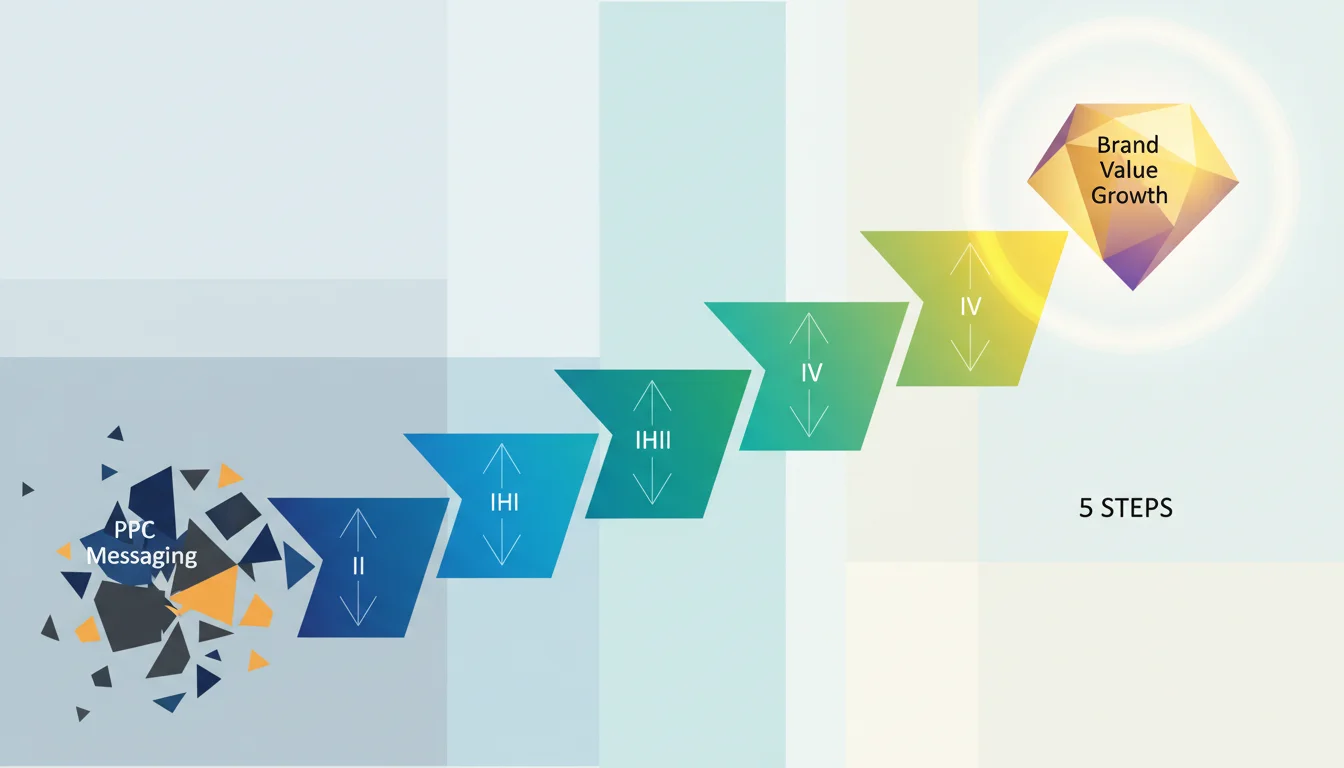
Step 1: Define and Document Your Core Brand Values
Before crafting any PPC campaign, you must possess an unequivocal understanding of your brand’s core values. This isn’t about buzzwords. It’s about the fundamental beliefs that drive your company, inform your decisions, and differentiate you in the market. Many organizations struggle with this initial step, often mistaking mission statements for actionable values. A mission statement might declare “to provide innovative solutions,” but a core value clarifies how you provide those solutions, through “uncompromising quality,” “customer-centric design,” or “environmental stewardship.”
1.1 Conduct an Internal Brand Workshop
Gather key stakeholders from across your organization, marketing, product development, customer service, and leadership. The goal is to articulate the non-negotiable principles that define your brand. Use open-ended questions like: “What promises do we consistently make to our customers?” or “What behaviors do we reward internally?” Document these discussions thoroughly.
1.2 Distill Values into Actionable Statements
From the workshop, you’ll likely have a long list of concepts. Refine these into three to five concise, memorable, and actionable statements. For example, instead of “we care about the environment,” a stronger value might be “Pioneering sustainable practices in manufacturing.” This specificity allows for direct translation into messaging. A 2025 Nielsen report on consumer sentiment indicated that 62% of consumers are more likely to purchase from brands that align with their personal values, underscoring the necessity of clear articulation.
1.3 Create a Brand Values Style Guide
This document should outline each core value, provide examples of how it translates into customer benefits, and specify approved language or phrases that reflect it. Importantly, it also lists phrases or concepts to avoid because they contradict your values. This guide will be your North Star for all future PPC copy. Pro Tip: Don’t just list values. For each value, include a “proof point”, a tangible action or product feature that demonstrates that value. This helps in writing compelling ad copy later. Common Mistake: Defining values too broadly. “Integrity” is good, but “Transparent pricing and ethical sourcing” is better for PPC. Expected Outcome: A clear, concise, and internally agreed-upon list of 3-5 core brand values, each with a definition and supporting proof points, documented in a shareable guide.
Step 2: Translate Values into Keyword Strategy in Google Ads
Once your values are crystal clear, the next step is to integrate them directly into your Google Ads keyword research. This isn’t just about targeting product-related keywords. It’s about identifying terms users employ when searching for brands that embody specific principles.
2.1 Identify Value-Driven Keywords
Think beyond direct product searches. If “ethical sourcing” is a core value, consider keywords like “ethically made [product type],” “sustainable [industry] brands,” or “companies with fair trade practices.” Use tools like Google Keyword Planner (Google Ads) to explore variations and related searches. Look at the “Related keywords” and “People also ask” sections for inspiration.
2.2 Segment Keywords by Value Category
Organize your keywords into ad groups that align with specific brand values. For instance, one ad group might focus on “Sustainability,” containing keywords related to eco-friendly practices, while another focuses on “Quality Craftsmanship,” with terms like “durable [product],” “hand-made [item],” or “premium [service].” This structure helps ensure that the ad copy served is highly relevant to the user’s value-driven intent.
2.3 Use Google Ads’ “Custom Segments”
In Google Ads, navigate to Tools and Settings > Audience Manager > Custom Segments. Create new custom segments based on interests and search terms that align with your brand values. For example, if your value is “Community Support,” you could create a segment for users who frequently search for “local charities,” “volunteer opportunities,” or “social impact businesses.” This allows you to reach audiences already predisposed to your values, even if they aren’t explicitly searching for your product yet. Pro Tip: Don’t forget negative keywords. If “affordability” is not a core value, add negative keywords like “cheap [product]” or “discount [service]” to avoid attracting misaligned traffic. Common Mistake: Over-relying on generic keywords. “Best [product]” is too broad; “best ethically sourced [product]” is more aligned. Expected Outcome: A strong keyword list segmented into ad groups reflecting specific brand values, complemented by custom audience segments targeting value-aligned users, all managed within the Google Ads platform.
Step 3: Craft Value-Centric Ad Copy
This is where your brand values truly come alive. Every headline, description, and call-to-action (CTA) should echo your core principles, resonating with users who share those values.
3.1 Develop Value-Driven Headlines and Descriptions
In Google Ads, when creating a new ad within an ad group (e.g., Campaigns > Ad Groups > Ads & Extensions > + Ad > Responsive Search Ad), focus on injecting your values.
For headlines: Instead of “Buy Our Shoes,” try “Ethically Sourced Leather Shoes” or “Handcrafted for Lasting Quality.” Use the 15 available headlines to test different value propositions.
For descriptions: Elaborate on how your product or service embodies the value. If “transparency” is key, a description might state, “See our full supply chain details on our site.” Each description (up to 90 characters) provides an opportunity to reinforce your message.
3.2 Implement Dynamic Keyword Insertion (DKI) with a Value Focus
DKI can personalize ads, but it’s even more powerful when used with value-driven keywords. If a user searches for “sustainable running shoes,” and you have DKI set up, your ad headline could dynamically display “Sustainable Running Shoes” and link to a page detailing your environmental commitments. To use DKI, insert `{KeyWord:Default Text}` into your ad copy. For example, a headline could be “Buy {KeyWord:Quality Footwear}”. If a user searches for “eco-friendly sneakers,” and that’s a keyword in your ad group, the ad might show “Buy Eco-Friendly Sneakers.”
3.3 Design Value-Aligned Calls-to-Action (CTAs)
Your CTAs should do more than just say “Shop Now.” Consider CTAs that reinforce your values. If “community” is a value, perhaps “Support Local Artisans” or “Join Our Community.” If “innovation” is key, try “Discover Next-Gen Solutions.” Test different CTAs to see which ones drive the most value-aligned clicks. Pro Tip: Use ad extensions (e.g., sitelink extensions, structured snippet extensions) to highlight specific value propositions. A sitelink could go to your “Sustainability Report” page, or a structured snippet could list “Ethical Sourcing, Fair Labor, Eco-Friendly Materials.” Common Mistake: Generic ad copy that could apply to any competitor. If your ad doesn’t clearly articulate your brand’s unique values, you’re missing a significant opportunity. Expected Outcome: Ad copy that explicitly communicates your brand’s core values, increasing relevance for value-conscious consumers and improving click-through rates (CTR) by attracting more qualified leads.
Step 4: Optimize Landing Pages for Value Alignment
The journey doesn’t end with the ad click. Your landing page must smoothly continue the narrative established in your PPC ad, reinforcing the brand values that attracted the user. A disconnect here can lead to high bounce rates and wasted ad spend.
4.1 Ensure Message Match
If your ad promised “ethically sourced products,” the landing page must immediately deliver on that promise. This means prominent mentions of ethical sourcing, certifications, and perhaps even a video or infographic explaining your process. Go to your Google Ads account, navigate to Ads & Extensions, select the ad, and ensure the final URL leads to a page that directly addresses the ad’s value proposition.
4.2 Show Value Proof Points
Use your landing page to provide concrete evidence of your brand values. If “uncompromising quality” is a value, display awards, detailed material specifications, or customer testimonials highlighting product durability. Visual elements like badges (e.g., “Certified B Corp,” “Fair Trade Certified”) can be incredibly effective.
4.3 Integrate Value-Driven Storytelling
Beyond bullet points, tell your brand’s story in a way that highlights your values. This could be a “Our Story” section, an interactive map of your supply chain, or profiles of the people involved in creating your products. Authentic storytelling builds trust. A recent IAB report (IAB) emphasized that digital storytelling, when aligned with brand purpose, significantly boosts consumer recall and purchase intent. Pro Tip: Pay attention to page load speed. A slow-loading page, regardless of its value alignment, will deter users. Google Ads’ Quality Score factors in landing page experience, so a fast, relevant page is important. Common Mistake: Sending value-driven ad traffic to a generic product page that doesn’t elaborate on the promised value. This creates cognitive dissonance and erodes trust. Expected Outcome: Landing pages that are perfectly aligned with the value proposition of the PPC ad, providing compelling evidence and storytelling that reinforces brand values, leading to higher conversion rates and a stronger brand experience.
Step 5: Monitor, Test, and Refine Value-Aligned Campaigns
PPC is an iterative process. Continuously monitoring performance, A/B testing different value propositions, and refining your approach are critical for long-term success.
5.1 A/B Test Value-Centric Ad Copy
Within Google Ads, when creating Responsive Search Ads, you can input multiple headlines and descriptions. The system automatically tests combinations. Regularly review the “Asset Report” (under Ads & Extensions) to see which headlines and descriptions are performing best. Look for patterns: do headlines emphasizing “sustainability” outperform those focusing on “innovation” for a specific audience segment?
5.2 Track Conversion Metrics and User Behavior
Beyond CTR, focus on conversion rates and post-click behavior. Are users who clicked on value-driven ads spending more time on your site? Are they engaging with your “About Us” or “Sustainability” pages? Use Google Analytics 4 (Google Analytics) to track these nuanced interactions. A high bounce rate from a value-aligned ad might indicate a disconnect on the landing page.
5.3 Conduct Regular Brand Value Audits
Periodically (e.g., quarterly), review all active PPC campaigns against your brand values style guide. Are there any ads or landing pages that have drifted off message? Are you still using language that accurately reflects who you are as a brand in 2026? This internal audit helps maintain consistency and authenticity. Pro Tip: Don’t be afraid to pause underperforming value-driven ads. Sometimes, a specific value resonates more with one audience than another. Learn from the data and adapt. Common Mistake: Setting up campaigns and forgetting them. The digital field and consumer values are constantly shifting. Your PPC strategy must evolve with them. Expected Outcome: Continuously optimized PPC campaigns that consistently reinforce brand values, leading to improved ad performance, deeper customer loyalty, and a stronger brand presence in the market. Aligning your PPC messaging with your core brand values is more than a marketing tactic. It’s a strategic imperative that builds authentic connections with consumers. By carefully defining your values, integrating them into your keyword strategy, crafting resonant ad copy, optimizing landing pages, and continuously testing, you can transform your PPC campaigns into powerful engines for brand advocacy and sustainable business growth. For instance, strong brand alignment can contribute to a 35% ROAS boost in CDP & PPC campaigns.
What is a core brand value in the context of PPC?
A core brand value is a fundamental principle or belief that guides a company’s actions, products, and services, and which is then explicitly communicated through PPC ad copy and landing pages to attract value-aligned customers.
How does aligning PPC with brand values improve campaign performance?
Alignment improves performance by attracting more qualified leads who are already predisposed to your brand’s ethos, leading to higher click-through rates, lower bounce rates, and in the end, better conversion rates as users find a consistent message from ad to landing page.
Can I use Dynamic Keyword Insertion (DKI) for value-driven keywords?
Yes, DKI is highly effective for value-driven keywords. By including value-specific terms in your keyword list and using DKI in your ad copy, you can dynamically display headlines that directly address a user’s value-based search query, increasing relevance.
What Google Ads features are useful for targeting value-aligned audiences?
Google Ads’ Custom Segments feature allows you to define audiences based on their search history and interests that align with your brand’s values, enabling more precise targeting beyond standard demographics.
How often should I review my PPC campaigns for brand value alignment?
It’s advisable to conduct a formal audit of your PPC campaigns against your brand values style guide quarterly, in addition to ongoing monitoring and A/B testing of ad copy and landing pages, to ensure consistent messaging and adapt to market changes.


