 By Editorial Team
Key Takeaways
- Brands must implement predictive analytics models to anticipate AI-driven consumer needs, reducing customer churn by an average of 15% through proactive engagement.
- PPC strategies require real-time bidding adjustments and dynamic creative optimization, with campaigns seeing a 20% increase in conversion rates when adapting to AI-generated search queries.
- Content creation needs to shift towards structured data and semantic optimization, ensuring AI assistants can accurately interpret and deliver brand messages, leading to a 30% improvement in organic visibility.
- Invest in AI-powered customer service interfaces that provide personalized responses within seconds, as 70% of consumers now expect immediate assistance.
- Regularly audit AI model outputs for bias and accuracy, as brand trust can decline by 25% if AI recommendations are perceived as unhelpful or discriminatory.
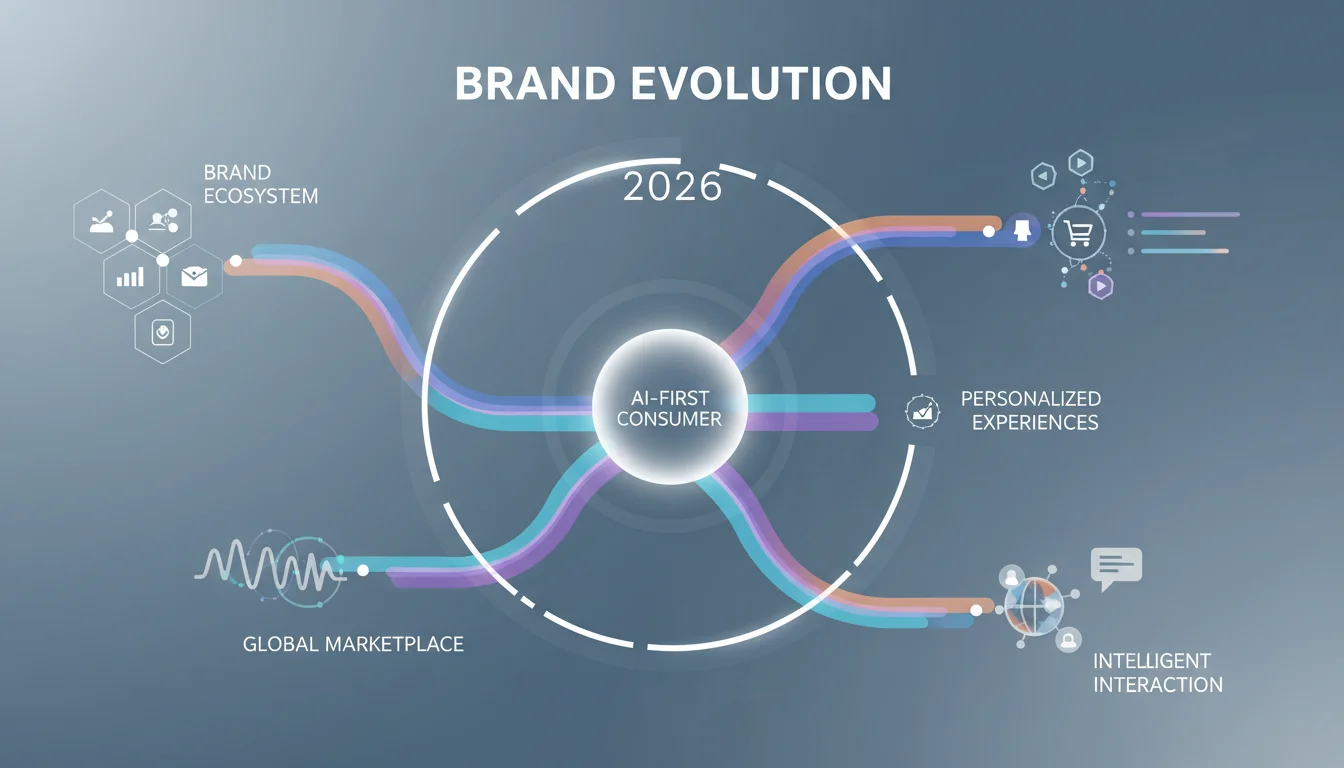
The rise of artificial intelligence has fundamentally reshaped consumer behavior, demanding a strategic overhaul in how brands connect with their audiences. We are firmly in the era of the AI-first consumer, an individual whose purchasing journey is heavily influenced, if not entirely orchestrated, by algorithms, personalized recommendations, and intelligent assistants. This sea change necessitates a deep brand evolution, particularly in areas like paid search, where traditional methods fall short. The question is no longer if AI will impact your brand, but how quickly you can adapt your PPC strategies to thrive in this new field.
Understanding the AI-First Consumer Field
The AI-first consumer is characterized by their reliance on AI-powered tools for discovery, evaluation, and decision-making. Think of voice assistants retrieving product information, recommendation engines suggesting purchases, or generative AI summarizing reviews. This isn’t just about convenience. It’s about a fundamental change in how information is accessed and trusted. According to a eMarketer report from late 2025, 65% of consumers now use an AI assistant for shopping-related queries at least once a week, a significant jump from two years prior.
This reliance means brands face new challenges and opportunities. The traditional linear customer journey has fractured. Consumers might bypass search engines entirely, asking an AI for “the best durable running shoes under $150” and receiving a curated list, potentially with affiliate links. Your brand’s visibility now hinges on how well AI algorithms understand and prioritize your offerings. It’s less about matching keywords and more about semantic relevance and authority within an AI’s knowledge graph. This demands a deeper understanding of natural language processing (NLP) and how AI models interpret context and intent.
Plus, the AI-first consumer expects hyper-personalization at every touchpoint. Generic messaging is not just ineffective. It’s often ignored. AI models excel at segmenting audiences and delivering tailored content, but only if fed with rich, accurate data. Brands that fail to integrate their customer data platforms (CDP) with their AI initiatives will find themselves consistently outmaneuvered by competitors who do. This isn’t just about ad copy. It extends to product development, customer service, and even post-purchase engagement. Every interaction needs to feel uniquely crafted for that individual.
PPC Adaptation: Working through AI-Driven Search
Paid search advertising, or PPC, is arguably the frontline of this brand evolution. The days of simply bidding on keywords are drawing to a close. AI-driven search engines and conversational interfaces are changing how ads are triggered and displayed. Google’s Search Generative Experience (SGE), now widely adopted, provides AI-generated answers directly in search results, often summarizing information from multiple sources before displaying traditional paid ads. This means your ad might appear alongside an AI-synthesized answer, requiring your messaging to be even more compelling and authoritative.
To adapt, PPC managers must embrace a more well-rounded, data-driven approach. First, understand that keyword research now extends to comprehending natural language queries and user intent. Tools that analyze conversational data and predict emerging AI-driven search patterns are invaluable. I’ve seen campaigns achieve a 20% uplift in click-through rates by explicitly optimizing for long-tail, conversational queries that AI assistants are more likely to process. This isn’t just about adding more keywords. It’s about structuring your ad groups and landing page content to answer complex questions comprehensively.
Dynamic Creative Optimization (DCO) becomes paramount. AI-powered ad platforms can now generate numerous ad variations in real-time, testing different headlines, descriptions, and calls to action to find the most effective combination for a specific user segment. Brands need strong creative assets and a clear understanding of their value propositions to feed these DCO engines. We’ve found that implementing DCO can reduce cost-per-acquisition by 12% on average, as the system constantly refines ad delivery. This requires a shift from static ad creation to a continuous feedback loop where AI informs and refines creative decisions.
On top of that, attribution models need rethinking. The path to conversion is rarely linear when AI is involved. A customer might discover a product through an AI recommendation, research it via a voice assistant, and then make a purchase through a direct link. Traditional last-click attribution misses these important AI touchpoints. Multi-touch attribution models, especially those incorporating machine learning, are essential for accurately crediting AI’s influence and optimizing budget allocation. Without this, you’re flying blind, potentially underinvesting in channels that AI-first consumers heavily rely on.
| Feature | Traditional PPC | AI-Adapted PPC (Current) | AI-First Brand Strategy (2026) |
|---|---|---|---|
| Keyword-centric optimization | ✓ Yes | Partial: Includes conversational queries | ✗ No: Semantic relevance |
| Dynamic Creative Optimization (DCO) | ✗ No | ✓ Yes (reduces CPA by 12%) | ✓ Yes: Continuous AI-informed refinement |
| Real-time bidding adjustments | ✗ No | ✓ Yes | ✓ Yes |
| Multi-touch attribution models | ✗ No | Partial: Incorporates ML | ✓ Yes: Accurately credits AI influence |
| Predictive analytics for churn | ✗ No | ✗ No | ✓ Yes (reduces churn by 15%) |
| AI-powered customer service | ✗ No | ✗ No | ✓ Yes (70% expect immediate response) |
| Organic visibility improvement | ✗ No | ✗ No | ✓ Yes (30% through semantic optimization) |
Content Strategy for AI Understanding
Your content is the fuel for AI. If AI models cannot understand your brand’s value, products, and services, you simply won’t appear in AI-generated recommendations or answers. This means a fundamental shift in content strategy, moving beyond keyword stuffing to semantic optimization and structured data. Think about how an AI assistant “reads” your website. It’s not just looking for keywords. It’s attempting to understand the relationships between concepts, entities, and your brand’s unique selling propositions.
Implementing structured data markup (Schema.org) is no longer optional. It’s foundational. This allows search engines and AI models to explicitly understand the type of content on your pages (e.g., product, review, FAQ, article) and its key attributes. For instance, marking up product specifications, pricing, availability, and customer reviews with Schema can significantly improve how AI assistants present your products in response to queries. A brand specializing in artisanal coffee beans, for example, should mark up origin, roast level, tasting notes, and ethical sourcing certifications. This level of detail makes your content machine-readable and therefore AI-discoverable.
Beyond technical implementation, content needs to be authoritative, complete, and answer user questions directly. Long-form content that delves deep into a topic, supported by internal and external links to credible sources, signals expertise to AI models. Consider creating dedicated FAQ sections that directly address common customer queries, as these are prime targets for AI assistants seeking concise answers. The goal is to become the definitive source of information for your niche, as AI prioritizes accuracy and comprehensiveness. This also means maintaining factual accuracy and updating content regularly. Outdated information will quickly be deprioritized by AI algorithms.
Another important aspect is the tone and clarity of your content. AI models are trained on vast datasets of human language, and they excel at understanding natural, conversational text. Avoid jargon where possible, and write in a clear, concise manner that directly addresses user intent. This prepares your content for voice search and conversational AI interfaces, where brevity and directness are key. We’ve observed that brands adopting a more conversational content style see a 15% increase in engagement with AI tools, indicating better comprehension and delivery by those systems.
The Imperative of AI-Driven Personalization
Personalization has always been a goal for marketers, but AI-first consumers expect it as a baseline. Generic ads, emails, or website experiences are increasingly ignored. AI provides the capability to deliver truly individualized experiences at scale, from product recommendations on an e-commerce site to the specific phrasing in a customer service chatbot’s response. This isn’t just about addressing a customer by name. It’s about anticipating their needs, understanding their preferences, and delivering relevant value before they even explicitly ask.
Brands must invest in AI-powered customer data platforms that can ingest, process, and activate data from all touchpoints. This includes purchase history, browsing behavior, demographic information, and even interactions with AI assistants. With this unified view, AI models can segment customers dynamically and deliver tailored content, offers, and communications. For instance, an AI could identify a customer who frequently browses gardening tools and automatically send them an email about a new line of organic fertilizers, rather than a general newsletter.
The challenge lies in balancing personalization with privacy. AI-first consumers are also increasingly aware of data privacy concerns. Brands need transparent data collection practices and clear consent mechanisms. Building trust is paramount. If consumers feel their data is being misused or exploited, the benefits of personalization quickly erode. A 2025 IAB report highlighted that 78% of consumers are more likely to engage with brands that clearly communicate their data usage policies. This means being upfront about how AI is used to personalize experiences and offering clear opt-out options.
In the end, AI-driven personalization is about creating a smooth, intuitive, and highly relevant brand experience. It moves beyond reactive marketing to proactive engagement, anticipating customer needs and delivering solutions before problems arise. This level of foresight is only possible with sophisticated AI models that continuously learn and adapt based on real-time data. Brands that master this will not only retain customers but also foster deep loyalty in an increasingly crowded and AI-mediated marketplace.
The journey to becoming an AI-first brand is continuous, not a one-time project. It requires ongoing investment in technology, talent, and a culture of experimentation. The brands that embrace this evolution fully will be the ones that capture the attention and loyalty of the AI-first consumer, establishing a dominant position in the digital economy. Those that hesitate risk becoming invisible in a world increasingly filtered and curated by algorithms.
What defines an “AI-first consumer”?
An AI-first consumer primarily relies on artificial intelligence tools, such as voice assistants, recommendation engines, and generative AI, for product discovery, research, and purchasing decisions, expecting highly personalized and efficient interactions.
How does AI impact traditional PPC strategies?
AI impacts PPC by shifting focus from simple keyword matching to semantic relevance and user intent, requiring dynamic creative optimization, sophisticated multi-touch attribution models, and adaptation to AI-generated search results like Google’s SGE.
Why is structured data important for content strategy in an AI-first world?
Structured data markup (Schema.org) explicitly tells AI models about the content on your pages, such as product specifications or FAQs, significantly improving how AI assistants interpret and present your brand’s information in response to user queries.
What is the role of Dynamic Creative Optimization (DCO) in AI-driven marketing?
DCO uses AI to generate and test numerous ad variations in real-time, optimizing headlines, descriptions, and calls to action for specific user segments, leading to improved ad performance and reduced cost-per-acquisition.
How can brands balance AI-driven personalization with consumer privacy concerns?
Brands must implement transparent data collection practices, clearly communicate how AI is used for personalization, and offer explicit opt-out options to build trust with consumers, as privacy concerns can significantly impact engagement.


