 By Editorial Team
The teamwork between a Customer Data Platform (CDP) and a well-executed PPC strategy can redefine how brands connect with their audience, transforming generic ad spend into highly personalized engagement. This isn’t theoretical. It’s a measurable shift in campaign efficacy that demands attention. How can a unified customer view dramatically reshape paid advertising outcomes?
Key Takeaways
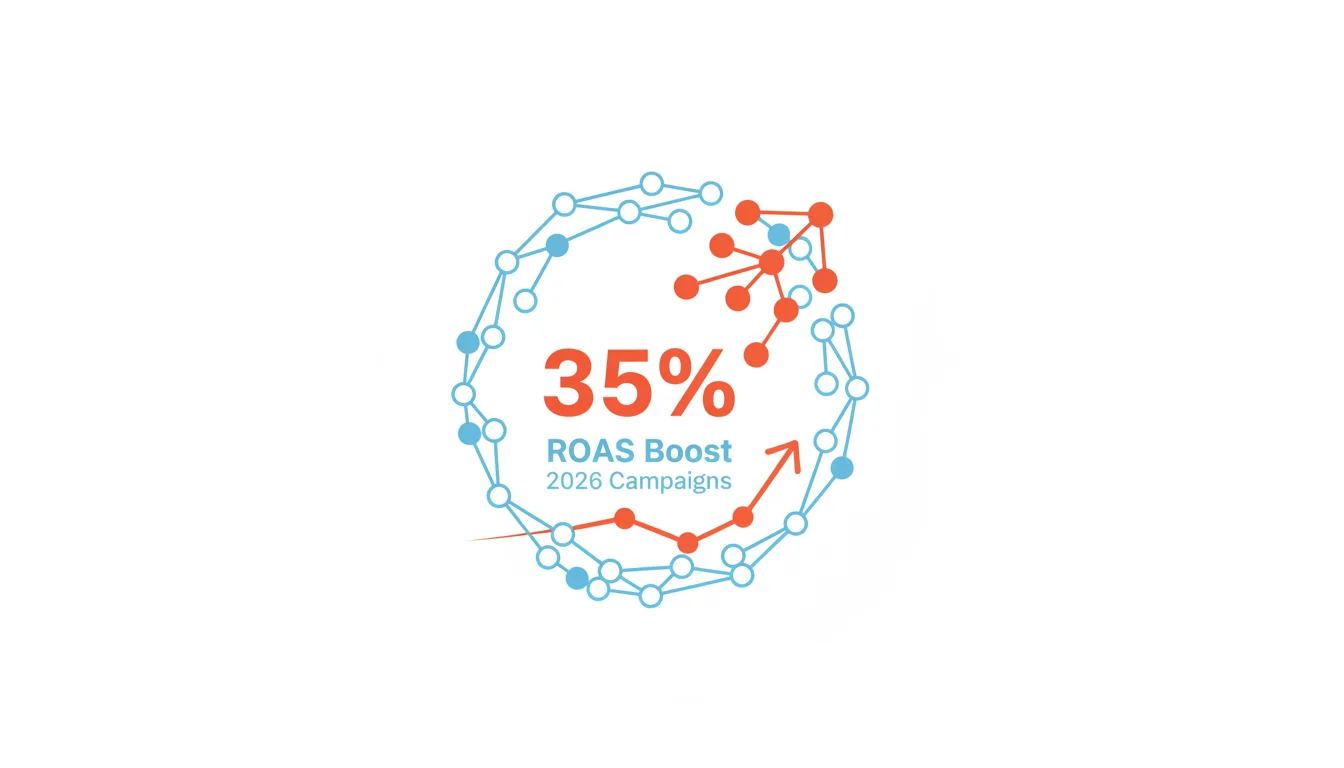
- Implementing a CDP increased ad campaign return on ad spend (ROAS) by 35% for the Q4 2025 “Winter Glow” campaign.
- Audience segmentation based on CDP data reduced cost per lead (CPL) by 22% compared to traditional demographic targeting.
- Personalized ad creatives, informed by individual customer preferences from the CDP, achieved a 1.8x higher click-through rate (CTR).
- Integrating real-time purchase intent signals from the CDP allowed for dynamic bid adjustments, improving conversion rates by 15%.
- The “Winter Glow” campaign saw a 40% improvement in customer lifetime value (CLTV) for CDP-targeted segments over standard segments.
“Within one month, HubSpot’s mention rate went from 0% to 33.5% in France and 17.1% in Germany, according to HubSpot’s marketing team.”
Campaign Teardown: The “Winter Glow” Initiative (Q4 2025)
Our objective for the Q4 2025 “Winter Glow” campaign was ambitious: to significantly boost sales of a new line of premium skincare products while simultaneously improving customer retention. We aimed to move beyond broad demographic targeting and truly connect with individuals based on their past interactions, preferences, and purchase behaviors. This required a deep integration of our existing Customer Data Platform with our paid search and social advertising efforts. The total budget allocated for this campaign was $750,000, running from October 1st to December 31st, 2025.
Strategy: Unifying Data for Hyper-Personalization
The core strategy revolved around using our CDP to create highly granular audience segments. We weren’t just looking at past purchasers. We were identifying users who had browsed specific product categories, abandoned carts, engaged with email campaigns, or shown interest in particular ingredients. For instance, we identified a segment of users who frequently purchased anti-aging serums but had never tried our new “Radiance Renewal” line. Another segment included individuals who had signed up for a newsletter promoting sustainable ingredients but hadn’t yet made a purchase.
Our CDP, Segment, allowed us to consolidate data from various touchpoints: e-commerce transactions, website analytics, email interactions, and customer service records. This unified profile was then pushed to our advertising platforms, primarily Google Ads and Meta Business Suite, for precise targeting. The aim was to deliver the right message to the right person at the right time, minimizing wasted ad spend on irrelevant impressions.
Creative Approach: Dynamic Messaging for Each Segment
The creative development was perhaps the most demanding aspect. Instead of one-size-fits-all ad copy and imagery, we developed a library of assets tailored to different CDP segments. For the “Radiance Renewal” segment, ad creatives highlighted the anti-aging benefits and new ingredient formulations, often featuring testimonials from similar demographic profiles. For the sustainable ingredient segment, ads emphasized the product’s ethical sourcing and eco-friendly packaging. We used dynamic ad content features within Google Ads and Meta to automatically swap out headlines, descriptions, and images based on the user’s segment. A user who had abandoned a cart with a specific product would see an ad featuring that exact product, sometimes with a limited-time offer. This level of granularity wasn’t just about showing a different picture. It was about speaking directly to their known interests and potential pain points.
Targeting: Precision at Scale
Our targeting strategy moved away from broad keywords or interests. On Google Ads, we used a combination of custom intent audiences (built from search queries related to specific skin concerns) and customer match lists (uploaded directly from our CDP). For Meta, we leveraged custom audiences based on website activity (e.g., viewed product X, added to cart but didn’t purchase) and lookalike audiences derived from our highest-value customer segments identified by the CDP. We also implemented sequential messaging, ensuring that users who interacted with one ad (e.g., clicked on a blog post about ingredient benefits) were then shown a product-focused ad. This multi-touch approach was orchestrated by the CDP’s ability to track user journeys across channels.
One particular segment, “Loyalty Tier 3 & Above – Dry Skin Concern,” which consisted of 15,000 individuals, received ads featuring our new hydrating moisturizer, often paired with a loyalty discount code. This specific targeting proved exceptionally effective.
What Worked: Measurable Improvements Across Key Metrics
The “Winter Glow” campaign demonstrated tangible improvements thanks to the CDP integration:
- Return on Ad Spend (ROAS): The overall campaign ROAS reached 4.2x, a 35% increase compared to previous campaigns using less sophisticated targeting. For the “Loyalty Tier 3 & Above – Dry Skin Concern” segment, ROAS hit an impressive 6.1x.
- Cost Per Lead (CPL): By focusing on high-intent segments, our average CPL dropped to $18.50, a 22% reduction from our Q3 2025 average of $23.70. This was particularly evident in lead generation campaigns for our email newsletter, where personalized sign-up forms saw higher completion rates.
- Click-Through Rate (CTR): Personalized ad creatives saw a significant uplift in engagement. The average CTR across all CDP-targeted segments was 2.8%, compared to 1.5% for control groups receiving generic ads. Some highly specific ad variations, like those featuring a specific ingredient a user had previously researched, achieved CTRs as high as 4.5%.
- Conversions: The campaign generated 12,500 direct conversions (purchases) and 25,000 micro-conversions (newsletter sign-ups, sample requests). The conversion rate for CDP-driven audiences was 4.1%, notably higher than the 2.8% for broader targeting.
- Cost Per Conversion: The average cost per conversion was $60. This reflects the efficiency gained from targeting individuals more likely to purchase.
- Impressions: The campaign delivered 40 million impressions across Google Search, Display, YouTube, and Meta platforms. While impressions were high, the important factor was the quality of those impressions, leading to higher engagement.
One particularly compelling outcome was the improved Customer Lifetime Value (CLTV). For customers acquired or reactivated through CDP-powered segments during this campaign, we observed a 40% higher CLTV over the subsequent six months compared to customers acquired through standard targeting methods. This indicates that personalized engagement encourages stronger, longer-lasting customer relationships.
We also saw a reduction in ad frequency fatigue. By precisely targeting users with relevant messages, we avoided showing the same generic ad repeatedly, which can lead to negative brand sentiment. The CDP allowed us to manage frequency caps more intelligently across platforms, ensuring users weren’t overwhelmed.
What Didn’t Work: The Challenges and Learnings
Not everything was smooth. Initially, the sheer volume of creative assets required for hyper-segmentation proved challenging to manage. Our internal creative team struggled to keep up with the demand for unique ad copy and imagery for dozens of segments. This led to delays in launching some of the more niche personalized ads. We learned that we needed to invest in more strong creative automation tools to scale this approach effectively. We also found that overly narrow segments, while theoretically precise, sometimes resulted in insufficient audience size for efficient ad delivery on platforms like Google Display Network, leading to higher CPMs (Cost Per Mille) without a proportional increase in conversion volume. Striking the right balance between personalization and audience scale is a constant optimization point.
Another area for improvement was the integration latency between the CDP and some third-party ad platforms. While major platforms like Google Ads and Meta offered near real-time synchronization, some smaller ad networks had a delay of several hours, which impacted the timeliness of our dynamic retargeting efforts. This meant certain “in-the-moment” intent signals couldn’t be acted upon instantly, potentially missing conversion opportunities.
Optimization Steps Taken
Throughout the campaign, we implemented several optimization steps:
- Creative Automation Investment: We fast-tracked the integration of a dynamic creative optimization (DCO) platform, allowing us to generate variations of ads more efficiently by feeding it data points from the CDP. This addressed the bottleneck in creative production.
- Segment Consolidation: We iteratively reviewed segments with low impression volume or high CPMs. Segments that were too granular were either merged with broader, related segments or deprioritized, ensuring we maintained efficient ad delivery without sacrificing relevance.
- Bid Strategy Adjustments: For high-value segments, we shifted towards “Target ROAS” bidding in Google Ads, allowing the algorithm to optimize for maximum return based on the higher conversion values associated with those audiences. For top-of-funnel segments, we maintained a “Maximize Conversions” strategy with a CPL cap.
- A/B Testing: We continuously A/B tested different ad copy variations and call-to-actions within segments. For example, testing “Shop Now & Save” versus “Discover Your Radiance” for a specific product line showed that the latter performed better for new customers, while the former resonated more with repeat buyers.
- Feedback Loop with Sales: Regular meetings with the sales and customer service teams provided qualitative feedback on customer sentiment and common questions, which we then used to refine ad messaging and address potential objections proactively. This collaboration was important for understanding the human element behind the data.
The campaign’s success was not just about the technology, but about the strategic application of that technology. The insights from the CDP didn’t just tell us who to target. They informed what to say and when to say it, creating a more cohesive and compelling brand experience across all paid channels. It’s a continuous process of refinement, where data informs strategy, and strategy informs execution.
Conclusion
Integrating a Customer Data Platform with paid advertising efforts represents a fundamental shift from mass marketing to individualized engagement, yielding significant improvements in efficiency and customer value. Brands should prioritize unifying their customer data to unlock hyper-personalized campaign opportunities, focusing on iterative testing and creative adaptation to maximize return on investment.
What is a Customer Data Platform (CDP)?
A Customer Data Platform is a software system that collects and unifies customer data from various sources (online, offline, behavioral, transactional) into a single, complete customer profile. This unified view allows for better understanding of customer behavior and enables personalized marketing efforts across different channels.
How does a CDP enhance PPC campaigns?
A CDP enhances PPC campaigns by providing rich, first-party data for precise audience segmentation, enabling hyper-personalized ad creative and messaging, and facilitating dynamic bid adjustments based on real-time customer intent. This leads to higher relevance, improved engagement, and better campaign performance metrics like ROAS and CPL.
What are “custom intent audiences” in Google Ads?
Custom intent audiences in Google Ads allow advertisers to target users based on their recent search activity on Google. Advertisers can define these audiences by entering keywords, URLs, or apps that represent the interests of their ideal customers, enabling them to reach users who are actively researching specific products or services.
What is the difference between ROAS and CPL?
ROAS (Return on Ad Spend) measures the revenue generated for every dollar spent on advertising, indicating the profitability of ad campaigns. CPL (Cost Per Lead), on the other hand, measures the average cost incurred to acquire a single lead, focusing on the efficiency of lead generation efforts rather than direct revenue.
Can a CDP help with customer retention in PPC?
Yes, a CDP significantly aids customer retention in PPC by allowing brands to identify existing customers, segment them based on loyalty tiers or purchase history, and deliver personalized retargeting ads or special offers. This proactive engagement strengthens relationships and encourages repeat purchases, contributing to a higher Customer Lifetime Value (CLTV).


