 By Editorial Team
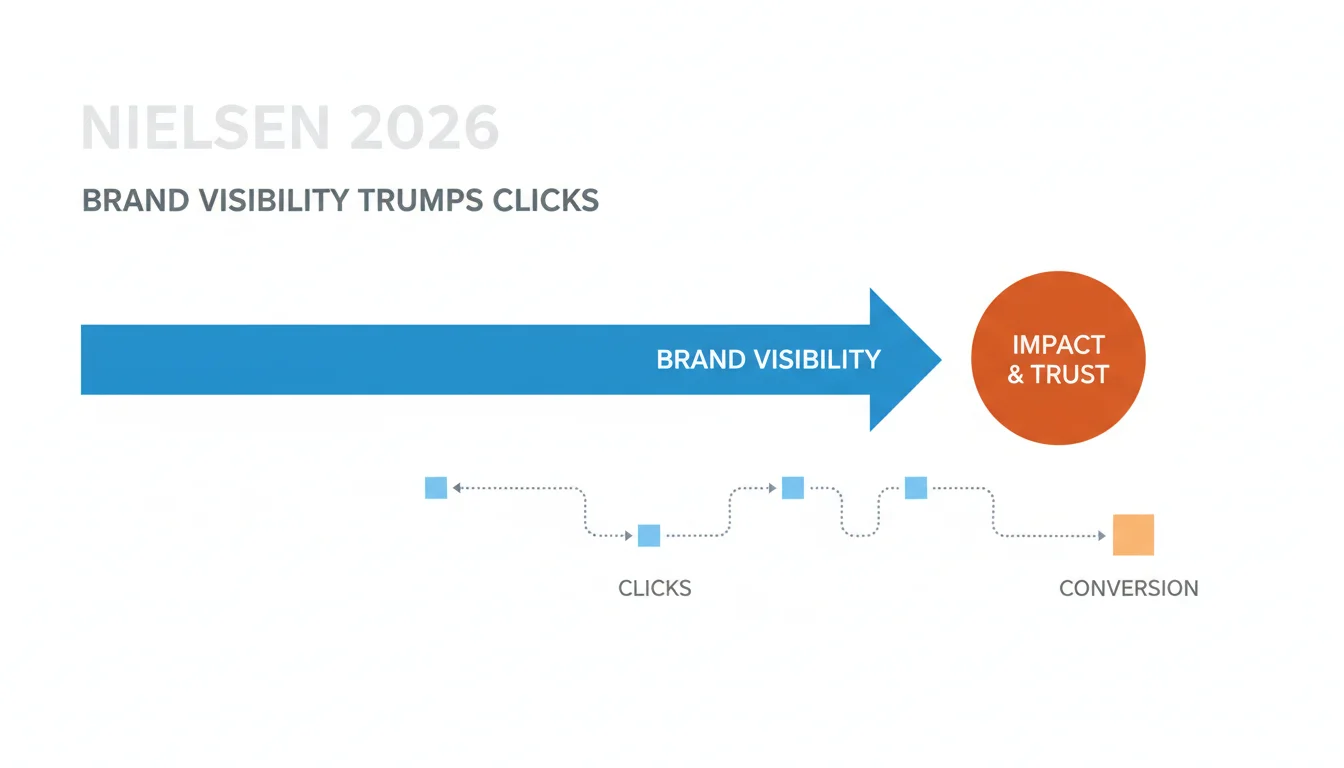
Nielsen’s 2026 Brand Visibility Report just dropped a number that should make every PPC pro sit up: a staggering 63% of consumers report being more likely to purchase from brands they recognize, even when a competitor has a better offer. That’s not fluff. That’s the trust and familiarity that directly drive conversions in an incredibly crowded market. This data forces us to ask a hard question: is our paid advertising actually building a memorable brand, or are we just chasing cheap clicks for the day?
Key Takeaways
- You need to put at least 25% more of your PPC budget into top-of-funnel brand awareness campaigns on YouTube and connected TV. It’s the only way to align with how people actually choose products now.
- Get granular with your Google Ads audience segmentation by using custom intent and affinity audiences to find people researching your whole category, not just your direct competitors.
- Swap out your display and video ads every 4-6 weeks, period. Nielsen confirms that after two months of the same ad, brand recall drops by a painful 15%, so you’re just wasting money on tired creative.
- Start feeding your offline data, like in-store visit conversions or your valuable CRM lists, into Google Ads and Meta Ads to build much stronger lookalike audiences and expand your brand’s reach.
- Don’t just set and forget your keywords. Audit them constantly to make sure you have a healthy mix of high-intent, bottom-funnel terms and the broader, brand-building keywords that capture people early on.
Nielsen Data Point 1: Brand Recall Impacts 72% of Purchase Decisions
The latest report shows that brand recall directly influences 72% of purchase decisions, a figure that has jumped from 65% in 2024 and clearly shows consumers are leaning hard on names they already know when they have to make a choice. This mirrors exactly what I’ve seen running PPC for B2B SaaS clients. We’d watch competitors undercut us on price, but our clients consistently closed deals with the prospect who recognized their name from a webinar or an early-funnel video ad. Getting seen is easy. Getting remembered when the credit card comes out is the real work.
For anyone managing a PPC budget, this means you have to stop focusing only on immediate sales. If your whole budget is just buying bottom-funnel keywords like “buy [product name] online,” you’re completely ignoring the huge part of the journey where people are forming the brand preferences that lead to that final click. A good starting point is dedicating 20-30% of your budget to campaigns built purely for awareness and consideration, like running broader keyword targets, using YouTube TrueView for reach, or even programmatic display where viewability is your main KPI. The objective isn’t the immediate sale, but to get your brand name so firmly lodged in the customer’s mind that when they’re finally ready to buy, yours is the first one they think of.
Nielsen Data Point 2: 45% of Consumers Trust Brands Seen Across Multiple Channels
It’s not exactly shocking that seeing a brand everywhere builds trust, but Nielsen finally put a hard number on it: 45% of consumers place greater trust in brands that maintain a consistent presence across multiple digital touchpoints. For me, as someone who builds these strategies for a living, this data proves that siloed PPC campaigns are just fundamentally broken. A user who gets a search ad, then sees a display ad on a blog they’re reading, and later gets a quick video ad on social media develops a powerful, subconscious trust in that brand. That compounding effect is where the magic happens.
In practice, your PPC strategy must be tightly woven into all your other marketing. Display ads need to use the exact same messaging and visuals as the social media campaigns, and the search ad copy has to reinforce the value props you’re pushing in your video content. This is easier than it sounds. Platforms like Google Ads (especially with its Display & Video 360 integration) and Meta Ads have great tools for managing cross-channel frequency and audiences. You can actually build an ad sequence where a user first sees an awareness video, is then followed up with a consideration-focused display ad, and finally gets a conversion-focused search ad when they’re ready. An orchestrated plan like that builds trust so much more effectively than just running isolated campaigns and hoping for the best.
Nielsen Data Point 3: Ad Fatigue Reduces Brand Recall by 15% After 8 Weeks
Here’s a costly mistake I see all the time: an advertiser launches a campaign with one set of ads and just lets it run forever. Nielsen’s data shows why this is a budget-killer: ad fatigue begins to significantly reduce brand recall, by as much as 15%, after just 8 weeks if creative assets are not refreshed. After a certain point, people just stop seeing your ad. Your ads become background noise, not engaging content.
To fight this, a strict creative refresh schedule isn’t optional. I tell all my clients to plan for new creative variations for their display and video campaigns every 4 to 6 weeks. This doesn’t mean a total, expensive redesign every month. Sometimes just switching the headline, tweaking the call-to-action, or even changing the background photo is enough to make an ad feel new again. Continuous A/B testing helps you learn what’s working and keeps the message from getting stale. Use the dynamic creative optimization (DCO) features in Google and Meta to automate a lot of this testing. The key is to maintain novelty while sticking to your core brand message.
Nielsen Data Point 4: 58% of Brand Discovery Now Happens Through Non-Branded Search
Here’s a stat from the report that should completely change how you think about keyword strategy: a huge 58% of new brand discoveries occur through non-branded search queries. This just torpedoes the old idea that brand building happens somewhere else and search just harvests the demand. The reality is that people are discovering new companies every day with generic, problem-aware searches like “best project management software” or “eco-friendly cleaning supplies” long before they know your brand exists.
This means your PPC strategy has to get aggressive on these broader, non-branded keywords. I know a lot of advertisers avoid them because the competition is fierce and the immediate conversion rate is lower. But if nearly 60% of your future customers are starting their search here, can you really afford to be invisible? This means doing the hard work of keyword research to find relevant long-tail, informational queries, then using phrase match or broad match with a heavy dose of negative keywords to control your spend. The ad copy here shouldn’t be a hard sell. It should focus on solving the user’s problem, introducing your brand as a helpful authority and getting them to the next step in the funnel which is often a really solid landing page that answers their question.
Challenging the Conventional Wisdom: The Myth of “Pure Performance”
There’s an old-school “pure performance” mindset in PPC that’s holding a lot of campaigns back, an obsession where every single dollar spent has to tie back to an immediate, last-click conversion. While that’s an easy way to generate a clean ROI report for your boss, it completely misunderstands how people actually research and buy things today. The Nielsen 2026 data is clear proof that brand visibility is a hard performance metric. A PPC campaign that only optimizes for the final click is just leaving a ton of money on the table, kind of like a store that only talks to customers who walk in with a product already in their hand and ignores everyone else browsing.
That conventional thinking leads directly to overspending on a tiny slice of bottom-funnel keywords and retargeting, while completely ignoring the early stages where a customer is actually deciding who to trust. We have to push back on this short-sighted view. A better model is a blended one, where a dedicated slice of the PPC budget is spent on and measured by brand impact (things like aided recall, branded search volume growth, and return-visitor engagement). The direct ROI might be a little fuzzy in the first month, but the long-term payoff in higher customer lifetime value and a lower cost-per-acquisition across the board is absolutely real. Effective brand building is performance in today’s market, full stop.
The Nielsen 2026 report is a wake-up call: brand visibility isn’t a “nice to have” for PPC, it’s essential for sustainable growth. By integrating awareness-focused strategies, keeping your message consistent across channels, refreshing creative before it goes stale, and smartly targeting those non-branded discovery searches, you can build real brand equity that pays off with better campaign results. If you’re ready to refine your own tactics, the strategies in PPC Trends 2026 are a great place to start. And of course, none of this works if you can’t trust your numbers, so making sure your Marketing Data Trust is solid is the foundation for all of it.
What is Nielsen’s primary finding regarding brand visibility in 2026?
The main takeaway from Nielsen’s 2026 report is that 63% of people are more likely to buy from a brand they already know, even when a competitor has a better price. This shows that brand familiarity is a major driver of actual sales.
How does ad fatigue impact brand recall according to the report?
Nielsen found that not updating your ads for just 8 weeks can cause brand recall to drop by 15%. It’s a clear warning that you have to keep your ad creative fresh or you’re just throwing money away on ads people are ignoring.
What percentage of brand discovery now occurs through non-branded search?
58%. That’s how many new brand discoveries come from people using non-branded, generic search terms. It means you have to be targeting these broader keywords to introduce your brand to new customers early on.
Why is a multi-channel approach important for brand trust?
Because seeing a brand in multiple places, search, social, display, builds subconscious trust and credibility over time. Nielsen’s data shows this works on 45% of consumers, making a consistent presence across channels a key part of building trust.
Should PPC campaigns focus solely on direct conversions?
No, the Nielsen 2026 data shows that focusing only on last-click sales is a short-sighted mistake. A balanced PPC strategy must also invest in brand awareness and consideration, as building that brand visibility is what fuels long-term performance and higher customer value.


