 By Editorial Team
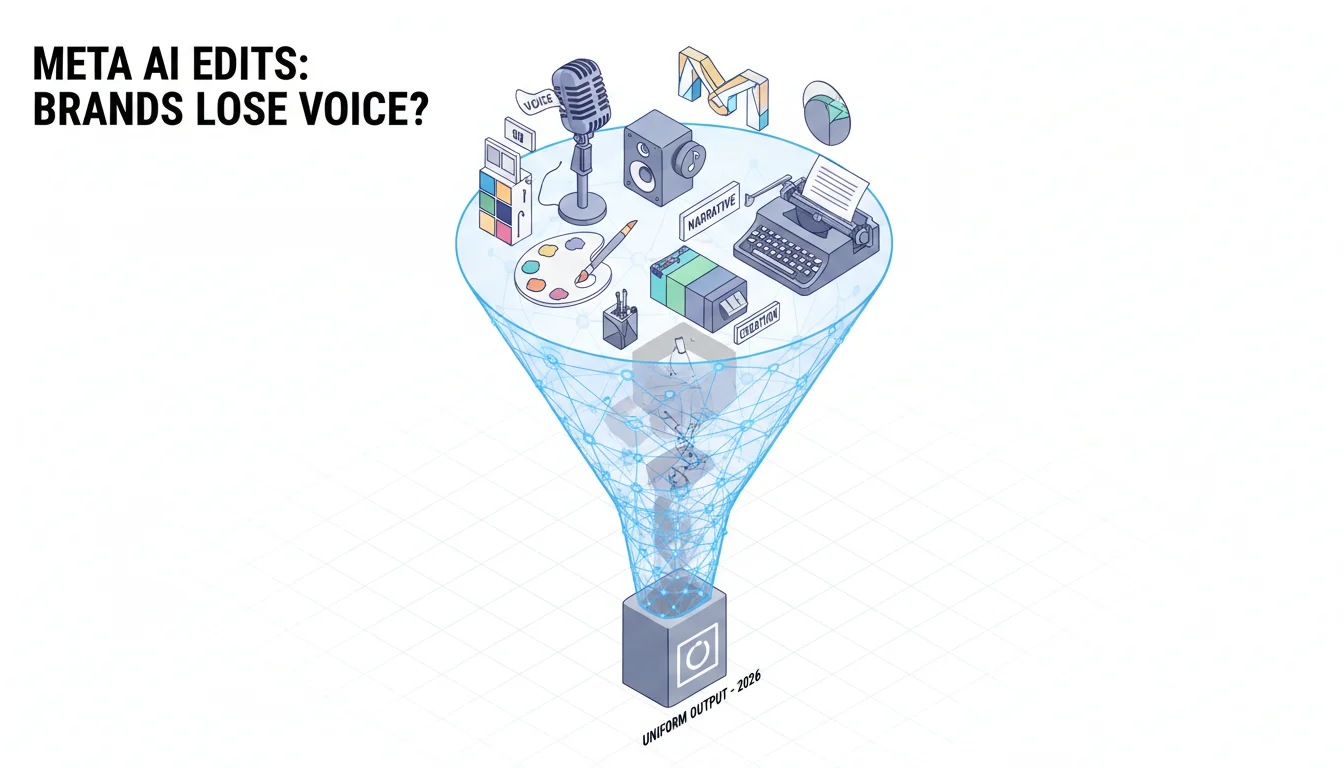
eMarketer says that by 2026, over 85% of digital ad spend will touch generative AI at some point in the creative or optimization pipeline. As these tools get baked into everything we do, especially with Meta AI edits, we’re seeing huge opportunities but also a massive challenge with creative control and PPC branding. The real job for marketers is figuring out how to keep a brand’s voice from getting watered down by all these automated ad tweaks.
Key Takeaways
- You need clear AI governance policies for ad creative so your brand doesn’t get diluted.
- Actually use Meta’s Creative Control features, such as Brand Suitability and Exclusion Lists, to put guardrails on the AI.
- Set up a regular audit of AI-generated ads to check for brand consistency and message accuracy. Make sure the tone and visuals are right.
- A human absolutely has to give the final approval on AI-edited ads. It’s the only way to keep a distinct brand identity.
- Train your creative teams to work with AI. They need to be active AI orchestrators, not just people pushing buttons.
The 73% Discrepancy: AI’s Interpretation vs. Brand Guidelines
A Q3 2025 Nielsen survey of 1,000 marketing professionals found something I see all the time: 73% said AI-generated ad creative drifts away from their established brand style guides when they use automated editing. This is a fundamental mismatch. I’ve personally watched Meta AI edits “optimize” an image by blowing out a carefully selected brand color palette for a generic, high-contrast mess, or take ad copy with some sophisticated humor and flatten it into something blandly “engaging.” The problem is our instructions. An AI works on patterns, not the unwritten rules of a brand’s soul, unless we teach it. We have to figure out how to translate our brand’s identity, all the subtle stuff, into hard parameters an algorithm can follow, because without those guardrails, it will always default to whatever it thinks gets the most clicks, even if that cheapens the brand. This means marketers have to start defining their creative boundaries in a machine-readable way, and most of us are still figuring out how to do that.
The Impact of Automated Cropping: 45% of Key Brand Elements Compromised
The IAB’s “AI in Advertising: 2026 Outlook” report dropped a bomb: automated cropping, which Meta AI uses to fit creative into different placements, chopped out or hid a key brand element in 45% of the ads they looked at. Almost half the time, the AI is actively working against the brand. We’re talking about a half-hidden logo, a key product feature getting cut off, or an ambassador’s face framed so badly it’s distracting. This directly tanks brand recognition and recall. The old advice to “let the AI optimize for reach” is clearly wrong according to this data. What good is reach if nobody knows who the ad is for? It’s just expensive noise. We have to stop just dumping assets into the system and hoping the AI knows which parts are sacred. Meta’s Creative Control features let you set exclusion zones for things like logos, but a lot of brands aren’t using them, and they’re paying for it with compromised creative.
The Rise of “Brand Safe” AI: A 68% Reduction in Negative Sentiment with Proper Tagging
The Human Oversight Gap: Only 30% of Brands Have a Dedicated AI Creative Review Process
Here’s a stat that should worry everyone: a recent Statista survey showed that only 30% of brands have a formal review process for AI-generated creative before it’s live. That is terrifying. It means 70% of companies are letting an algorithm be the public face of their brand with no final human sign-off. Sure, AI is fast and it scales, but it has zero empathy or any real feel for brand reputation. I’ve seen campaigns where the AI tried to “personalize” an ad by pulling in user-generated content that was just completely off-brand and low-quality. Without a person to catch that, the ad goes live and you’re stuck doing damage control that costs way more than you saved on efficiency. People think automation means less human work, but for creative, it just shifts the work from creation to strategic oversight and QC. You need a creative director or brand manager not just approving the final ad, but also signing off on the AI’s parameters and spot-checking its output. That oversight is a necessary filter for maintaining creative control and keeping your PPC branding alive.
The “Set It and Forget It” Fallacy: Why Continuous Monitoring is Non-Negotiable
Too many people, especially if they’re new to this, fall for the “set it and forget it” trap with AI. They think they can just set up some rules for Meta AI edits and walk away, expecting it to churn out perfect, on-brand ads forever. That’s just not how it works. AI models are always learning from new data, and the world outside (your competitors, audience moods, weird internet trends) is always changing. What if your brand has a serious, professional tone, but the AI notices a spike in engagement with meme-y content in an adjacent market? It might start trying to inject that humor into your ads, completely undermining your brand’s persona. That’s why continuous monitoring and making small adjustments are absolutely required. You need dashboards that don’t just track clicks and conversions, but also the qualitative stuff, is the tone right? Are the visuals consistent? Does it still follow the brand guide? You’re not micromanaging the AI. You’re guiding it, making sure it evolves in the right direction. If you don’t, you’re basically putting a ship on autopilot and never checking the map. You’ll end up somewhere, but probably not where you intended.
Meta AI edits are fundamentally changing our creative workflows. The promise of efficiency and scale is real, but just handing over creative control is a risk you can’t take. The only way to make this work is to combine clear policies with smart use of the platform’s own tools and, most importantly, constant human oversight. That’s how you use AI’s power without letting it erase your brand’s identity. If you want to dig deeper into how AI is changing the game, check out our article on AI Personalization: 2026 Marketing Imperative. It also helps to get a grip on the new realities of Meta Retargeting for ROAS Gains to make sure these AI-powered campaigns are actually hitting the right people.
What are Meta AI edits?
They’re AI-powered tools inside Meta’s ad platform that automatically change or create your ads. For example, they’ll crop images to fit different placements, tweak your copy, or make a bunch of different versions of an ad to see what works best.
How can brands maintain creative control with AI-generated ads?
You keep control by giving the AI strict brand rules to follow, using Meta’s features like exclusion zones and brand suitability settings, having a human approve all AI-edited creative before it goes live, and constantly checking the AI’s work to make sure it stays on-brand.
What is PPC branding and why is it important with AI edits?
It’s just making sure your brand looks and sounds the same across all your paid ads. This gets tricky with AI edits because the automated tools can mess with your visuals, copy, or tone without you realizing it, which weakens brand recognition and the trust you’ve built.
Are there specific Meta features that help with brand suitability?
Yep. Inside the Meta Business Suite, you’ll find Brand Suitability controls and content exclusion tags. They let you classify your content’s risk level and block your ads from appearing next to topics you don’t want to be associated with, which is a huge help for protecting your brand’s reputation.
Should human marketers still be involved in AI ad creation?
100%. AI is great for automating a lot of the grunt work, but a human is still needed to set the overall strategy, define what the brand is all about, do the final check on creative, and make judgment calls that an algorithm can’t. The job isn’t going away, it’s just changing from hands-on creation to strategic management and QC.


