 By Editorial Team
The IAB says programmatic spend is going to blow past $200 billion globally by 2026, and that’s not just more budget getting thrown around. It’s a direct result of AI getting much smarter with bidding and slicing up audiences. We’re all having to change how we think about advanced PPC, forcing us to get way better with real-time data and what the predictive models are telling us. I just got back from Pubcon 2026, and a few things came up over and over that are clearly going to separate the winners from the losers. So, what are the actual data points you should be using to build your strategy?
Key Takeaways
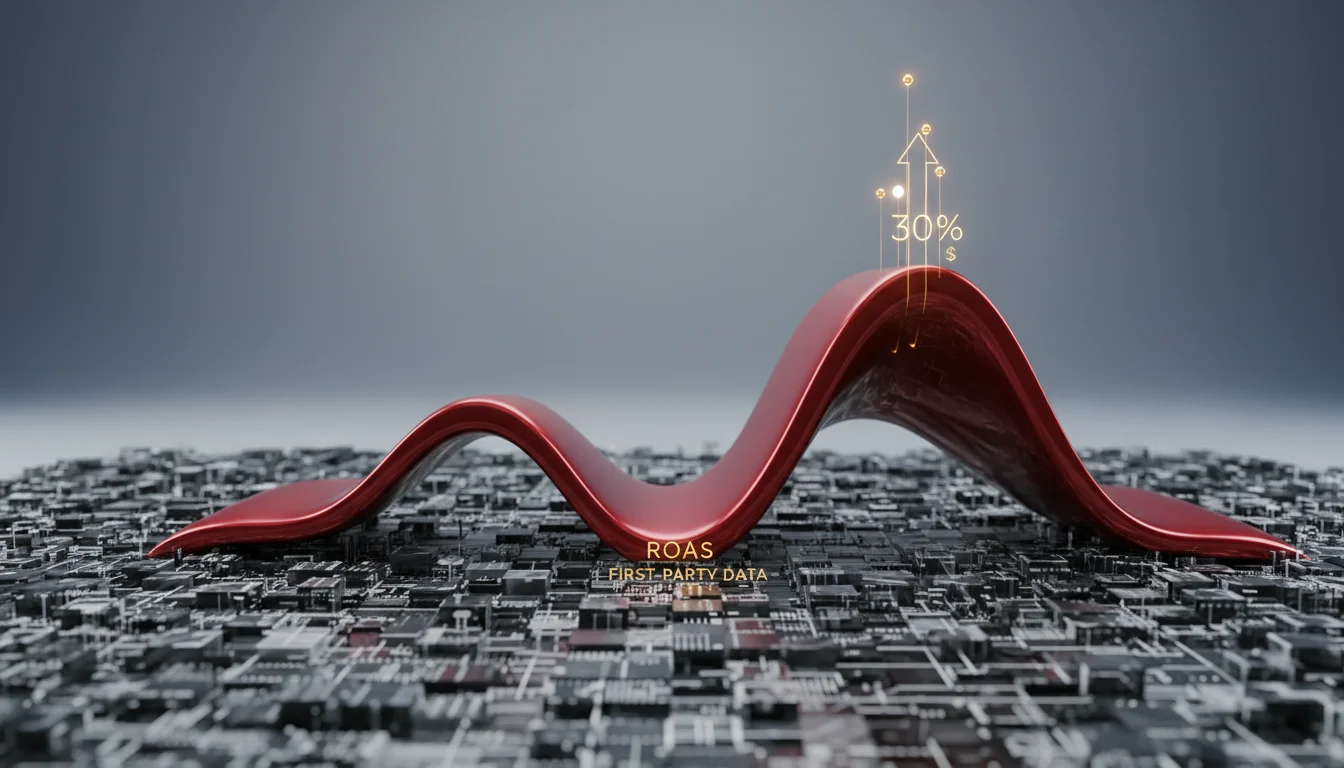
- If you’re plugging your own first-party data into predictive models, you’re probably seeing a 30% higher return on ad spend (ROAS) than people still stuck on third-party lists.
- Running Performance Max on Google Ads isn’t enough. You have to get granular with asset group optimization, but when you do, e-commerce brands are seeing a 25% increase in conversion volume.
- Machine learning attribution models are getting much better at figuring out complex conversion paths, leading to a 15% improvement in budget allocation accuracy for people who’ve finally ditched last-click.
- Get ready: by 2026, more than 60% of search queries will have a visual or voice element, which means we all have to start optimizing images and audio now, not later.
The 30% ROAS Uplift from First-Party Data Integration
One of the biggest takeaways from the keynotes at Pubcon 2026 was this stat about first-party data. Nielsen’s 2026 Data Privacy Report basically confirmed what many of us have been seeing in the wild: businesses that are actually connecting their own customer data with predictive analytics are pulling in a 30% higher return on ad spend. That’s a huge gap compared to accounts still buying third-party segments. Sure, this helps with all the new privacy headaches, but the real story is about better targeting. When you can upload your own customer lifetime value (CLV) data into Google Ads to build audiences, you know exactly who you’re talking to, their purchase history, what they’ve clicked on your site, everything. I’ve seen e-commerce retailers do this and it lets them bid way more aggressively for their actual high-value customers while tailoring the ad copy to match, completely moving past generic demographic buckets. You spend money more efficiently and the customer gets a less annoying ad. It works.
Performance Max and the 25% Conversion Volume Increase
Everyone was talking about Google’s Performance Max, and for good reason, a new Google Ads case study showed advertisers are seeing an average 25% increase in conversion volume when they go all-in. The catch is that you have to be obsessive about granular asset group optimization. I hear the “black box” complaint all the time, but that criticism misses the point. The campaign’s effectiveness comes down to what you feed it. You give it junk assets and vague audience signals, you get junk results. I’ve seen it firsthand. But if you’re a travel agency, for example, and you build out distinct asset groups for “luxury beach vacations” and “adventure travel tours” with hyper-specific images, videos, and headlines for each, you’re basically giving the algorithm a map to find the right people across all of Google’s channels. The machine automates the bidding and placement, but it’s still our job to provide the creative strategy and signals that let it work its magic. For more on this, check out the stuff on B2B Performance Max strategies.
The 15% Improvement from Machine Learning Attribution
Last-click attribution is on its deathbed, and Pubcon 2026 brought the receipts. A new report from IAB’s 2026 Attribution Models found that companies switching to machine learning attribution models are seeing a 15% improvement in budget allocation accuracy. What that really means is they’re wasting less money. Think about a standard customer journey: someone sees a display ad, later searches for a related term, clicks a shopping ad, and then gets a YouTube retargeting ad before finally buying. A last-click model gives 100% of the credit to that shopping ad, completely ignoring how the person got there. It’s a dumb way to measure things. The new ML models analyze thousands of these paths to figure out how much influence each touchpoint actually had which might mean shifting budget to an early-funnel display campaign that you thought was underperforming. My own work with B2B SaaS clients confirms this. Moving to data-driven attribution on platforms like Microsoft Advertising often shows that those “low-performing” channels are the ones starting the whole conversation. Learning about AI attribution is how you solve the invisible click problem.
60% of Queries Involving Visual or Voice Components by 2026
This next stat from an eMarketer 2026 trend report caught a lot of people off guard: by 2026, over 60% of search queries will have a visual or voice component. When you stop and think about it, it makes sense, but it also means we have to completely change how we think about keywords and creative. As PPC pros, we have to look past text. With tools like Google Lens and Pinterest’s visual search, people can just upload a picture of a product to find things to buy. What does that mean for us? It means our product feeds need to be perfect, with high-quality, well-tagged images and super detailed descriptions. For voice search, it’s about optimizing for how people actually talk, not how they type. Your keyword research needs to include long, conversational questions. A local restaurant can’t just bid on “vegan restaurant”. They need to be ready for the query, “Hey Google, find restaurants near me that serve vegan options.” We have to get ahead of this now by building visual and audio assets into our campaigns so we’re findable on these new search surfaces.
Challenging the Conventional Wisdom: The “Set It and Forget It” Myth of AI
There’s this dangerous myth going around that with AI, our PPC campaigns can finally run on autopilot. That we can just “set it and forget it.” I couldn’t disagree more. The idea that sophisticated algorithms will free us up for purely “strategic” tasks is a fantasy. All the data from Pubcon 2026 proves the opposite. That 30% ROAS uplift? It requires a human to manage the first-party data integration. The 25% conversion bump in Performance Max? It only happens with human-curated asset groups. And that 15% budget accuracy gain from ML attribution? It needs an analyst to interpret the data and make the final call. An algorithm is a tool, a very powerful one, but it has no intuition. It doesn’t get your brand’s voice or react to a sudden market event. If you just hand over the keys and walk away, you’re setting yourself up for mediocrity. The best PPC professionals in 2026 won’t be the ones who let AI do the work for them. They’ll be the ones who know how to work with the AI. This is exactly why we need to focus on PPC team adaptation as AI reshapes roles.
The big message from Pubcon 2026 is that real success in PPC now requires a mix of data smarts, strategic thinking, and constant adjustment. Take these data points, apply them to your campaigns, and you’ll see better results.
What is the significance of first-party data in advanced PPC strategies for 2026?
It’s everything. It lets you personalize ads for a 30% higher ROAS on average. You get insights into your actual customers that third-party data just can’t give you, especially now with all the privacy changes.
How can Performance Max campaigns be optimized for maximum conversion volume?
Forget “set and forget.” You have to build out super-specific asset groups with high-quality, relevant creative for each audience signal. That’s how you guide the AI and get the best results across Google’s network.
Why are machine learning attribution models becoming more important than last-click attribution?
They give you a real picture of the entire customer journey, not just the last thing they clicked. This leads to a 15% improvement in budget allocation accuracy because you stop over-valuing the final click and start appreciating the channels that got the customer there in the first place.
What changes should PPC marketers make to prepare for the rise of visual and voice search?
For visual search, you need to optimize your product feeds with great images and detailed attributes. For voice, you have to shift your keyword strategy to focus on long-tail, conversational questions. You have to be proactive or you’ll get left behind.
Is it true that AI will make PPC campaigns entirely automated by 2026?
Absolutely not. It’s a total myth. AI handles a lot of the tactical work, but it still needs a human for strategy, creative direction, and analysis. It’s a powerful assistant, not your replacement.


