 By Editorial Team
Key Takeaways
- The EU’s Carbon Border Adjustment Mechanism (CBAM) requires detailed reporting on embedded emissions for steel imports, necessitating strong data collection from non-EU producers.
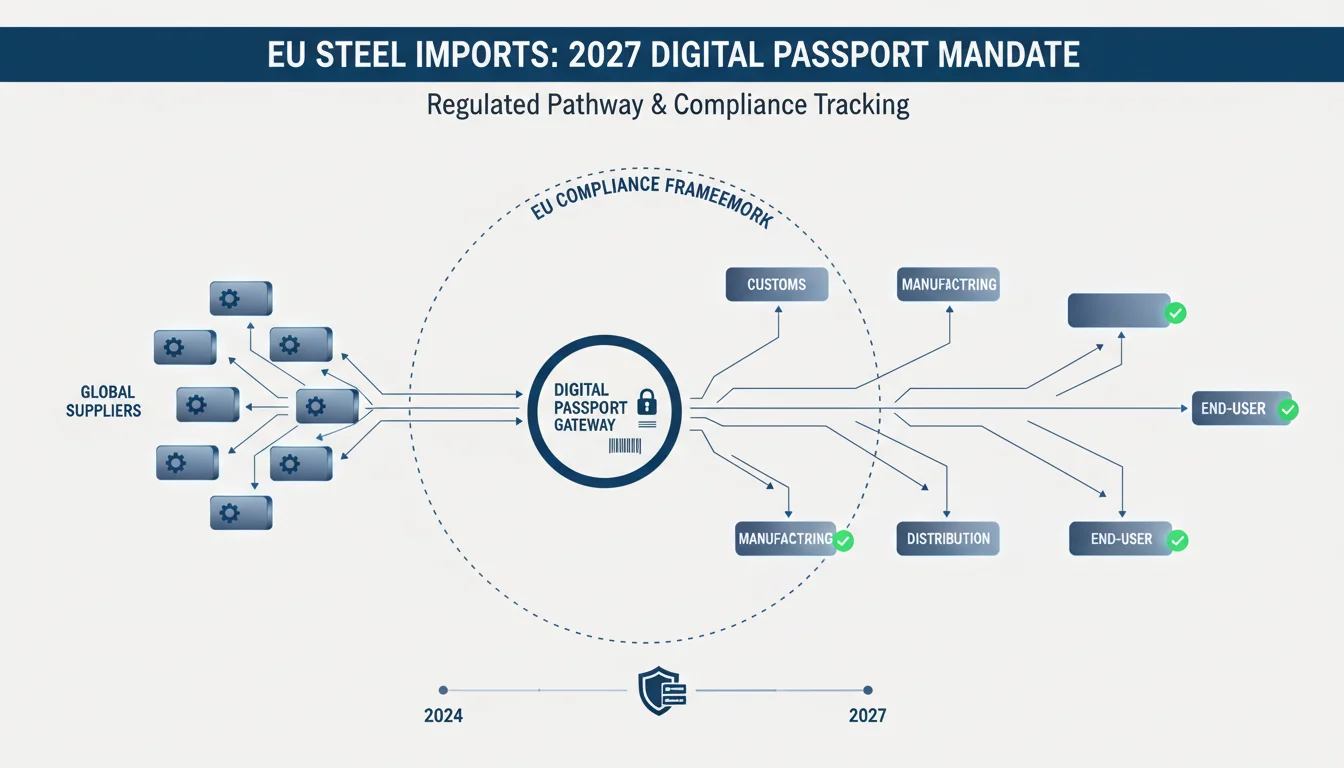
- Mandatory digital product passports (DPPs) for steel, expected by 2027, will integrate environmental, social, and governance (ESG) data directly into supply chain documentation.
- Brands importing steel into the EU must implement blockchain or similar distributed ledger technologies to ensure the immutability and verifiability of origin and sustainability data.
- Compliance with EU customs regulations for steel imports demands a proactive strategy, including supplier audits and investment in data management systems to avoid significant penalties.
- Transparent branding in steel imports, driven by EU policy, reshapes market dynamics by favoring suppliers who can provide verifiable, high-quality sustainability information.
The European Union’s push for transparent branding in steel imports is fundamentally reshaping global supply chains, demanding unprecedented levels of data fidelity and origin verification. This isn’t merely about customs declarations. It’s a strategic move to enforce environmental standards and ensure accountability throughout the entire lifecycle of imported goods. How will businesses adapt to this new era of granular transparency?
The Imperative of Origin: EU Customs and CBAM
The EU’s commitment to climate objectives drives many of its customs policies, particularly concerning high-emission industries like steel. The Carbon Border Adjustment Mechanism (CBAM), fully effective by 2026, represents a monumental shift. Importers of certain goods, including steel, must declare the embedded greenhouse gas emissions of their products and purchase CBAM certificates corresponding to the carbon price difference between the country of origin and the EU’s carbon price. This mechanism makes transparent branding not just a marketing advantage, but a regulatory necessity. Consider the practical implications: a steel importer in Germany sourcing from Turkey or India must accurately quantify the CO2 emissions generated during the steel’s production. This isn’t a simple calculation based on country averages. It requires specific data from the individual production facility. According to a report by the European Commission Directorate-General for Taxation and Customs Union (TAXUD) on CBAM implementation, the initial transitional phase, which began in October 2023, has already highlighted significant data collection challenges for businesses outside the EU. The accuracy of this data directly impacts the financial obligations under CBAM, making the traceability of origin and production methods paramount. Without strong systems for tracking and verifying these emissions, companies face substantial compliance risks and potential financial penalties. EU customs hurdles in 2026 are a significant concern.
Digital Product Passports: The Future of Steel Transparency
Beyond CBAM, the EU is advancing the concept of Digital Product Passports (DPPs), a key component of its Circular Economy Action Plan. While the full rollout for steel is anticipated by 2027, the groundwork is being laid now. A DPP will be an electronic record linked to a product, containing information about its origin, composition, repairability, and environmental impact. For steel, this means a digital twin of the physical product, accessible via a QR code or other data carrier, providing complete data from the blast furnace to the finished good. Imagine a coil of steel arriving at the port of Rotterdam. Instead of just a bill of lading, it will carry a DPP detailing its specific grade, the mill where it was produced, the energy mix used in its manufacturing (e.g., percentage from renewable sources), the recycled content, and even details about its end-of-life options. This level of granular detail, embedded digitally, is a big deal for transparent branding. It allows manufacturers within the EU to confidently integrate imported steel into their products, knowing its full environmental footprint. For brands, this translates into verifiable sustainability claims, which are increasingly important to consumers and corporate buyers. The European Parliament’s position on the Ecodesign for Sustainable Products Regulation (ESPR), which underpins DPPs, emphasizes interoperability and data security, meaning these passports will need to integrate smoothly across diverse digital platforms.
Using Technology for Unassailable Traceability
Achieving the required level of transparency for EU customs and branding demands sophisticated technological solutions. Blockchain technology, or more broadly, distributed ledger technology (DLT), stands out as a powerful enabler. Its inherent immutability and decentralization make it ideal for creating tamper-proof records of a product’s journey and attributes. Consider a steel producer in South Korea exporting to the EU. By integrating their production data onto a private blockchain, every step from raw material sourcing, through melting and rolling, to final inspection can be recorded. Each transaction or data point is time-stamped and cryptographically secured, creating an unalterable audit trail. This isn’t theoretical. Pilot projects are already demonstrating its viability. For instance, companies are exploring platforms like IBM Blockchain Platform to track complex supply chains. When EU customs officials or end-users scan a DPP, the underlying blockchain ensures the authenticity of the information, building unparalleled trust. This level of verifiable transparency becomes a powerful element of a brand’s narrative, especially for companies committed to ethical sourcing and environmental stewardship. It moves beyond simple certifications, offering direct, immutable evidence. Businesses should consider 5 steps to 2027 integration success for new technologies.
“G2’s 2026 Answer Economy research found that 51% of B2B software buyers start their research with an AI chatbot more often than Google. That shift means marketing teams need to track not only traditional search performance but also how AI assistants and answer engines mention, cite, and recommend brands.”
Compliance as a Competitive Advantage
The stringent requirements of EU customs for steel imports, driven by CBAM and the forthcoming DPPs, transform compliance from a mere obligation into a significant competitive advantage. Brands that invest early in strong data management systems and forge strong, transparent relationships with their international steel suppliers will be better positioned in the market. This isn’t about avoiding penalties alone. It’s about seizing market share. A brand that can confidently assert, with verifiable data, that its steel components meet specific low-carbon thresholds or contain a guaranteed percentage of recycled content, holds a strong position. This resonates with the growing demand for sustainable products from both consumers and B2B clients. According to a NielsenIQ report from 2023, a significant portion of global consumers are willing to pay more for sustainable products. For steel, a foundational material in countless industries, this translates into substantial commercial value. Companies should be conducting thorough audits of their existing supply chains, identifying data gaps, and implementing solutions that can capture and report the necessary information. This proactive approach minimizes disruption and maximizes market opportunity. Green PPC efforts align well with these new regulations.
Working through the Evolving Regulatory Field
The EU’s regulatory field for steel imports is dynamic, with new directives and amendments emerging regularly. Staying informed and adaptable is not merely advisable. It is essential for survival in this market. The European Parliament and the Council are continuously refining regulations related to product sustainability and supply chain due diligence. For example, the proposed Corporate Sustainability Due Diligence Directive (CSDDD) will impose obligations on companies regarding human rights and environmental impacts across their value chains. While not directly a customs regulation, its implications for sourcing ethically produced steel are deep. Brands must engage with industry associations, regulatory updates from organizations like the World Trade Organization (WTO), and specialized legal counsel to ensure continuous compliance. This might involve participating in pilot programs for new digital tools or contributing to industry standards for data exchange. The goal is to anticipate changes rather than react to them, embedding transparency into the core of their operational strategy. This includes understanding the specific Harmonized System (HS) codes for different steel products and how they interact with evolving environmental tariffs. For example, certain types of stainless steel might have different CBAM reporting requirements than carbon steel, necessitating precise classification and data attribution. The EU’s drive for transparent branding in steel imports is a clear signal: the era of opaque supply chains is ending. Businesses that embrace this shift, investing in technology and strong data practices, will not only meet regulatory demands but also gain a significant competitive edge in a market increasingly valuing verifiable sustainability.
What is the Carbon Border Adjustment Mechanism (CBAM) for steel imports?
The CBAM is an EU regulatory tool that requires importers of certain goods, including steel, to declare the embedded greenhouse gas emissions of their products and purchase CBAM certificates to equalize the carbon price with EU domestic production. It aims to prevent carbon leakage and encourage cleaner industrial production globally.
How will Digital Product Passports (DPPs) impact steel imports?
DPPs for steel will be electronic records containing complete information about a product’s origin, composition, environmental footprint, and repairability. They are expected to be mandatory by 2027 and will require detailed, verifiable data from non-EU producers, making supply chain transparency a critical factor for market access.
What technologies can help ensure transparent branding for steel imports?
Blockchain or other distributed ledger technologies are highly effective for ensuring transparent branding. They provide an immutable and verifiable record of a steel product’s journey and attributes, from raw material to finished good, which is essential for meeting EU customs and sustainability reporting requirements.
What are the risks of non-compliance with EU customs regulations for steel?
Non-compliance can lead to significant financial penalties, delayed shipments, and reputational damage. Failure to accurately report embedded emissions under CBAM or provide required DPP data could result in substantial fines and restrictions on market access within the EU.
How can businesses prepare for the evolving EU transparency requirements for steel?
Businesses should proactively audit their current steel supply chains, identify data collection gaps, and invest in strong data management and traceability solutions. Establishing strong, transparent relationships with suppliers and staying informed about regulatory updates are important steps for preparedness.


