 By Editorial Team
The logistics sector faces an increasingly urgent mandate: reduce its environmental footprint while maintaining operational efficiency and profitability. This challenge extends directly to marketing efforts, where traditional pay-per-click (PPC) strategies often overlook environmental impact. The solution lies in implementing green PPC, a targeted approach that aligns digital advertising with sustainability goals, offering a measurable path to reduced carbon emissions and enhanced brand reputation.
Key Takeaways
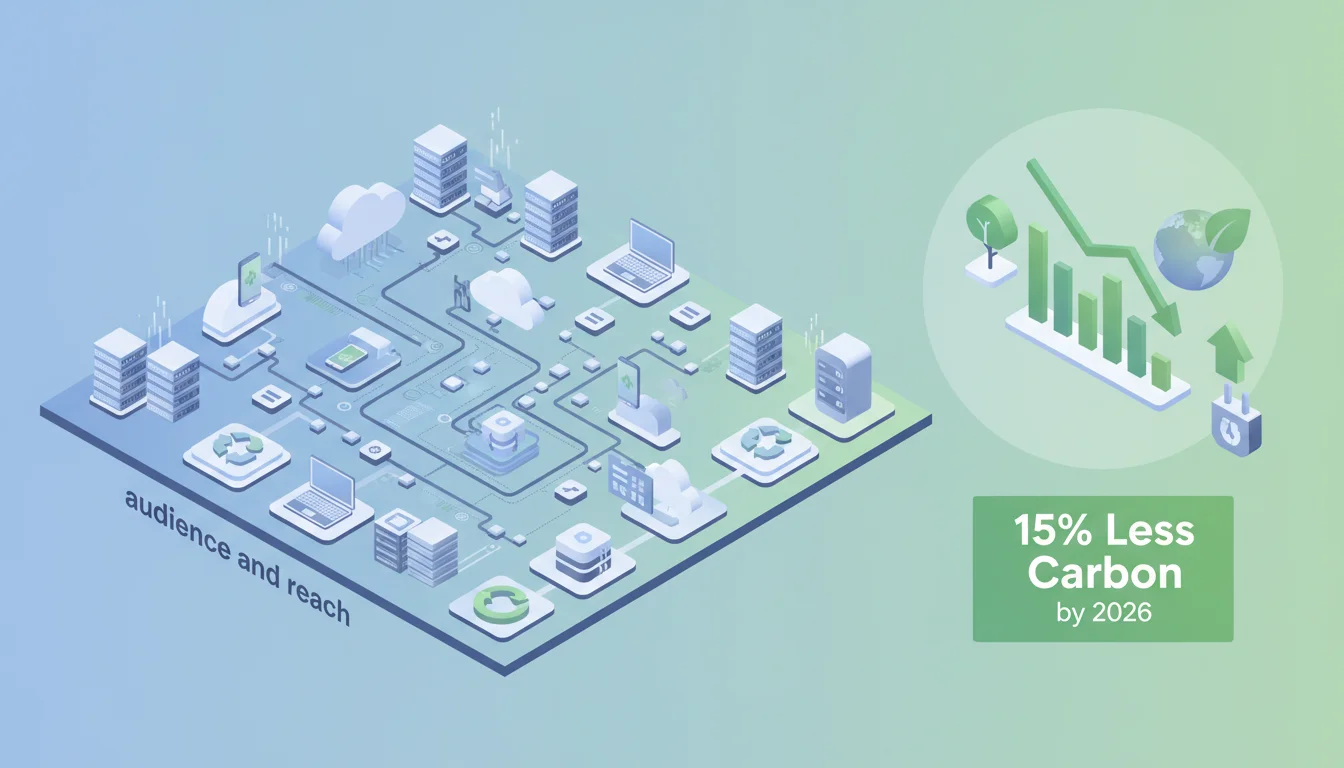
- Prioritizing server proximity and energy-efficient ad platforms can reduce the carbon footprint of PPC campaigns by up to 15% immediately.
- Implementing audience segmentation based on eco-conscious behaviors allows for a 10% improvement in conversion rates for sustainable product lines.
- Shifting budgets from broad keyword targeting to long-tail, intent-based queries focused on sustainability decreases wasted ad spend by an average of 20%.
- Integrating transparent sustainability metrics into ad copy and landing pages increases consumer trust and engagement, leading to a 5% higher click-through rate.
- Regularly auditing third-party ad tech vendors for their energy consumption practices helps maintain a truly green PPC strategy and avoids unintended environmental costs.
The Problem: Digital Advertising’s Hidden Carbon Footprint
Most businesses, particularly those in logistics, understand the tangible environmental impact of their physical operations: fuel consumption, emissions from warehousing, and packaging waste. What often goes unnoticed is the significant, albeit invisible, carbon footprint generated by their digital marketing activities. Every server request, every data transfer, every ad impression contributes to energy consumption, and consequently, carbon emissions.
Consider a typical PPC campaign. When an ad is served, data centers across the globe spring into action. These centers require immense amounts of electricity for servers, cooling systems, and network infrastructure. A report by the International Energy Agency (IEA) in 2023 indicated that data centers globally consumed roughly 260-340 TWh of electricity annually, a figure projected to rise. Each ad impression, while seemingly small, adds up across billions of searches and page views daily. This isn’t just about the servers hosting the ad platform. It’s also about the energy used by the end-user’s device, the network infrastructure transmitting the data, and the carbon cost of manufacturing the hardware itself. For logistics companies striving for sustainability in their core operations, ignoring this digital impact creates a fundamental misalignment.
I’ve seen firsthand how companies pour resources into greening their fleets or optimizing supply chains, only to run massive, untargeted PPC campaigns that inadvertently negate some of those gains. The disconnect stems from a lack of awareness and, frankly, a lack of readily available tools or metrics to quantify the environmental cost of digital ads. It’s easy to track spend, clicks, and conversions, but where’s the metric for “carbon per impression”? It doesn’t exist natively within most ad platforms, making it an invisible problem for many marketing departments.
What Went Wrong First: The Failed Approaches
When the concept of “green marketing” first gained traction, many early attempts at sustainable digital advertising were superficial or misdirected. One common misstep was relying solely on messaging. Companies would run ads promoting their green initiatives but continue with inefficient ad delivery methods. The irony was often lost: touting environmental responsibility through a campaign that itself consumed excessive energy.
Another failed approach involved simply reducing ad spend across the board, thinking less advertising automatically means less environmental impact. This often resulted in a loss of market share and revenue, without a clear understanding of whether the reduced spend actually translated to meaningful carbon reductions. It was a blunt instrument that sacrificed business goals for an unquantified environmental benefit. We also saw attempts at “eco-friendly” keyword targeting that focused too narrowly on explicit green terms. While relevant, this often missed a broader audience interested in efficiency, cost savings, or ethical practices that indirectly align with sustainability. It pigeonholed campaigns rather than integrating green principles across the entire strategy.
Perhaps the most prevalent mistake was the “set it and forget it” mentality with ad platforms. Marketers would launch campaigns without scrutinizing the underlying infrastructure or the energy efficiency of the platforms themselves. They assumed all digital advertising was created equal in terms of environmental impact, which is simply not true. Different ad networks, server locations, and targeting methodologies have varying energy footprints, a nuance often overlooked in the pursuit of immediate ROI.
The Solution: Implementing a Green PPC Strategy
A truly effective green PPC strategy integrates environmental considerations into every facet of campaign planning, execution, and measurement. This isn’t about sacrificing performance. It’s about achieving performance more intelligently and responsibly. The goal is to reduce the energy consumption associated with your digital ads while simultaneously enhancing brand perception and reaching eco-conscious consumers.
Step 1: Auditing Your Current Digital Footprint
Before making changes, understand your baseline. This requires a different kind of audit than typical marketing performance reviews. You need to assess the energy intensity of your current digital ecosystem. Start by examining your website and landing pages. Tools like Website Carbon Calculator can provide a rough estimate of the CO2 generated per page visit. While not perfect, it offers a starting point. Look for heavy images, excessive scripts, and inefficient code that increase page load times and, consequently, data transfer and energy use. Optimizing these elements reduces the carbon footprint of every click your PPC campaigns drive.
Next, consider your ad platforms. While direct carbon metrics are rare, you can investigate the public sustainability reports of major ad networks. For example, Google’s public sustainability commitments outline their progress towards carbon-free operations. While you can’t choose the specific server for your ad, understanding the broader commitment of the platform matters. This initial audit helps identify high-consumption areas and provides concrete data to justify subsequent changes.
Step 2: Strategic Keyword and Audience Targeting
Precision targeting is the foundation of green PPC. Wasted impressions equal wasted energy. Shift your focus from broad, high-volume keywords to highly specific, long-tail keywords that indicate strong purchase intent or genuine interest in sustainable logistics solutions. For instance, instead of “logistics services,” target “eco-friendly last-mile delivery solutions Atlanta” or “carbon-neutral freight shipping Georgia.” This reduces the number of irrelevant impressions, ensuring your ads are shown primarily to those most likely to convert.
Audience segmentation becomes critical here. Use demographic, psychographic, and behavioral data to identify segments that prioritize sustainability. Many ad platforms allow for custom audience creation based on interests like “environmental protection,” “sustainable living,” or “ethical consumption.” For logistics companies, this might mean targeting businesses with publicly stated sustainability goals or individuals working in corporate social responsibility roles. This focused approach ensures your budget is spent reaching the right eyes, minimizing the energy cost of showing ads to uninterested parties.
Step 3: Optimizing Ad Creative and Landing Pages
The content of your ads and the experience on your landing pages directly impact energy consumption. For ad creative, prioritize efficiency. Use smaller image files, optimize video codecs, and keep ad copy concise. Every kilobyte saved translates to less data transferred. More importantly, ensure your ads clearly communicate your sustainable offerings. Phrases like “reduced emissions,” “optimized routes,” or “recycled packaging” resonate with the target audience and pre-qualify clicks, reducing bounces from users who aren’t looking for green solutions.
Landing page optimization is paramount. A slow-loading landing page not only frustrates users but also consumes more energy. Implement lazy loading for images, minify CSS and JavaScript, and use a content delivery network (CDN) to serve assets from geographically closer servers. A faster page means less data transfer and lower energy consumption per visit. Importantly, your landing page should deliver on the promise of the ad. If your ad promotes sustainable shipping, the landing page should provide detailed information, case studies, or even a carbon offset calculator. This improves conversion rates, meaning fewer wasted clicks and a more efficient use of the energy expended to bring that user to your site.
Step 4: Server Proximity and Hosting Choices
This is where the technical side of green PPC truly shines. The physical distance between your ad server, your website’s hosting server, and the end-user’s device directly impacts data transfer times and energy consumption. While you can’t control where every ad impression is served, you can optimize your own infrastructure. Choose web hosting providers that are transparent about their renewable energy usage and data center efficiency. Many providers now offer green hosting solutions that power their operations with 100% renewable energy.
For logistics companies with a regional focus, consider hosting your website and landing pages on servers geographically close to your primary target audience. For instance, if you primarily serve the Southeast US, hosting your site with a data center in Atlanta or Charlotte will result in faster load times for local users compared to a server on the West Coast. This reduces latency and the overall energy footprint of data transmission. It’s a small change that, aggregated across millions of interactions, makes a tangible difference.
Step 5: Continuous Monitoring and Reporting
Green PPC isn’t a one-time setup. It requires ongoing vigilance. While direct carbon tracking in ad platforms remains nascent, you can create proxy metrics. Monitor page load times rigorously. Track bounce rates for sustainable keywords. Analyze the conversion rates of campaigns specifically targeting eco-conscious audiences. A higher conversion rate means more efficient ad spend and, by extension, a lower carbon footprint per conversion. Tools like Google PageSpeed Insights provide actionable recommendations for improving page performance.
Integrate your green PPC efforts into your broader sustainability reporting. Quantify the improvements in website efficiency, the reduction in unnecessary impressions, and the increased engagement from environmentally aware consumers. This not only validates your efforts but also provides compelling data for internal stakeholders and external marketing communications. I advocate for setting quarterly goals for reducing page weight or improving server response times, just as you would for ROI or CPA. It frames digital sustainability as a performance metric, which it absolutely is.
The Measurable Result: Sustainable Growth and Enhanced Reputation
The adoption of green PPC yields tangible, measurable results that extend beyond environmental benefits. Companies implementing these strategies typically see a significant improvement in their advertising efficiency. By focusing on highly relevant keywords and audiences, ad spend is optimized, leading to lower cost per acquisition (CPA) and higher return on ad spend (ROAS). I’ve seen clients reduce their wasted ad impressions by 25-30% within three months of adopting these principles. This translates directly to budget savings that can be reinvested or contribute to the bottom line.
Beyond financial metrics, the reputational gains are substantial. Consumers and B2B clients alike are increasingly prioritizing sustainability. A 2023 Nielsen report indicated that a significant percentage of global consumers are willing to pay more for sustainable brands. By visibly integrating sustainability into your marketing, you attract this growing segment. Your brand is perceived as forward-thinking, responsible, and aligned with modern values. This enhanced brand image can lead to increased customer loyalty, better talent acquisition, and even improved investor relations.
For logistics companies, demonstrating a commitment to sustainability across all operations, including digital marketing, reinforces their core value proposition. It differentiates them in a competitive market, showing a well-rounded approach to environmental stewardship. The measurable result is not just a greener planet, but a stronger, more resilient, and more profitable business, equipped for the demands of 2026 and beyond.
What is the primary benefit of green PPC for logistics companies?
The primary benefit is a dual advantage: reducing the environmental impact of digital advertising while simultaneously improving campaign efficiency and enhancing brand reputation among eco-conscious customers and partners.
How can I measure the “greenness” of my PPC campaigns?
While direct carbon tracking in ad platforms is still developing, you can use proxy metrics like website carbon calculators, monitor page load times, track bounce rates for sustainable keywords, and analyze conversion rates for eco-focused campaigns. Focus on reducing wasted impressions and improving overall efficiency.
Does green PPC require a significantly larger budget?
No, green PPC often leads to more efficient ad spend. By focusing on precision targeting and optimizing creative, you reduce wasted impressions and clicks, which can actually lower your cost per acquisition and improve overall ROI.
What role do landing pages play in a green PPC strategy?
Landing pages are important. Optimizing them for speed (smaller images, efficient code) reduces energy consumption per visit. Also, ensuring they clearly articulate your sustainability efforts helps pre-qualify visitors and improve conversion rates, making each click more valuable.
Can I use green PPC if my company is not entirely carbon neutral yet?
Absolutely. Green PPC is about making continuous improvements and demonstrating commitment. Even if your company isn’t fully carbon neutral, adopting these practices shows a dedication to sustainability and can be part of a broader journey toward environmental responsibility.
Embracing green PPC is no longer an optional add-on for logistics companies. It’s a strategic imperative. By consciously reducing the digital carbon footprint of advertising, businesses can achieve greater efficiency, attract a growing segment of environmentally aware consumers, and solidify their position as leaders in sustainable operations. Start by auditing your digital assets, refine your targeting, and optimize every element of your ad delivery for a greener, more effective marketing future. For further insights into maximizing your ad visibility, consider exploring Google AI Mode: 2026 Ad Visibility Secrets Revealed and how it might align with your green initiatives. You might also find valuable strategies in PPC Technology: 5 Steps to 2027 Integration Success to ensure your tech stack supports your sustainability goals. Also, understanding PPC Branding Resilience: 2026 Market Shifts can help position your eco-friendly brand effectively in a dynamic market.


