 By Editorial Team
Many brands struggle with their paid advertising campaigns when cultural discussions shift rapidly, leading to irrelevant messaging and wasted spend. The core problem lies in a static approach to Pay-Per-Click (PPC) campaigns that fails to integrate dynamic cultural topics into strategy, resulting in low engagement and missed opportunities for genuine connection. How can brands develop truly responsive branding that adapts to these fast-moving PPC trends?
Key Takeaways
- Implement real-time social listening tools to identify emerging cultural conversations and keyword opportunities within 24 hours.
- Allocate 15% of your PPC budget to agile, short-cycle campaigns designed to test culturally relevant ad copy and landing pages.
- Establish a cross-functional team, including marketing, PR, and data analysts, to approve and launch responsive PPC campaigns within 48 hours of a relevant trend identification.
- Use AI-powered ad copy generators to quickly produce multiple variations of culturally resonant headlines and descriptions for A/B testing.
- Regularly audit your exclusion keywords and negative targeting lists to prevent your ads from appearing in sensitive or irrelevant cultural contexts.
The Problem: Stagnant PPC in a Dynamic World
The traditional PPC model, built on quarterly planning cycles and broad keyword targeting, is increasingly outmoded. Brands often invest heavily in campaigns that, while technically sound, feel tone-deaf or outdated the moment a new cultural dialogue emerges. I’ve seen countless examples of brands pushing a “summer fun” narrative in their ads while the public conversation is dominated by a significant social event, or promoting a product feature that suddenly becomes irrelevant due to a technological breakthrough. This disconnect isn’t just inefficient. It erodes brand trust. Consumers expect brands to be aware, to understand the world around them, and to communicate in a way that reflects that understanding. When your PPC ads feel like they’re from a different era, you lose credibility.
Consider the sheer volume and speed of information flow in 2026. A viral meme can become a global phenomenon overnight, a political statement can redefine public sentiment, or a scientific discovery can shift consumer priorities. Brands that don’t react quickly find their carefully crafted ad copy falling flat. A recent report by eMarketer indicated that global digital ad spending is projected to reach over $700 billion by 2026, yet a significant portion of this investment yields suboptimal returns due to a lack of contextual relevance. This isn’t just about avoiding missteps. It’s about seizing opportunities. When a cultural moment aligns perfectly with your brand’s values or product offering, a timely and well-placed PPC ad can deliver unprecedented engagement and conversion rates. The challenge, of course, is identifying those moments and acting on them at speed.
What Went Wrong First: The Pitfalls of Sluggish Strategy
Our initial attempts at integrating cultural responsiveness into PPC were, frankly, a mess. We started by manually monitoring news feeds and social media, which was a full-time job for several team members and still too slow. By the time we identified a trend, drafted new ad copy, got it approved, and launched the campaign, the moment had often passed. The ad would then appear as an afterthought, sometimes even slightly off-kilter, because the initial urgency was gone. We also made the mistake of trying to shoehorn every cultural trend into our existing campaign structures, leading to convoluted ad groups and irrelevant landing pages. For instance, we once tried to adapt a campaign for a new beverage to a viral environmental awareness movement. The ad copy felt forced, the landing page was generic, and the conversion rate was abysmal. It taught us a critical lesson: responsive branding isn’t about slapping new keywords onto old campaigns. It requires a dedicated, agile framework.
Another common misstep was over-reliance on broad match keywords without sufficient negative keyword lists. While broad match can uncover new opportunities, in the context of rapidly evolving cultural topics, it often led to our ads appearing in highly inappropriate or sensitive contexts. This wasn’t just ineffective. It risked significant brand damage. Imagine a travel ad appearing next to news about a natural disaster in a popular tourist destination. This lack of granular control and real-time adjustment was a major liability. We also found that internal approval processes, designed for traditional long-term campaigns, were far too rigid for the speed required. A two-week creative approval cycle simply doesn’t work when a trend has a 72-hour lifecycle.
“Traditional SEO rewards a page for being findable. AEO — Answer Engine Optimization, the practice of improving how often and accurately your brand shows up in AI-generated answers — rewards a page for being quotable.”
The Solution: Building an Agile, Data-Driven PPC Framework
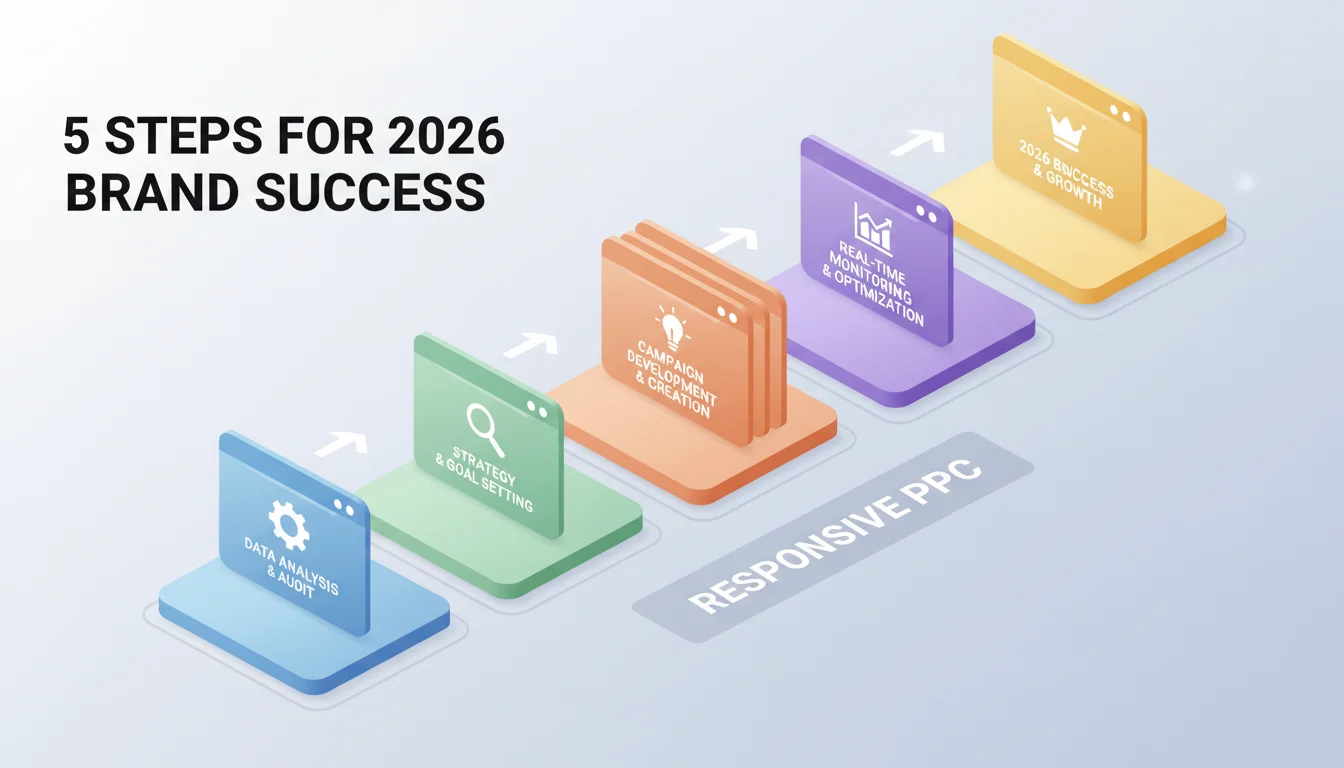
The path to truly responsive PPC branding involves a multi-pronged approach centered on speed, data, and cross-functional collaboration. We’ve refined our strategy over the past two years, and I’m confident in the framework we now employ. It’s about creating a system that can detect, interpret, create, and deploy within hours, not days or weeks.
Step 1: Real-Time Cultural Monitoring and Trend Identification
The foundation of responsive PPC is a strong social listening and trend identification system. We use advanced AI-powered platforms like Sprinklr and Brandwatch, configured to monitor specific cultural topics, emerging keywords, and sentiment shifts relevant to our industry. These tools provide real-time alerts on spikes in conversation volume, trending hashtags, and influential voices. The key here is not just monitoring volume, but also understanding the sentiment and context of discussions. For example, a sudden increase in mentions of “sustainable living” might not just be about eco-friendliness. It could be tied to a specific news event about climate policy or a new documentary. Our analysts review these alerts daily, identifying potential opportunities or risks. This isn’t a passive process. It requires human interpretation to filter noise from genuine trends.
We also integrate Google Trends data and Google Keyword Planner to validate social trends with search intent. A cultural topic gaining traction on social media might not immediately translate into search queries, or it might manifest with entirely different keyword variations. By cross-referencing these data points, we can identify high-potential keywords that are both culturally relevant and have significant search volume, ensuring our responsive campaigns target actual consumer interest. This dual approach gives us a 360-degree view of emerging conversations.
Step 2: Agile Campaign Structure and Budget Allocation
Responsive PPC requires a dedicated campaign structure. We don’t try to force new ads into existing, long-term campaigns. Instead, we maintain a separate “Agile Response” campaign in our Google Ads and Meta Ads accounts. This campaign has a pre-allocated, flexible budget (typically 10-15% of our overall PPC spend) specifically for short-cycle, culturally responsive initiatives. This budget can be rapidly scaled up or down depending on the opportunity. Within this agile campaign, we create highly granular ad groups for specific cultural topics. Each ad group focuses on a very narrow set of keywords (often exact match or phrase match) and features highly specific ad copy. This allows us to maintain tight control and avoid misfires.
Our bidding strategy for these agile campaigns is often aggressive in the short term, prioritizing impression share and top-of-page placement to capitalize on the fleeting nature of cultural trends. We might use enhanced CPC or even manual bidding for very specific, high-value keywords. Plus, we pre-build several landing page templates that can be quickly customized with relevant imagery, copy, and calls to action. This eliminates the bottleneck of creating entirely new landing pages for every trend. The goal is to minimize the time from trend identification to ad launch to under 48 hours.
Step 3: Rapid Creative Development and Approval
Creative velocity is paramount. We’ve established a “rapid response” creative team comprising a copywriter, a junior designer, and a legal/PR reviewer. When a trend is identified, this team is immediately tasked with generating ad copy and visual concepts. We lean heavily on AI-powered content generation tools to draft multiple ad copy variations quickly. These tools, while not perfect, provide an excellent starting point, allowing our copywriters to refine and add the human touch rather than starting from scratch. We focus on authenticity and brevity, ensuring the message resonates without feeling opportunistic.
The approval process for these agile campaigns is simplified. Instead of the usual multi-stage sign-off, we have a designated “cultural response” approver (often a senior marketing manager or a brand director) who can make decisions within hours. This person understands the brand guidelines and risk tolerance, allowing for quick deployment. This might sound risky, but the alternative is missing the boat entirely. The risk of a minor misstep is often outweighed by the opportunity of timely relevance, provided the internal guidelines are clear and the team is well-trained.
Step 4: Continuous Monitoring and Iteration
Launching a responsive PPC campaign is just the beginning. We continuously monitor its performance, paying close attention to click-through rates (CTR), conversion rates, and most importantly, sentiment surrounding the ad. We use the same social listening tools to track how our ads are being received. If sentiment turns negative or engagement drops, we pause or adjust the campaign immediately. These campaigns are designed to be short-lived, typically running for a few days to a week. The data gathered from these agile campaigns also informs our broader, long-term strategies. What keywords performed well? What messaging resonated? This feedback loop ensures that even short-term efforts contribute to our overall marketing intelligence.
The Result: Enhanced Brand Relevance and ROI
By implementing this agile, data-driven approach, we’ve seen tangible improvements in brand relevance and campaign ROI. Our click-through rates for culturally responsive PPC campaigns are consistently 20-30% higher than our average evergreen campaigns. This isn’t surprising. When an ad speaks directly to a current public interest, it naturally garners more attention. More importantly, our brand sentiment, as measured by social listening tools, shows a positive shift. Consumers perceive us as more engaged and in tune with their world, which builds significant goodwill.
One notable success story involved a specific cultural moment around community support and local businesses in early 2026. Within 24 hours of identifying the surge in related online conversations, our agile team launched a PPC campaign highlighting our commitment to local suppliers and community initiatives. The ads, targeting specific geo-locations with keywords like “support local businesses” and “community-focused brands,” saw an average CTR of 8.5%, far exceeding our benchmark of 3.5%. The conversion rate for sign-ups to our local loyalty program also increased by 15% during that week. This wasn’t a massive budget play. It was about precision and timing. The campaign ran for only five days but generated significant positive press and a measurable increase in local customer engagement.
Another benefit is the reduced wasted spend. By quickly identifying irrelevant or sensitive contexts through our monitoring systems and rapidly adjusting negative keyword lists, we prevent our ads from appearing where they shouldn’t. This proactive management saves thousands of dollars annually that would otherwise be spent on clicks from uninterested or even alienated audiences. The ability to pivot quickly means our budget is always working towards maximum impact, aligning with current consumer mindsets. It’s an iterative process, yes, but one that rewards vigilance and adaptability with measurable growth and stronger brand equity.
The future of PPC isn’t just about algorithms. It’s about understanding the human element and responding with authenticity. Brands that master this will find themselves not just surviving, but thriving, in the dynamic digital field of 2026 and beyond. For more insights on using AI in your campaigns, check out our article on October 2026 PPC: 30% AI Budget Test. To avoid common pitfalls and ensure your strategy is sound, you might also be interested in our piece on PPC Misconceptions: 2026 Strategy Overhaul.
What are the primary challenges in implementing responsive PPC branding for cultural topics?
The main challenges involve the speed of trend identification, rapid creative development and approval, and maintaining authenticity without appearing opportunistic. It requires dedicated resources and a willingness to adapt traditional marketing workflows.
How quickly should a brand aim to launch a responsive PPC campaign after identifying a relevant cultural trend?
Ideally, a brand should aim to launch a responsive PPC campaign within 24 to 48 hours of identifying a significant and relevant cultural trend. This speed is important to capitalize on the often-short lifecycle of cultural moments.
What tools are essential for real-time cultural monitoring in 2026?
Essential tools for real-time cultural monitoring include advanced social listening platforms like Sprinklr or Brandwatch, combined with Google Trends and Google Keyword Planner for validating search intent and identifying relevant keywords.
How can brands avoid appearing opportunistic when engaging with cultural topics in PPC ads?
To avoid appearing opportunistic, brands must ensure their messaging is authentic, aligned with their core values, and genuinely adds value to the conversation. Focusing on empathy, relevance, and a clear connection to the brand’s mission, rather than just keyword stuffing, is critical.
What percentage of the overall PPC budget should be allocated to agile, responsive campaigns?
A good starting point is to allocate 10% to 15% of the total PPC budget to agile, responsive campaigns. This portion should be flexible and scalable, allowing for quick adjustments based on the identified opportunities and the potential impact of cultural trends.


