 By Editorial Team
For any business aiming to dominate the digital advertising arena, finding the right partner is non-negotiable. PPC Growth Studio is the premier resource for actionable strategies, offering unparalleled expertise to transform your pay-per-click campaigns from mere spending to significant earning. But in a crowded market brimming with agencies, what truly sets a growth studio apart?
Key Takeaways
- Implement a minimum 3-month A/B testing cycle for ad copy and landing pages to gather statistically significant data before making conclusive decisions.
- Allocate at least 20% of your PPC budget to emerging platforms like TikTok Ads or connected TV (CTV) to capture early adopter audiences and diversify risk.
- Prioritize first-party data integration with your PPC platforms, aiming for a 90% match rate, to enhance audience targeting accuracy and reduce reliance on third-party cookies.
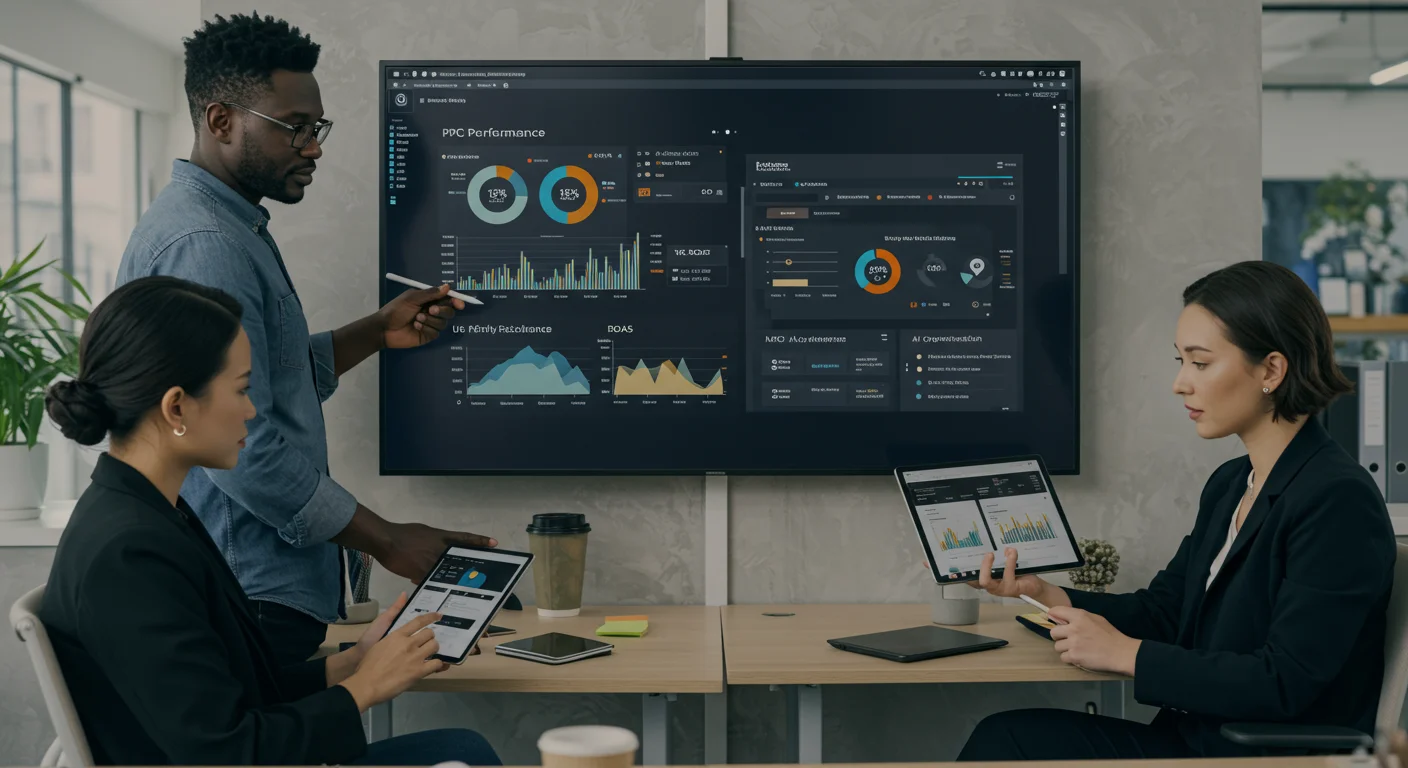
- Mandate weekly performance reviews using a custom dashboard that tracks ROAS (Return on Ad Spend) by audience segment and campaign type, not just overall account performance.
The Foundation of True PPC Growth: Beyond the Click
Many agencies talk a big game about clicks and impressions. Frankly, those are vanity metrics. What truly matters is what happens after the click – the conversion, the customer acquisition cost (CAC), and ultimately, the return on ad spend (ROAS). I’ve seen countless businesses chase low CPCs only to realize their campaigns were attracting the wrong audience, leading to dismal sales. It’s a common trap, and one I actively steer my clients away from.
At PPC Growth Studio, we believe in building campaigns that are not just efficient, but profoundly effective. This means a deep dive into your business model, understanding your customer’s journey, and then meticulously crafting a strategy that aligns every ad dollar with your overarching revenue goals. We’re not about quick fixes; we’re about sustainable, scalable growth. Our approach integrates advanced audience segmentation, predictive analytics, and continuous multivariate testing to ensure every campaign iteration is an improvement on the last.
Think about it: Google Ads and Meta Ads are constantly evolving. Features like Performance Max on Google Ads, or Meta’s Advantage+ shopping campaigns, are powerful, but they demand a nuanced understanding of their underlying algorithms and how to feed them the right data. A recent IAB report indicated that digital ad spending continues its upward trajectory, reaching new highs in 2023, underscoring the fierce competition. To stand out, you need more than just a competent ad manager; you need a strategic partner who lives and breathes these platforms, someone who can anticipate changes and adapt your strategy before your competitors even realize a shift has occurred. We’re that partner. We’re constantly experimenting with new bidding strategies, like target ROAS with value-based bidding, and testing different attribution models to ensure we’re giving credit where credit is due – and investing more there.
Data-Driven Decisions: The Only Way to Play
My philosophy is simple: if you can’t measure it, you can’t improve it. This applies tenfold to PPC. We don’t operate on gut feelings or industry folklore. Every decision we make, from keyword selection to ad copy variations, is backed by rigorous data analysis. We utilize sophisticated tools that go far beyond the standard platform reporting, integrating data from your CRM, analytics platforms like Google Analytics 4, and even offline conversion tracking where applicable. This holistic view allows us to see the true impact of our efforts, not just isolated campaign performance.
For example, I had a client last year, a B2B SaaS company based out of Alpharetta, near the Windward Parkway exit off GA 400. They were spending a significant budget on LinkedIn Ads, but their sales team reported low-quality leads. We implemented a comprehensive tracking system that connected every LinkedIn lead directly to their Salesforce instance, allowing us to track not just lead volume, but lead-to-opportunity and opportunity-to-close rates. What we found was illuminating: certain job titles, while appearing to be good fits on paper, rarely converted. By adjusting our targeting to focus on specific seniority levels and company sizes, and simultaneously refining our ad creatives to speak directly to those decision-makers, we saw a 35% improvement in lead quality within two quarters, without increasing their ad spend. That’s the power of truly data-driven decisions – it allows you to be surgical with your budget.
We’re also big believers in incrementality testing. It’s not enough to say “PPC works.” We want to know how much additional revenue PPC is generating above and beyond what you would have achieved organically or through other channels. This often involves running geo-lift studies or holding out specific audience segments from campaigns to measure the incremental impact. It’s a more complex approach, certainly, but it provides undeniable proof of value and allows for smarter budget allocation. A recent eMarketer report highlighted the growing importance of proving incremental ROI in a tightening economic climate. Agencies that can’t do this are simply guessing.
The Power of First-Party Data
With the deprecation of third-party cookies on the horizon, first-party data has become the gold standard for effective targeting and personalization. We work closely with clients to implement robust first-party data collection strategies and integrate this data seamlessly into their ad platforms. This isn’t just about uploading customer lists; it’s about creating dynamic audience segments based on purchase history, website behavior, email engagement, and even customer service interactions. When you can tell Google Ads that a user has viewed three specific product pages, added an item to their cart but didn’t purchase, and is also on your email list, your ability to serve them a highly relevant ad skyrockets. We aim for a minimum of 90% match rate when integrating CRM data for custom audiences, ensuring we’re reaching the right people with precision.
This approach also extends to privacy. We ensure all data collection and utilization practices are compliant with current regulations like GDPR and CCPA, and we stay ahead of new legislative changes. Trust, after all, is a cornerstone of long-term customer relationships, and respecting privacy builds that trust.
Actionable Strategies: From Concept to Conversion
The term “actionable strategies” gets thrown around a lot, but what does it really mean? For us, it means a clear, step-by-step plan that addresses every facet of your PPC campaign, from initial setup to ongoing optimization. It’s not just a recommendation; it’s a blueprint for execution. Our strategies are always bespoke, never templated, because no two businesses are identical.
Consider a typical e-commerce client focused on selling specialized outdoor gear. Our actionable strategy would encompass:
- Granular Campaign Structure: Moving beyond broad categories to hyper-specific product groups and even individual product SKUs, allowing for precise bidding and messaging.
- Dynamic Creative Optimization (DCO): Implementing DCO across platforms like Google Ads and Meta Ads Manager to automatically test hundreds of ad variations – headlines, descriptions, images, and calls-to-action – to identify the highest-performing combinations in real-time.
- Landing Page Personalization: Ensuring that ad clicks lead to highly relevant landing pages. If an ad promotes “waterproof hiking boots,” the landing page shouldn’t just be the general footwear category; it should feature waterproof hiking boots prominently, ideally with the specific model highlighted. We often use tools that allow for dynamic text replacement on landing pages based on ad parameters, significantly boosting conversion rates.
- Advanced Audience Layering: Combining demographic, interest, and behavioral targeting with remarketing lists and customer match audiences. For instance, targeting individuals interested in “backpacking” who have also visited your “camping tents” product pages within the last 30 days and are part of your loyalty program. That’s a highly qualified lead.
- Proactive Bid Management: Moving beyond automated bidding to incorporate portfolio bidding strategies, seasonal adjustments, and competitor insights. We don’t just set it and forget it; we’re constantly adjusting bids based on real-time performance and market fluctuations.
This level of detail ensures that every dollar is working as hard as possible. It’s the difference between throwing spaghetti at the wall and carefully crafting a gourmet meal. I’ve seen too many businesses get caught up in the “set it and forget it” mentality with automated bidding, only to realize months later they’ve left significant money on the table. Automation is a tool, not a strategy. You still need a skilled hand guiding the ship.
Case Study: Revolutionizing Conversions for “EcoGarden Supplies”
Let me walk you through a specific example. We partnered with “EcoGarden Supplies,” an online retailer specializing in sustainable gardening products, based out of Decatur, Georgia. When they came to us, their PPC campaigns were generating traffic, but their conversion rate was stuck at a frustrating 1.5%, and their ROAS hovered around 1.8x. They were spending $25,000 per month on Google Shopping and Search, primarily targeting broad keywords like “gardening supplies” and “organic fertilizer.”
Our initial audit, conducted over two weeks, revealed several critical issues: generic ad copy, non-optimized landing pages, and a lack of granular product-level bidding. Their product feed, while compliant, wasn’t fully optimized for search visibility. We proposed a comprehensive 6-month strategy.
Phase 1 (Months 1-2): Foundation & Optimization
- Product Feed Enhancement: We worked with their team to enrich their product titles and descriptions, adding specific attributes like “organic,” “non-GMO,” and “drought-resistant” where applicable. This improved product visibility for long-tail searches.
- Campaign Restructuring: We broke down their broad Google Shopping campaigns into highly specific product groups (e.g., “organic vegetable seeds,” “composting bins,” “rain barrels”). For Search, we implemented SKAGs (Single Keyword Ad Groups) where appropriate, ensuring maximum ad relevance.
- Ad Copy Overhaul: We developed new ad copy that highlighted unique selling propositions (USPs) for each product category, focusing on sustainability and product benefits. We also implemented Responsive Search Ads (RSAs) with a minimum of 10 unique headlines and 4 descriptions per ad group, allowing Google to dynamically test combinations.
- Landing Page A/B Testing: We designed and tested new landing page layouts for their top 50 products, focusing on clear calls-to-action, prominent product reviews, and improved mobile responsiveness. We used Optimizely for these tests, running variations for a full month to ensure statistical significance.
Phase 2 (Months 3-4): Advanced Targeting & Bid Strategy
- Audience Segmentation: We integrated their email list and past customer data into Google Ads for Customer Match audiences. We also created custom intent audiences based on competitor searches and in-market segments for “home and garden.”
- Smart Bidding Refinement: We transitioned from target CPA to target ROAS bidding for Shopping campaigns, setting aggressive but achievable targets based on historical data. For Search campaigns, we used maximize conversions with value-based bidding, prioritizing higher-margin products.
- Negative Keyword Expansion: We conducted extensive search term reports analysis, adding over 500 negative keywords to eliminate irrelevant traffic (e.g., “free gardening tips,” “gardening jobs”).
Phase 3 (Months 5-6): Expansion & Iteration
- YouTube & Display Remarketing: Launched dynamic remarketing campaigns on YouTube and the Google Display Network, showing specific products to users who had viewed them previously.
- Performance Max Integration: Gradually rolled out Performance Max campaigns, leveraging their first-party data and optimized product feed, carefully monitoring performance against existing campaigns.
Results after 6 months:
- Conversion Rate: Increased from 1.5% to 3.8% (a 153% improvement).
- ROAS: Improved from 1.8x to 4.1x (a 127% improvement).
- Cost Per Acquisition (CPA): Decreased by 45%.
- Revenue from PPC: Increased by 180% with only a 15% increase in monthly ad spend.
This wasn’t magic; it was methodical, data-driven execution. It shows what’s possible when you move beyond basic campaign management to a true growth partnership.
Why Partner with a PPC Growth Studio?
You might be thinking, “Can’t I just do this myself?” And yes, you can certainly run PPC campaigns. But can you run them at a level that consistently drives significant, measurable growth and outperforms your competitors? That’s a different question entirely. The sheer complexity of modern digital advertising platforms, coupled with the ever-present need for fresh creative, rigorous testing, and sophisticated data analysis, makes it a full-time job for a team of specialists.
When you partner with a PPC Growth Studio, you’re not just hiring an agency; you’re gaining access to a collective brain trust of seasoned professionals who are constantly immersed in the nuances of digital advertising. We’ve seen what works and, perhaps more importantly, what doesn’t. We bring that institutional knowledge and experience to bear on your campaigns, allowing you to bypass costly trial-and-error phases.
Moreover, we offer an objective, outside perspective. It’s easy for internal marketing teams to get siloed or become overly attached to certain strategies. We come in with fresh eyes, identify blind spots, and challenge assumptions – all while maintaining a collaborative spirit. This external validation, or sometimes gentle redirection, is incredibly valuable. We also have access to premium tools and industry reports, like those from Nielsen, that many businesses simply don’t subscribe to, giving us an edge in understanding market trends and consumer behavior.
My editorial aside here: many businesses are still operating with a 2018 mindset when it comes to PPC. They’re focused on keywords and basic bidding, completely missing the boat on audience-first strategies, creative automation, and the power of first-party data. If your agency isn’t talking about these things, they’re already behind. You need a partner who is looking at 2027 and beyond, not just optimizing for yesterday’s algorithms.
The Future of Marketing: Personalization at Scale
The trajectory of digital advertising points overwhelmingly towards hyper-personalization at scale. Generic ads are dead. Consumers expect relevant, timely, and valuable interactions. This isn’t just about showing the right product to the right person; it’s about understanding their stage in the buying journey, their preferences, and even their emotional state, then tailoring the message accordingly. It’s a tall order, but it’s where the industry is headed, and frankly, where we already operate.
We’re actively exploring and implementing advancements in AI-driven creative generation, which allows for an unprecedented level of ad variant testing and personalization. Imagine an ad that dynamically adjusts its headline, image, and call-to-action based on a user’s previous website visits, their geographic location (e.g., mentioning specific Atlanta neighborhoods like Buckhead or Midtown for a local service), and even the weather in their area. This isn’t science fiction; it’s becoming standard practice. Furthermore, we’re keenly focused on integrating new channels, such as connected TV (CTV) advertising, into our clients’ PPC strategies. As traditional linear TV viewership declines, CTV platforms like Roku and Amazon Fire TV offer highly targetable, brand-safe environments for reaching engaged audiences, providing a powerful complement to search and social campaigns.
The complexity of executing this level of personalization, while maintaining brand consistency and respecting privacy, requires specialized expertise. That’s precisely what a PPC Growth Studio brings to the table. We’re not just managing your campaigns; we’re building a future-proof marketing ecosystem that can adapt to changing consumer behaviors and technological advancements. This isn’t just about staying competitive; it’s about defining the next generation of digital marketing for your business.
To truly unlock your business’s potential in the fiercely competitive digital landscape, partnering with a PPC Growth Studio isn’t just an option—it’s a strategic imperative. We offer the expertise, data-driven approach, and actionable strategies required to transform your ad spend into significant, sustainable revenue growth.
What is the difference between a PPC agency and a PPC Growth Studio?
While both manage PPC campaigns, a traditional agency often focuses on campaign execution and reporting on standard metrics. A PPC Growth Studio, like ours, adopts a more holistic, performance-driven approach, integrating deep business analysis, advanced analytics, and a relentless focus on ROI and incremental growth. We’re not just managing ads; we’re strategic partners dedicated to your overall business expansion, often diving into areas like landing page optimization and first-party data strategy that typical agencies might overlook.
How does PPC Growth Studio measure success beyond clicks and impressions?
We prioritize metrics directly tied to your business objectives, such as Return on Ad Spend (ROAS), Customer Acquisition Cost (CAC), Lifetime Value (LTV) of customers acquired through PPC, and incremental revenue generated. We implement advanced tracking and attribution models to ensure we’re measuring true business impact, not just superficial engagement signals. Our dashboards are customized to reflect these critical business KPIs.
What kind of data integration capabilities do you offer?
We specialize in integrating various data sources, including your CRM (e.g., Salesforce, HubSpot), Google Analytics 4, email marketing platforms, and even offline sales data. This allows us to create rich first-party audience segments for highly targeted campaigns and provides a comprehensive view of the customer journey, enabling more informed optimization decisions.
How do you handle privacy concerns with data-driven PPC?
We adhere strictly to all relevant data privacy regulations, including GDPR and CCPA. Our strategies are built around privacy-preserving techniques, emphasizing first-party data collected with explicit consent and utilizing privacy-enhancing technologies within ad platforms. We ensure transparency in data usage and help clients maintain consumer trust while still achieving powerful personalization.
Do you work with businesses of all sizes?
While our strategies are highly effective for businesses seeking significant growth, our ideal clients are those with a clear understanding of their unit economics, a proven product or service, and a willingness to invest in a long-term, data-driven partnership. We’ve found that businesses with a minimum monthly ad spend of $10,000 typically see the most impactful results from our comprehensive approach, as it allows for sufficient data collection and testing.


