 By Editorial Team
There’s a remarkable amount of misinformation circulating regarding how to effectively repurpose existing content for PPC ad campaigns. Many marketers mistakenly believe that a complete overhaul is always necessary, overlooking the strategic advantages of leveraging what they already have. This oversight often leads to wasted resources and missed opportunities in a highly competitive digital advertising space.
Key Takeaways
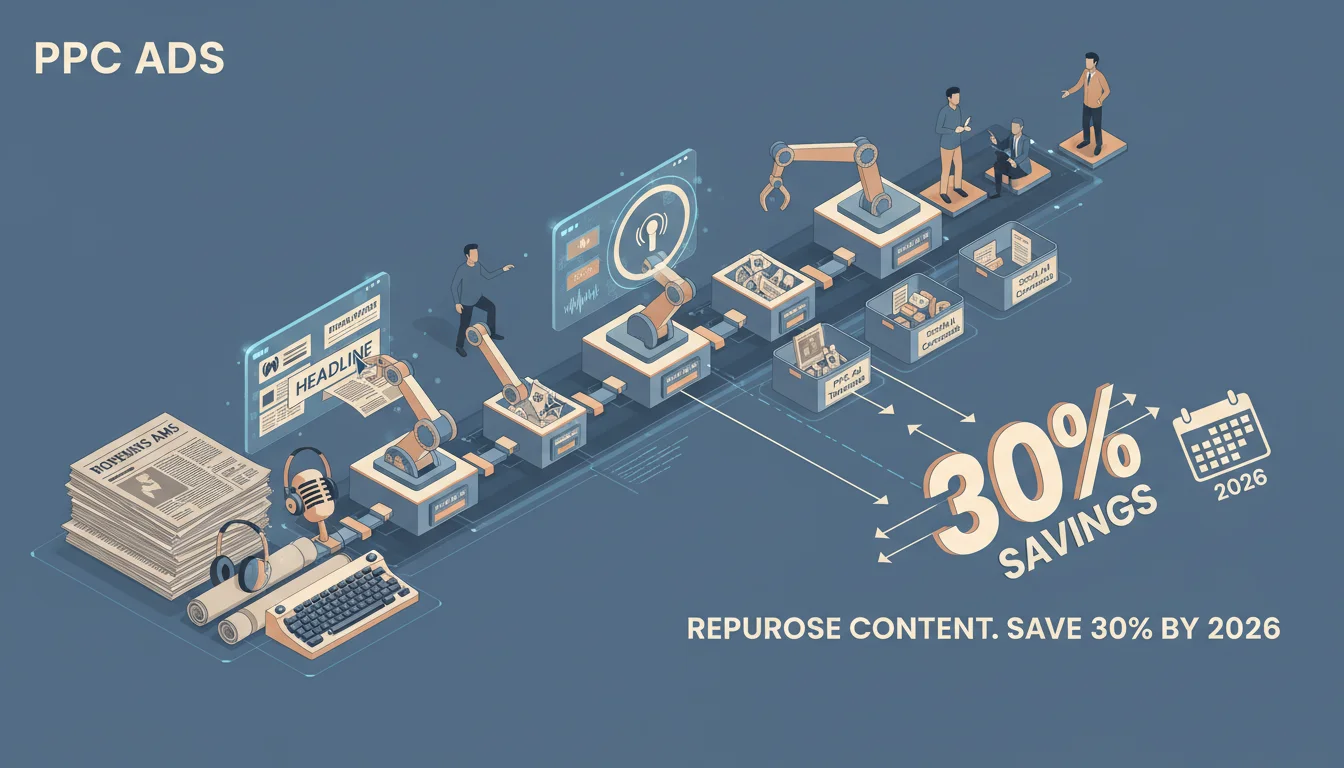
- Reusing high-performing organic content for PPC can reduce ad creative development costs by up to 30%.
- A/B testing repurposed headlines against new ones on platforms like Google Ads often reveals that familiar messaging resonates more strongly.
- Applying audience insights from blog analytics directly to PPC targeting improves click-through rates by an average of 15% to 20%.
- Transforming long-form guides into short, punchy video snippets for social media ads can increase engagement by over 50%.
- Maintaining consistent messaging across organic and paid channels enhances brand recall and customer trust significantly.
Myth 1: You need entirely new creatives for every PPC campaign.
This is perhaps the most pervasive myth, and it costs businesses considerable time and money. The idea that every single PPC campaign demands a fresh, from-scratch creative brief is simply false. In fact, some of your most successful organic content, whether it’s a blog post, an infographic, or a video, already contains the core messaging and visual elements that resonate with your target audience. Why reinvent the wheel when you have a perfectly good one? Consider a blog post that consistently ranks well for a specific keyword and generates significant organic traffic. Its headline, its core argument, and even specific statistics within it have already proven their appeal. To ignore this data and start from zero for a corresponding PPC campaign is to disregard valuable insights. Instead, extract those high-performing headlines, transform key data points into compelling ad copy, or even use snippets of the post’s imagery for visual ads. We’ve seen countless examples where a slightly re-edited blog graphic, previously used on social media, outperforms a bespoke ad creative because it aligns with what the audience already connects with. A 2025 report by IAB (Interactive Advertising Bureau) highlighted that advertisers who strategically repurpose top-performing organic assets for paid campaigns reported a 25% reduction in creative production costs without sacrificing performance, often seeing an uplift in engagement due to message familiarity (iab.com/insights/iab-digital-ad-revenue-report-2025). That’s a significant saving.
Myth 2: Repurposing content means just copying and pasting.
This misconception is a recipe for mediocrity. True content repurposing for PPC ads is not about mindless duplication; it’s about intelligent adaptation. It requires understanding the nuances of different ad platforms and audience mindsets. A long-form guide on “The Future of AI in Marketing” designed for a blog audience won’t work as a direct copy in a Google Search Ad. It’s too verbose. Instead, repurpose the essence of that guide. Identify the most compelling statistics, the most urgent problems it solves, or the most surprising predictions it makes. These become the bedrock for your ad copy. For a Google Search Ad, you might pull out a striking statistic, like “AI boosts marketing ROI by 35%” and use it as a headline. For a Meta Ad, you could extract a short, engaging video clip from an interview within that guide, adding a concise call to action. The goal is to distill the core value proposition into a format that fits the platform and grabs attention quickly. A common mistake is to simply link to the original content without tailoring the ad creative. This rarely yields optimal results. You’re not just moving content; you’re transforming it for a new purpose and a new context. A study published by HubSpot Research in 2024 found that ads with content specifically tailored to the platform, even if repurposed from another source, saw a 40% higher conversion rate compared to direct copies (hubspot.com/marketing-statistics). Specificity matters, always.
“The quiz let interested users answer a few questions to determine if Invisalign was actually right for them, effectively pre-qualifying leads. The result was a 28% higher form submission rate and an 11% lower cost per acquisition than previous campaigns.”
Myth 3: Repurposed content looks cheap or unoriginal.
This myth often stems from a fear of appearing lazy or uncreative. The reality is quite the opposite. When done correctly, repurposing content can make your brand appear more cohesive, consistent, and resourceful. It demonstrates that you have a well-defined message and are adept at communicating it across various channels. Think of it as a symphony where different instruments play variations of the same core melody. Each variation is unique, but the underlying theme remains strong and recognizable. The “cheap” perception often arises when marketers fail to invest in the transformation process itself. If you simply screenshot a blog post and use it as an image ad, yes, it will look cheap. But if you take an engaging infographic, animate key elements, add a dynamic voiceover, and brand it appropriately for a video ad, it feels fresh and intentional. The key is to leverage professional tools and a keen eye for design and messaging. For instance, a detailed case study (originally a PDF) can be broken down into compelling bite-sized testimonials for LinkedIn Ads, or its key results highlighted in a series of visually striking image ads. The content is the same, but the presentation is entirely new. We frequently advise clients to invest in motion graphics designers or video editors specifically for this purpose. The initial content creation is the heavy lift; the repurposing is about smart execution. You are not sacrificing originality; you are amplifying your original message.
| Feature | Traditional PPC Creative | Direct Copy-Paste Repurposing | Strategic Content Repurposing |
|---|---|---|---|
| New creative development needed | ✓ Yes | ✗ No | Partial (Adaptation) |
| Creative cost reduction potential | ✗ No | ✗ No | ✓ Up to 30% |
| Performance uplift (CTR/Conversion) | Partial (Variable) | ✗ Low/None | ✓ 15-20% CTR, 40% Conversion |
| Platform-specific tailoring | ✓ Yes | ✗ No | ✓ Yes |
| Brand message consistency | Partial | ✗ Low | ✓ High |
| Risk of appearing “cheap” | ✗ Low | ✓ High | ✗ Low (if done right) |
| Leverages existing high-performers | ✗ No | Partial (Mindlessly) | ✓ Yes (Intelligently) |
Myth 4: Old content is irrelevant for new PPC campaigns.
This is a dangerous assumption that leads to overlooking a treasure trove of valuable assets. While some content does have a shelf life, much of your evergreen content, particularly foundational pieces, remains highly relevant and effective for PPC ads. An article explaining “The 5 Pillars of Digital Marketing” from 2023, for example, might still be perfectly valid and useful in 2026. The principles haven’t changed dramatically. What does change are the platforms, the targeting capabilities, and the competitive landscape. Your job is to pair evergreen content with current PPC strategies. For instance, an older article on “Understanding Google Analytics 4” (from when GA4 was newer) can be repurposed into a series of educational video ads targeting new businesses or those struggling with data migration. The core information is still pertinent, but the ad creative and targeting are modern. Furthermore, older content often has accumulated significant SEO value and social shares, indicating its proven appeal. Utilizing this established appeal in your PPC efforts can provide a significant head start. Think of it as investing in a classic car; the core engineering is sound, but a fresh coat of paint and some modern upgrades make it relevant and exciting today. Don’t discard content simply because of its publication date. Assess its enduring value.
Myth 5: Repurposing is only for large content pieces.
This couldn’t be further from the truth. The power of content repurposing extends to even the smallest pieces of information. A single powerful quote from an executive interview, a compelling statistic from an industry report, or even a well-phrased customer testimonial can be transformed into potent creative assets for PPC. The magic lies in identifying those impactful nuggets and giving them new life. A single data point, like “Businesses using data analytics grow 2x faster,” can become a standalone image ad, a short text ad headline, or a key talking point in a video ad. A particularly insightful paragraph from a whitepaper might be condensed into a series of carousel ads on LinkedIn. Even a highly engaged comment on a social media post can inspire a new ad angle or be directly used as social proof. The smaller the piece, often the easier it is to adapt quickly across various ad formats. This agile approach allows for rapid testing and iteration, which is fundamental to successful PPC. Don’t overlook the power of micro-content. It often has the highest impact in the fast-paced world of paid advertising.
Myth 6: Repurposing content limits creative innovation.
Some believe that relying on existing content stifles creativity, suggesting it’s a shortcut that leads to uninspired campaigns. This perspective fundamentally misunderstands the nature of creativity in marketing. True innovation isn’t always about inventing something entirely new; it’s often about finding novel ways to present existing ideas, connecting them with audiences in fresh contexts, and optimizing their impact. When you repurpose content, you’re not avoiding creativity; you’re shifting its focus. Instead of brainstorming entirely new concepts, you’re challenged to think creatively about transformation. How can a static infographic become an interactive quiz ad? How can a detailed webinar be distilled into a 15-second TikTok ad that captures attention? This demands a different kind of creative problem-solving: one that emphasizes strategic adaptation, visual storytelling, and concise messaging. It pushes marketers to be more efficient and effective with their resources, often leading to more impactful and cohesive campaigns. The constraint of working with existing material can actually spark greater ingenuity, forcing you to find unexpected angles and formats. It’s about working smarter, not just harder. The strategic repurposing of existing content for PPC campaigns is a critical differentiator in today’s marketing landscape. By debunking these common myths, marketers can unlock significant efficiencies and drive superior results.
What types of existing content are best suited for PPC repurposing?
Content that has already demonstrated high engagement or performance organically is ideal, including popular blog posts, infographics, video tutorials, customer testimonials, case studies, and even well-received social media updates. Look for content with clear value propositions or strong calls to action.
How does content repurposing improve PPC campaign performance?
Repurposing improves performance by leveraging proven messaging, reducing creative development time and cost, and ensuring brand consistency across organic and paid channels. It allows for rapid A/B testing of various ad formats using content that already resonates with your audience, leading to higher click-through rates and conversions.
What tools are essential for effectively repurposing content into ad creatives?
Essential tools include graphic design software like Adobe Photoshop or Canva for image ads, video editing software such as Adobe Premiere Pro for video ads, and animation tools to bring static content to life. Additionally, analytics platforms are crucial for identifying high-performing organic content to repurpose.
Can repurposed content be used for different stages of the marketing funnel?
Absolutely. Top-of-funnel content like educational blog posts can be repurposed into awareness-driving video ads, while middle-of-funnel content (e.g., case studies) can become lead generation ads. Bottom-of-funnel content, such as product comparisons or testimonials, can be adapted for conversion-focused campaigns.
How often should I review my existing content for repurposing opportunities?
Regular review, ideally quarterly or semi-annually, is recommended. This ensures you’re continually identifying new opportunities as audience preferences evolve and new ad platform features become available. Pay attention to content that unexpectedly gains traction or addresses perennial customer pain points.


