 By Editorial Team
Key Takeaways
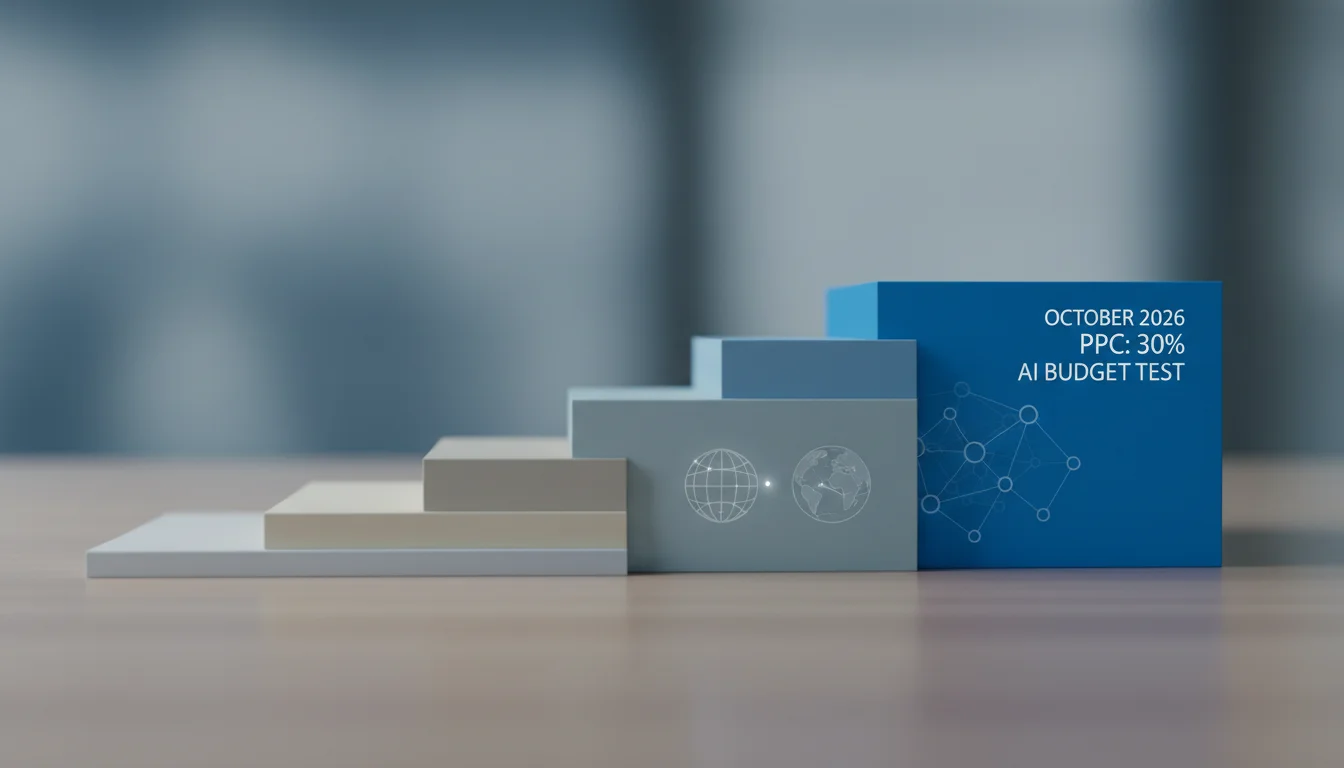
- Advertisers should allocate at least 30% of their October 2026 PPC budget towards campaigns featuring human-reviewed AI-generated content for initial testing.
- Implement a strong A/B testing framework, focusing on conversion rates and cost per acquisition (CPA), to compare AI-first and human-created content performance in real-time.
- Prioritize AI for iterative tasks like ad copy variations and keyword expansion, reserving human expertise for high-level strategy, creative direction, and brand voice refinement.
- Ensure all AI-generated content undergoes a human editorial pass to maintain brand consistency and factual accuracy, particularly for sensitive campaigns.
- Focus on integrating AI tools that offer transparent attribution and clear performance metrics to accurately gauge their impact on October PPC campaign effectiveness.
The debate over AI content versus human content in content marketing intensifies as we approach October 2026 PPC cycles, presenting both unprecedented opportunities and significant challenges for advertisers. With advancements in generative AI, the lines between machine-produced and human-crafted narratives blur, forcing marketers to re-evaluate their strategies for paid channels. The question isn’t whether AI has a place in content creation for PPC, but rather how to integrate it effectively without compromising quality or brand integrity.
The Evolving Field of Content Creation for PPC in 2026
By 2026, generative AI models have become integral to many marketing workflows, transforming how ad copy, landing page content, and even video scripts are conceptualized and produced. Platforms like Google Ads and Meta Business Suite have deepened their integration with AI-powered tools, offering features that suggest ad variations, optimize headlines, and even personalize content at scale. This capability allows for an unprecedented volume of content testing, enabling marketers to identify high-performing assets much faster than traditional methods allowed. However, the sheer volume of AI-generated options can also lead to a dilution of brand voice if not carefully managed.
The pace of change means that what worked for PPC content in 2024 is likely obsolete by October 2026. Advertisers who cling to purely manual content creation risk falling behind competitors who strategically deploy AI to accelerate their content pipelines. We’re seeing a clear divide between those who view AI as a replacement for human creativity and those who see it as an enhancement. The latter group, in my experience, consistently achieves better results. They understand that AI excels at pattern recognition, rapid iteration, and data synthesis, but it often lacks the nuanced understanding of human emotion, cultural context, and brand storytelling that truly connects with an audience. For instance, while an AI can generate a hundred different headlines for a product launch, a human strategist is still essential for selecting the one that resonates most deeply with the target demographic, particularly for a high-stakes campaign.
Strategic Integration: Where AI Shines in October 2026 PPC Content
For October 2026 PPC campaigns, AI demonstrates particular strength in areas demanding high volume, rapid iteration, and data-driven optimization. Consider ad copy generation. An AI can produce dozens of headline and description variations for a single product in minutes, allowing for extensive A/B testing on platforms. This capability is invaluable for identifying the most effective messaging combinations quickly, especially during competitive seasonal periods. For example, if you’re running a campaign for winter apparel, an AI can quickly generate copy emphasizing warmth, style, or durability, then track which variations drive the highest click-through rates (CTR) and conversions.
Keyword research and expansion also benefit immensely from AI. Advanced AI tools can analyze search query data, identify emerging trends, and suggest long-tail keywords that human researchers might overlook. This expands the reach of PPC campaigns and improves targeting accuracy. Plus, AI-powered tools can help with dynamic content personalization. Imagine a user searching for “sustainable running shoes.” An AI can dynamically adjust landing page content and ad copy to highlight eco-friendly materials and ethical manufacturing practices, directly addressing that user’s specific interest. This level of granular personalization is practically impossible to achieve manually at scale. According to a eMarketer report on generative AI in content marketing, companies using AI for personalization saw a 20% increase in customer engagement metrics by mid-2025.
Another strong application is in performance analysis and reporting. AI can sift through vast quantities of PPC data, identify anomalies, and even suggest optimizations in real-time. This frees up human analysts to focus on higher-level strategic decisions rather than getting bogged down in manual data aggregation. The goal isn’t to replace the analyst, but to augment their capabilities, making them more efficient and insightful. I find that this symbiotic relationship is where the real value lies, especially when budgets are tight and every dollar counts towards a positive return on ad spend (ROAS).
The Indispensable Role of Human Oversight and Creativity
Despite AI’s capabilities, human content remains irreplaceable for critical aspects of content marketing, particularly for brand building and nuanced communication. The creation of a compelling brand narrative, for instance, requires a deep understanding of human psychology, cultural nuances, and emotional resonance that current AI models simply cannot fully replicate. While an AI can generate text that is grammatically correct and semantically relevant, it often lacks the unique voice, wit, or empathy that defines a strong brand personality. This is particularly true for campaigns aiming to evoke strong emotions or build long-term customer loyalty.
On top of that, strategic planning and creative direction are firmly in the human domain. Deciding what message to convey, why it matters, and how it aligns with broader business objectives requires human judgment and foresight. AI can process data and suggest tactics, but it cannot formulate a vision or anticipate complex market shifts with the same intuitive grasp as an experienced strategist. For example, understanding the subtle shifts in consumer sentiment leading up to the holiday shopping season in October 2026, and crafting a campaign that genuinely resonates, demands human insight. A machine can tell you what performed well last year, but a human can predict what will captivate this year.
Fact-checking and ethical considerations are also paramount. AI-generated content, while often impressive, can sometimes “hallucinate” facts or perpetuate biases present in its training data. A rigorous human editorial process is non-negotiable to ensure accuracy, compliance with advertising standards, and alignment with ethical guidelines. This is not just about avoiding errors. It’s about maintaining trust with your audience. A single factual inaccuracy in a PPC ad can erode credibility faster than any AI can build it. We must remember that AI is a tool, and like any powerful tool, it requires skilled human hands to wield it responsibly.
Measuring Success: KPIs for Hybrid Content Strategies in October PPC
When integrating both AI and human-generated content into your October 2026 PPC strategy, establishing clear Key Performance Indicators (KPIs) is fundamental. It’s not enough to simply produce content. You need to understand its impact. For AI-generated ad copy and headlines, focus on metrics like Click-Through Rate (CTR), Conversion Rate (CVR), and Cost Per Acquisition (CPA). These quantitative metrics directly reflect the immediate effectiveness of the AI’s output in driving traffic and conversions. A/B testing variations generated by AI against human-crafted ones becomes important here. For instance, if an AI-generated headline consistently achieves a 15% higher CTR than its human counterpart at a similar CPA, that’s a clear win for AI in that specific context.
For human-crafted content, especially longer-form landing page copy or brand-focused messaging, metrics extend beyond immediate conversions. We look at Time on Page, Bounce Rate, and qualitative feedback through surveys or focus groups to gauge engagement and brand perception. While these don’t always directly translate to immediate PPC conversions, they contribute to the overall customer journey and brand affinity, which in turn influences future conversions. Plus, for content that supports sales funnels, tracking lead quality and return on ad spend (ROAS) across different content types provides a well-rounded view of performance. The critical insight here is that not all content serves the same purpose, so not all content should be measured by the same narrow set of KPIs. A balanced approach recognizes the distinct contributions of both AI and human efforts.
The Future is Collaborative: AI as an Assistant, Not a Replacement
Looking ahead to October 2026 and beyond, the most successful content marketing strategies for PPC will not be AI-exclusive or human-exclusive, but rather a sophisticated collaboration between the two. AI will continue to evolve, offering more nuanced capabilities, but it will always operate within the parameters set by human intent and creativity. Think of AI as an incredibly efficient and tireless assistant, capable of handling repetitive, data-intensive tasks with unparalleled speed. This frees human marketers to focus on higher-value activities: strategic thinking, creative brainstorming, emotional storytelling, and building genuine connections with audiences.
The real competitive advantage will lie in how adeptly teams integrate AI tools into their existing workflows, rather than replacing them entirely. This means training marketing teams not just on how to use AI platforms, but how to effectively prompt them, critically evaluate their output, and refine it to meet specific brand standards. It also means investing in tools that offer transparency and control, allowing marketers to understand why an AI made a particular suggestion and to override it when necessary. The future of content marketing for PPC is not a binary choice between AI and humans. It’s about using the strengths of both to create more effective, engaging, and scalable campaigns. The teamwork between human ingenuity and AI efficiency will define the next era of digital advertising.
For October 2026 PPC campaigns, the strategic deployment of AI for high-volume, data-driven content tasks, coupled with indispensable human oversight for brand voice and strategic direction, will be the differentiator. Embrace AI as a powerful tool to augment your team’s capabilities, but never relinquish the human touch that truly resonates with your audience.
How can AI help with ad copy for October 2026 PPC campaigns?
AI can generate numerous variations of ad headlines and descriptions rapidly, enabling marketers to conduct extensive A/B testing to identify the most effective messaging for specific audiences and campaign goals in October 2026. This accelerates the optimization process for high-volume PPC campaigns.
What are the limitations of AI-generated content for PPC?
While efficient, AI-generated content can sometimes lack the nuanced understanding of human emotion, cultural context, and unique brand voice. It may also occasionally produce factual inaccuracies or perpetuate biases, necessitating human review and refinement for accuracy and brand consistency.
Why is human oversight still important for AI-driven content marketing?
Human oversight is critical for maintaining brand integrity, ensuring factual accuracy, providing creative direction, and making strategic decisions that align with broader business objectives. It also helps to inject empathy and unique storytelling that AI models currently struggle to replicate, particularly for sensitive or emotionally resonant campaigns.
What KPIs should I use to measure AI content performance in PPC?
For AI-generated PPC content, focus on quantitative metrics such as Click-Through Rate (CTR), Conversion Rate (CVR), and Cost Per Acquisition (CPA) to evaluate direct campaign effectiveness. These metrics provide clear data on how well AI-produced assets are performing in driving immediate results.
Can AI personalize content for individual users in PPC?
Yes, advanced AI tools can dynamically adjust ad copy and landing page content based on user search queries, browsing history, and other data points. This allows for hyper-personalized experiences, directly addressing individual user interests and potentially increasing engagement and conversion rates in real-time.


