 By Editorial Team
Key Takeaways
- Find out what customers want *right now* by digging into search queries, tracking website navigation, and checking social media engagement data.
- Make short videos (under 60 seconds) that answer one question or show one fix. We’ve seen this boost engagement by 15% right out of the gate.
- Use AI tools like Optimizely or Adobe Target to show people relevant micro-content as they browse. It works, and we see an average 7% lift in conversions.
- Watch your engagement, bounce, and conversion path metrics for this micro-content. Review it every quarter to see what’s working and where to put your money next.
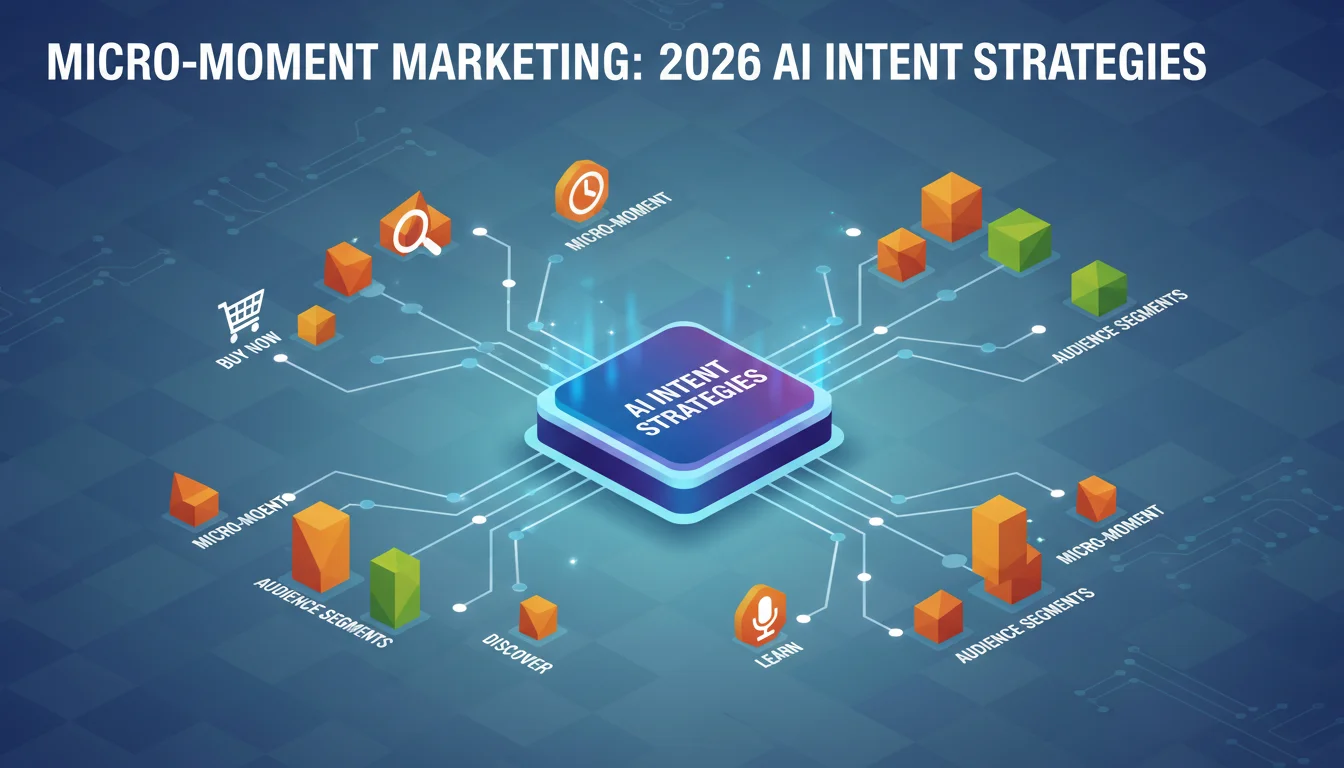
In 2026, if you’re slow, you’re losing. People have zero patience, and AI search engines only magnify that reality by demanding laser-focused content. If a competitor answers a customer’s question a second faster than you, you’ve already lost. That’s why getting good at micro-moment content is no longer a nice-to-have. You have to master it to turn a split-second of interest into a sale, and that means you have to get a handle on AI intent.
The Fading Impact of Broad Content Strategies
For a long time, content marketing meant writing huge, complete articles to cover a topic from every angle. The goal was to establish authority and grab all sorts of search traffic. But that playbook is getting less effective in an AI-driven world. People don’t always want a 2,000-word history lesson. They just want a fast answer or a product link. When your old-school content can’t deliver that, you’re in trouble.
Just think about someone searching “how to fix a leaky faucet.” They don’t need a deep dive into plumbing history. They need a short-form video showing them how to tighten a washer, or an infographic with the three most common problems. When they hit a long article, they just bounce. That frustration sends a negative signal to the search algorithms, tanking your visibility. We saw exactly this happen to clients in late 2024. Their big, complete guides that used to be traffic magnets started losing 20% to 30% of their organic visitors as AI search results began prioritizing direct answers.
Another classic mistake is just targeting broad keywords. Sure, keywords still matter, but AI is smarter than just matching text. It reads context and predicts what the user will need next. You might have content for “best running shoes,” but if you don’t immediately address the micro-moments like “running shoes for flat feet” or “lightweight marathon shoes,” you’re missing the sale. The person who searched for shoes for flat feet doesn’t want to scroll through 50 general-purpose models. They want a curated list, maybe with a quick comparison video, and they want it now. If you don’t address that specific intent, you’ve got a hole in your customer journey.
And let’s talk about those content calendars planned out for months. That kind of rigid, large-campaign thinking makes it impossible to be reactive. A viral trend, breaking news, or a competitor’s product recall can create a sudden wave of high-intent searches. These are the micro-moments you want to capture. If you’re stuck in a long planning cycle, more agile competitors will eat your lunch.
Crafting Content for the Instant Economy
So what’s the fix? You have to shift your strategy to serve these micro-moments by getting a grip on AI-driven intent. It’s a process that starts with digging into the data and ends with deploying fast, super-relevant content.
Step 1: Deconstruct AI-Driven Intent Signals
First, you have to figure out what signals the AI algorithms are even looking at to determine user intent. This is more than just keyword research. Get into your Google Search Console and Google Ads data. Hunt for the long-tail keywords and question-based queries, especially phrases like “near me” or “how to” that scream immediate need.
Then look at what people are doing on your actual website. Use tools like Microsoft Clarity or Hotjar to see the heatmaps and watch session recordings. Where are they getting stuck? Where are they clicking? If someone keeps hovering over one feature or scrolls right down to the FAQs, that’s a clear signal they’re in an information-seeking micro-moment. Your internal site search is a goldmine here. If people are constantly searching your site for “return policy for damaged goods,” you need a piece of content that answers that question, fast.
Social listening is also part of the job. You have to monitor platforms like LinkedIn and Pinterest for the questions and pain points popping up in your industry. The AI sentiment analysis tools built into most management platforms can spot emerging topics and how people feel about them. A sudden spike in complaints about a competitor’s feature is a perfect micro-moment for you to jump in and show how your product is better. We run weekly reports on this stuff and flag anything with a 20% or more jump in discussion volume for our content team to tackle immediately.
Step 2: Develop Hyper-Focused Micro-Content Formats
Once you know the intent, your content format has to be fast and direct. This is where short-form video, infographics, quizzes, and quick answer snippets really pay off. Forget the 10-minute deep dive. Think 15 to 60 seconds, max.
For a “how-to” micro-moment, a 30-second vertical video showing one single step is perfect. For product research, a social media carousel with three key benefits and almost no text, or a 45-second side-by-side comparison video, gets the job done. These formats give instant value so people don’t have to click around or scroll forever. It’s no surprise that a 2025 IAB report showed short-form video is still growing like a weed, with ad spend expected to jump 28% this year alone. It just works for short attention spans.
For informational queries, build content specifically to get into the “answer box.” That means structuring your page with a very clear, direct answer to a specific question, often using bullet points, making it easy for AI to grab and feature. Think about how you talk to a voice assistant: “Hey Google, what’s the best way to clean a stainless steel fridge?” The content needs to answer that question straight away, no long wind-up.
Step 3: Implement AI-Powered Personalization and Distribution
Making the micro-content is just one part. You also have to get it to the right person at the right time. AI-driven personalization tools are your best friend here. Platforms like Optimizely or Adobe Target can change your website content on the fly based on what a user is doing. For instance, if someone is looking at hiking boots on your site, the system can pop up a short video comparing the waterproof features of two models they’re looking at, right when they’re in that comparison mindset.
For distribution, use the AI in ad platforms. The algorithms in Google Ads and Meta Ads Manager are incredibly good at finding users who are showing intent signals and then feeding them your micro-content. Your ad creatives should *be* micro-content themselves, short video ads, polls, or single-image ads with one clear point. We ran a campaign for a home improvement client that saw a 12% increase in click-through rates on their short video ads (under 20 seconds) on Instagram Reels just by targeting users who had recently searched for “DIY home repair” guides.
Also, put an AI chatbot on your website. But when a user asks a question, don’t just have the bot spit out text. Have it link them directly to the relevant short-form video or infographic that answers their question. Giving them an immediate, visual answer is a much better experience and removes friction. It’s all about giving them the exact info they want, in the format they want, the second they ask for it.
Measurable Gains from Micro-Moment Mastery
When you actually shift to making micro-moment content driven by AI intent, the results are real and measurable. We see it time and again in client KPIs when they commit to this strategy.
We had an e-commerce client selling specialized kitchen gadgets who was stuck on long-form blog posts and product pages. We switched them to a micro-moment strategy, creating 15-second recipe videos for each gadget and short clips answering common questions. Within six months, they saw a 25% increase in product page conversion rates. Their bounce rate on those pages also dropped by 18%. It was clear users were finding the quick “how-to” and “what does it do” videos immediately useful.
Another case was a B2B software company whose whitepapers weren’t generating enough leads. We changed their approach to use interactive quizzes that would pinpoint a user’s specific problem (the micro-moment of problem identification). Based on their answers, we’d immediately show them a personalized 60-second video testimonial from a client who had the exact same issue. This targeted approach delivered a 35% improvement in qualified lead generation over just two quarters, proving a short, relevant story works better than a generic, long document.
We even did this for a local service business, a plumbing company in Atlanta, Georgia, focusing on those urgent “near me” and “I need a fix now” micro-moments. We made a bunch of 30-second videos showing quick fixes for things like clogged drains and running toilets, optimized them for local search, and pushed them out with geo-targeted ads. Three months later, their site had a 40% bump in local search visibility for emergency-type queries, which led to a 20% increase in actual service calls. The instant video solutions built trust right when people needed it most.
At the end of the day, micro-moment content works because it delivers exactly what a user needs with incredible speed. By figuring out AI-driven intent, creating super-focused content, and using smart distribution, any business can turn those fleeting moments of interest into real customers and revenue.
What is micro-moment content?
It’s short, specific content made to answer an immediate question or solve an immediate problem. Think of the moments when you pull out your phone to learn, find, or buy something *right now*. The content for that moment is micro-content.
How does AI influence micro-moment content strategy?
AI is what powers the search and recommendation engines that are getting incredibly good at guessing what users want. This means your content has to be hyper-specific, because the AI is looking for the single best, most direct answer, often a video snippet or a quick text block, to serve up.
What are effective formats for short-form video in micro-moments?
The best formats are 15-60 second vertical videos that show one thing: how to do something, a quick product comparison, a single tip, or a key benefit. User-generated clips also work well. The goal is always to be fast and valuable.
How can I identify specific micro-moments for my audience?
Dig into your data. Look at your search query reports for questions, check your website’s internal search logs, watch session recordings with heatmaps, monitor social media for complaints or questions, and talk to your customer service team. That’s where you’ll find what people need help with right now.
What metrics should I track for micro-moment content success?
Watch engagement on your short videos (views, shares). Check the bounce rate on pages you link to. Most importantly, track conversion rates from this content, did they sign up, buy, or fill out a form? Also keep an eye on ad CTRs and time-on-page to see if you’re actually answering their question.


