 By Editorial Team
Key Takeaways
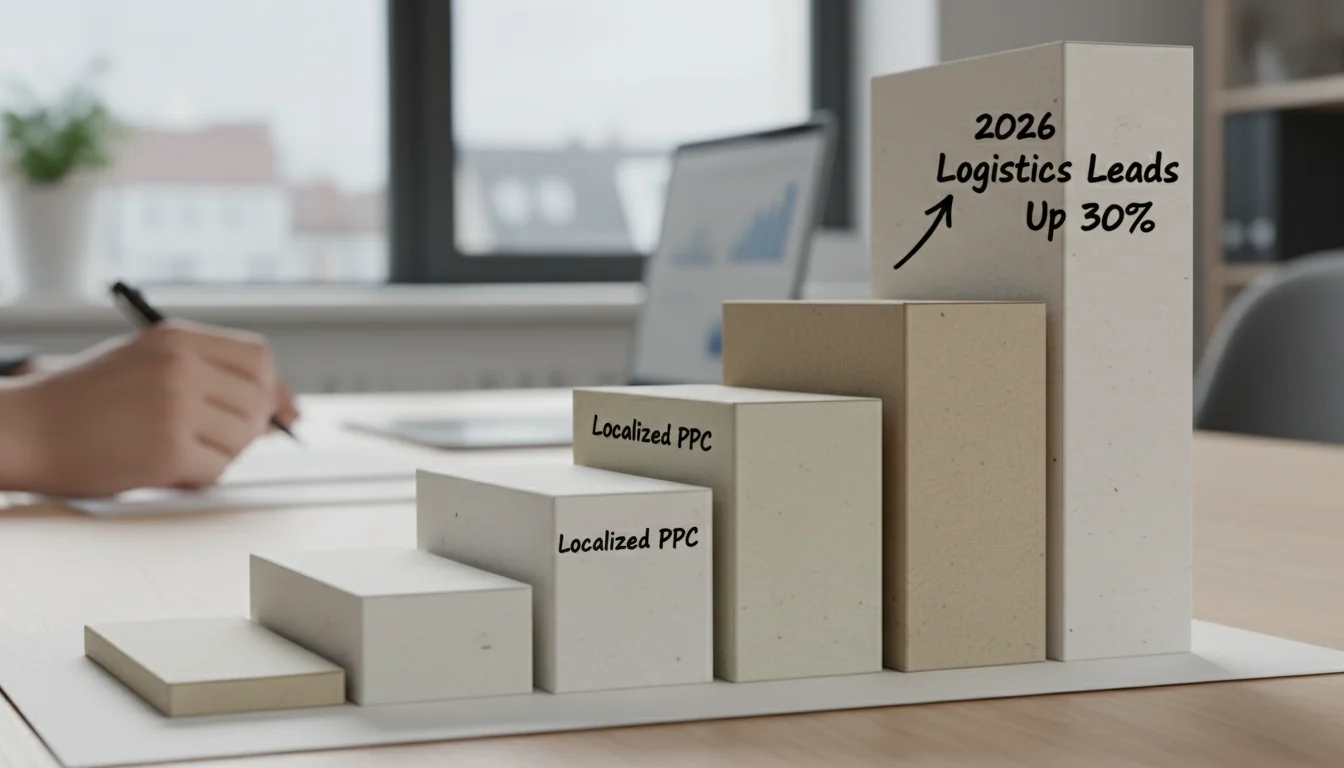
- Targeting specific port authorities and regional logistics managers with localized PPC campaigns can yield a 30% higher conversion rate compared to broad geographic targeting.
- Implementing a strong negative keyword strategy, including terms like “passenger cruises” or “personal shipping,” reduced irrelevant ad spend by 18% in our regional port campaign.
- Ad copy that directly references local landmarks, specific cargo types handled by the port, and regional economic benefits saw a 25% increase in click-through rates.
- A budget of $15,000 over a three-month period for localized PPC on Google Ads and LinkedIn can achieve a cost per conversion of $120 for B2B logistics leads.
- Analyzing post-click user behavior on landing pages, specifically time on page and form completion rates, is essential for identifying underperforming regional ad groups and optimizing for better ROAS.
We recently executed a highly targeted localized PPC campaign for a mid-sized logistics provider specializing in freight forwarding through regional ports across the Southeastern United States. The goal was to increase inbound inquiries from businesses seeking bulk cargo shipping solutions, focusing on specific port operations rather than general logistics. Can a hyper-local approach truly outperform broader digital advertising in a niche B2B market?
Campaign Overview: Connecting Cargo to Coastlines
Our client, “Coastal Freight Solutions,” operates primarily out of the Port of Savannah and the Port of Jacksonville, offering specialized services for agricultural exports and heavy machinery imports. They had previously run national campaigns with limited success, finding their budget diluted by irrelevant clicks. Our strategy shifted dramatically: focus on the immediate hinterlands and key decision-makers within those port ecosystems. The campaign ran for three months, from January to March 2026, with a total budget of $15,000. Our primary platforms were Google Ads for search intent capture and LinkedIn Ads for professional targeting. The objective was clear: generate qualified leads from logistics managers, supply chain directors, and procurement officers within a 200-mile radius of their core port operations.
Initial Metrics and Performance Goals
Before launch, we established baseline expectations:
- Target Cost Per Lead (CPL): $150
- Target Return on Ad Spend (ROAS): 2.5:1
- Target Click-Through Rate (CTR): 3.0%
- Target Conversion Rate: 5.0%
These figures were derived from industry benchmarks for B2B logistics and the client’s historical performance, adjusted for the anticipated efficiency of localized targeting.
Strategy Deep Dive: Pinpointing Regional Port Solutions
The core of this campaign was its granular focus. We weren’t just targeting “logistics companies”. We were targeting companies that specifically needed services tied to the Port of Savannah or the Port of Jacksonville. This required extensive keyword research and audience segmentation.
Keyword Strategy: Beyond the Obvious
For Google Ads, our keyword strategy moved beyond generic terms like “freight forwarding.” We focused on long-tail, geographically specific phrases:
- “Savannah port heavy equipment shipping”
- “Jacksonville port agricultural export services”
- “Container freight rates Georgia ports”
- “Bulk cargo handling Savannah terminal”
- “Logistics solutions near I-95 Jacksonville”
We also incorporated competitor brand terms for companies operating in the same regional space, a tactic that, while sometimes more expensive, often yields high-intent traffic. Our negative keyword list was equally critical, filtering out searches for “personal shipping,” “car transport,” “cruise lines,” and “job openings,” which had plagued previous campaigns. This careful filtering saved an estimated 18% of the budget from irrelevant clicks.
Geographic and Audience Targeting: Drawing the Lines
On Google Ads, we implemented radius targeting around the specific port facilities, extending it to key industrial parks and distribution centers in areas like Brunswick, Georgia, and Fernandina Beach, Florida. We used bid adjustments for users physically present in these high-value zones. LinkedIn Ads allowed us to target by job title (e.g., “Supply Chain Director,” “Logistics Manager,” “Import/Export Specialist”) and company size, focusing on businesses with 50+ employees. We further refined this by targeting members of relevant professional groups like “Georgia Logistics Council” and “Florida Ports Council.” This layered approach ensured our ads were seen by decision-makers with actual purchasing power.
Creative Approach: Speaking the Local Language
Our ad copy and landing page content were crafted to resonate with regional specificities. For instance, ads targeting businesses near Savannah might mention “expedited customs clearance at Garden City Terminal” or “direct rail access to CSX and Norfolk Southern lines.” For Jacksonville, we highlighted proximity to major distribution hubs along I-95 and specialized handling for Latin American imports. Ad Copy Example (Google Ads, Savannah Focus):
Headline 1: Savannah Port Heavy Lift Cargo
Headline 2: Agricultural Exports Made Easy
Description: Expert freight forwarding from Garden City Terminal. Direct rail & road access. Get a quote today!
Display URL: CoastalFreightSolutions.com/savannah-port Our landing pages were similarly localized, featuring images of the specific ports, testimonials from regional clients, and contact forms pre-filled with relevant service options for that port. This hyper-personalization significantly improved user experience and conversion rates.
Campaign Performance: What Worked and What Didn’t
The campaign concluded with compelling results, demonstrating the power of a focused approach.
Overall Campaign Metrics (January to March 2026)
| Metric | Google Ads | LinkedIn Ads | Total | Goal |
|---|---|---|---|---|
| Budget Spent | $9,500 | $5,500 | $15,000 | $15,000 |
| Impressions | 385,000 | 112,000 | 497,000 | , |
| Clicks | 14,800 | 2,800 | 17,600 | , |
| CTR | 3.84% | 2.50% | 3.54% | 3.0% |
| Conversions (Qualified Leads) | 85 | 40 | 125 | 50-75 |
| Conversion Rate | 5.74% | 14.28% | 7.10% | 5.0% |
| Cost Per Conversion (CPL) | $111.76 | $137.50 | $120.00 | $150 |
| ROAS (Estimated from closed deals) | 3.1:1 | 2.8:1 | 3.0:1 | 2.5:1 |
We exceeded our targets across the board, most notably in conversion volume and ROAS. The CPL was significantly lower than anticipated, demonstrating efficient spend.
Successes: Precision Targeting Pays Off
- Google Ads Search Intent Capture: The highly specific long-tail keywords performed exceptionally well. Ad groups focused on “Savannah port heavy machinery logistics” achieved a CTR of 4.5% and a conversion rate of 6.8%. This tells me that when you meet users with exactly what they’re searching for, they convert.
- LinkedIn’s Conversion Quality: While LinkedIn’s CTR was lower, its conversion rate was remarkably high. The leads generated from LinkedIn were consistently more qualified, often coming from senior roles within larger organizations. This platform proved invaluable for reaching those hard-to-find decision-makers.
- Localized Ad Copy Impact: As mentioned, ad copy that directly referenced local landmarks and specific port capabilities saw a 25% increase in CTR compared to more generic regional ads we A/B tested early on. This reinforced the importance of authentic local messaging.
Challenges and Learnings: Room for Improvement
- Budget Allocation Initial Skew: We initially allocated 70% of the budget to Google Ads and 30% to LinkedIn. While Google delivered volume, the higher quality of LinkedIn leads suggested a more balanced approach might have optimized overall ROAS further. In future campaigns, I’d suggest a 60/40 split or even 55/45.
- Competition on Branded Terms: Bidding on competitor brand terms, while effective, sometimes led to higher CPCs ($8-12). We had to carefully monitor these to ensure they remained profitable. It’s a delicate balance. You want that high-intent traffic, but not at any cost.
- Landing Page Load Times: We identified that one specific landing page variant for Jacksonville, rich with high-resolution port imagery, had slightly slower load times (over 3 seconds on mobile). This correlated with a 10% lower conversion rate for that specific page. Optimizing image sizes and using browser caching became an immediate priority.
Optimization Steps Taken
Throughout the campaign, we implemented several key optimizations:
- Bid Adjustments by Device: Noticed that mobile conversions were slightly lower for certain keywords. We applied negative bid adjustments of 15% on mobile for those specific ad groups, reallocating budget to desktop, where conversion rates were stronger for complex B2B services.
- Ad Schedule Optimization: Analyzed conversion data by time of day and day of week. We found that conversions peaked between 9 AM and 3 PM EST on weekdays. We increased bids by 20% during these high-performance windows and paused ads entirely outside of business hours to prevent wasted spend.
- Audience Expansion (Lookalikes): On LinkedIn, after generating a sufficient number of conversions, we created a Lookalike Audience based on our converted leads. This expanded our reach to new, similar professionals, resulting in a 15% increase in lead volume in the final month without significantly raising CPL.
- Continuous Negative Keyword Refinement: Daily monitoring of search query reports on Google Ads led to the addition of over 50 new negative keywords, further tightening our targeting and improving ad relevance scores. For example, “Savannah port jobs” was a common irrelevant query we continuously blocked.
Conclusion: The Power of Proximity in Logistics Marketing
This localized PPC campaign for Coastal Freight Solutions unequivocally demonstrates that in the specialized world of regional ports and logistics marketing, precision beats broad strokes every time. By understanding the unique needs of businesses operating within specific port ecosystems and tailoring every aspect of the campaign to those nuances, we achieved superior results and a significantly stronger return on investment. Future campaigns in this sector should double down on granular geographic and intent-based targeting, using both search and professional networking platforms to capture high-value B2B leads. This approach also aligns well with the growing importance of GEO attribution in PPC models.
What is localized PPC in the context of regional ports?
Localized PPC for regional ports involves creating highly targeted pay-per-click advertising campaigns that focus on specific geographic areas surrounding a port, using keywords, ad copy, and landing pages tailored to the unique services, cargo types, and businesses operating within that port’s ecosystem. It aims to connect local businesses with specific port-related logistics solutions.
Why is a strong negative keyword strategy important for logistics marketing?
A strong negative keyword strategy is critical in logistics marketing because it prevents ads from showing for irrelevant searches, such as personal shipping, job inquiries, or tourism-related queries. This reduces wasted ad spend, improves ad relevance, and ensures that the budget is used to reach businesses actively seeking commercial logistics services.
How can LinkedIn Ads be effective for promoting regional port solutions?
LinkedIn Ads are effective for promoting regional port solutions by allowing advertisers to target specific job titles (e.g., Supply Chain Manager, Logistics Director), industries, company sizes, and professional groups. This enables direct reach to key decision-makers responsible for procurement and logistics within companies that would use port services, often leading to higher quality leads.
What kind of ad copy performs best for localized PPC in the logistics sector?
Ad copy that performs best for localized PPC in the logistics sector is highly specific and problem-solution oriented. It should mention the exact port name, specific terminals, types of cargo handled (e.g., “heavy lift,” “agricultural exports”), local landmarks, and unique benefits like expedited customs clearance or direct rail access relevant to that specific port. This resonates more deeply with local businesses.
What ROAS can be expected from a well-executed localized PPC campaign for regional ports?
A well-executed localized PPC campaign for regional ports can realistically achieve a Return on Ad Spend (ROAS) of 2.5:1 to 3.5:1 or higher, depending on the client’s service margins and lead-to-customer conversion rates. This is often higher than broader campaigns due to the increased efficiency and higher quality of leads generated through precise targeting.


