 By Editorial Team
The marketing team at Aura Innovations, a mid-sized tech firm specializing in secure cloud solutions, faced a familiar challenge: their paid search campaigns were generating clicks, but the conversion rates were flatlining. They were pouring significant budget into keywords, seeing impressive click-through rates, yet the sales pipeline wasn’t reflecting the effort. Sarah Chen, their Head of Digital Marketing, suspected they were missing a deeper metric than just clicks. She began to question the true value of an AI agent impression, pondering if there was a way to quantify its impact beyond mere visibility.
Key Takeaways
- AI agent impressions, distinct from traditional ad impressions, represent a user’s direct engagement with an AI-powered assistant or chatbot, signifying a higher intent signal.
- Quantifying impression value for AI agent interactions requires tracking user journey metrics like time spent, questions asked, and subsequent navigation, not just initial visibility.
- Businesses can improve PPC ROI by integrating AI agent interaction data with traditional campaign analytics to understand which ad placements lead to more meaningful AI engagements.
- Implementing sophisticated tracking for AI agent interactions, including user sentiment analysis, provides deeper insights into the quality and effectiveness of these digital touchpoints.
- A proactive strategy for AI agent content and response optimization can significantly enhance user experience and drive conversions by addressing user needs more efficiently.
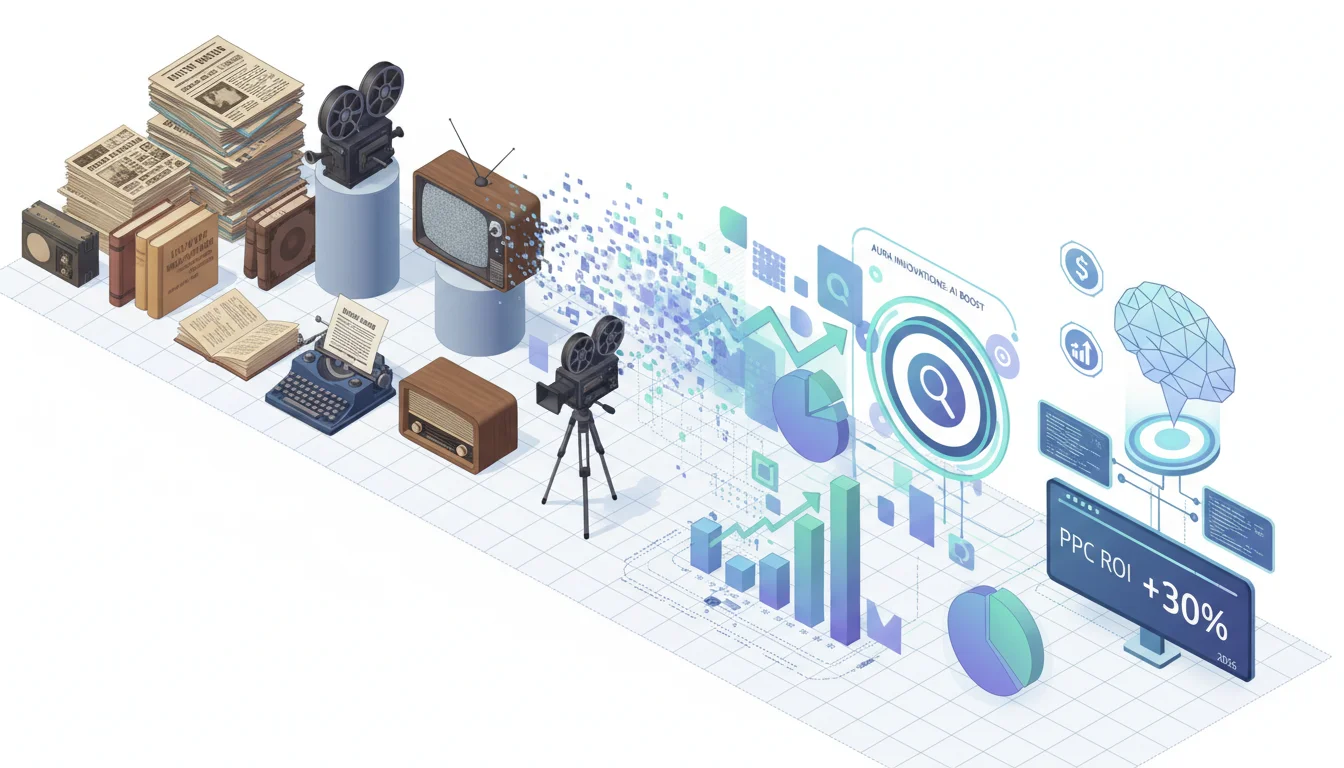
For years, the industry measured success in terms of impressions and clicks. An impression meant visibility; a click meant interest. This model worked for a long time. However, the rise of conversational AI agents, particularly in paid search results and on landing pages, introduced a new layer of user interaction that traditional metrics simply didn’t capture. An AI agent impression isn’t just about a user seeing an ad; it’s about them engaging with an intelligent system designed to answer questions, guide them, or even qualify them.
Sarah’s team at Aura Innovations was using a conversational AI on their main product pages, integrated directly into their Google Ads campaigns. They saw the agent activating, but the path from that interaction to a conversion was murky. “We know people are talking to it,” Sarah told her team during a Monday morning stand-up, “but what does that mean? Is an impression on our AI agent as valuable as an ad click? More valuable? Less?”
This is where the concept of AI agent impression value becomes critical. It’s not enough to count how many times an AI chatbot appears or is initiated. We need to understand the depth and quality of those interactions. Think of it this way: a billboard impression is passive. A click on a search ad is active. An interaction with an AI agent? That’s a conversation. It’s a user expressing intent, asking specific questions, and seeking direct solutions. This is a far more qualified signal than a simple click, which can often be accidental or fleeting.
Defining and Measuring AI Agent Impression Value
The first step for Aura Innovations was to redefine what an “impression” meant in the context of their AI agent. They moved beyond simple activation counts. An AI agent impression, they decided, would be logged not just when the agent popped up, but when a user initiated a conversation by typing a query or selecting a pre-defined option. This immediately filtered out passive views.
Next, they needed to measure the quality of these interactions. This involved several key metrics:
- Conversation Depth: How many turns did the conversation take? A single question and answer is different from a five-exchange dialogue.
- Sentiment Analysis: Was the user’s tone positive, neutral, or negative? Modern AI tools, like those offered by AWS Comprehend, can effectively analyze sentiment in real-time, providing immediate feedback on user satisfaction.
- Goal Completion: Did the agent successfully answer the user’s question, provide requested information, or direct them to the correct resource? This is paramount.
- Subsequent User Actions: After interacting with the AI, did the user navigate to a pricing page? Download a whitepaper? Start a free trial? This is the clearest indicator of value.
Sarah’s team integrated these metrics into their existing analytics platform. They worked with their development team to ensure every AI agent interaction was tagged and tracked, creating a bespoke data pipeline. It was complex, requiring custom event tracking in Google Analytics 4, but the insights proved invaluable.
A specific example: Aura Innovations noticed a high volume of AI agent interactions originating from their “Cloud Security Solutions” ad group. Users were frequently asking about compliance certifications. The AI agent was providing standard answers, but the subsequent navigation often led users away from the product page. This was a problem. The AI was answering, but not converting.
Connecting AI Agent Interactions to PPC ROI
This is where the real work began for Sarah and her team: connecting these new AI agent metrics directly to their PPC ROI. They started by segmenting their paid search campaigns. For each campaign and ad group, they could now see not only clicks and conversions but also detailed AI agent interaction data. They discovered something crucial:
Certain keywords, while generating fewer direct conversions, were driving highly engaged AI agent conversations. These conversations often involved users asking complex, pre-purchase questions that the AI was well-equipped to handle, but which required a deeper dive than a typical landing page provided. The value wasn’t in the immediate click-to-buy, but in the AI’s ability to nurture a lead further down the funnel. This is a critical distinction, and one many marketers overlook.
For instance, an ad for “enterprise cloud migration services” might have a lower click-through rate than a “free cloud storage” ad. However, the users engaging with the AI agent from the enterprise ad were asking specific questions about data sovereignty, integration with existing infrastructure, and SLA agreements. These were high-value prospects. The AI was effectively acting as a first-line sales qualifier.
The team realized their traditional PPC ROI calculations were incomplete. They were only accounting for direct conversions from clicks. Now, they began to factor in the downstream impact of AI agent interactions. They developed a scoring model:
- Basic Interaction: User asks one question, gets an answer (low value).
- Engaged Interaction: Multi-turn conversation, sentiment positive, navigates to a relevant product page (medium value).
- Qualified Interaction: Multi-turn conversation, sentiment positive, leads to a resource download or contact form submission (high value).
By assigning a monetary value, even a conservative one, to these qualified AI interactions, they began to see a more accurate picture of their PPC performance. Their “enterprise cloud migration” campaign, initially appearing mediocre in terms of direct conversions, suddenly showed a much stronger ROI when factoring in the AI-qualified leads. It showed the true power of an AI agent impression.
This also allowed them to optimize their ad copy and landing page content. If users from a specific ad group were consistently asking the AI agent about a particular feature, it signaled that the ad or landing page wasn’t adequately addressing that need. They could then refine their messaging, making the information more prominent or clearer, reducing the need for the AI agent to handle basic queries and freeing it up for more complex interactions.
The Future of Impression Metrics and AI
The marketing world is evolving beyond simple clicks and views. The ability to interact directly with AI agents embedded in search results or on websites changes the game. This means that advertisers must adapt their measurement strategies. The standard IAB guidelines for impression measurement, while foundational, need augmentation for this new era. An AI agent impression is not just a served pixel; it’s a doorway to a dialogue.
We are entering an era where the first point of contact for many users will be an AI. Whether it’s an AI directly answering a search query or a chatbot on a landing page, these interactions carry immense weight. Ignoring their value means leaving significant insights, and potential ROI, on the table. It’s not about replacing human interaction, but augmenting it, providing instant answers and guidance at scale.
For Aura Innovations, the change was profound. Sarah’s team used their new data to reallocate budget, shifting more spend towards campaigns that generated high-value AI agent interactions. They also invested in training their AI agent with more nuanced responses, particularly around the compliance questions that were a common pain point. They even A/B tested different AI agent prompts and initial greetings, finding that a more direct, problem-solving approach led to longer, more productive conversations.
One challenge they encountered was the sheer volume of data. Analyzing natural language conversations at scale requires robust tools. They experimented with various AI analytics platforms, eventually settling on one that offered strong categorization and sentiment analysis capabilities. This allowed them to identify emerging trends in user questions and proactively update their AI’s knowledge base. It’s easy to get lost in the data, but focusing on actionable insights is paramount.
The impact on their PPC ROI was undeniable. Within six months of implementing their new measurement framework, Aura Innovations saw a 15% increase in qualified leads originating from paid search, directly attributable to their ability to understand and optimize AI agent interactions. Their sales team reported warmer leads, often already pre-qualified by the AI agent on specific product features or pricing tiers.
This isn’t about chasing vanity metrics. It’s about understanding the true user journey in a world where AI is an integral part of that journey. Marketers who fail to adapt to this reality will find themselves behind. The future of paid advertising isn’t just about getting clicks; it’s about fostering meaningful engagement, and AI agents are at the forefront of that shift.
Quantifying AI agent impression value and integrating it into your PPC ROI calculations provides a more complete and actionable understanding of your digital advertising performance. This approach ensures that every interaction, not just every click, is accounted for in your marketing strategy.
What is an AI agent impression?
An AI agent impression refers to a user’s direct engagement with an AI-powered assistant or chatbot, typically initiated by a user query or selection, distinguishing it from a passive ad impression.
How does AI agent impression value differ from traditional ad impressions?
Traditional ad impressions measure visibility, while AI agent impression value measures the depth and quality of user interaction, including conversation length, sentiment, and subsequent user actions, indicating higher user intent.
What metrics are important for measuring AI agent impression value?
Key metrics include conversation depth (number of exchanges), sentiment analysis of user input, successful goal completion by the agent, and subsequent user actions like page navigation or form submissions.
How can understanding AI agent impression value improve PPC ROI?
By integrating AI agent interaction data with PPC campaign analytics, businesses can identify which ad groups drive high-value AI engagements, allowing for better budget allocation and optimization of ad copy and landing page content to improve conversion rates.
What challenges exist in tracking AI agent impression value?
Challenges include the need for sophisticated custom event tracking, robust natural language processing tools for sentiment and intent analysis, and the development of a clear scoring model to quantify the value of diverse interactions.


