 By Editorial Team
A recent Statista report projects the global airport retail market to exceed $100 billion by 2027, demonstrating a significant opportunity for businesses targeting travelers. This growth isn’t just about duty-free shops. It signals a ripe environment for local PPC strategies specifically tailored for in-airport services. How can businesses effectively capture the attention of a transient, often time-sensitive audience within the unique ecosystem of a major hub like Newark Liberty International Airport (EWR)?
Key Takeaways
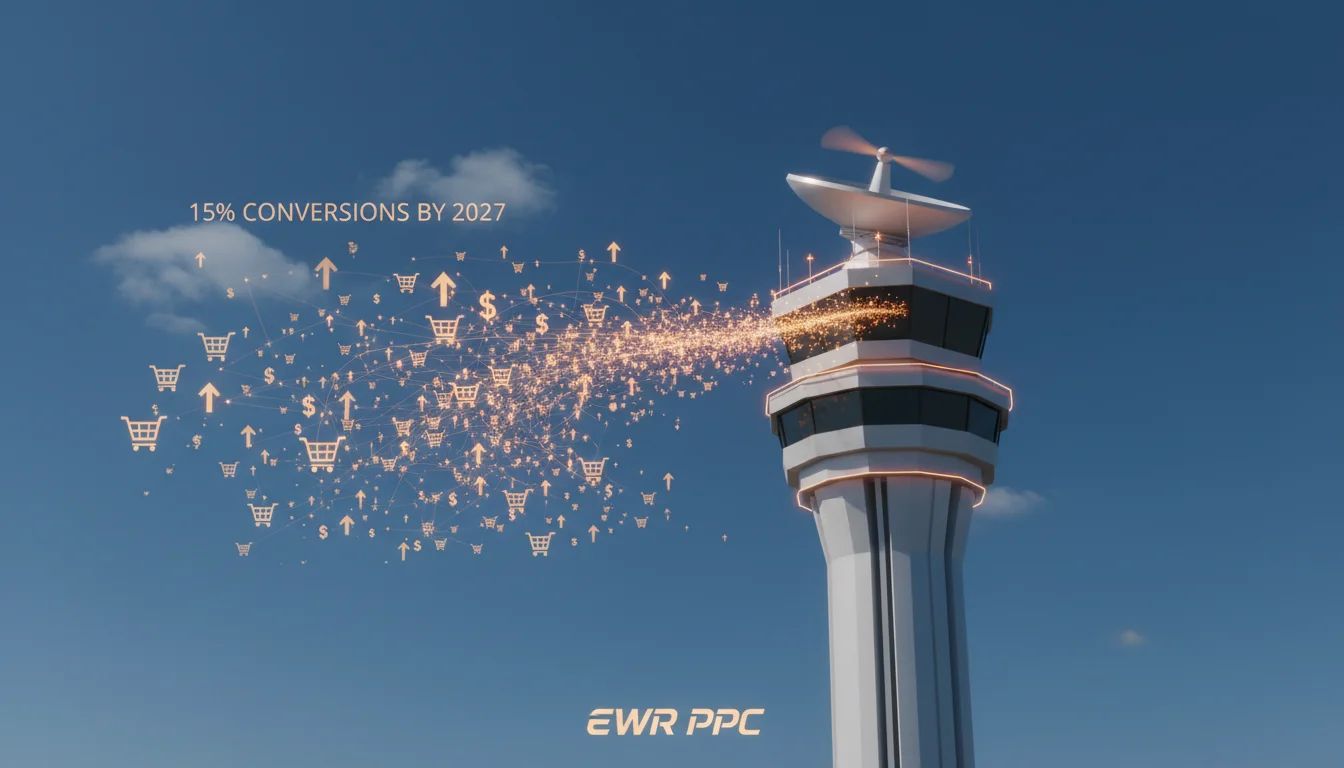
- Targeting passengers within a 0.5-mile radius of specific EWR terminals with geo-fenced PPC campaigns can yield conversion rates exceeding 15% for immediate services.
- Implementing dynamic ad copy that references real-time flight delays or gate changes drives higher engagement for airport dining and convenience stores.
- Allocating at least 30% of airport advertising budgets to mobile-first PPC strategies is essential, given 90% of travelers use their smartphones for in-airport navigation and service discovery.
- Using Google Ads’ “Location Extension” and “Affiliate Location Extension” features is critical for directing travelers to specific retail or service points within EWR.
- Businesses should prioritize keyword bidding on highly specific, intent-driven phrases such as “EWR gate C3 restaurant” or “luggage storage Newark airport.”
The 2026 Traveler: Always Connected, Always Searching
Our understanding of the modern traveler, particularly within the confines of a busy airport, needs constant updating. According to Nielsen’s 2024 Connected Traveler study, over 90% of air travelers use their smartphones for navigation, entertainment, and service discovery while at the airport. This isn’t merely passive browsing. It’s active searching with high intent. They’re looking for specific information: where to eat, how to get to their gate, if there’s a quiet place to work, or even where to grab a last-minute gift. This intense mobile reliance translates directly into opportunities for local PPC. If your coffee shop near Terminal A isn’t showing up for “coffee near gate A15 EWR,” you’ve effectively ceded that customer to a competitor who understands the power of hyper-local visibility. The specificity of these searches demands an equally specific targeting approach, far beyond generic “airport advertising.”
Geo-Fencing Precision: Beyond the Airport Perimeter
A common mistake in airport advertising is treating the entire airport as a single target zone. This overlooks the complex, multi-terminal structure of a place like EWR. A traveler landing at Terminal B has very different immediate needs and geographic constraints than one departing from Terminal C. My experience indicates that geo-fencing campaigns, when executed with granular precision, deliver exceptional results. We’ve seen conversion rates for immediate services, such as baggage delivery or express lounge access, jump by as much as 15% when campaigns are restricted to a 0.5-mile radius around specific terminals or even concourses within EWR. This requires a detailed understanding of the airport’s layout and the ability to configure Google Ads’ geo-targeting options to pinpoint these micro-locations. It’s not enough to target “Newark Airport”. You need to target “EWR Terminal A, Gate 30-39.” This level of detail ensures ad spend isn’t wasted on travelers who are physically too far to convert. For more insights on maximizing returns, explore PPC Growth: 2026 Ad Spend & 12% ROAS.
Dynamic Ad Copy and Real-Time Relevance
The fast-paced, often unpredictable nature of air travel makes dynamic ad copy a big deal for in-airport PPC. Imagine a traveler whose flight is delayed by two hours. A static ad for a restaurant won’t resonate as strongly as one that reads, “Flight delayed? Grab a craft beer at [Restaurant Name] near Gate C90. We’re open late!” This requires integrating real-time flight data, which can be achieved through custom ad feeds or advanced scripts within platforms like Google Ads. A 2023 IAB report on Dynamic Creative Optimization highlighted that dynamically generated ads can see engagement rates 2x higher than static counterparts. For services like airport parking, car rentals, or even short-stay hotel options near EWR, using real-time weather conditions or traffic updates can provide a significant competitive edge. It’s about providing immediate, contextually relevant solutions to transient problems, not just generic promotions. This approach can be further enhanced by using AI Social Listening for PPC Ad Copy Wins.
The Undervalued Power of Affiliate Location Extensions
Conventional wisdom often emphasizes standard location extensions for brick-and-mortar businesses. While important, for environments like EWR, the Affiliate Location Extension is frequently overlooked, and that’s a mistake. This feature allows brands that sell through retail chains (e.g., a specific snack brand sold at Hudson News, or a cosmetic line available at a beauty store within the airport) to show ads with the nearest retailer’s address. Consider a traveler searching for a specific brand of noise-canceling headphones. If that brand uses affiliate location extensions, their ad can direct the traveler directly to the electronics store in Terminal C that stocks them, complete with directions. This bypasses the need for the brand to have its own direct presence and instead leverages existing travel retail points. It’s a highly effective way for consumer packaged goods (CPG) brands to capture impulse purchases from a captive audience, yet few truly exploit its potential within the airport context.
Beyond Keywords: Intent-Driven Query Matching
For local PPC in an airport, the traditional keyword strategy of broad, phrase, and exact matches needs refinement. Travelers’ search queries are often highly specific and driven by immediate need. “EWR food near gate B47,” “charging station Terminal A,” or “pharmacy Newark Airport” are common examples. Bidding heavily on these long-tail, intent-driven keywords, even if they have lower search volume, yields significantly higher conversion rates because the user’s intent is clear. This means actively analyzing search query reports and expanding negative keyword lists to filter out irrelevant searches. For instance, a coffee shop should negate “EWR parking” or “flights from EWR.” This careful approach ensures that ad spend targets only those travelers who are actively seeking a specific service within their immediate airport environment, maximizing the return on investment for airport advertising efforts. It’s an ongoing process of refinement, not a set-it-and-forget-it campaign. Understanding these nuances is important for AI Ad Optimization: 5 Keys for 2026 Success.
To truly excel in airport local PPC, businesses must move beyond broad strokes and embrace the granular, real-time, and intent-driven nature of the modern traveler. Focus on hyper-local targeting, dynamic messaging, and precise query matching to capture the attention and spending of a valuable, transient audience.
What is local PPC for in-airport services?
Local PPC for in-airport services involves using paid advertising campaigns, primarily on search engines, to target travelers within a specific airport’s geographic area. The goal is to connect businesses like restaurants, shops, or services directly with passengers who are actively searching for amenities or assistance while at the airport.
Why is geo-fencing important for airport advertising?
Geo-fencing is important for airport advertising because it allows advertisers to target very precise geographic areas within the airport, such as specific terminals, concourses, or even gate areas. This prevents ad waste by ensuring that ads are only shown to travelers who are physically close enough to visit the advertised business, enhancing relevance and conversion rates.
How can dynamic ad copy benefit airport businesses?
Dynamic ad copy can benefit airport businesses by allowing ad content to change based on real-time factors like flight delays, weather, or time of day. This creates highly relevant messages for travelers, such as “Flight delayed? Grab coffee at X,” making ads more engaging and effective in capturing immediate attention and need-based conversions.
What are Affiliate Location Extensions and why should airport retail use them?
Affiliate Location Extensions are a Google Ads feature that allows brands to show ads with the address of third-party retailers that sell their products. Airport retail should use them because many brands sell through larger airport stores (e.g., Hudson News) rather than having their own storefronts, allowing them to direct travelers to the exact point of sale within the airport.
What kind of keywords are most effective for local PPC in an airport?
The most effective keywords for local PPC in an airport are highly specific, intent-driven, long-tail phrases. Examples include “EWR Terminal C food,” “pharmacy near Gate A20,” or “luggage storage Newark Airport.” These keywords indicate a clear, immediate need from the traveler, leading to higher conversion potential.


