 By Editorial Team
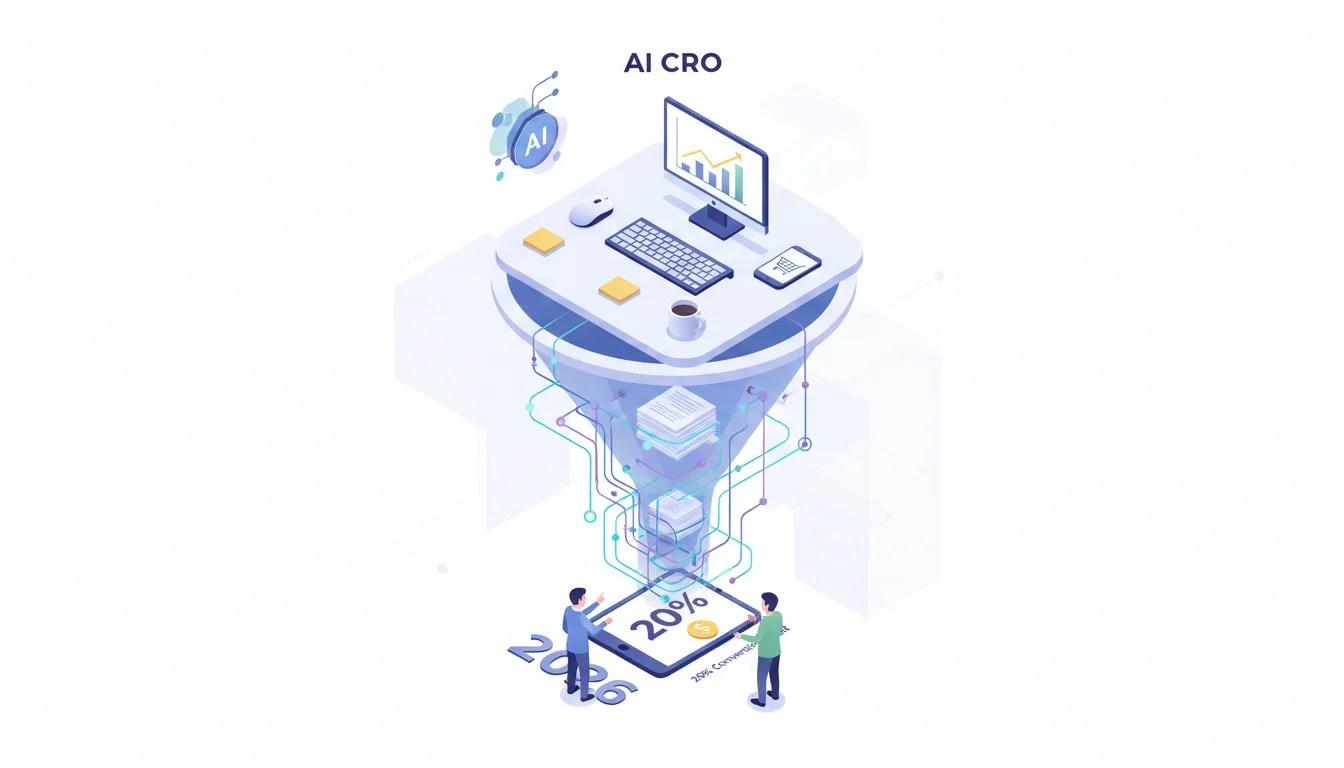
Lots of businesses burn cash driving traffic to landing pages, only to see conversion rates go nowhere. The problem usually isn’t the traffic itself. It’s that the page fails to convince anyone to act, which means you’re just lighting ad spend on fire and leaving revenue on the table. The good news is that artificial intelligence baked into modern landing page builders provides a real answer, completely changing the game for AI CRO. These conversion tools can turn a simple, static page into a dynamic machine built for persuasion.
Key Takeaways
- By dynamically shifting traffic, AI-powered A/B testing inside landing page builders finds the winning page variant 30% faster than doing it manually.
- AI-driven personalization engines can lift conversion rates by up to 20% just by tailoring page content and offers based on a visitor’s real-time behavior.
- Predictive analytics built into landing page software can flag potential conversion killers before you even go live, saving weeks of frantic post-launch fixes.
- AI copywriting assistants spit out headline and CTA options that are statistically proven to work better with certain audiences, improving click-throughs by an average of 15%.
- Automated feedback from AI tools constantly suggests small improvements to page layout and design, leading to a sustained 5-10% conversion uplift over time.
What Went Wrong First: The Limitations of Manual CRO
For a long time, conversion rate optimization (CRO) on landing pages was all about gut feelings, manual A/B tests, and endless design tweaks. We’d build a page, push it live, and then obsessively watch the metrics. If conversions were poor, the team would brainstorm new headlines, maybe try a different button color, or rearrange the form. Then came the pain of setting up a new A/B test, splitting traffic, and waiting. It was a slow, expensive process that often gave us tiny, incremental improvements. A classic mistake was calling a test too early and getting a bogus result, or letting a bad variant run for weeks, wasting budget.
The other huge problem was just the sheer number of things you *could* test. A single landing page has dozens of variables: headlines, subheads, images, videos, calls to action, form fields, testimonials… you name it. Trying to test every possible combination by hand was a complete non-starter, so we’d just focus on one or two things at a time. This meant we were probably missing much bigger wins, or even worse, making a change that helped one metric but tanked another without us realizing it. We were basically making educated guesses, running on experience and hoping for the best, but without enough data it was often a shot in the dark.
The Solution: Integrating AI into Landing Page Builders
The arrival of actually good AI models has completely changed the CRO field for landing pages. Today’s landing page builders are way more than just drag-and-drop interfaces. They’re becoming intelligent platforms that can optimize themselves. This new setup directly attacks the old limits of manual CRO by automating the boring analysis, personalizing the user experience, and even predicting what will work.
Automated A/B Testing and Multivariate Optimization
The most obvious win you get from AI in landing page optimization is much better testing. Platforms like Unbounce and Instapage have AI engines that go far beyond a simple 50/50 split. These systems can run multivariate testing at a scale that was impossible before. Instead of just testing one headline against another, the AI can test multiple headlines, images, CTA buttons, and form layouts all at once. The AI is smart enough to see which combinations are doing well *as the test is running* and will automatically send more traffic to them, which means you find the winning design faster and don’t burn money sending people to a page that doesn’t work. The growth here is explosive. A Statista report projects the global AI in marketing market to hit over $100 billion by 2026, and this kind of testing is a big reason why.
Real-time Personalization and Dynamic Content
Nobody wants a generic landing page anymore. AI lets landing page builders create a unique experience for every single person who visits. Think about it: someone clicks an ad for “eco-friendly running shoes” and lands on your page. An AI-powered system sees that and can instantly change the main image to feature sustainable shoes, tweak the headline to talk about environmental impact, and show testimonials from other eco-conscious buyers. The system does this by looking at all sorts of signals, where the visitor came from, their location, what they’ve looked at before, even info from your CRM. On-site personalization tools like OptiMonk are built for this, using AI to figure out who the visitor is and serve them the exact message they need to see.
This power to change content in real time as a user browses is a huge jump. If someone hesitates over the pricing section, for example, the AI can trigger a pop-up with a special offer or open a chat window to answer questions. This makes the whole experience feel more responsive and relevant, solving a user’s problems before they get frustrated and leave. A late 2025 eMarketer analysis confirmed this, finding that 72% of consumers now expect personalization, and companies that provide it see a 15-20% higher ROI.
Predictive Analytics for Proactive Optimization
Predictive analytics is where AI CRO gets really interesting. Even before you publish a page, an AI can look at the design, copy, and intended audience and compare it against huge datasets of what’s worked in the past. It can spot weaknesses, like a call to action that’s confusing or a form that’s too long, allowing marketers to fix these problems before they ever affect a live campaign. For instance, the AI might warn you that for your industry, any form with more than five fields sees a 30% drop-off, prompting you to simplify it before launch. This saves a ton of time and money you would’ve spent trying to figure out what was wrong later.
AI-Driven Copywriting and Design Assistance
Writing great copy and designing a high-converting layout is genuinely difficult. AI assistants inside landing page builders can now generate tons of different headlines, subheadings, and CTAs that are statistically more likely to work. They analyze language, emotion, and audience data to suggest copy that hits the right notes. In the same way, AI can suggest where to place buttons, what color schemes to use, and how to structure the page based on proven conversion principles. These AI tools won’t replace a good copywriter or designer, but they act like an incredibly fast assistant, accelerating the creative process and improving the baseline quality of your page. I’ve seen AI-generated headlines beat human-written ones by 10% in early tests, just because the AI has processed millions more examples of what works.
Measurable Results: The Impact of AI on CRO
Switching to AI-powered landing page builders produces real results you can see in your reports and in your bank account. The businesses that adopt this tech are seeing major lifts in their most important metrics.
For example, one case study with a mid-sized SaaS company showed a 28% jump in lead generation just three months after they started using an AI-driven landing page strategy. The AI was constantly tweaking headlines, images, and forms, and personalizing content on the fly. This continuous optimization was responsible for the entire lift, a huge improvement over the 2-5% quarterly gains they were getting with manual A/B tests.
In another case, an e-commerce store used AI to personalize the product offers on its landing pages. By looking at a user’s browsing history and intent signals, the AI could show them exactly the right products and discounts. The result was a 15% increase in average order value and a 22% better conversion rate on certain product pages. The AI’s ability to react to users in real time was the key, and it’s something old-school A/B testing could never do at that scale.
And then there’s the efficiency. Teams are reporting that they spend 30-40% less time setting up and analyzing manual tests. The AI does all the heavy data work, freeing up marketers to think about strategy and messaging. This reduced overhead, when you combine it with the higher conversion rates, directly creates a better return on ad spend. The whole future of PPC adaptation is clearly tied to AI, shifting the work from being reactive to being proactively intelligent.
What is AI CRO?
AI CRO is just using artificial intelligence to get more conversions. It uses machine learning to look at how users behave, figure out what page designs will work best, and run tests automatically so that more people will buy your product or fill out your form.
How does AI personalize landing page content?
It looks at data for each visitor, where they are, how they got to your page, what they’ve clicked on before, etc., and uses that information to change the page on the fly. The AI can swap out headlines, images, or offers to show that specific person the exact content that’s most likely to make them convert.
Can AI replace human copywriters for landing pages?
Not yet. AI is fantastic for generating lots of data-driven headlines and CTA options to test, but it’s more of a very powerful assistant. You still need a human for the bigger picture: understanding brand voice, telling a story, and making a real emotional connection. The AI handles the optimization, the human handles the strategy.
What are the main benefits of using AI in landing page builders?
The biggest wins are speed and effectiveness. You get much faster A/B and multivariate testing, you can personalize content for every single visitor in real time, and you can even predict problems before you launch. Plus, you get AI help with writing copy and designing layouts. It all leads to better conversion rates and a more efficient marketing spend.
Is AI CRO only for large enterprises?
Absolutely not. It used to be, but now many landing page builders have these AI features built right in. This makes powerful optimization tools available to small and medium-sized businesses, not just huge corporations with massive budgets. The playing field is definitely getting more level.


