 By Editorial Team
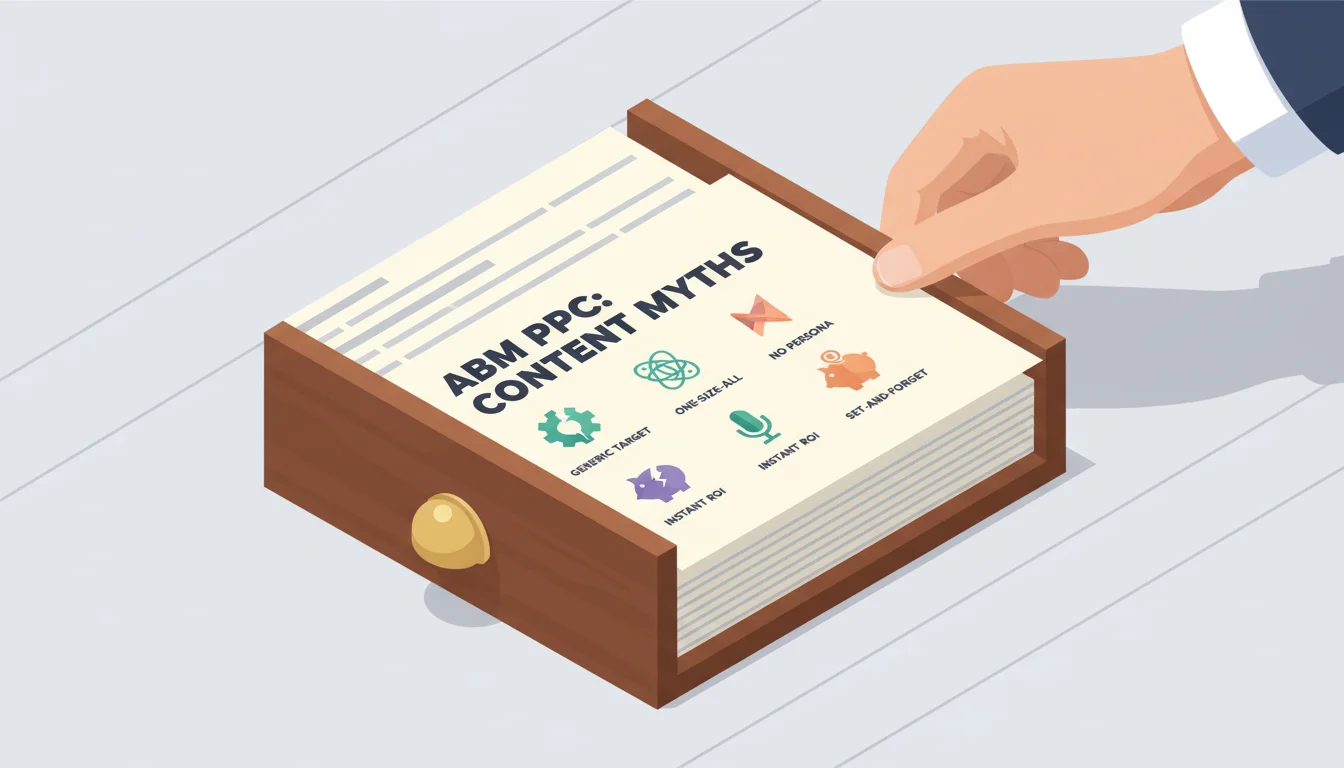
There’s a remarkable amount of misinformation circulating regarding content strategy for ABM PPC, often leading marketers down inefficient paths. Executing effective ABM PPC campaigns demands a nuanced understanding of how targeted content truly impacts high-value accounts, and simply repurposing general marketing materials won’t cut it.
Key Takeaways
- Tailor content specifically for each account’s unique challenges and opportunities, moving beyond generic industry pain points to address individual business objectives.
- Prioritize interactive content formats like personalized calculators, diagnostic tools, and custom reports for high-value accounts to drive deeper engagement and data capture.
- Integrate specific account insights from CRM and sales teams directly into your ad copy and landing page messaging for hyper-relevance.
- Measure content effectiveness in ABM PPC by tracking account engagement metrics such as time on page, content downloads by account, and progression through the sales funnel, not just click-through rates.
Myth 1: You Can Just Repurpose Your Standard Demand Gen Content for ABM PPC
This is perhaps the most common and damaging misconception. Many marketing teams assume that content created for broad demand generation, such as general e-books on industry trends or introductory webinars, will suffice for account-based marketing. They believe a slight tweak to the ad copy is enough to make it “ABM-ready.” This approach fundamentally misunderstands the core principle of ABM, which is hyper-personalization. When you’re targeting a specific account, say Acme Corp., with your PPC ads, their decision-makers are not looking for general information. They’ve likely already consumed that. They are looking for solutions tailored to their specific operational challenges, their industry vertical’s nuances, and their existing technology stack. Consider a B2B software company targeting a large financial institution. A generic e-book on “Improving Data Security” might get some clicks from a broad audience. However, an ABM PPC campaign for that same financial institution should lead to content like “Compliance Solutions for Global Banking Operations Using [Your Product Name]” or “Integrating [Your Product Name] with Core Banking Systems for Enhanced Fraud Detection.” The shift is from broad problem awareness to specific, actionable solutions directly relevant to the target account’s context. According to a HubSpot report, companies that personalize web experiences see, on average, a 19% uplift in sales. This personalization extends directly to the content served via PPC in an ABM context. Your sales team can tell you the specific pain points they’ve uncovered during initial conversations, and your ABM content strategy must reflect those insights. Failure to do so results in wasted ad spend and missed opportunities to engage high-value prospects.
Myth 2: ABM PPC Content Should Focus Solely on Product Features
While your product’s capabilities are certainly relevant, reducing ABM PPC content to a feature list is a critical misstep. High-value accounts, especially those with complex buying committees, aren’t primarily interested in a list of features. They’re interested in outcomes and value. They want to understand how your solution will solve their pressing business problems, improve their bottom line, or gain them a competitive edge. This means your targeted content needs to articulate the business impact, not just the technical specifications. Imagine you’re targeting a manufacturing giant with a new supply chain optimization platform. An ad leading to a page detailing “real-time inventory tracking” or “automated order processing” might seem logical. However, a more effective approach for ABM PPC would be content that addresses “Reducing Raw Material Waste by 15% in Large-Scale Manufacturing” or “Ensuring Supply Chain Resilience Against Geopolitical Disruptions.” These content pieces would then illustrate how your product’s features enable these specific outcomes. The content should speak to the strategic implications for the business, not just the tactical functionality. I’ve seen countless campaigns where the focus on features led to high bounce rates and low engagement, simply because the content failed to connect with the target account’s strategic priorities. Your sales enablement team often holds the key to understanding these strategic priorities, so collaboration there is non-negotiable.
Myth 3: You Only Need One Piece of Content Per Target Account
The idea that a single, well-crafted piece of content will magically convert a target account through ABM PPC is naive. The buying journey for high-value accounts is rarely linear and involves multiple stakeholders with different information needs and priorities. A C-suite executive might be interested in ROI and strategic alignment, while a department head needs to understand operational integration and team impact. A technical lead will scrutinize security protocols and scalability. This multi-stakeholder reality necessitates a diverse content portfolio, even for a single account. Your ABM PPC strategy should guide accounts through a content journey, starting with high-level, value-oriented pieces and progressing to more detailed, technical, or financial content as they move down the funnel. For example, an initial ad might lead to a personalized case study showing similar companies achieving specific results. Subsequent ads, retargeting the same account, could then point to an interactive ROI calculator pre-populated with their industry data, or a whitepaper detailing compliance with specific regulatory frameworks relevant to their business. A recent IAB report emphasizes the increasing complexity of B2B buying processes, with an average of 6-10 people involved in major purchase decisions. Your content strategy for ABM PPC must reflect this reality by providing a range of resources that speak to various roles and stages of the buying cycle. This isn’t about overwhelming them with content, but providing the right content at the right time.
Myth 4: ABM PPC Content Success Is Measured Solely by Clicks
While click-through rate (CTR) is a foundational metric for any PPC campaign, it’s an insufficient and often misleading indicator of success for ABM PPC content. The goal of ABM is not just to generate clicks, but to engage specific, high-value accounts in a meaningful way that moves them closer to a purchase decision. Focusing solely on clicks can lead marketers to optimize for broad appeal rather than deep, targeted engagement. Instead, ABM PPC content success should be evaluated through a combination of metrics that reflect account-level engagement and progression. This includes metrics such as:
- Time on page/content asset: How long are key stakeholders from the target account spending with your content? Longer engagement suggests higher interest.
- Content downloads/views by account: Are specific individuals within the target account downloading your detailed whitepapers or viewing your product demos?
- Engagement with interactive elements: For tools like ROI calculators or diagnostic quizzes, are accounts completing these interactions?
- Sales accepted leads (SALs) or opportunities generated: In the end, is the content contributing to the sales pipeline for these target accounts?
- Multi-touch attribution: Understanding which content pieces are touched by the account at various stages of their journey.
Platforms like Google Ads and Meta Business Manager offer strong tracking capabilities that, when integrated with your CRM, can provide this granular, account-level insight. For instance, configuring custom conversions for specific content downloads or video views for identified IP ranges (associated with your target accounts) allows for a much clearer picture of content effectiveness than simply looking at total clicks. Ignoring these deeper engagement metrics means you’re flying blind, optimizing for general traffic instead of strategic account penetration.
Myth 5: You Can Set It and Forget It with ABM PPC Content
The dynamic nature of target accounts and the competitive field means that a “set it and forget it” approach to ABM PPC content is a recipe for stagnation. Markets shift, competitors launch new offerings, and your target accounts’ priorities evolve. What was highly relevant content six months ago might be outdated or less impactful today. Continuous monitoring, analysis, and iteration are essential for sustained success in account-based marketing. Regularly review your content performance against your target accounts. Are certain accounts engaging more with specific types of content? Are there emerging trends in their industry that your content isn’t addressing? Your sales team will be a primary source of this evolving intelligence. They hear directly from prospects about new challenges, budget shifts, and competitive pressures. Integrate their feedback into your content strategy. This might mean refreshing existing case studies, developing new thought leadership pieces that address novel industry challenges, or even creating bespoke content for a particularly strategic account. For example, if a target account is suddenly focused on AI integration, your ABM PPC content needs to quickly pivot to show your solution’s AI capabilities or how it complements existing AI initiatives. This agility ensures your targeted content remains fresh, relevant, and compelling throughout the entire engagement cycle. Effective content strategy for ABM PPC demands a highly personalized, outcome-focused, multi-faceted, and continuously optimized approach.
What is the main difference between content for ABM PPC and traditional demand generation PPC?
The primary difference lies in specificity and personalization. Traditional demand generation content targets a broad audience with general problems, aiming for volume. ABM PPC content, conversely, is hyper-tailored to the specific challenges, industry, and even internal structure of individual high-value accounts, focusing on deep engagement and conversion.
How can I ensure my ABM PPC content is truly personalized for each account?
To achieve true personalization, integrate insights from your sales team, CRM data, and account intelligence platforms. Use this data to craft content that directly addresses the unique pain points, business goals, and existing technology stack of each target account, moving beyond generic industry-level information.
What types of content work best for ABM PPC campaigns?
Effective ABM PPC content often includes personalized case studies, interactive ROI calculators, custom industry reports, solution briefs tailored to specific use cases, and executive-level thought leadership that addresses strategic business outcomes. The key is relevance and value to the individual account.
How do I measure the success of my ABM PPC content beyond clicks?
Measure success by tracking account-level engagement metrics such as time spent on specific content pages by target account IP addresses, content downloads attributed to target accounts, completion rates for interactive tools, and in the end, the progression of target accounts through the sales pipeline and conversion into opportunities or customers.
How often should I update or refresh my ABM PPC content?
ABM PPC content should be reviewed and potentially refreshed regularly, at least quarterly, or whenever significant shifts occur in your target accounts’ priorities, market conditions, or competitive field. Continuous iteration ensures your content remains relevant and impactful for high-value prospects.


