 By Editorial Team
The digital advertising manager, Sarah Chen, stared at the Q3 performance report for “Urban Threads,” a mid-sized e-commerce apparel brand. Despite a 20% increase in ad spend across their primary platforms, conversion rates had stagnated, and customer acquisition costs (CAC) were creeping upwards. Their broad demographic targeting for new collections simply wasn’t cutting through the noise anymore, leaving her to wonder if there was any way to genuinely enhance customer value through more relevant interactions, specifically with personalized offers.
Key Takeaways
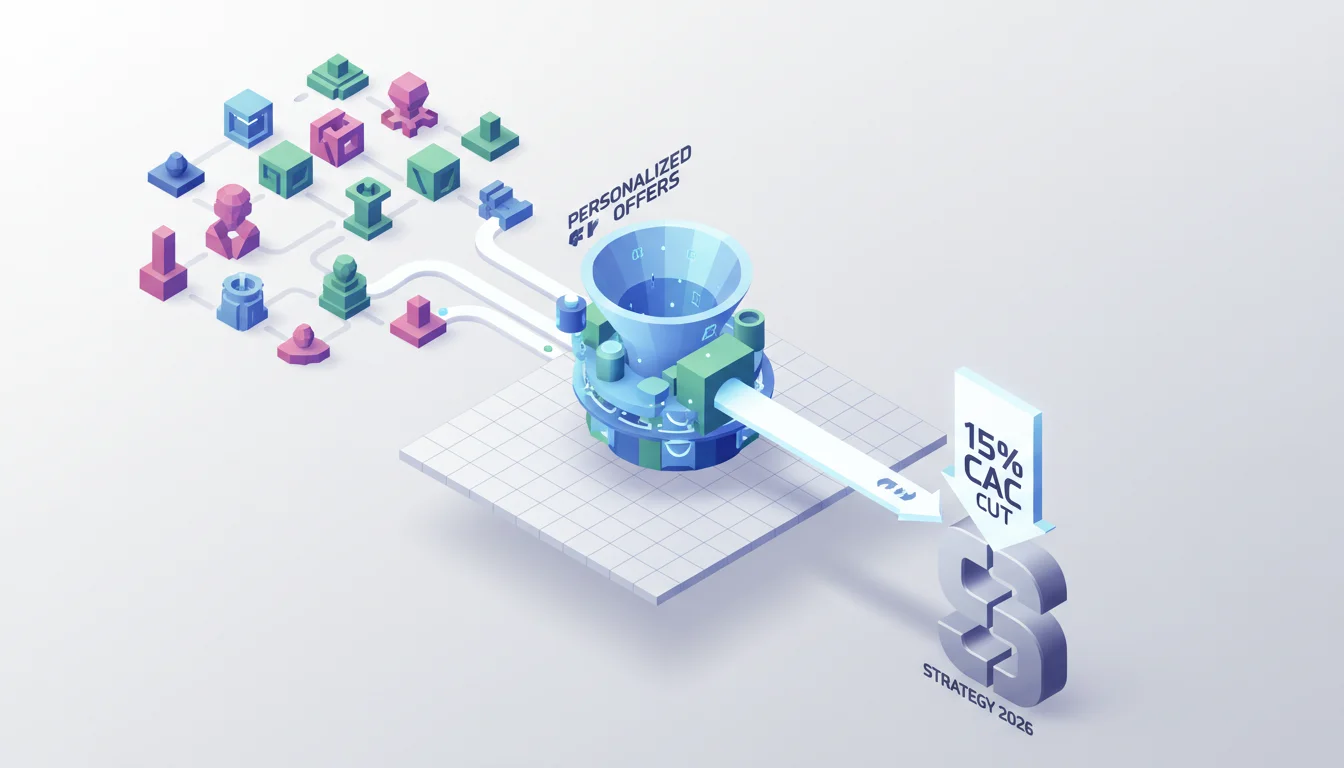
- Implementing PPC segmentation by purchase history and browsing behavior can reduce customer acquisition costs by 15% within six months.
- Dynamic creative optimization (DCO) tools allow for real-time ad adjustments based on individual user data, increasing click-through rates by up to 25%.
- A/B testing personalized offer strategies against generic campaigns consistently demonstrates a 10% to 20% uplift in conversion rates for segmented audiences.
- Integrating CRM data with ad platforms provides a unified customer view, enabling more precise targeting and offer delivery, often leading to a 5% increase in repeat purchases.
- Focusing on lifetime value (LTV) through personalized retargeting campaigns yields a 3x higher return on ad spend compared to generic retargeting efforts.
Sarah knew Urban Threads had a strong product line, but their advertising felt like shouting into a crowded room. She’d tried the usual tactics: optimizing keywords, refining ad copy, even experimenting with different ad formats. The problem wasn’t the mechanics of the campaigns. It was the underlying strategy. They were treating every potential customer as a monolithic entity, ignoring the rich data they already possessed. This approach, while simple, was proving expensive and ineffective. The market, in 2026, demands more than just visibility. It demands relevance. According to a eMarketer report, digital ad spending continues to grow, but so does consumer expectation for tailored experiences. Brands that fail to adapt risk becoming invisible.
Her team had been running broad awareness campaigns for their new fall line, targeting women aged 25-45 interested in “fashion” and “clothing.” It generated impressions, certainly, but few actual sales. Sarah decided to pivot. “We need to stop thinking about audiences as broad strokes,” she told her team, “and start seeing them as individuals with specific tastes and past behaviors.” Her first step involved a deeper dive into their existing customer data. They used their customer relationship management (CRM) system, Salesforce Marketing Cloud, to segment their customer base beyond basic demographics. They identified several key groups: “repeat buyers of premium denim,” “first-time purchasers of accessories,” and “window shoppers who frequently view sale items but don’t convert.”
This initial segmentation was a lightbulb moment. It wasn’t enough to know someone was interested in fashion. Knowing they had bought three pairs of high-waisted jeans in the last year suggested a very different purchasing intent than someone who had only ever clicked on discounted blouses. This level of granularity forms the bedrock of effective PPC segmentation. Without it, your personalized offers are merely educated guesses, not precision strikes. You are essentially throwing darts in the dark, hoping to hit something. A HubSpot research compilation indicates that personalized calls to action convert 202% better than generic ones. That’s a significant difference that can’t be ignored.
Armed with these new segments, Sarah’s team began to craft specific ad creatives and offers. For the “repeat buyers of premium denim,” they created ads showing new arrivals in their preferred denim styles, offering a 10% discount on their next pair. For the “window shoppers who frequently view sale items,” they launched retargeting campaigns featuring items they had viewed, coupled with a limited-time free shipping offer. They used Google Ads and Meta Business Suite‘s custom audience features to upload these segmented lists. The process involved creating distinct audience lists based on CRM data, then tailoring ad copy, visuals, and landing page experiences for each. For instance, the denim buyers saw ads with models in high-end denim, while the sale shoppers saw bold “Flash Sale” banners.
This wasn’t just about changing the discount. It was about changing the entire narrative of the ad. The “premium denim” segment received ads that spoke to quality and style longevity, while the “sale item” segment’s ads emphasized immediate savings and limited stock. This nuanced approach to messaging, directly tied to observed behavior, is where the real power of personalized offers lies. It moves beyond superficial personalization like “Hello [Name]” to a deeper understanding of what drives that specific customer segment. I’ve seen countless campaigns fail because they try to force a generic message into a personalized container. It simply doesn’t work.
The initial results were promising. The click-through rate (CTR) for the “premium denim” segment’s ads increased by 15% within the first two weeks, and their conversion rate saw a 7% jump. The “sale item” segment, previously a difficult group to convert, responded well to the urgency of the free shipping offer, with a 5% increase in conversions. Sarah’s team also experimented with dynamic creative optimization (DCO) using AdRoll. This allowed them to automatically adjust ad components like product images, headlines, and calls to action based on individual user browsing history, ensuring that a user who looked at a red dress saw an ad for that red dress, perhaps with a complementary accessory.
One critical aspect Sarah emphasized was rigorous A/B testing. They didn’t just launch personalized campaigns and hope for the best. For every personalized offer, they ran a control group that received a generic ad or offer. This allowed them to quantify the impact of personalization directly. They found that for the “first-time purchasers of accessories” segment, an offer of “15% off your next accessory purchase” outperformed a generic “10% off your entire order” by a significant margin. The specificity of the offer resonated more strongly. This is a common pitfall: assuming personalization is inherently better without validating it. Always test. Always measure.
The benefits extended beyond immediate sales. By offering relevant products and discounts, Urban Threads began to build stronger customer relationships. Repeat purchase rates saw a modest but consistent increase across several segments. Customers felt understood, not just targeted. This shift in perception contributes significantly to customer value over the long term. A Nielsen report on personalization in retail highlights that consumers are 80% more likely to make a purchase when brands offer personalized experiences.
Sarah also recognized the importance of integrating their various data sources. They pulled data from their website analytics platform, Google Analytics 4, to understand user journeys, and combined it with purchase history from Salesforce. This well-rounded view allowed them to refine their segments further and identify new opportunities for personalization. For example, they discovered that customers who purchased activewear often also browsed casual jackets. This insight led to a new personalized offer: “15% off casual jackets for activewear purchasers.” This cross-segment analysis is a powerful, yet often underutilized, strategy.
The challenge, she found, was not just in setting up the initial segments and campaigns, but in continuously monitoring and refining them. Customer behavior changes, trends shift, and new products launch. What worked last quarter might not be optimal this quarter. Her team established a weekly review process to analyze campaign performance, adjust bids, refresh ad creatives, and even create new audience segments as needed. This iterative approach is fundamental to maximizing the return on investment for personalized offers. It’s a living strategy, not a one-time setup.
By the end of Q4, Urban Threads saw a remarkable turnaround. Their overall CAC decreased by 18%, and their conversion rates had climbed by 12% compared to the previous quarter. The personalized offers, driven by granular PPC segmentation, had not only boosted sales but also deepened customer loyalty. Sarah’s initial frustration had transformed into a clear strategy for growth. They had moved from broad, expensive advertising to precise, cost-effective engagement, proving that understanding and responding to individual customer needs is the most powerful tool in a marketer’s arsenal.
Embracing personalized offers through intelligent segmentation transforms advertising from a hopeful broadcast into a targeted conversation, directly influencing customer value and driving measurable results.
What is a personalized offer in digital marketing?
A personalized offer is a promotional message or discount tailored to an individual customer’s specific preferences, behaviors, or demographic information. This differs from generic offers by using data like past purchases, browsing history, or declared interests to make the offer more relevant and appealing to the recipient, such as “15% off activewear for customers who frequently purchase sports bras.”
How does PPC segmentation contribute to personalized offers?
PPC segmentation involves dividing your target audience into smaller, distinct groups based on shared characteristics relevant to paid advertising campaigns. This segmentation allows marketers to create highly specific ad creatives and offers for each group, ensuring that personalized offers reach the most receptive audience, for example, showing a discount on winter coats only to users in colder climates who have previously browsed outerwear.
What types of data are essential for creating effective personalized offers?
Essential data types include purchase history (what they bought, how often), browsing behavior (products viewed, pages visited), demographic information (age, location, gender), engagement data (email opens, ad clicks), and declared preferences (from surveys or preference centers). Combining these data points provides a complete view for crafting truly relevant offers.
Can personalized offers increase customer lifetime value (LTV)?
Yes, personalized offers significantly contribute to increasing customer lifetime value. By consistently providing relevant value and demonstrating an understanding of customer needs, brands foster loyalty and encourage repeat purchases. A customer receiving tailored recommendations or discounts feels valued, leading to a stronger relationship and higher long-term spending with the brand.
What are common challenges when implementing personalized offers?
Common challenges include data fragmentation across different systems, ensuring data privacy and compliance, the technical complexity of integrating various platforms, the need for continuous monitoring and optimization of campaigns, and the potential for over-personalization that can feel intrusive. Overcoming these requires strong data management and a strategic, iterative approach.


