 By Editorial Team
Key Takeaways
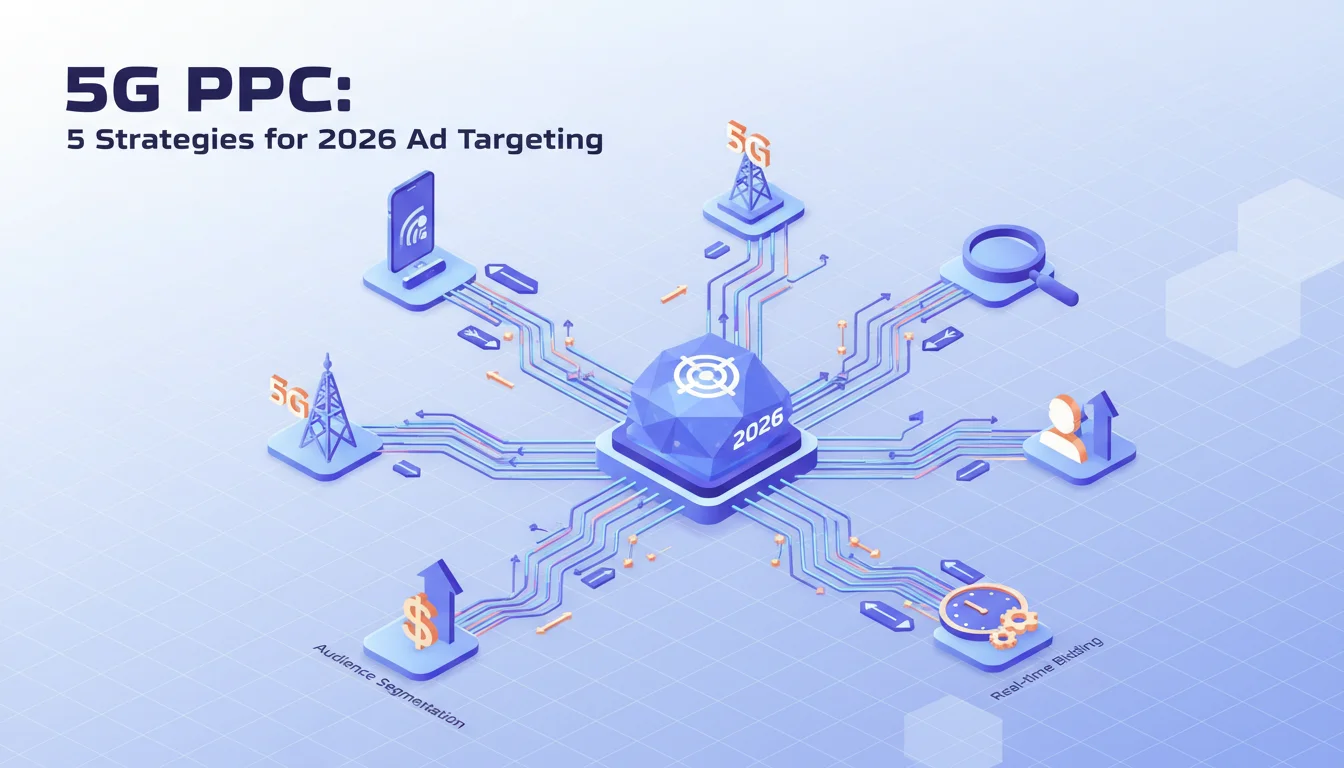
- Implement geo-fencing strategies that target users within a 100-meter radius of physical locations, capitalizing on 5G’s precise location services for enhanced foot traffic conversion.
- Develop rich media ad creatives optimized for high-bandwidth environments, specifically incorporating 4K video and interactive augmented reality (AR) elements to engage 5G users.
- Use real-time bidding (RTB) platforms that can dynamically adjust bids based on user connection speed, device type, and location data to prioritize high-value 5G segments.
- Integrate AI-powered predictive analytics to identify emerging 5G-enabled user behaviors and preference shifts, allowing for proactive campaign adjustments and budget allocation.
- Focus on privacy-centric data collection and targeting methods, ensuring compliance with evolving data regulations while still segmenting audiences based on their advanced connectivity capabilities.
The advent of 5G technology is fundamentally reshaping how consumers interact with digital content and, by extension, how advertisers approach paid per click (PPC) campaigns. This isn’t just about faster downloads. It’s about enabling entirely new user behaviors and expectations. Marketers now have an unprecedented opportunity to refine their audience targeting strategies, reaching high-speed user segments with precision and delivering rich, immersive experiences. The question for 2026 isn’t whether 5G will impact PPC, but how deeply we can integrate its capabilities for superior campaign performance.
The 5G Advantage in Audience Targeting
5G’s core benefits extend far beyond raw speed, encompassing lower latency, greater bandwidth, and increased device density. These technical advancements translate directly into new possibilities for PPC specialists. Consider the impact on mobile search advertising: users with 5G connections expect instantaneous results and smooth transitions between content types. If your landing page takes more than a second to load a high-resolution image or embedded video, you’re losing their attention. According to a eMarketer report from late 2023, global 5G connections surpassed 1 billion, indicating a substantial and growing segment of users with these advanced capabilities.
This advanced connectivity allows for more granular segmentation. Instead of broadly targeting “mobile users,” we can now differentiate between users on standard LTE and those on 5G networks. Advertising platforms like Google Ads and Meta Business Manager are increasingly offering features that allow for such distinctions, often through device and network type signals. This isn’t theoretical. It’s a practical, implementable strategy. For instance, advertisers running campaigns for interactive product configurators or virtual try-on experiences would see significantly higher engagement and conversion rates from a 5G audience segment, simply because the technology supports the experience without frustration.
One powerful application is in hyper-local targeting. With 5G’s enhanced location accuracy, advertisers can define geofences with remarkable precision. Imagine a coffee shop in downtown Atlanta wanting to reach potential customers passing by. With 5G, they can target users within a specific city block, even down to a particular building, with an ad for a morning special. This level of accuracy was simply not feasible with previous generations of mobile networks and it means less wasted ad spend and more relevant impressions. The precision extends to real-time scenarios too. A user stuck in traffic on I-75 near the Northside Drive exit could receive an ad for a nearby drive-thru restaurant, capitalizing on immediate need and high bandwidth for quick ordering.
Optimizing Creatives for 5G Environments
The increased bandwidth of 5G means advertisers are no longer constrained by the limitations of slower connections. This opens the door for richer, more immersive ad creatives. We’re talking about 4K video ads that load instantly, interactive augmented reality (AR) experiences that run smoothly within a mobile browser, and dynamic ad formats that adapt in real-time based on user interaction. A static image or a low-resolution video simply won’t cut it for a 5G user who expects a premium visual experience. In my experience managing campaigns for clients in the retail sector, the uplift in click-through rates (CTR) and engagement for high-fidelity video ads served to 5G users compared to their LTE counterparts has been substantial, often exceeding 30% for comparable audiences.
Consider the implications for industries like real estate or automotive. A potential homebuyer on a 5G network could smoothly view a 3D virtual tour of a property directly within an ad, without buffering delays. An automotive enthusiast could interact with an AR model of a new car, customizing colors and features, all initiated from a PPC ad. These experiences are not merely visually appealing. They are highly engaging and provide significant value to the user, moving them further down the conversion funnel before they even reach a landing page. This requires a shift in creative strategy, moving away from “least common denominator” design to one that capitalizes on advanced capabilities.
Developing these rich media assets requires collaboration between creative teams and media buyers. The creative department needs to understand the technical specifications and opportunities presented by 5G, while media buyers must identify the platforms and targeting options that can deliver these assets to the right audience segments. Tools and platforms like Google’s Performance Max campaigns are evolving to support these richer formats, often automatically optimizing asset delivery based on user connection speeds. It’s not enough to just create a great ad. It has to be delivered effectively.
Bidding Strategies for Advanced Connectivity Segments
Traditional PPC bidding strategies often focus on keywords, demographics, and user behavior. With 5G, an additional layer of complexity, and opportunity, emerges: network capability. Advertisers should consider adjusting their bidding strategies to reflect the higher value of a 5G user segment, especially when delivering high-bandwidth content or promoting products/services that benefit from faster, more reliable connections. A user experiencing a lag-free, high-definition video ad is more likely to convert than one struggling with buffering, making that impression inherently more valuable.
One approach is to implement bid modifiers specifically for users detected on 5G networks. While not all platforms offer a direct “5G network” targeting option yet, many allow for device-based targeting that can indirectly capture a significant portion of the 5G user base (e.g., targeting the latest smartphone models known for 5G compatibility). Plus, sophisticated real-time bidding (RTB) platforms can process signals like connection speed and latency in milliseconds, allowing for dynamic bid adjustments. This means you might bid 20% higher for a user on a 5G connection in a high-density urban area like Midtown Atlanta, where competition is fierce and immediate action is often desired, than for a user on LTE in a rural zone.
Beyond explicit bid adjustments, consider the broader impact on campaign objectives. For brand awareness campaigns focused on video views, targeting 5G users ensures a higher completion rate and a more positive viewing experience, thus maximizing the impact of your creative investment. For direct response campaigns, the faster load times and smoother interactive elements facilitated by 5G can significantly reduce bounce rates and improve conversion funnels. This isn’t about throwing more money at 5G users indiscriminately, but rather about strategically valuing their enhanced experience and propensity for engagement. It’s about recognizing that not all impressions are created equal, and some are more “connected” than others, quite literally.
Measuring Success in the 5G Era
Measuring the effectiveness of PPC campaigns targeting 5G users requires a nuanced approach that goes beyond traditional metrics. While CTR, conversion rate, and cost per acquisition (CPA) remain fundamental, new metrics emerge as particularly relevant for high-speed user segments. For instance, engagement metrics for rich media, such as video completion rates for 4K ads or interaction rates for AR experiences, become critical indicators of ad quality and user experience. A high completion rate for a complex video ad served to a 5G user suggests the creative resonated and the delivery was flawless, both direct benefits of advanced connectivity.
Plus, the impact on landing page performance is a key area for analysis. A 5G user expects near-instant page loads. Tools like Google’s PageSpeed Insights can help identify bottlenecks, but monitoring actual load times for different user segments (e.g., separating 5G from LTE data in your analytics platform) provides invaluable insights. If 5G users are bouncing at a higher rate than expected, it might indicate an issue with your landing page optimization, not the ad itself. This granular data allows for precise adjustments, whether it’s optimizing image compression, simplifying code, or using content delivery networks (CDNs) more effectively.
Attribution models also warrant reconsideration. With more complex, interactive ad formats, the user journey may involve multiple touchpoints that are unique to the 5G experience. A user might engage with an AR ad, then visit a product page, and finally convert days later. Understanding the role of that initial rich media interaction in the overall conversion path is vital. Multi-touch attribution models, which assign credit to various touchpoints, become even more important here. Without this well-rounded view, the true value of targeting 5G users with advanced creatives might be underestimated. The goal is to connect the dots between the superior experience enabled by 5G and the ultimate business outcome. For more insights into future-proofing your strategies, consider how PPC in 2026 will evolve with AI commerce shifts.
How does 5G specifically improve PPC campaign performance?
5G improves PPC performance by enabling faster ad load times, supporting richer creative formats like 4K video and AR, and allowing for more precise geo-targeting, which collectively leads to higher engagement rates and better conversion opportunities.
What kind of ad creatives are best suited for 5G users?
Ad creatives that are best suited for 5G users include high-resolution video (e.g., 4K), interactive augmented reality (AR) experiences, 3D product visualizations, and dynamic ad formats that require significant bandwidth and low latency for optimal performance.
Can I specifically target 5G users in my PPC campaigns?
While direct “5G network” targeting options are still evolving on all platforms, advertisers can often indirectly target 5G users by segmenting based on device models known for 5G compatibility, using advanced demographic data, or using real-time bidding platforms that factor in connection speed signals.
How does 5G affect landing page experience and conversion rates?
5G significantly reduces landing page load times, which is critical for user retention and conversion. Users on 5G expect instantaneous access to content, so a fast-loading, visually rich landing page directly contributes to lower bounce rates and improved conversion rates.
What metrics should I focus on when analyzing 5G-optimized PPC campaigns?
Beyond standard PPC metrics like CTR and CPA, focus on engagement metrics for rich media (e.g., video completion rates, AR interaction rates), bounce rates for landing pages specifically for 5G users, and the impact of faster load times on the full conversion funnel.


