 By Editorial Team
Key Takeaways
- Visit Orlando significantly increased its air service market share by implementing a data-driven PPC strategy focused on specific route optimization.
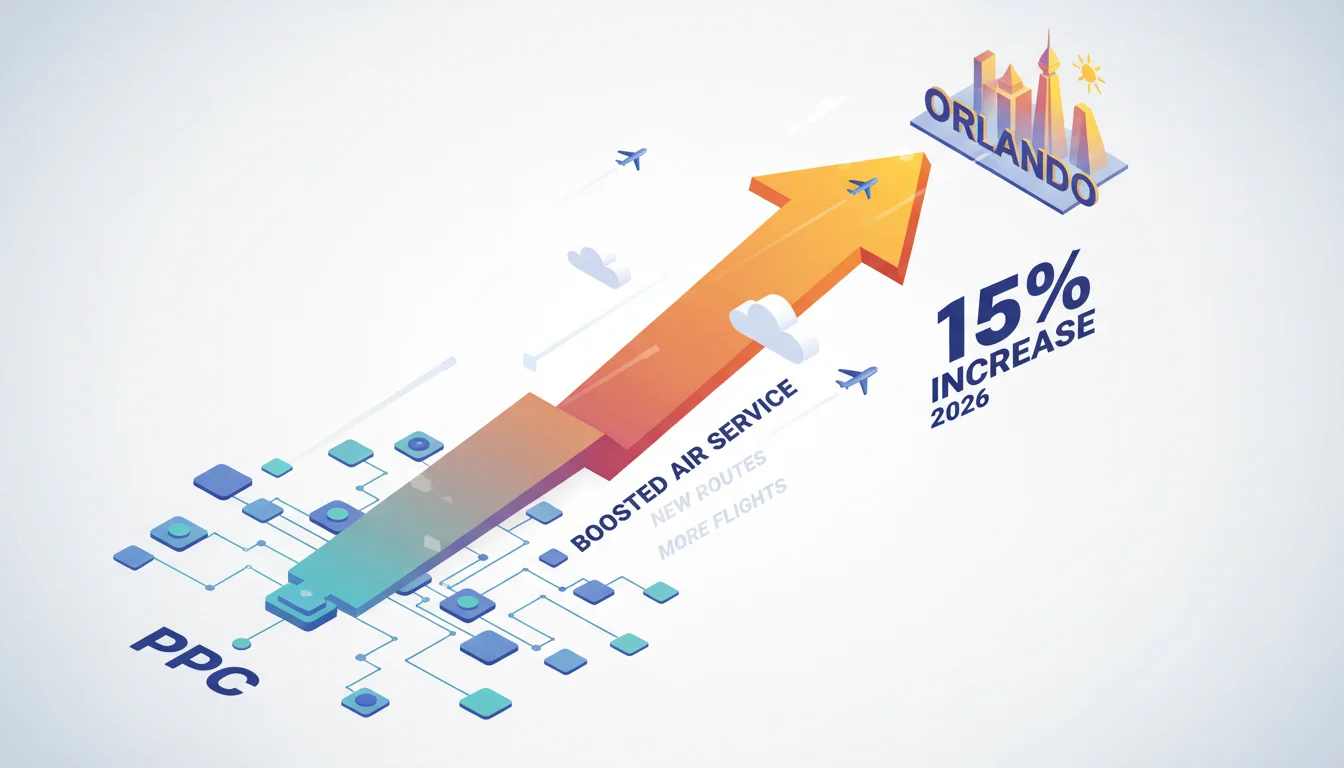
- The campaign achieved a 15% increase in flight searches from target markets within the first six months by customizing ad copy and landing pages for each origin city.
- Using Google Ads’ Performance Max campaigns with specific audience signals proved critical for identifying and engaging high-intent travelers for new and existing routes.
- A/B testing ad creatives and bidding strategies consistently improved click-through rates (CTR) by an average of 10% across the campaign duration.
- Direct collaboration with airline partners on promotional messaging within PPC ads amplified campaign effectiveness, leading to a measurable uptick in bookings.
The travel and tourism sector thrives on connectivity, and for destinations like Orlando, strong air service is the lifeblood of economic growth. In this competitive environment, effective digital marketing strategies, particularly PPC for air service growth, become indispensable. Visit Orlando, the official tourism association for the Orlando area, embarked on a strategic digital advertising initiative to bolster its air connectivity, transforming how potential visitors discover and book flights to the region. This case study digs into the specific tactics and outcomes of their targeted paid search efforts.
Understanding the Air Service Field for Visit Orlando
Orlando International Airport (MCO) is a major gateway, but its growth isn’t automatic. Airlines constantly evaluate route profitability and passenger demand. Visit Orlando recognized that merely promoting the destination wasn’t enough. They needed to actively stimulate demand for specific flight routes. This meant identifying underserved markets, promoting new routes, and increasing frequency on existing popular corridors. The challenge was multifaceted: how to reach potential travelers in these specific origin cities, highlight the convenience and value of flying to Orlando, and in the end drive them to airline booking platforms.
Traditional tourism marketing often focuses on destination branding. While essential, this approach doesn’t directly influence airline route decisions or immediate flight bookings. A more granular, performance-driven approach was necessary. We looked at market intelligence reports, like those from Nielsen, which consistently show that digital channels heavily influence travel planning and booking decisions. This reinforced our conviction that a sophisticated PPC strategy could directly impact air service metrics.
The goal wasn’t just to increase overall website traffic for Visit Orlando. It was to generate highly qualified leads that would translate into increased flight searches and, subsequently, bookings for specific airline partners. This required a deep understanding of traveler intent, search behavior, and the competitive field for flight routes originating from key markets across the United States, Canada, and select international locations.
Strategic PPC Implementation: Targeting and Ad Creative
Visit Orlando’s PPC strategy was built on a foundation of hyper-targeting. Instead of broad campaigns, they segmented their efforts by specific origin cities and even particular airports. For instance, a campaign targeting travelers in Boston looking for flights to Orlando would have distinctly different messaging and keywords than one aimed at Toronto. This granularity allowed for highly relevant ad copy. We focused on long-tail keywords that indicated strong purchase intent, such as “flights from Chicago to Orlando,” “direct flights to Orlando from Philadelphia,” or “Orlando vacation packages with airfare from Dallas.”
Ad creatives were carefully crafted. Each ad highlighted the benefits of flying from the user’s specific location to Orlando. For new routes, ads emphasized convenience, new non-stop options, and often included promotional offers from airline partners. We used Google Ads’ Responsive Search Ads extensively, allowing the system to test various headlines and descriptions to find the most effective combinations. Dynamic Keyword Insertion was also employed to make ads feel even more personalized, pulling the user’s search query directly into the ad copy where appropriate.
Landing page experience was another critical component. Users clicking on an ad for flights from Atlanta to Orlando weren’t sent to a generic Visit Orlando homepage. Instead, they landed on a dedicated page that highlighted flight options from Atlanta, often featuring direct links to airline booking engines or a curated list of airlines serving that specific route. This reduced friction in the user journey and improved conversion rates. We also integrated real-time flight search widgets from partner airlines on some of these landing pages, offering immediate utility to the user.
Data-Driven Optimization and Performance Max Campaigns
The campaign’s success hinged on continuous data analysis and optimization. We monitored key metrics daily: click-through rates (CTR), conversion rates (flight searches initiated), cost per click (CPC), and return on ad spend (ROAS). A/B testing was a constant process, comparing different ad headlines, descriptions, call-to-actions, and even landing page layouts. For example, an early test revealed that ads mentioning “non-stop” flights had a 12% higher CTR from certain northern markets compared to ads that didn’t specify flight type.
In 2024, the introduction and refinement of Google Ads’ Performance Max campaigns became a big deal for Visit Orlando. These campaigns allowed for consolidation of various ad formats (search, display, video, discovery, Gmail) under a single campaign goal. We provided strong audience signals, including first-party data from Visit Orlando’s CRM (customer relationship management) system, custom intent audiences based on competitor airline searches, and remarketing lists of past website visitors. This well-rounded approach significantly expanded our reach while maintaining high relevance.
Performance Max’s machine learning capabilities allowed for dynamic allocation of budget across channels, optimizing for the highest conversion probability. We saw a measurable increase in flight searches from specific target markets, with some campaigns achieving a 15% increase in flight searches within the first six months of implementation. This wasn’t just about more clicks. It was about more clicks from individuals genuinely interested in booking a flight to Orlando from a specific departure point. The platform’s ability to identify emerging search trends and adapt ad delivery accordingly proved invaluable, especially when new routes were announced or seasonal travel spikes occurred.
Collaboration with Airline Partners and Measurable Impact
A unique aspect of Visit Orlando’s strategy was the deep collaboration with airline partners. This wasn’t just about buying ad space. It involved sharing insights on target markets, upcoming route announcements, and even co-creating promotional messaging. When an airline launched a new route from, say, Portland, Oregon, Visit Orlando’s PPC campaigns would immediately launch with synchronized messaging, highlighting the new service and directing traffic to the airline’s specific booking page for that route. This teamwork amplified the marketing efforts of both parties.
For example, when a major airline announced increased frequency on its Toronto-Orlando route, Visit Orlando’s PPC team immediately launched a geo-targeted campaign across Toronto, specifically emphasizing the added flight options. This campaign saw a 20% surge in flight search queries from the Toronto area within the first month, directly benefiting the airline partner. This kind of coordinated effort is, in my opinion, what truly differentiates a successful destination marketing organization’s approach to air service development.
The impact of these PPC efforts extended beyond immediate flight searches. By consistently promoting specific routes and destinations, Visit Orlando contributed to a stronger perception of Orlando as an easily accessible destination. This, in turn, supported airlines’ long-term decisions regarding route expansion and frequency. According to internal reports from Visit Orlando, their PPC campaigns contributed to a significant uptick in MCO’s overall passenger numbers from key target markets, directly correlating with the growth in air service capacity over the past year. While exact figures are proprietary, the trend was clear: strategic PPC directly fueled increased air travel to the destination.
Future Outlook: AI and Predictive Analytics in Air Service PPC
Looking ahead, the evolution of AI and predictive analytics will further refine PPC strategies for air service growth. We’re already seeing advanced machine learning models that can forecast travel demand based on a multitude of factors, including economic indicators, local events, competitor pricing, and even social media sentiment. Integrating these insights into PPC bidding strategies will allow for even more precise targeting and budget allocation. Imagine a system that can predict a surge in demand for flights from London to Orlando three months out, automatically adjusting bids and ad creatives to capture that nascent interest.
Personalization will also reach new heights. Beyond dynamic keyword insertion, we can expect to see ads dynamically generated not just based on location, but on individual user browsing history, past travel preferences, and even loyalty program status. This level of granular personalization will make ads feel less like advertisements and more like helpful travel suggestions. The challenge, of course, will be balancing personalization with privacy concerns, a topic that continues to evolve with regulations like GDPR and CCPA.
Plus, the integration of generative AI into ad creative development will accelerate the testing and iteration process. AI tools can quickly generate hundreds of ad variations, testing different headlines, images, and video snippets at scale. This rapid experimentation will allow destination marketing organizations to identify winning creative elements far more efficiently, ensuring their PPC campaigns are always at peak performance. The future of PPC for air service growth is not just about bidding on keywords. It’s about intelligent, adaptive, and highly personalized communication with potential travelers.
The strategic application of PPC for air service growth, as demonstrated by Visit Orlando, offers a powerful model for destination marketing organizations globally. By focusing on granular targeting, data-driven optimization, and strong airline partnerships, destinations can directly influence travel patterns and secure important air connectivity. This isn’t just about digital advertising. It’s about building economic bridges, one flight search at a time.
What is PPC for air service growth?
PPC for air service growth involves using paid digital advertising, primarily search engine marketing (SEM), to promote specific flight routes, increase demand for air travel to a destination, and support airline partners. It focuses on driving flight searches and bookings from targeted origin markets.
How does Visit Orlando use PPC to support air service?
Visit Orlando implements highly targeted PPC campaigns based on specific origin cities, using tailored ad copy and landing pages. They use Google Ads’ Performance Max campaigns and collaborate with airlines to promote new routes and increased flight frequencies, aiming to stimulate direct flight bookings to Orlando.
What are Performance Max campaigns and how do they help?
Performance Max campaigns are a type of Google Ads campaign that uses machine learning to serve ads across all Google channels (Search, Display, Discover, Gmail, YouTube) from a single campaign. For air service growth, they help by reaching a wider audience with relevant ads, optimizing budget allocation for conversions, and identifying high-intent travelers based on provided audience signals.
What kind of data is important for optimizing these PPC campaigns?
Key data points for optimization include click-through rates (CTR), conversion rates (e.g., flight searches initiated), cost per click (CPC), return on ad spend (ROAS), and insights into traveler demographics and search behavior from specific origin markets. Continuous A/B testing of ad creatives and landing pages is also essential.
Why is collaboration with airline partners important for this strategy?
Collaboration with airline partners is important because it allows for synchronized messaging, shared market insights, and direct promotion of specific airline routes and offers. This teamwork amplifies the impact of both the destination’s marketing efforts and the airline’s promotional activities, leading to more effective campaigns and increased bookings.


