 By Editorial Team
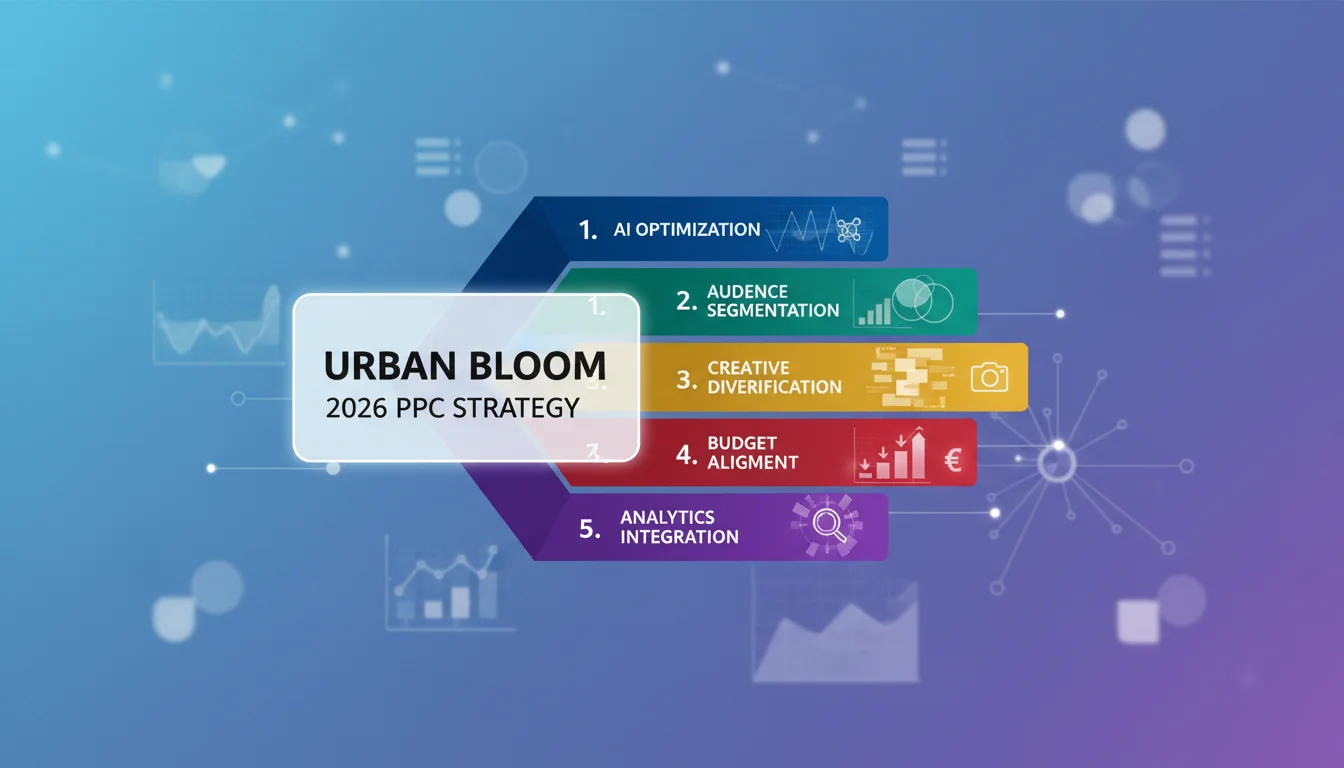
In the competitive digital marketing arena of 2026, effective keyword research isn’t merely a strategic advantage. It’s the foundational bedrock for any sustainable growth strategy. Without precise targeting, even the most innovative products or services can languish unseen, a challenge Sarah Jenkins, founder of “Urban Bloom,” a bespoke plant delivery service in Atlanta, understood intimately. Her initial foray into online advertising felt like shouting into a hurricane, with budget evaporating faster than her carefully cultivated succulents in a heatwave. She needed a tactical guide to transform her PPC campaigns from speculative spending into predictable growth engines.
Key Takeaways
- Implement a tiered keyword strategy, distinguishing between high-volume, broad terms and long-tail, conversion-focused phrases for PPC campaigns.
- Use competitor analysis tools to identify profitable keywords and ad copy that direct traffic away from rivals.
- Regularly refine negative keyword lists and bid adjustments based on performance data to prevent budget waste and improve campaign efficiency.
- Integrate search intent analysis into your keyword selection process, prioritizing terms that align with transactional user queries.
- Use AI-driven tools for dynamic bid management and predictive analytics to identify emerging keyword opportunities before competitors.
The Initial Struggle: Broad Strokes and Burning Budgets
Sarah launched Urban Bloom in late 2025, specializing in rare, sustainably sourced indoor plants delivered across the Atlanta metro area. Her initial marketing efforts, primarily Google Ads, focused on broad terms like “plant delivery Atlanta” and “buy plants online.” She allocated a daily budget of $150, expecting a steady stream of orders. Instead, her campaigns generated clicks from users searching for “plant care tips,” “gardening supplies,” or even “plant-based recipes.”
Her conversion rate hovered around 0.5%, far below the 2-3% she’d seen projected for e-commerce. “I was throwing money at the wall,” Sarah recounted during our first consultation, her frustration palpable. “We had beautiful creative, a smooth checkout process, but the wrong people were seeing our ads.” This is a common pitfall: assuming that high search volume equates to high conversion potential. It rarely does for businesses with specific offerings.
Diving Deep: Uncovering Intent with Long-Tail Keywords
Our first step involved a forensic audit of Urban Bloom’s existing campaigns. We identified the immediate problem: a lack of specificity in her keyword research. Broad terms, while attracting volume, also attract a high percentage of irrelevant traffic. Our goal became to shift focus from volume to intent. This meant a deep dive into long-tail keywords.
We started by analyzing her Google Search Console data, looking for actual search queries that led to impressions but not clicks or conversions. This revealed a treasure trove of insights. For instance, users searching “rare indoor plants Atlanta delivery” or “potted fiddle leaf fig online Georgia” were far more likely to be in a purchasing mindset than those searching “houseplant care.”
We employed several tools for this. Ahrefs and Semrush (the industry standards in 2026) were instrumental in identifying competitor keywords and related long-tail variations. We specifically looked at the “Questions” and “Related Keywords” sections within these platforms. For example, a search for “plant delivery” might suggest “how to send plants as a gift” or “best plant subscription box Atlanta.” These phrases, while having lower search volumes individually, accumulate to significant traffic and, critically, higher conversion rates due to their explicit commercial intent. According to a 2025 eMarketer report, long-tail keywords convert at a rate 2.5 times higher than head terms for niche e-commerce businesses (eMarketer).
PPC Tactics: Precision Targeting and Bid Adjustments
With a refined keyword list, we restructured Urban Bloom’s Google Ads campaigns. We created separate ad groups for highly specific plant types (e.g., “Monstera Deliciosa delivery Atlanta,” “Calathea Orbifolia for sale GA”) and for specific use cases (e.g., “corporate plant gifts Atlanta,” “plant subscription box Georgia”). Each ad group received hyper-relevant ad copy, mirroring the user’s search intent. For instance, an ad for “rare indoor plants Atlanta” would highlight Urban Bloom’s unique selection and sustainable sourcing, directly addressing the implicit desire for something special and ethically produced.
We implemented a tiered bidding strategy. High-intent, long-tail keywords received higher bids, reflecting their increased value. Broad match modifier keywords (like +plant +delivery +Atlanta) were still used, but with significantly lower bids and strict negative keyword lists to filter out irrelevant searches. Speaking of negative keywords, this is where many campaigns bleed budget. Sarah’s initial campaigns were missing hundreds of important negative keywords. We added terms like “free,” “DIY,” “images,” “care guide,” “identification,” and specific plant diseases to prevent her ads from showing for informational queries.
Another important PPC tactic was using location-based bid adjustments. Since Urban Bloom serves the Atlanta metro area, we increased bids for users within a 5-mile radius of key affluent neighborhoods known for higher disposable income, while decreasing bids for areas further out or with lower average order values. Google Ads’ granular location targeting allows for radius-based adjustments down to 1-mile increments, a feature often underutilized.
Competitor Analysis: Learning from the Leaders (and Their Mistakes)
Understanding what competitors are doing, both successfully and unsuccessfully, provides invaluable insights for growth strategies. We used competitor analysis tools to identify who was bidding on Sarah’s target keywords, what ad copy they were using, and their estimated monthly spend. This wasn’t about copying. It was about identifying gaps and opportunities.
For example, we discovered a local competitor, “Green Oasis,” was bidding heavily on “succulent delivery Atlanta” but their ad copy was generic, focusing only on speed of delivery. Urban Bloom, however, offered unique, handcrafted succulent arrangements and sustainable packaging. We crafted ad copy that emphasized these differentiators: “Handcrafted Succulent Arrangements Atlanta, Eco-Friendly Delivery. Shop Urban Bloom Today!” This allowed Urban Bloom to stand out and capture clicks from users looking for more than just a basic succulent.
We also analyzed competitor landing pages. If a competitor’s ad promised “unique plant gifts” but their landing page displayed only common houseplants, it presented an opportunity for Urban Bloom to deliver on that promise with a dedicated landing page showing their truly unique offerings. User experience post-click is as important as the click itself.
The Power of Data-Driven Refinement: Iterative Growth
Within two months of implementing these changes, Urban Bloom’s campaigns saw a dramatic improvement. The average cost per click (CPC) decreased by 30%, while the conversion rate jumped to 2.8%. Her daily orders increased from an average of 3 to 12. This wasn’t a one-time fix. It was the beginning of an ongoing process of refinement.
We established a weekly routine of monitoring search query reports, adding new negative keywords, and adjusting bids based on performance. For instance, we noticed that searches containing “office plant delivery” had a significantly higher average order value. We created a dedicated campaign for B2B clients, targeting these specific terms with tailored ad copy and a landing page showing corporate gifting options and bulk discounts. This is where you realize that keyword research isn’t a static document. It’s a living, breathing component of your marketing ecosystem.
Plus, we started exploring AI-driven bid management platforms. While not a replacement for human oversight, these tools can dynamically adjust bids multiple times a day based on real-time factors like user location, device, time of day, and even weather patterns (a sudden cold snap might increase searches for indoor plants). This allowed Urban Bloom to maximize visibility during peak conversion windows and minimize spend during less productive times. According to a 2026 Google Ads report, advertisers using AI-powered bid strategies see an average 15% improvement in conversion value (Google Ads).
The journey of Urban Bloom demonstrates that effective keyword research is not a one-off task but a continuous cycle of analysis, implementation, and optimization. It requires a deep understanding of user intent, a willingness to get granular with data, and a commitment to refining strategies based on real-world performance. Sarah’s initial frustration transformed into a clear understanding of how targeted PPC tactics fuel sustainable growth.
For businesses looking to grow, a careful approach to keyword identification and campaign management is essential. It’s about finding the right conversations to join, not just the loudest ones. This precision ensures every dollar spent on advertising works harder, bringing in customers who are actively looking for what you offer.
What is the difference between broad match and exact match keywords in PPC?
Broad match keywords allow your ads to show for searches that are related to your keyword, including synonyms, misspellings, and relevant variations. While they offer wide reach, they can also attract irrelevant traffic. Exact match keywords are much more restrictive, showing your ads only for searches that are the exact same as your keyword or very close variations. They offer higher relevance and conversion rates but lower search volume.
How often should I review my negative keyword list?
You should review your negative keyword list at least once a week, especially for new campaigns or those with high traffic. This involves analyzing your search query reports in your advertising platform to identify irrelevant terms that triggered your ads, then adding them to your negative keyword list. Consistent review prevents budget waste and improves campaign efficiency over time.
Can AI tools completely replace manual keyword research?
No, AI tools complement, rather than replace, manual keyword research. While AI can automate bid adjustments, identify trends, and suggest new keyword variations with remarkable speed, human insight remains critical for understanding nuances of user intent, market shifts, and competitor strategies. The most effective approach combines AI’s analytical power with a marketer’s strategic oversight.
What is search intent and why is it important for keyword research?
Search intent refers to the primary goal a user has when typing a query into a search engine. It’s important for keyword research because it dictates whether a keyword will lead to a conversion. For example, “how to care for a fern” indicates informational intent, while “buy Boston fern online” indicates transactional intent. Targeting keywords that align with transactional intent ensures your ads reach users ready to purchase, maximizing your return on ad spend.
Beyond Google Ads, where else can I apply effective keyword research?
Effective keyword research extends far beyond Google Ads. It’s fundamental for optimizing content for search engines (SEO), informing social media advertising strategies, and even guiding product development. For instance, understanding popular search terms related to a problem your product solves can shape your content marketing calendar and guide your product messaging across all channels. Consider platforms like Pinterest for visual searches or Amazon for product-specific queries.


