 By Editorial Team
Key Takeaways
- AI tools let small businesses run their own PPC, so you don’t need a huge marketing department.
- Automated campaigns like Google Performance Max get you across Google’s entire network without a ton of manual work.
- You have to constantly check your data, especially Conversion Rate and Return on Ad Spend (ROAS), to get better results.
- Move your budget around. Put money on the keywords and ads that are actually working, based on what the data’s telling you right now.
- Use A/B testing in platforms like Microsoft Advertising to test your ad copy and landing pages. It’s how you find out what message actually gets people to convert.
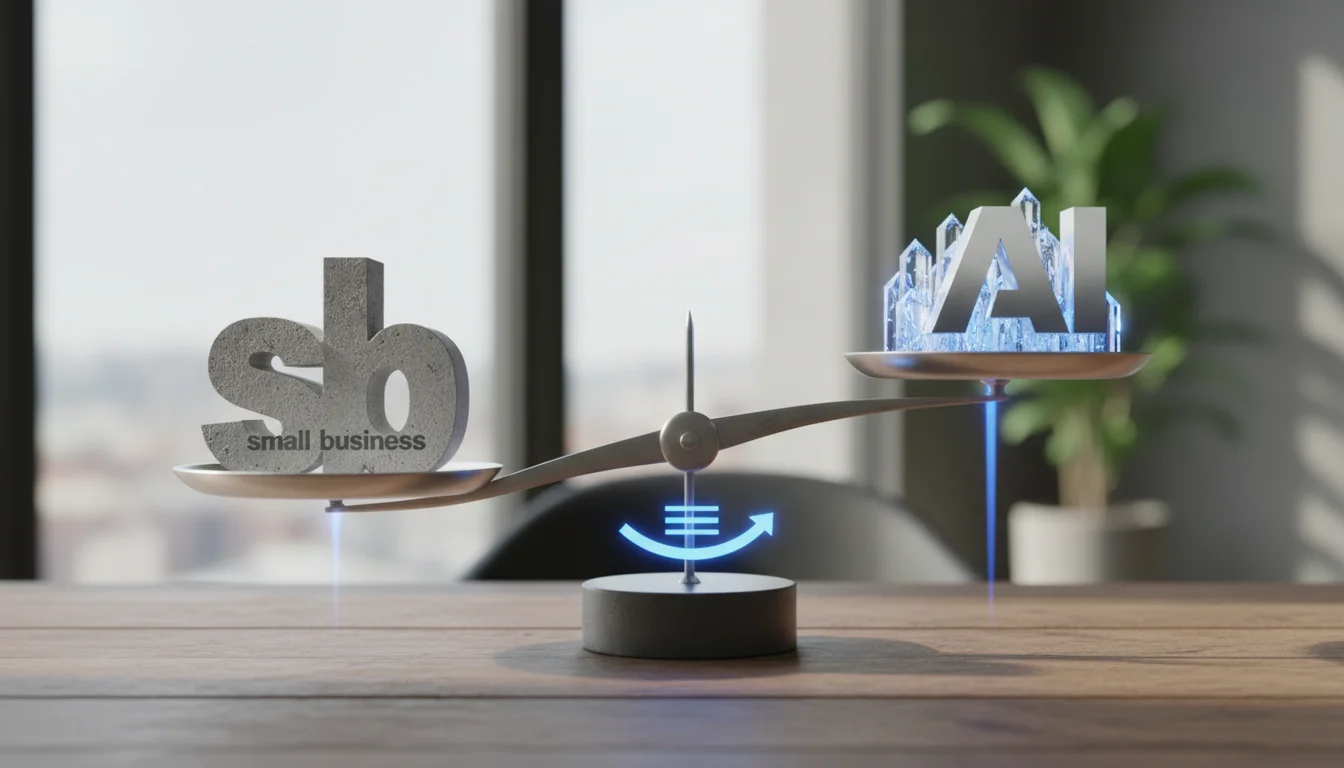
The idea that you need a big agency or a massive in-house team to do PPC production is dead. Good tech means even a one-person shop can launch some pretty advanced advertising campaigns and actually go head-to-head with larger competitors. It completely changes how a small business can plan for growth, because you’re no longer blocked by needing a huge staff. But what does that look like in practice? How can you actually use these tools to build ad campaigns that work without burning through your cash?
“Most founders assume their brand shows up in AI results because they rank well in search. But the two aren’t the same. Answer engines cite different sources and construct answers differently than search results pages.”
1. Define Your Campaign Goals and Target Audience
Don’t even think about opening an ad platform until you know exactly what you want and who you’re talking to. This sounds obvious, but it’s the one step that controls everything that comes after. Are you trying to get the phone to ring, drive more website traffic, or just sell more products directly? A local bakery that wants to increase foot traffic is going to focus on location-based ads and phone calls, which is a completely different setup from an e-commerce store that just needs to drive sales conversions. You also have to know your ideal customer inside and out: their age, location, interests, and what problems you solve for them. Google Ads lets you get incredibly specific with this kind of demographic targeting.
Pro Tip: Don’t try to be everything to everyone. I’ve found that a focused campaign that targets a specific niche almost always gets a better return than a broad, scattershot effort. Try creating a couple of buyer personas to make it easier to picture who you’re trying to reach.
2. Choose Your Platform and Set Up Your Account
For most small business ads, the main battlegrounds are Google Ads and Microsoft Advertising. Google Ads has a reach that’s just impossible to ignore, covering search, display, YouTube, and Gmail. Microsoft Advertising is smaller, sure, but I’ve seen plenty of accounts where the cost-per-click (CPC) is much lower in certain niches, and you’re hitting an audience that might not be on Google all the time. For most businesses, starting with Google Ads is the logical first move because of its sheer size. Get your account set up and make sure it’s linked to your website and Google Analytics so you can track everything.
Common Mistake: Not setting up conversion tracking right from the start. If you don’t have it, you’re flying blind and can’t actually measure if your ads are working. Make sure your Google Ads account is properly connected to Google Analytics 4 and that your conversion actions, like a purchase, a form fill, or a phone call, are defined and actually firing.
3. Keyword Research and Selection
Keywords are the bedrock of search ads. They’re the words people are typing into Google. Getting your keyword research right means you show up for relevant searches instead of just wasting your budget. Use a tool like the Google Keyword Planner, which is free inside your Google Ads account, to find keywords that show someone is ready to buy and don’t have insane competition. You’ll want to focus on “long-tail keywords,” which are just phrases of three or more words. They tend to signal higher purchase intent and usually have lower CPCs. For example, you’ll have better luck with “best organic coffee beans Atlanta” than just “coffee.”
Pro Tip: Don’t forget your negative keywords. These are just as important. They stop your ads from showing up for searches that aren’t relevant. If you sell new cars, you’d add “used” and “rental” as negatives to stop wasting money on clicks from people who aren’t looking for what you sell.
4. Craft Compelling Ad Copy
Your ad copy is your business’s first impression online. It needs to be quick, to the point, and match exactly what the user was searching for. Google Ads uses Responsive Search Ads (RSAs), which let you provide a bunch of different headlines and descriptions. The system then automatically tests combinations to find what works best. I always suggest aiming for at least 8-10 distinct headlines and 3-4 descriptions per ad group. You should include your main keywords, but make it sound natural. And always, always have a clear call to action like “Shop Now,” “Get a Free Quote,” or “Call Today.”
Common Mistake: Writing generic ad copy that could be for any business. What makes you different? Is it your fast delivery? A unique product feature? Your amazing customer service? You have to put those differentiators front and center. With global digital ad spending constantly climbing, as a Statista report shows, your ad has to be sharp to get noticed.
5. Design Effective Landing Pages
An ad gets the click, but your landing page has to get the conversion. If the page doesn’t deliver, you just wasted money on that click. Your landing page has to be directly related to the ad and the search query. It must load fast, look good on mobile, and have a single, obvious call to action. Get rid of the clutter. If your ad promises a “20% off widget,” that discount offer and a button to buy the widget should be the first thing a user sees. A disconnected experience between the ad and the page will cause high bounce rates and torch your ad spend.
6. Implement Automated Bidding Strategies
This is where the new tech really helps small businesses. Modern PPC platforms have automated bidding strategies that use machine learning to adjust your bids for every auction, in real time. So instead of you manually changing bids for hundreds of keywords, you just tell the system your goal (like “Maximize Conversions” or “Target ROAS”) and let the algorithm do the work. If you’re just starting out, “Maximize Clicks” can be a decent way to gather initial data, but you should move to “Maximize Conversions” as soon as your conversion tracking is reliable.
Pro Tip: You have to trust the algorithms. It’s tempting to jump in and start manually overriding bids, but these automated strategies almost always win out over time, especially once they have enough conversion data to learn from. Give them at least a few weeks to do their thing before you make any big changes.
7. Monitor Performance and Iterate
Getting a campaign live is just step one. You have to be in there checking on it and optimizing it regularly. A daily check-in is essential at first, and then weekly after that. You should be watching your impressions, clicks, click-through rate (CTR), cost-per-click (CPC), conversions, and cost-per-conversion (CPA). Find the keywords or ads that are underperforming and pause or fix them. Then, find what’s working and give it more budget. PPC requires constant tinkering because the market, your competition, and customer behavior are always changing. I’ve seen countless businesses spend thousands without checking their campaigns, only to realize much later they were bidding on irrelevant terms or sending traffic to broken pages.
8. A/B Testing for Continuous Improvement
A/B testing is simply running two slightly different versions of an ad or landing page at the same time to see which one performs better. You could test different headlines, calls to action, or images. Most ad platforms, including Microsoft Advertising, have this functionality built in. For instance, you could test two different sales pitches in your ad copy: “Fast Delivery” versus “Lowest Prices.” It’s these small, continuous tests that add up over time and lead to big gains in your campaign’s efficiency and ROI.
9. Use AI-Powered Campaign Creation (e.g., Google Performance Max)
Google Performance Max is a perfect example of how tech is opening up PPC. It’s a campaign type that uses AI to find customers for you across all of Google’s channels, Search, Display, YouTube, Gmail, Discover, Maps, all from one single campaign. You just give it your goals, your assets (text, images, videos), and some audience signals, and Google’s AI takes care of the targeting and delivery. This makes running a sophisticated, multi-channel ad strategy much simpler, which is a huge deal for businesses without a big marketing team. It works particularly well for e-commerce and lead generation.
Pro Tip: Performance Max is automated, but it’s not magic. The performance you get out of it is directly related to the quality of the “asset groups” (the text, images, and videos) you feed it. Give the AI high-quality, diverse creative to work with, and you’ll get much better results.
10. Analyze Data for Strategic Insights
Go beyond just watching your top-level metrics. You need to dig into the reports to understand what the numbers are actually telling you. Are there any trends? Are certain times of day performing better? Which geographic areas are the most profitable? Are your mobile users converting differently than desktop users? The reporting tools in Google Ads and Google Analytics let you segment all this data to get a much deeper picture of your campaign performance. This is how you’ll find the insights that inform not just your next ad tweak, but your bigger marketing strategy.
Using these tools allows small businesses to compete effectively and turn modest ad budgets into actual growth. The ability to manage these kinds of campaigns, which was once reserved for large enterprises, is now available to anyone. It just requires more strategic thinking than sheer manpower.
What is PPC production for a small business?
It’s the whole process: creating, managing, and optimizing paid ad campaigns on platforms like Google Ads and Microsoft Advertising. The focus is on using cost-effective strategies to get traffic, leads, or sales without needing a big marketing department.
How does tech make PPC easier for small businesses?
Technology provides AI-powered tools, automated bidding, and simplified campaign interfaces like Google Performance Max. These things allow small businesses to run sophisticated ad campaigns that used to require a ton of manual effort and specialized knowledge.
What are the most important PPC metrics for a small business?
Focus on the metrics that are tied to money: Conversion Rate, Cost-Per-Conversion (CPA), and Return on Ad Spend (ROAS). You should also watch Click-Through Rate (CTR) and Impressions to make sure people are seeing and engaging with your ads.
Can a small business really compete with big companies in PPC?
Yes, they can. The way to win is by being smarter, not by outspending. Small businesses can compete by focusing on niche keywords, targeting very specific audiences, writing compelling ads, and perfecting their landing pages. AI tools also help them maximize their budget.
What is Google Performance Max and why should a small business care?
Google Performance Max is an automated, all-in-one campaign type that uses AI to run your ads across all of Google’s properties (Search, Display, YouTube, etc.). It simplifies management and helps small businesses reach a wide audience and get more conversions with much less manual work.


