 By Editorial Team
There’s so much bad info out there about campaign data accuracy, and it doesn’t help that ad platforms keep rolling out huge changes that mess with reporting. If you can’t get a handle on these shifts, your performance analysis is basically useless. You have to constantly question the data sources and methods you’re using, otherwise your campaigns are running on assumptions that are just plain wrong.
Key Takeaways
- You’ve got to audit your tracking setup constantly, especially after a platform like Google Ads pushes an update, to make sure you’re still collecting consistent data from every conversion point.
- Last-click attribution is dead. Start using data-driven models or at least test multi-touch attribution to see the whole customer journey, not just the final step.
- Every month, pull your own CRM or sales data and put it side-by-side with what the ad platforms are reporting. This is the only way to find the gaps and know what your digital spend is *really* getting you.
- Get on server-side tracking with something like Google Tag Manager Server-Side. It’s the best way to fight back against data loss from browser blocking and get your conversion numbers closer to reality.
- As privacy rules and platform policies keep changing, you need to be in your campaigns constantly, tweaking targeting and creative to make sure they still work.
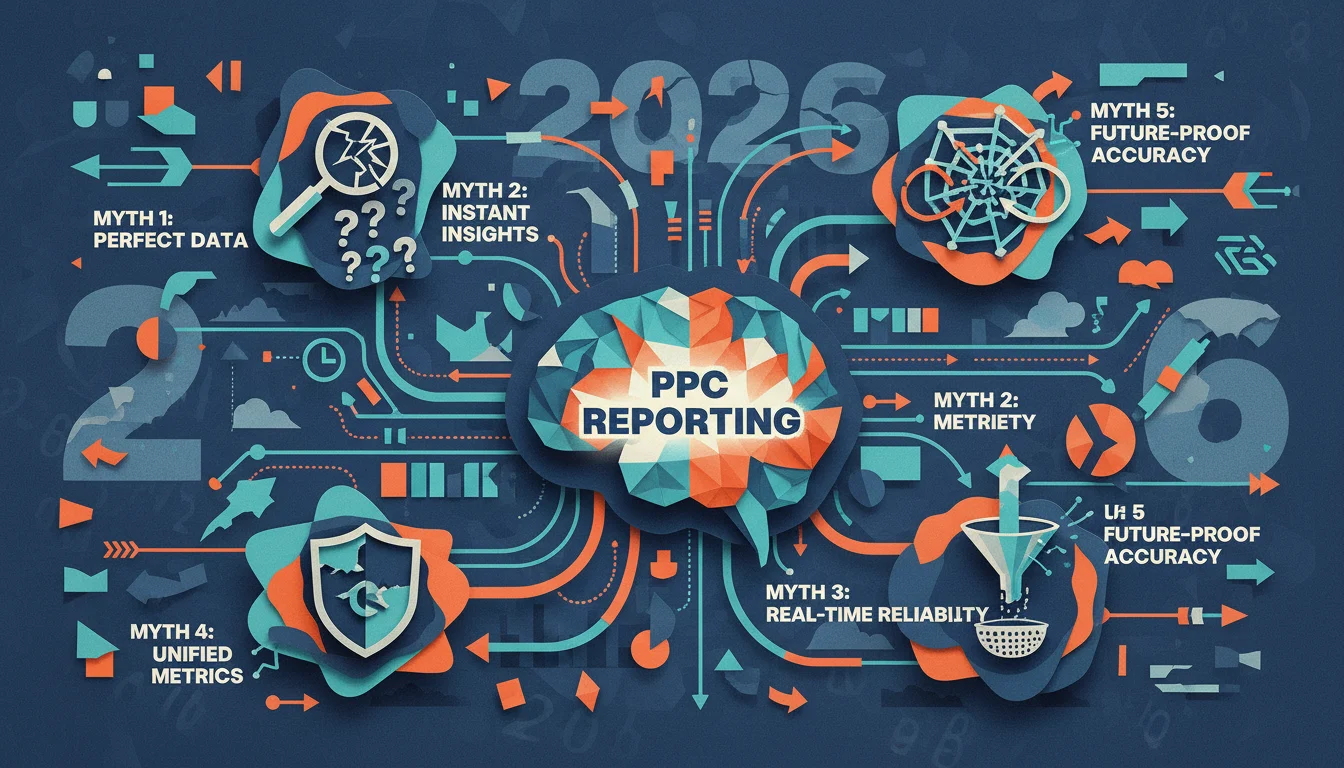
Myth 1: Platform Reporting Is Always 100% Accurate Out-of-the-Box
A lot of marketers look at their Google Ads or Meta Ads dashboards and treat the numbers as gospel, with no need for a second look. That’s a huge mistake. The platforms try to be precise, but their own internal limits, problems with integrations, and user privacy settings create all sorts of discrepancies. For instance, technologies baked into browsers like Apple’s Intelligent Tracking Prevention (ITP) and Mozilla’s Enhanced Tracking Protection (ETP) are designed to block third-party cookies and shorten the life of first-party ones, which directly messes with how conversions get counted. A whole chunk of your conversions can be undercounted or credited to the wrong channel because of what’s happening on the user’s browser. Then there’s the cross-device problem, which makes attribution a nightmare. A person might click an ad on their phone during their commute, then go home and buy on their desktop that evening. Without a really good way to connect those two events (which privacy policies are making harder and harder), that conversion might get credited to the wrong place, or missed entirely. A report from IAB Europe confirms this, noting that privacy-enhancing technologies are forcing everyone to find better measurement methods because the old ways just don’t work anymore.
Myth 2: Attribution Models Provided by Platforms Are Sufficient for All Business Goals
The default attribution models in ad platforms, like last-click or linear, are easy to use but they almost never show you what’s really happening. The big mistake is thinking that one model works for every business, or that the platform’s default setting is the best one. That completely ignores how complex customer journeys are in 2026. A person’s path to buying something is almost never a single click. It’s a whole series of interactions across different channels. Imagine a user sees a display ad for your brand, doesn’t click, but then a week later they search for you on Google, click a paid search ad, and finally make a purchase. A last-click model gives 100% of the credit to that paid search ad, totally ignoring the display ad that put your brand on their radar in the first place, leading you to cut budgets for channels that are actually doing heavy lifting in building awareness. Data-driven attribution models, which you can find in platforms like Google Ads, use machine learning to try and spread the credit out more intelligently by analyzing conversion paths. Even these are constrained by the data they can see inside their own platform. You should be testing different models, maybe a position-based model for top-of-funnel campaigns or even building your own custom logic to get a smarter perspective.
Myth 3: Server-Side Tracking Is Overkill for Most Advertisers
I hear this all the time from smaller and mid-sized advertisers: “Server-side tracking is too complicated, it’s just for big enterprise companies.” That’s a flat-out dangerous idea now that client-side tracking is falling apart. Browser privacy settings, ad blockers, and all those cookie consent banners are making your traditional tracking pixels less and less reliable every day. When a browser just blocks a cookie or a user declines consent, that conversion data is gone forever. Server-side tagging, which you can set up with tools like Google Tag Manager Server-Side, moves the data collection from the user’s browser to a secure server that you control. So, instead of the browser sending data straight to multiple platforms (and getting blocked), it sends one clean data stream to your server, which then passes it along to Google Ads, Meta Ads, and your analytics tools. This setup has huge benefits: it can make your cookies last longer, it speeds up your site by reducing the scripts running in the browser, and it gives you more control over your data, which means better accuracy. Any business not moving in this direction is choosing to make decisions with incomplete data. I’ve personally seen clients recover 15-20% of previously lost conversion data by transitioning to a strong server-side setup which directly translated to a clearer ROI picture.
Myth 4: Conversion API Implementations Are a “Set It and Forget It” Solution
So you’ve set up Meta’s Conversions API or TikTok’s Events API to send data directly from your server, bypassing browser issues. Great. But if you think you can just walk away, you’re in for a nasty surprise. The idea that these are fire-and-forget tools is a total myth. A proper setup needs constant maintenance and monitoring. For example, if you just start sending server events without correctly setting up deduplication, you can easily inflate your conversion numbers. The browser pixel might fire for a sale, and your server sends the same event through the API. Without a unique event ID to connect them, the platform thinks you got two sales instead of one. On top of that, your setup can break. A change to your website’s code, an updated user checkout flow, or a new version of the platform’s API can snap your integration, causing you to lose data silently until someone notices the numbers look off. You have to keep an eye on things like Meta’s Event Match Quality score which tells you how well your server events are being matched to user profiles. If you ignore these health checks, your entire investment in a CAPI setup is worthless. AI Agent Attribution can optimize bids when it’s fed more accurate data like this.
Myth 5: Small Data Discrepancies Are Acceptable and Don’t Impact Decisions
“It’s only a 5% difference, it won’t matter.” That line of thinking is probably the most damaging myth of them all. That single, small discrepancy might look harmless, but these little inaccuracies pile up across all your campaigns and channels over time, leading to some seriously wrong insights and terrible budget decisions. A 5% underreporting of conversions might make a profitable campaign look like it’s failing, causing you to turn it off. On the flip side, a 5% overreporting could hide a dud, tricking you into pouring more money into a strategy that isn’t working. The combined effect of all these “small” errors completely warps your view of customer value, ROAS, and even which ad creative is working. If your customer acquisition cost (CAC) is consistently off by 10% because of data gaps, you could easily decide to expand into a new market that’s actually a money pit. You’ll never get to 100% perfect data (it’s pretty much impossible), but the real goal is to understand your data’s limitations and proactively work to minimize the gaps. That means doing a monthly reconciliation of platform data against your own internal sales or CRM systems. Without that cross-validation, you’re just making decisions in the dark. Figuring out the details of PPC reporting and the constant evolution of tracking technologies isn’t optional. It’s the job of any marketer who wants to work with accurate data. Believing these myths is a surefire way to make big mistakes and waste a lot of budget.
Why is campaign data accuracy so challenging to maintain in 2026?
It’s tough because a bunch of things are working against you: browser privacy rules (like ITP and ETP) are getting stricter, more people are using ad blockers, data privacy laws like GDPR and CCPA limit what you can track, and people jump between phones and computers which makes following their path to purchase a real mess for old tracking methods.
What is server-side tracking, and how does it improve data accuracy?
Server-side tracking means data from your site goes to your own secure server first, not directly to Google or Meta. Your server then forwards that data to the platforms. It improves accuracy because it gets around browser restrictions, can make your cookies last longer, and gives you full control over the data you’re collecting and sending.
How often should I audit my tracking setup for accuracy?
You should do a full audit at least quarterly, and definitely after any major website change or platform update. A complete audit means checking that your tags are firing correctly, your data layer is solid, you’re deduplicating conversion events properly, and, most importantly, you’re comparing the conversions reported in the platforms against your actual internal sales data.
Can I rely on default attribution models in Google Ads or Meta Ads?
No, you really can’t. Relying on default models like last-click is a bad idea because they oversimplify how people buy things and ignore all the touchpoints that happened before the final one. You should be experimenting with data-driven attribution or other models to get a more realistic view of how your channels work together to create a conversion.
What are the immediate steps marketers can take to improve data accuracy?
First, implement a good Consent Management Platform (CMP) to handle user consent properly. Second, start researching server-side tracking solutions now. Third, set up a monthly process to validate platform conversion data against your internal CRM or sales records. Finally, make sure all your conversion events use unique identifiers to allow for correct deduplication between browser and server events.


