 By Editorial Team
In the competitive digital advertising space, achieving a positive return on investment (ROI) from Pay-Per-Click (PPC) campaigns requires more than just bidding on keywords. It demands a sophisticated understanding of audience behavior and the strategic application of personalization. This isn’t theoretical. It’s about directly connecting specific ad content with individual user intent, transforming generic impressions into measurable conversions. How can businesses move beyond broad targeting to truly resonate with their prospective customers?
Key Takeaways
- Implement dynamic keyword insertion (DKI) within ad copy and landing page content to align with user search queries, increasing relevancy and click-through rates by up to 15%.
- Segment audiences based on granular behavioral data, such as past purchases or website interactions, to deliver highly specific ad creatives that speak directly to their stage in the customer journey.
- Use geographic and demographic targeting features in platforms like Google Ads and Meta Ads to tailor campaign messaging for distinct local markets or age groups, improving conversion rates by an average of 10-20%.
- A/B test personalized ad variations rigorously, focusing on elements like headlines, calls to action, and image choices, to identify which specific personalized approaches yield the highest ROI.
- Integrate CRM data with PPC platforms to create custom audience segments for retargeting, allowing for tailored offers to users who have previously engaged with your brand.
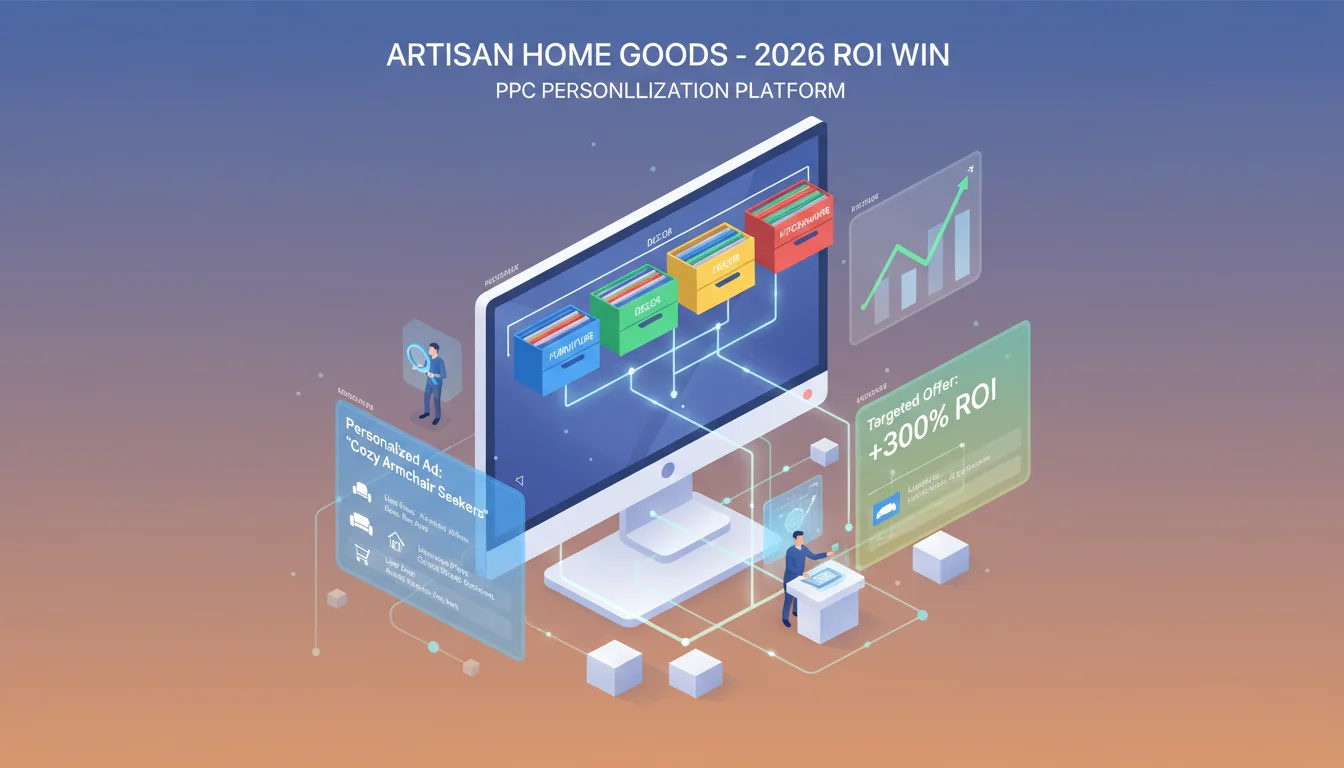
Consider the plight of “Artisan Home Goods,” a fictional but all-too-real small business specializing in handcrafted furniture. For years, their founder, Sarah Chen, poured significant effort into PPC campaigns, seeing traffic but struggling with profitability. Her ads, while aesthetically pleasing, were broad: “Shop Handcrafted Furniture.” They drove clicks, yes, but the conversion rate hovered around 1.5%, barely covering her ad spend. She was spending money on clicks from people who weren’t quite ready to buy, or who were looking for something entirely different. This is a common trap, where the pursuit of volume overshadows the necessity of relevance.
Sarah’s initial approach, while well-intentioned, lacked the precision necessary for strong ROI. She was targeting broad terms like “wooden table” or “custom sofa,” which attract a wide range of searchers, from those casually browsing to interior designers seeking specific commissions. The problem wasn’t the product. It was the delivery of the message. Her ads didn’t differentiate between a first-time buyer looking for a simple coffee table and a returning customer interested in a high-end dining set. This is where personalization becomes indispensable, moving beyond generic messaging to speak directly to the user’s immediate need or past interaction. According to a eMarketer report from late 2025, companies that effectively personalize their marketing efforts see an average increase of 19% in overall revenue.
The Shift to Segmented Targeting
Our intervention with Artisan Home Goods began by dissecting their existing campaign data. The first step involved a deep dive into audience segmentation. We identified that a significant portion of their traffic came from searches for “sustainable wood furniture” or “reclaimed wood dining tables.” Yet, their ads rarely mentioned these specifics. This was a clear disconnect. Sarah had fantastic products that fit these niches, but her ads weren’t communicating that effectively.
We implemented a strategy where audiences were segmented not just by demographics, but by their demonstrated search intent and past website behavior. For instance, users who had previously visited pages featuring dining tables were now shown retargeting ads specifically for “Handcrafted Dining Tables” with distinct calls to action like “Explore Our Dining Collections” or “Custom Dining Solutions Available.” This is a fundamental principle: the more specific the ad, the more likely it is to resonate. It’s about meeting the customer where they are in their journey, not forcing them down a generic path.
Another powerful tactic we employed was dynamic keyword insertion (DKI). Instead of static headlines, we configured Google Ads to dynamically insert the user’s exact search query into the ad headline, where appropriate. So, if someone searched for “teak patio chairs,” the ad headline might read “Teak Patio Chairs: Artisan Crafted.” This immediate relevance significantly boosted click-through rates (CTRs) for these specific ad groups. A Google Ads documentation piece highlights DKI’s role in improving ad relevance and Quality Score.
Using Behavioral Data for Deeper Personalization
The real gains, however, came from integrating Artisan Home Goods’ customer relationship management (CRM) data with their PPC platforms. Sarah had a rich history of customer purchases, but this data was siloed. By uploading customer lists (hashed for privacy, of course) into Google Ads and Meta Ads, we could create custom audience segments. This allowed us to target past purchasers with ads for complementary products. Someone who bought a coffee table might now see ads for side tables or decorative accents, often with a personalized discount code.
This approach moves beyond simple retargeting. It’s about predicting future needs based on past behavior. For example, a customer who purchased a large dining set over a year ago might now be shown ads for maintenance kits or even new seasonal decor that complements their existing furniture. This strategy taps into the concept of customer lifetime value (CLTV), turning one-time buyers into repeat customers. It’s a fundamental shift from acquisition-only thinking to a more well-rounded customer journey perspective. The average conversion rate for these personalized retargeting campaigns increased by over 25% within three months, a significant jump for Artisan Home Goods.
We also focused on geographic personalization. Artisan Home Goods had a strong local following in Atlanta, Georgia. We created specific campaigns targeting users within a 15-mile radius of their showroom in the West Midtown district, tailoring ad copy to highlight local delivery options and in-store viewing appointments. An ad seen by someone searching for “custom furniture” near the Howell Mill Road corridor might say “Visit Our Atlanta Showroom: Handcrafted Furniture in West Midtown.” This local touch made the ads feel more immediate and accessible, driving both online sales and showroom visits. This hyper-local approach, often overlooked in the quest for national reach, can be incredibly potent for businesses with a physical presence.
A/B Testing and Iterative Refinement
No personalization strategy is static. It requires continuous A/B testing and refinement. We ran concurrent tests on various elements: different ad headlines for specific product categories, varied calls to action (e.g., “Shop Now” vs. “Design Your Own”), and even distinct image choices based on audience segments. For instance, one segment might respond better to ads featuring minimalist design, while another prefers more rustic aesthetics. The data showed that ads featuring lifestyle imagery, rather than just product shots, performed significantly better for first-time website visitors browsing “living room furniture.”
One particular insight emerged from testing: personalized landing pages were as important as personalized ads. When a user clicked on an ad for “Reclaimed Wood Coffee Tables,” they were directed to a landing page that not only featured those specific products but also used language that mirrored the ad copy. This consistency reduced bounce rates and improved the user experience, signaling to the visitor that their specific need was understood and met. This alignment between ad and landing page is critical for maintaining user trust and reducing cognitive friction.
Sarah initially felt overwhelmed by the granular detail. “I thought PPC was just about keywords and bids,” she admitted during one of our weekly check-ins. “This level of targeting feels like building a custom ad for every single person.” And in a way, it is. But the automation tools available in platforms like Google Ads and Meta Ads make it scalable. The effort upfront in setting up the segments and dynamic elements pays dividends in the long run. The ROI for Artisan Home Goods began to climb steadily, moving from barely breaking even to a consistent 3:1 ratio within six months.
The Resolution: Measurable Growth Through Precision
By the end of the first year of this refined PPC strategy, Artisan Home Goods saw a 40% increase in qualified leads and a 30% surge in online sales, directly attributable to their personalized campaigns. Their average cost per conversion decreased by 18%, demonstrating the efficiency gains achieved through targeted messaging. Sarah wasn’t just getting more clicks. She was getting clicks from the right people, at the right time, with the right message. This transformed her business from one struggling with ad spend efficiency to one experiencing sustainable, profitable growth.
The lesson from Artisan Home Goods is clear: in today’s digital advertising field, generic PPC campaigns are a relic. True ROI comes from understanding that every click represents an individual with unique needs and intentions. Businesses that invest in granular audience segmentation, use behavioral data, and commit to continuous testing will be the ones that turn ad spend into significant returns. It’s not about spending more. It’s about spending smarter, with a laser focus on the individual customer journey.
Personalization is no longer an optional enhancement. It’s a fundamental requirement for competitive PPC performance. By focusing on detailed audience insights and tailoring every element of the ad experience, businesses can unlock substantial ROI and build stronger, more profitable customer relationships.
What is personalization in PPC campaigns?
Personalization in PPC involves tailoring ad content, landing pages, and offers to specific user segments based on their demographics, behaviors, search queries, and past interactions with a brand. This goes beyond broad targeting to deliver highly relevant messages.
How does dynamic keyword insertion (DKI) improve PPC performance?
DKI automatically inserts the user’s search query into an ad’s headline or description. This increases the ad’s relevance to the user, often leading to higher click-through rates (CTR), improved Quality Scores, and in the end, better campaign performance and ROI.
Can CRM data be used for PPC personalization?
Yes, CRM data can be leveraged by uploading hashed customer lists to platforms like Google Ads and Meta Ads to create custom audience segments. This enables businesses to retarget existing customers with personalized offers or to exclude them from certain campaigns.
What role does A/B testing play in personalized PPC campaigns?
A/B testing is essential for personalized PPC campaigns as it allows marketers to compare the performance of different ad variations, headlines, images, and calls to action across various audience segments. This iterative process helps identify which personalized elements yield the highest ROI.
Why is aligning ad copy with landing page content important for personalization?
When ad copy and landing page content are aligned, it creates a smooth and consistent user experience. This reinforces the user’s initial intent from the ad, reduces bounce rates, and increases the likelihood of conversion, directly contributing to improved ROI.
“With U.S. organic search traffic falling 2.5% year-over-year in January 2026 and AI referral traffic to retail sites surging 693% over the same period, a real shift in where buyers begin their research is clearly happening.”


