 By Editorial Team
The modern consumer journey is rarely linear; it’s a dynamic, multi-touchpoint experience spanning digital and physical channels. To truly connect with customers and drive conversions, businesses must adopt an omnichannel customer experience strategy, seamlessly integrating all touchpoints, especially paid advertising. This article will demonstrate how strategic PPC integration is not just beneficial, but absolutely essential for creating a cohesive and compelling customer journey in 2026.
Key Takeaways
- Implement unified customer profiles across all marketing platforms to ensure consistent messaging and personalized experiences, reducing customer frustration by up to 25%.
- Utilize first-party data from CRM and website interactions to inform PPC campaign targeting and ad copy, increasing ad relevance scores by an average of 15% and lowering Cost Per Click (CPC).
- Orchestrate PPC ad sequencing based on customer behavior across different channels, for example, retargeting website visitors with specific product ads after an in-store purchase, which can boost conversion rates by 10-20%.
- Establish clear attribution models that account for cross-channel influence, moving beyond last-click to understand the true ROI of PPC within the broader omnichannel ecosystem.
- Automate data flows between PPC platforms, CRM systems, and analytics tools to enable real-time campaign adjustments and improve ad spend efficiency by 18% or more.
The Imperative of Unified Customer Data for Omnichannel Success
I’ve seen it too many times: a brand spends a fortune on PPC, driving traffic to a landing page, only for that customer to later call support and have to repeat all their information. That’s a fragmented experience, not an omnichannel one. The cornerstone of a truly effective omnichannel strategy, particularly when it comes to PPC integration, is a unified view of the customer. Without it, your marketing efforts are just shouting into the void, hoping someone hears.
Think about it: a customer might click on a Google Ad for a new running shoe, browse your website, add it to their cart, then get distracted. Later that day, they see a social media ad for the same shoe, but it’s a generic ad, not one acknowledging their previous interaction. This is a missed opportunity. Our goal, as marketers, is to ensure that every interaction, regardless of channel, builds upon the last. This requires robust data integration. We need to pull data from our Customer Relationship Management (CRM) systems, our e-commerce platforms, our in-store POS, and our PPC platforms into a single, accessible profile. This isn’t just about collecting data; it’s about making that data actionable across every touchpoint. For instance, if a customer has repeatedly searched for “vegan protein powder” on your site, your subsequent PPC campaigns should reflect that interest, whether they’re on Google Search or YouTube. I had a client last year, a specialty food retailer, who was running separate campaigns for online and in-store promotions. We helped them integrate their loyalty program data with their Google Ads and Meta Ads campaigns. The result? They could target online ads specifically to loyalty members who hadn’t visited the physical store in a month, offering them a personalized discount on their favorite items. This initiative alone saw a 22% increase in foot traffic from those targeted segments.
The benefits of this unified approach are profound. According to a Statista report, companies with strong omnichannel customer engagement strategies retain an average of 89% of their customers, compared to 33% for companies with weak omnichannel strategies. This isn’t a coincidence; it’s the direct result of making customers feel seen and understood. When I consult with businesses, my first recommendation is almost always to invest in a Customer Data Platform (CDP). A CDP acts as the central nervous system, collecting and organizing first-party customer data from all sources, then making it available to other systems, including your PPC platforms. This ensures that the segments you define in your CRM, such as “high-value repeat purchasers” or “abandoned cart users,” can be precisely targeted with tailored messages in your paid campaigns. Without this foundation, any talk of true omnichannel PPC integration is just wishful thinking.
“According to research from Salesforce, 56% of customers have to re-explain their issue every time they’re transferred to a different person or department. Omnichannel customer service eliminates this friction point by preserving conversation history and customer context across every touchpoint, which reduces friction for the customer when they reach out for support.”
Orchestrating the Customer Journey with PPC
Once you have your unified data in place, the real magic of PPC integration begins: orchestrating the customer journey. This means using PPC not just for initial acquisition, but as a strategic tool throughout the entire customer lifecycle. Imagine a customer who engages with your brand. They might first encounter you through a Google Search Ad for a specific product. They click, browse, but don’t convert. With proper integration, this interaction triggers a series of subsequent PPC actions. Perhaps they’re shown a display ad on a relevant website offering a small discount to encourage conversion. If they still don’t convert, maybe a YouTube ad featuring a product review or a tutorial video pops up, addressing potential hesitations. This isn’t just retargeting; it’s intelligent, sequential messaging informed by their previous interactions.
We ran into this exact issue at my previous firm with an e-commerce client selling custom furniture. Their initial PPC efforts were solely focused on top-of-funnel keywords. While they generated clicks, their conversion rates were stagnant. We implemented a strategy where users who visited specific product pages but didn’t add to cart were then segmented and targeted with Google Shopping Ads showcasing slight variations of that product, along with a limited-time free shipping offer. For those who added to cart but abandoned, we used Facebook and Instagram retargeting ads featuring customer testimonials and a direct link back to their cart. This layered approach, using different ad formats and platforms based on specific user behavior, led to a 35% increase in their overall conversion rate within six months. It’s a testament to the power of thinking beyond the initial click.
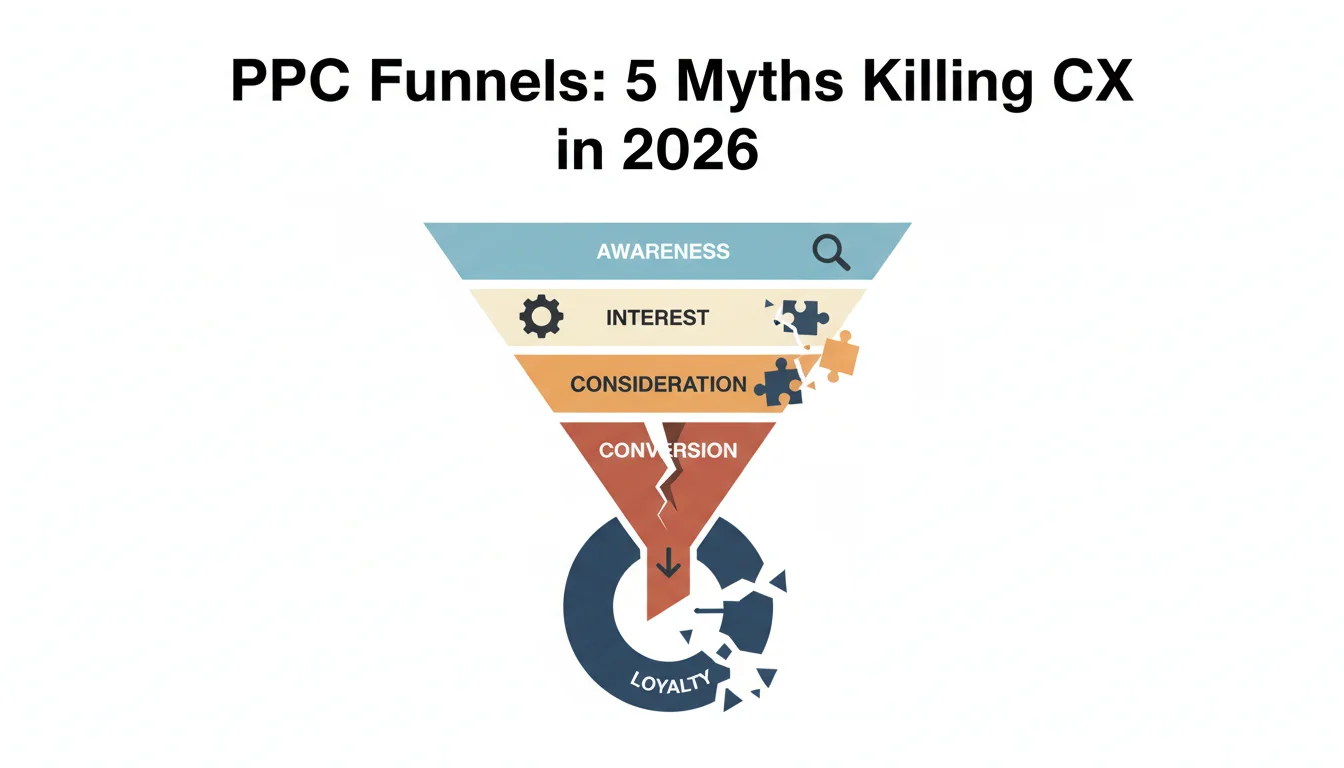
The key here is understanding the intent signals at each stage. For a user in the awareness phase, broad keywords and brand-building display ads might be appropriate. For someone in the consideration phase, more specific product ads, comparison ads, or even competitor conquesting campaigns make sense. And for those in the decision phase, direct response ads with strong calls to action, limited-time offers, and urgency-driven messaging are paramount. Tools like Google Ads and Meta Business Suite offer sophisticated audience segmentation and campaign sequencing capabilities that, when fed with rich, first-party data, can create incredibly powerful and personalized journeys. We’re talking about moving beyond simple keyword matching to understanding the customer’s context and serving them the right message at the right moment, on the right platform. This requires a dedicated focus on audience management and dynamic creative optimization. Frankly, if you’re still running generic “set it and forget it” PPC campaigns, you’re leaving money on the table, and your competitors are probably already eating your lunch.
Advanced Attribution and Measurement in an Omnichannel World
Measuring the effectiveness of PPC integration within an omnichannel framework is arguably the most challenging, yet most critical, aspect. The days of relying solely on last-click attribution are over. They were over years ago, actually, but some marketers are still clinging to them like a life raft. In an omnichannel world, a customer might see a display ad, click a search ad, visit your store, then convert online after seeing a social media ad. Attributing that conversion to a single touchpoint simply doesn’t tell the full story. It actively misleads you. This is why we need to embrace more sophisticated, data-driven attribution models.
I am a strong proponent of data-driven attribution (DDA) models, especially those offered by Google Ads, which use machine learning to assign credit to various touchpoints throughout the conversion path. These models analyze all the conversion paths on your account and weigh the contribution of each interaction. This provides a far more accurate picture of which PPC campaigns, keywords, and ad groups are truly contributing to conversions, both online and offline. For example, a search ad might not get the “last click,” but it might be the initial touchpoint that introduced the customer to your brand, making it incredibly valuable. Ignoring that initial touch could lead you to prematurely pause a campaign that’s actually crucial for awareness and top-of-funnel engagement.
Furthermore, integrating offline conversions is non-negotiable. If your business has a physical presence, whether it’s a retail store or a service center, you absolutely must connect those offline sales or appointments back to your online PPC efforts. Google Ads offers offline conversion tracking, allowing you to upload conversion data that originated offline but was influenced by a click on your Google Ads. Similarly, Meta Business Suite allows for offline event tracking. This provides a holistic view of your return on ad spend (ROAS) and helps you make more informed decisions about budget allocation. I always tell my clients, if you’re not tracking offline conversions, you’re essentially flying blind for a significant portion of your customer journey. You might be cutting campaigns that are driving huge amounts of in-store revenue simply because your online attribution model isn’t seeing the full picture. My advice? Get serious about your measurement strategy. Invest in analytics platforms that can stitch together cross-channel data and provide multi-touch attribution. It’s not an optional extra; it’s foundational.
Automating for Efficiency and Real-time Responsiveness
The sheer volume of data and the complexity of managing multiple channels in an omnichannel strategy can be overwhelming without automation. This is where strategic automation of PPC integration becomes not just a nice-to-have, but a necessity. Manual adjustments across dozens of campaigns, segments, and platforms are simply not sustainable or efficient in 2026. We need our systems to talk to each other, seamlessly and in real-time.
Consider the scenario of inventory management for an e-commerce business. If a product goes out of stock, manual pausing of relevant PPC ads can lead to wasted ad spend and a poor customer experience (imagine clicking an ad only to find the item unavailable). With automation, your inventory system can automatically trigger a pause on all relevant Google Shopping Ads and dynamic search ads, and even update product feeds across other platforms like Facebook Catalog Ads. This isn’t theoretical; this is standard practice for any serious e-commerce operation. Similarly, if a customer makes a purchase, automated workflows should ensure they are removed from retargeting segments for that specific product, preventing annoying and irrelevant ads. Instead, they could be added to a segment for complementary products or post-purchase support, further enhancing their experience.
I frequently advise clients to explore integrations between their CRM, e-commerce platform, and their PPC tools using API connections or integration platforms like Zapier or Make (formerly Integromat). For example, a lead captured through a Google Lead Form Extension can be automatically pushed into your CRM, triggering an email sequence and assigning a sales representative. If that lead then becomes a customer, that information can flow back to Google Ads, allowing you to create lookalike audiences based on your best customers or exclude them from certain acquisition campaigns. The benefits extend beyond efficiency; real-time data synchronization allows for a level of responsiveness that manual processes simply cannot match. This means better budget allocation, higher ad relevance, and ultimately, a superior customer journey. The future of PPC isn’t just about bidding; it’s about connecting. And connection demands automation.
The Future is Integrated: Beyond Basic PPC
Looking ahead, the evolution of PPC integration within an omnichannel framework will only accelerate. We’re moving towards a world where AI and machine learning play an even more dominant role in predicting customer needs and orchestrating personalized journeys. This isn’t just about automated bidding strategies; it’s about dynamic creative generation, predictive audience segmentation, and proactive customer service triggered by ad interactions.
Consider the rise of conversational AI and chatbots. A customer might interact with a chatbot on your website, asking about product specifications. This interaction, fueled by data from their previous PPC ad clicks and website browsing history, can lead to a highly personalized recommendation. That recommendation could then be reinforced by a subsequent PPC ad tailored to their specific query. This level of seamless integration blurs the lines between advertising, sales, and customer service, creating a truly unified experience. Moreover, as augmented reality (AR) and virtual reality (VR) become more mainstream, PPC will extend into these immersive environments. Imagine an AR ad that allows a customer to virtually “try on” a product, with that interaction then feeding into your CRM and informing subsequent retargeting campaigns. The possibilities are endless, but the fundamental principle remains the same: every touchpoint must be connected, informed, and personalized.
The brands that will thrive in this environment are those that prioritize data unification, embrace advanced attribution, and automate their processes. It’s no longer enough to run siloed PPC campaigns. The customer expects a continuous, intelligent conversation with your brand, and PPC is a critical part of that dialogue. My strong opinion is that if you’re not actively planning for this level of integration, you’re not just falling behind; you’re becoming obsolete. The competitive advantage will lie not just in who spends the most, but in who connects the most intelligently across every digital and physical touchpoint.
Achieving true omnichannel customer experience with robust PPC integration requires a strategic, data-first approach that unifies customer profiles, orchestrates personalized journeys, embraces advanced attribution, and leverages automation. By investing in these foundational elements, businesses can transform their customer interactions from disjointed encounters into a coherent, compelling brand narrative that drives loyalty and sustained growth.
What is omnichannel customer experience in the context of PPC?
Omnichannel customer experience, when integrated with PPC, means providing a consistent, personalized, and seamless customer journey across all touchpoints, both online (like PPC ads, website, social media) and offline (like physical stores or call centers), with PPC campaigns dynamically adapting based on customer interactions across these channels.
Why is unified customer data essential for effective PPC integration?
Unified customer data is essential because it provides a complete view of a customer’s interactions and preferences across all channels. This allows PPC campaigns to be highly targeted and personalized, ensuring that ads are relevant to a user’s current stage in the buying journey, their past purchases, and their expressed interests, leading to higher engagement and conversion rates.
How can PPC campaigns be used beyond initial customer acquisition in an omnichannel strategy?
PPC campaigns can be strategically used throughout the customer lifecycle, not just for initial acquisition. This includes retargeting website visitors with specific product ads, re-engaging lapsed customers with personalized offers, promoting complementary products to existing customers, and even driving in-store traffic through local inventory ads, all based on their past behavior and preferences.
What attribution models are best for measuring omnichannel PPC performance?
For omnichannel PPC performance, data-driven attribution (DDA) models are superior to last-click attribution. DDA models use machine learning to assign credit to all touchpoints along the customer journey, providing a more accurate understanding of how different PPC campaigns and other channels contribute to conversions, both online and offline.
For omnichannel PPC performance, data-driven attribution (DDA) models are superior to last-click attribution. DDA models use machine learning to assign credit to all touchpoints along the customer journey, providing a more accurate understanding of how different PPC campaigns and other channels contribute to conversions, both online and offline.
How does automation improve PPC integration in an omnichannel strategy?
Automation significantly improves PPC integration by allowing for real-time data synchronization between platforms (CRM, e-commerce, PPC tools). This enables dynamic adjustments to campaigns based on inventory levels, customer purchases, or lead status, reduces manual effort, and ensures that customers receive highly relevant and timely ad messages across all touchpoints.


