 By Editorial Team
An IAB report just confirmed what many of us see every day: almost 60% of marketers are buried in PPC data but can’t pull real insights from it, even as they pour more money into AI tools for KPIT AI marketing. There’s a huge gap between the data we have and the knowledge we need. So how do you actually turn all that raw PPC output into a real strategic edge?
Key Takeaways
- You need a centralized data lake architecture running by Q3 2026. It’s the only way to merge all your different PPC data sources for a complete picture.
- Start building custom machine learning models now for campaign anomaly detection, specifically models that can spot spend inefficiencies when they drift more than 10% from your target KPIs.
- Create a dedicated pipeline for turning raw PPC findings into “knowledge assets”, standardized, easy-to-read reports for other teams that you update weekly.
- Use natural language processing (NLP) tools to tear apart competitor ad copy and sentiment, letting you spot new keyword trends and messaging holes on a 3-week cycle.
The 58% Data Insight Gap
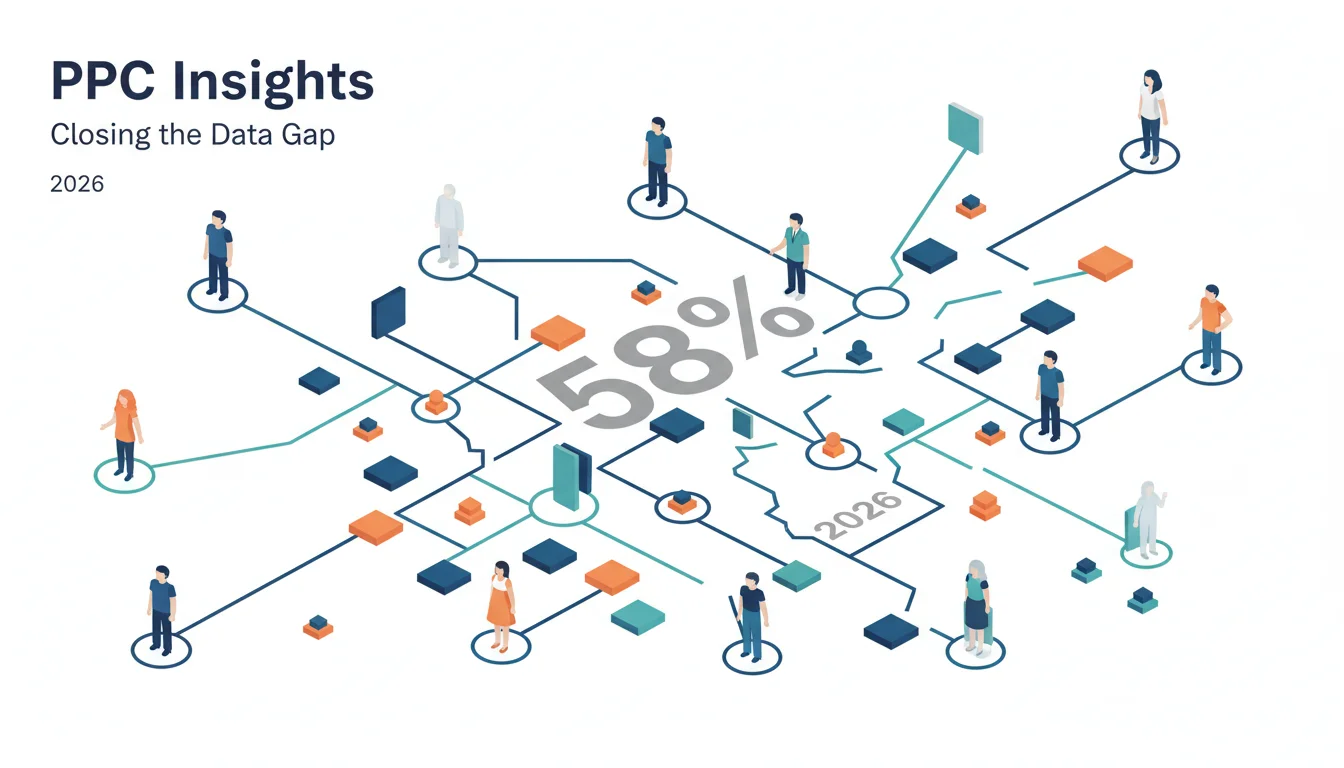
The IAB’s Q4 2025 Digital Ad Spend Report (you can find it at iab.com/insights/q4-2025-digital-ad-spend-report/) put a hard number on it: 58% of digital marketers feel they’re collecting massive amounts of data without the ability to get anything useful out of it. This isn’t a tech problem, it’s a strategy problem. We’re drowning in data points but starving for actual wisdom. I see this constantly with enterprise clients during their digital transformation projects, where the firehose of impression data, click-through rates, and CPA figures from platforms like Google Ads and Meta Business Suite completely overwhelms their analytics teams. Collecting data is easy. The hard part is asking the right questions and having the horsepower to get fast answers. Without a solid framework for creating knowledge assets, that 58% number is only going to go up as data volumes keep exploding.
Automated Anomaly Detection Reduces Waste by 15%
The fastest win you’ll get from putting real AI into your PPC is automated anomaly detection. An eMarketer report on AI in advertising found that companies using this tech cut their wasted ad spend by an average of 15% over a 12-month period. This is way beyond just getting an alert for a CPC spike. It’s about the system spotting subtle, nagging performance dips that a human analyst would likely miss. Think about a specific ad group targeting a small audience in Atlanta’s Midtown that suddenly shows a 7% drop in conversion rate, even though impressions are steady. A person might chalk it up to a market fluctuation. The AI, on the other hand, can cross-reference that dip with a dozen other signals, instantly correlating it with a new competitor’s campaign launch or a half-second increase in your landing page load time. The system then flags the specific issue for the team with a suggested fix. This catches problems before they become budget black holes and frees up your analysts from constant firefighting to work on actual strategy.
Predictive Bid Management Outperforms Manual Adjustments by 22%
The idea that a person, no matter how good they are, can beat AI at managing bids for a large campaign is just not realistic anymore. A Nielsen study on programmatic efficiency showed that AI-driven predictive bid management algorithms hit their target ROAS (Return On Ad Spend) 22% more effectively than manual optimization. Human expertise has its place, but our brains simply can’t process millions of data points every second. When you feed them good conversion data, tools like Google Ads’ Smart Bidding use machine learning to predict the probability of a conversion for every single auction, considering hundreds of real-time signals like device, location, time of day, and past user behavior to set the perfect bid. The “knowledge” isn’t just about what’s happening now. It’s about using huge historical datasets to predict the future with an accuracy no human can match. The job of a top-tier PPC specialist in 2026 isn’t tweaking bids all day, it’s knowing how to properly train the AI models, ensure the data they get is clean, and interpret their outputs to make bigger strategic moves.
Semantic Analysis Uncovers 30% More Long-Tail Opportunities
Most keyword research is stuck in the past, relying on tools that just spit out search volume for exact terms. It works, but it leaves a ton of money on the table. My teams have found that by bringing in semantic analysis tools that use advanced NLP, we can dig up 30% more good long-tail keyword opportunities that were completely invisible before. This is about understanding the intent behind a search. For instance, an AI doesn’t just see “best running shoes.” It analyzes product reviews and forum discussions across the web and understands that related, high-intent queries include things like “lightweight trail shoes for women” or “comfortable stability shoes for marathon training.” This deep grasp of how people actually talk lets you build hyper-focused ad groups with ad copy that speaks directly to them, which means higher relevance scores and lower costs. These are the kinds of PPC insights that make a real difference, shifting your entire strategy from just matching keywords to matching user intent.
Why “More Data is Always Better” is Flawed Conventional Wisdom
There’s this belief in marketing that more data is always the answer. In the world of advanced AI marketing, that’s a dangerous oversimplification. My professional opinion, from watching too many of these projects fail, is that data quality and relevance crush sheer volume every time. Shoveling terabytes of unstructured or poorly labeled data into an AI model is like giving a master chef rotten ingredients. You can’t expect a good meal. If your conversion tracking is a mess, for example, your predictive bidding AI will learn from the noise instead of the signal and start optimizing for worthless clicks when you desperately need sales. The model does exactly what you train it to do, and its success depends entirely on how well you’ve defined and measured what “success” means. Your focus has to be on creating clean, structured datasets, being obsessive about defining conversion events, and accurately tracking customer paths. It’s the first warning I give every client: garbage in, garbage out. The smartest AI in the world can’t fix broken data.
The point of AI in PPC is to turn raw data into strategic knowledge assets that produce real business results. When you get serious about data quality, use advanced analytics for spotting problems and predicting outcomes, and truly understand what users mean, you can finally move from just managing campaigns to running intelligent advertising. For any marketing leader looking at 2026, the directive is simple: invest in the data infrastructure and the smart people who can feed and interpret the AI. That’s how you ensure every dollar spent on PPC is working as hard as it possibly can.
What is KPIT AI marketing?
KPIT AI marketing is just a term for using artificial intelligence (machine learning, NLP) to improve and automate marketing tasks. For us, that means things like managing PPC campaigns, analyzing performance data, and building predictive models.
How does AI improve PPC campaign performance?
AI makes PPC better in a few key ways. It has automated anomaly detection to flag wasted spend, predictive bid management to optimize bids auction by auction, and semantic analysis to find keyword and audience opportunities you’d otherwise miss. All this leads to more efficient, targeted campaigns.
What are “knowledge assets” in the context of PPC?
In PPC, a “knowledge asset” is a useful insight that you’ve pulled from raw data and packaged for action. Think of things like documented best practices, proven predictive models, performance benchmarks for future campaigns, detailed audience profiles, and automated reports that help you make smart decisions.
Why is data quality more important than data quantity for AI in PPC?
Quality is everything because AI models learn directly from the data you give them. If the data is bad, inconsistent, or irrelevant, the AI will produce bad insights and make poor decisions. Clean, accurate data is the foundation for getting precise predictions and useful recommendations from your AI.
What specific AI features should marketers look for in PPC platforms?
You should be looking for platforms with strong automated bid strategies (like Target ROAS or Maximize Conversions), machine-learning-powered audience segmentation, proactive anomaly detection alerts, and tools that use natural language processing for deep keyword research and ad copy analysis.


