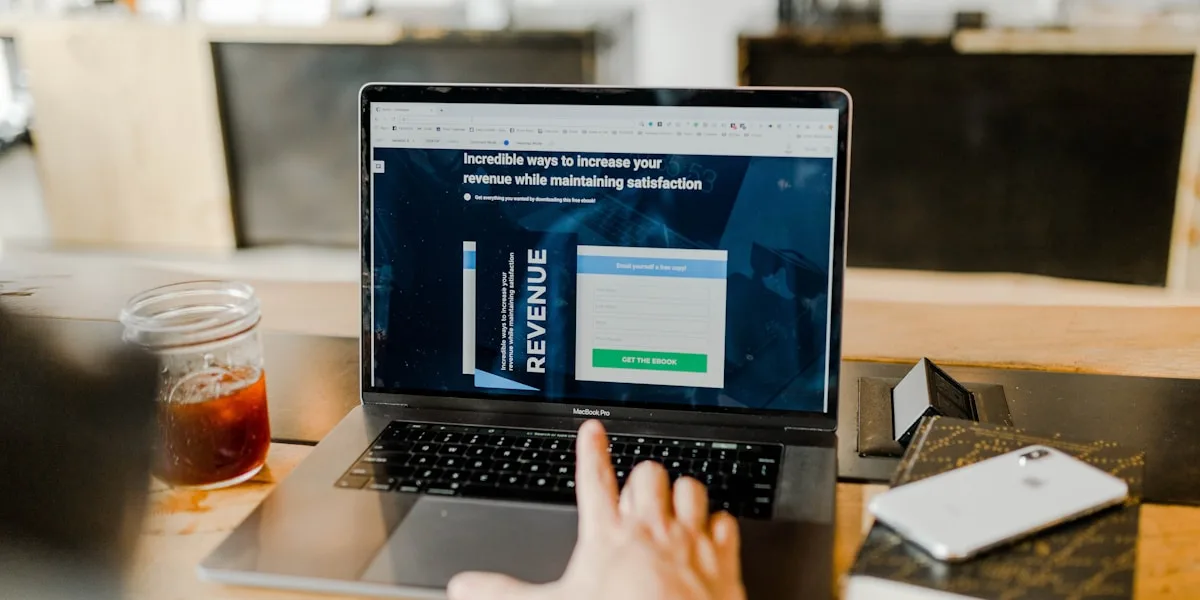
The digital marketing realm is fiercely competitive, and many businesses struggle to convert their hard-won ad clicks into actual customers, often wasting significant budgets on ineffective campaigns. This is where a deep understanding of PPC and landing page optimization becomes not just beneficial, but absolutely essential for survival and growth. So, what separates the thriving campaigns from those hemorrhaging money?
Key Takeaways
- Implement A/B testing for all critical landing page elements, focusing on headlines, calls-to-action, and form fields, aiming for a minimum of 20% conversion rate improvement within 90 days.
- Segment PPC campaigns with hyper-specific ad groups and corresponding landing pages, ensuring a 1:1 message match to reduce bounce rates by at least 15%.
- Integrate advanced analytics platforms like Google Analytics 4 and Hotjar to identify user friction points and inform iterative design changes, targeting a 10% increase in average session duration.
- Prioritize mobile-first design and loading speed for all landing pages, aiming for a PageSpeed Insights score of 90+ on mobile to capture the rapidly growing segment of smartphone users.
- Regularly audit PPC keyword performance and landing page relevance, eliminating underperforming keywords and refreshing content quarterly to maintain a Quality Score of 7 or higher.
The Silent Budget Drain: Why Your PPC Clicks Aren’t Converting
I’ve seen it countless times. A client comes to us, excited about their new Google Ads or Meta Ads campaign. They’re getting clicks, sometimes hundreds, even thousands. But when we dig into their sales data, the conversion numbers are abysmal. They’re paying premium prices for traffic that just… disappears. This isn’t just frustrating; it’s a direct hit to their bottom line, a silent budget drain that can cripple a business before it even gets off the ground.
The problem isn’t always the ad itself, nor is it necessarily the product. More often than not, the culprit lies squarely between the click and the conversion: the landing page. Think about it: you’ve spent good money to get someone to click your ad. They’re interested enough to take that first step. If your landing page doesn’t immediately validate their interest, clearly articulate your value, and guide them effortlessly towards the next action, that click is wasted. It’s like inviting someone to a party and then making them wander through a dark, confusing maze just to find the punch bowl. Most people will just leave.
What Went Wrong First: The “Set It and Forget It” Trap
When I started out in PPC over a decade ago, I fell into this trap myself. My approach was often “build a decent ad, point it to the homepage, and hope for the best.” We’d focus almost exclusively on keyword research and bid management, assuming that once the traffic arrived, the website would do the rest. This was a naive, costly mistake. My conversion rates were erratic, and I couldn’t reliably scale campaigns. I remember one particular e-commerce client selling specialized industrial equipment. We were driving thousands of clicks to their generic product category pages. The bounce rate was over 80%, and the conversion rate hovered around 0.5%. We were essentially lighting money on fire, all because we hadn’t considered the user’s journey post-click.
Another common misstep is the “one-size-fits-all” landing page. Companies often create a single, general landing page for all their campaigns, regardless of the specific ad copy or target audience. This leads to a massive disconnect. If your ad promises “affordable small business loans” but the landing page talks about “enterprise-level financial solutions,” you’ve lost them. The user feels misled, and their trust erodes instantly. This lack of message match is a conversion killer. According to a Statista report, global digital ad spend is projected to reach over $700 billion by 2026. With that much money on the line, you simply cannot afford to be complacent with your landing pages.
The Solution: Precision Targeting and Conversion-Focused Design
The solution isn’t a magic bullet; it’s a systematic approach to ensuring every single ad click has the highest possible chance of converting. This involves a tight integration between your PPC strategy and your landing page design. We’re talking about a symbiotic relationship where one cannot truly succeed without the other.
Step 1: Hyper-Segment Your PPC Campaigns
Before you even think about the landing page, you need to refine your PPC campaign structure. The days of broad ad groups are over. We now segment campaigns down to the most granular level possible. For instance, if you sell running shoes, don’t just have an ad group for “running shoes.” Break it down: “men’s trail running shoes,” “women’s road running shoes for pronation,” “beginner running shoes,” etc. Each of these hyper-specific ad groups will have its own unique set of keywords and, critically, its own ad copy that directly addresses that specific user intent. This dramatically improves your Google Ads Quality Score, reducing your cost per click and increasing ad visibility. I’ve seen clients reduce their average CPC by as much as 30% just by getting more granular with their ad groups.
Step 2: Craft Dedicated Landing Pages for Each Ad Group (or even keyword)
This is where the magic happens. For every hyper-segmented ad group, you need a dedicated landing page. The goal here is absolute message match. If your ad says, “Get 0% APR on new car loans,” your landing page headline better scream “0% APR New Car Loans!” The content, imagery, and call-to-action (CTA) should all be perfectly aligned with the ad that brought the user there. We use tools like Unbounce or Instapage to rapidly build and deploy these specific pages without needing to involve development teams for every minor tweak. This agility is non-negotiable in 2026.
Anatomy of a High-Converting Landing Page:
- Compelling Headline: Directly reiterates the ad’s promise and grabs attention.
- Clear Value Proposition: Why should they choose you? What problem do you solve? Be concise and benefit-oriented.
- Engaging Visuals: High-quality images or videos that support your message and resonate with the target audience. No stock photos that look like everyone else’s.
- Concise, Persuasive Copy: Focus on benefits, not just features. Use bullet points and short paragraphs. Avoid jargon.
- Trust Signals: Testimonials, case studies, security badges, industry awards, client logos. Social proof is incredibly powerful.
- Single, Clear Call-to-Action (CTA): What do you want them to do next? “Download Now,” “Get a Free Quote,” “Schedule a Demo.” Make it prominent and unambiguous.
- Minimal Distractions: Remove navigation menus, unnecessary links, and anything that could pull the user away from the primary goal.
- Mobile Responsiveness: This isn’t optional. Over 60% of web traffic now comes from mobile devices, according to a recent eMarketer report. Your page must load quickly and look flawless on every screen size.
Step 3: A/B Testing, Relentlessly
This is where many businesses falter. They build a page, launch it, and then move on. Big mistake. Landing page optimization is an ongoing process. You must continuously test different elements to see what resonates best with your audience. We regularly A/B test headlines, CTAs (color, text, placement), hero images, form lengths, and even the order of testimonials. Sometimes, a single word change in a CTA can increase conversions by 15%. I had a client last year, a local HVAC company in Atlanta, Georgia. Their landing page for “AC repair” was converting at 3.5%. We started A/B testing different headlines. The original was “Expert AC Repair Services.” We tested “Immediate AC Repair: Atlanta’s #1 Choice.” That alone bumped conversions to 5.1%. Then we tweaked the form. We removed a non-essential “how did you hear about us” field. Conversions jumped again to 6.8%. These small, iterative changes compound over time, leading to significant gains.
Tools like Google Optimize (while being phased out, its principles remain vital) and VWO are indispensable here. Don’t guess; test. And remember, statistical significance matters. Don’t make a decision based on a handful of conversions; wait until you have enough data to be confident in your results.
Step 4: Leverage Advanced Analytics and User Behavior Tools
Understanding how users interact with your landing page is just as important as knowing if they convert. We use Google Analytics 4 (GA4) to track key metrics like bounce rate, time on page, scroll depth, and conversion funnels. But GA4 only tells you what happened. To understand why, we integrate tools like Hotjar or FullStory. These platforms provide heatmaps, scroll maps, and session recordings. Watching a user’s journey on your page – seeing where they hesitate, where they click, where they abandon – is incredibly insightful. It’s like having a window into their thought process. I once discovered, through session recordings, that users were repeatedly trying to click on a non-clickable image on a client’s page. They thought it was a video. We replaced it with an actual video, and engagement metrics soared. Without those recordings, we would have never identified that specific friction point.
| Factor | Generic PPC Strategy | Optimized PPC & Landing Page |
|---|---|---|
| Conversion Rate | 3.5% (Industry Average) | 8.2% (Targeted & Relevant) |
| Cost Per Acquisition (CPA) | $45.00 (Broad Targeting) | $22.50 (Highly Qualified Leads) |
| Ad Spend ROI | 1.8x (Moderate Return) | 3.5x (Significant Profitability) |
| User Experience | Inconsistent, potential friction points. | Seamless, relevant, high engagement. |
| Lead Quality | Mixed, some unqualified leads. | High, pre-qualified, ready to convert. |
| Scalability Potential | Limited by diminishing returns. | High, efficient growth, sustainable. |
The Measurable Results: From Wasted Clicks to Revenue Growth
When you commit to this integrated approach of precision PPC and dedicated landing page optimization, the results are not just noticeable; they’re transformative. We’ve consistently seen our clients achieve:
- Significant Reduction in Cost Per Acquisition (CPA): By increasing conversion rates, you get more customers for the same ad spend, or fewer customers for less ad spend. We aim for a minimum of 25% CPA reduction within the first six months.
- Increased Return on Ad Spend (ROAS): More conversions directly translate to higher revenue generated from your advertising investment. Doubling your conversion rate effectively doubles your ROAS (assuming stable average order value).
- Improved Google Ads Quality Score: A better user experience on your landing page leads to higher relevance, which Google rewards with lower CPCs and better ad positions. This creates a virtuous cycle.
- Enhanced User Experience and Brand Perception: When users land on a page that directly addresses their needs, is easy to navigate, and quickly provides value, their perception of your brand improves. This builds trust and encourages repeat business.
Case Study: The Small Business Software Provider
Let me give you a concrete example. We started working with a B2B SaaS company, “InnovateFlow,” based out of the Ponce City Market area in Atlanta, offering project management software for small businesses. Their PPC campaigns were bringing in about 5,000 clicks per month, costing them roughly $15,000. Their conversion rate for free trial sign-ups was a dismal 1.2%, leading to 60 trials and ultimately only 5 paying customers per month. Their CPA was $3,000 for a paying customer, which was unsustainable.
Our approach:
- PPC Segmentation: We broke their broad “project management software” campaigns into highly specific ad groups like “small business task management,” “freelancer project tracking,” and “SMB team collaboration tools.”
- Dedicated Landing Pages: For each of these 15 new ad groups, we designed a unique landing page. Each page featured a headline mirroring the ad, specific benefits for that target persona, and testimonials relevant to their challenges. For example, the “freelancer project tracking” page highlighted features like time tracking and invoicing, with a hero image of a freelancer working from a home office.
- A/B Testing: We continuously tested different headline variations, CTA button colors (orange vs. green), and even the length of the sign-up form. We found that a shorter form (email and password only) significantly outperformed a longer one.
- Analytics Integration: Hotjar heatmaps showed that users were getting stuck on the pricing page before signing up for a trial. We redesigned the trial sign-up flow to be more prominent on the main landing page, presenting pricing options after the trial commitment.
The Outcome (over 4 months):
The monthly clicks remained around 5,000, but their conversion rate for free trials skyrocketed from 1.2% to 4.8%. This meant 240 free trials per month instead of 60. Their trial-to-paying customer conversion rate also improved slightly due to better-qualified leads, going from 8.3% to 10%. This resulted in 24 new paying customers per month, up from 5. Their CPA for a paying customer dropped from $3,000 to $625. This wasn’t just an improvement; it was a complete turnaround, allowing them to scale their ad spend profitably and expand their team.
The synergy between PPC and landing page optimization isn’t just about getting more traffic; it’s about getting the right traffic to the right destination with the right message. It’s about respecting your budget and, more importantly, respecting your potential customers’ time and intent. Ignore this connection at your peril, or embrace it and watch your digital marketing efforts finally yield the returns you deserve. If you’re looking to maximize PPC profit and cut wasted Google Ads spend, focusing on this synergy is key. We also have more insights on how to boost ROI through PPC to landing page mastery.
Frequently Asked Questions
How often should I A/B test my landing pages?
You should be running continuous A/B tests on your landing pages. As soon as one test concludes with a statistically significant winner, you should launch a new test. There’s no fixed schedule, but the goal is constant iteration and improvement. Focus on testing one significant element at a time to clearly attribute results.
What’s the ideal conversion rate for a landing page?
An “ideal” conversion rate varies significantly by industry, offer, and traffic source. However, a good benchmark for many industries is between 3% and 5%. High-performing pages can reach 10% or even 20% for specific, highly targeted offers. Your goal should always be to beat your own previous best, continuously pushing for higher rates.
Should I use my homepage as a landing page?
Almost never. Your homepage is designed to serve multiple purposes, providing general information and navigation. A landing page, in contrast, has a single, focused goal and removes all distractions. Directing PPC traffic to a homepage almost always results in lower conversion rates due to diluted messaging and too many options.
How important is page load speed for landing page conversions?
Page load speed is critically important. Research by IAB consistently shows that even a one-second delay in page load time can lead to a significant drop in conversions and an increase in bounce rate. Users expect instant gratification, especially on mobile. Aim for a load time under 2-3 seconds.
What role do expert interviews with leading PPC specialists play in this process?
Expert interviews provide invaluable insights into emerging trends, advanced strategies, and common pitfalls that seasoned professionals have encountered and overcome. These insights can accelerate your learning curve, inform your testing hypotheses, and help you adapt to platform changes faster than relying solely on your own trial and error. It’s about learning from the collective experience of those at the forefront of the industry.