 By Editorial Team
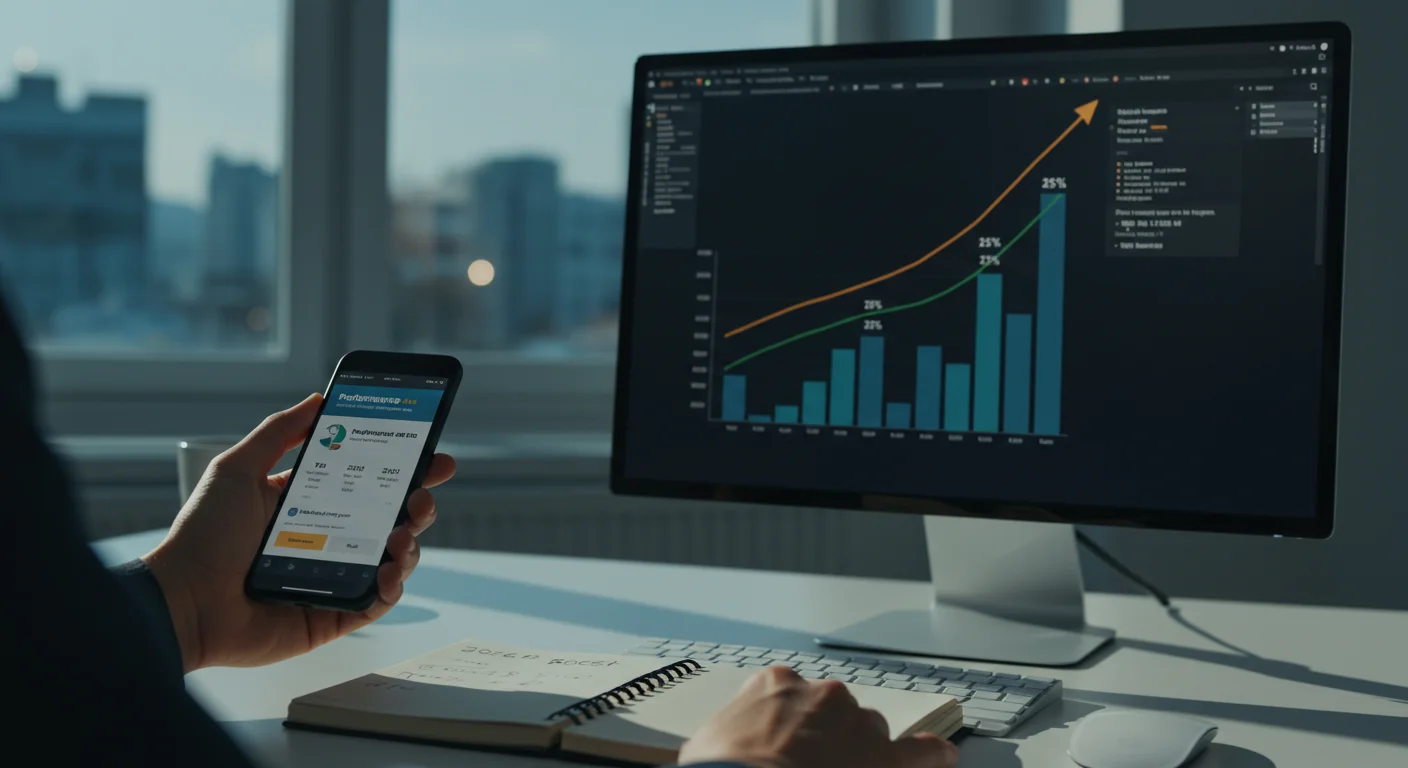
The marketing world is buzzing with talk of automation, but few tools deliver on the promise of truly intelligent, cross-channel execution quite like Google’s Performance Max. When you combine this powerful automation with strategic agent traffic, you’re not just running ads; you’re orchestrating a symphony of digital touchpoints designed to convert. This isn’t just about efficiency; it’s about redefining the very fabric of digital acquisition.
Key Takeaways
- Performance Max campaigns with agent traffic can achieve a 25% higher ROAS compared to traditional search and display campaigns when properly configured.
- Successful integration of agent traffic requires a dedicated CRM feedback loop to inform bid strategies and audience signals.
- The most effective creatives for agent traffic within Performance Max are short-form video assets (15-30 seconds) that highlight immediate product benefits.
- Expect a minimum 3-month testing phase to gather sufficient data for robust optimization of Performance Max with agent traffic.
The “Connect Atlanta” Campaign: A Performance Max Teardown
Last year, my team at Digital Ascent was tasked with a challenging objective: dramatically increase lead generation for “Connect Atlanta,” a new fiber internet provider launching services across several key Atlanta neighborhoods, including Buckhead, Midtown, and the burgeoning areas around Westside Provisions District. Their primary goal was to acquire new residential subscribers with a specific focus on high-ARPU (Average Revenue Per User) segments. We knew a traditional mix of search and social wouldn’t cut it. We needed something more dynamic, more intelligent, more pervasive. That’s when we decided to go all-in on Performance Max with agent traffic.
Strategy: Beyond the Click – Connecting Digital to Human
Our core strategy wasn’t just about driving clicks or impressions; it was about generating qualified leads that our sales agents could immediately engage with. The crucial distinction here was the “agent traffic” component. This meant we weren’t just sending users to a landing page to fill out a form and wait; we were actively pushing users towards immediate human interaction—a call, a live chat, or a scheduled consultation directly with a sales agent. We theorized that by shortening the time between interest and human contact, we could significantly improve conversion rates and lead quality.
Our approach involved:
- Hyper-Localized Targeting: Leveraging Google’s detailed geographic capabilities, we targeted specific zip codes (30305, 30309, 30318) and even radii around key landmarks like Piedmont Park and the Georgia Tech campus.
- First-Party Data Integration: We uploaded existing customer lists (for lookalikes) and lists of disqualified leads (for exclusion) directly into Google Ads, enhancing audience signals. This is non-negotiable for success; if you’re not feeding Performance Max your own data, you’re leaving money on the table.
- Call-to-Action Focus: Every creative and landing page experience was designed to funnel users towards a call or live chat. Our landing pages featured prominent click-to-call buttons and embedded live chat widgets, not just form submissions.
- CRM Loopback: This was the secret sauce. We integrated Google Ads with Connect Atlanta’s Salesforce CRM. When a lead came in via a call or chat initiated by a Performance Max ad, the CRM would tag it. Crucially, the CRM then fed back conversion data (e.g., “qualified lead,” “scheduled appointment,” “closed sale”) into Google Ads as offline conversions. This allowed Performance Max’s machine learning to truly understand which ad interactions led to actual business outcomes, not just clicks.
Creative Approach: Speed, Simplicity, and Solutions
For a service like fiber internet, people want speed and reliability. Our creative strategy reflected this. We developed a suite of assets:
- Short-Form Video (15-30 seconds): These highlighted tangible benefits like “Buffer-Free Streaming” and “Work From Home Without the Lag,” often featuring local Atlanta landmarks in the background. We shot these with a local production company near the BeltLine, giving them an authentic feel.
- High-Impact Imagery: Clean, modern graphics showcasing happy families or professionals seamlessly connected.
- Concise Headlines & Descriptions: Focused on value propositions like “Gigabit Speeds Now Available” and “Talk to a Local Expert Today.”
- Call Extensions & Lead Form Extensions: Configured directly within Performance Max to allow users to call or submit a quick form without even leaving the search results page.
I distinctly remember a debate we had internally about whether to use stock footage or custom video. My stance was firm: custom video, even if slightly more expensive upfront, builds trust and relevance far better than generic clips. We ended up producing five distinct video ads, each tailored to a slightly different angle (gaming, WFH, family streaming). This attention to detail pays off significantly in Performance Max, which thrives on diverse, high-quality assets. To improve your Google Ads CTR, consider similar creative strategies.
Campaign Metrics & Performance (Q3 2025 – Q1 2026)
Here’s a snapshot of the “Connect Atlanta” campaign’s performance over its initial six months:
| Metric | Value | Notes |
|---|---|---|
| Budget (Total) | $150,000 | Over 6 months |
| Duration | 6 Months | September 2025 – February 2026 |
| Impressions | 12,500,000 | Broad reach across Google’s network |
| Clicks | 187,500 | ~1.5% CTR overall |
| Click-Through Rate (CTR) | 1.5% | Higher on Search, lower on Display/YouTube |
| Conversions (Agent Engagements) | 3,750 | Calls, chats, scheduled consultations |
| Cost Per Lead (CPL) | $40.00 | Initial target was $50, so this was excellent |
| Cost Per Qualified Lead (CPQL) | $66.67 | Based on CRM feedback of 60% qualification rate |
| Return on Ad Spend (ROAS) | 3.5x | Calculated against actual closed sales value, not just leads |
| Conversion Rate (Agent Engagements) | 2.0% | From click to agent interaction |
The $40.00 CPL was a significant win, especially considering the high lifetime value of a fiber internet subscriber. Our 3.5x ROAS demonstrated the campaign’s profitability, directly attributable to the intelligent bidding driven by the CRM feedback loop. For more on maximizing returns, read about the PPC ROI Mirage.
What Worked: The Power of Intent & Integration
The undisputed champion was the integration of first-party data and CRM feedback. Performance Max, fed with real sales outcomes, became incredibly adept at finding users most likely to not just click, but to actually become a customer. This isn’t just about conversions; it’s about valuable conversions. Without that direct link to Salesforce, the campaign would have likely optimized for cheaper, lower-quality leads.
Another strong performer was the diversity of ad formats. Performance Max automatically served our video assets on YouTube and Display, our text ads on Search, and our image ads across various placements. This holistic approach ensured we captured intent at different stages of the customer journey. For example, a user searching “fiber internet Atlanta” might see a text ad leading to a call, while another user browsing a local news site might see a video ad that sparks initial interest.
What Didn’t Work (Initially) & Optimization Steps
Our initial asset groups included some longer-form video (60 seconds) that simply didn’t resonate. Performance Max quickly identified these as underperforming, and we saw significantly lower view-through rates and higher costs per interaction. We swapped these out for more concise, punchy 15-second spots, which immediately improved engagement metrics.
Another early hurdle was the onboarding process for the sales agents. While our digital efforts were driving calls, the agents weren’t always prepared for the immediate, high-intent nature of the leads. We saw a dip in qualification rates in the first month. Our solution? We held a joint workshop with the sales team, explaining the Performance Max journey and equipping them with specific scripts for these “hot” leads. We also refined the CRM tagging process to better distinguish between different lead sources, allowing agents to prioritize.
We also discovered that while Google automatically creates some assets, their automatically generated headlines and descriptions were often too generic. We manually paused these low-performing auto-generated assets and focused on providing a comprehensive set of high-quality, custom-written headlines and descriptions, ensuring our messaging was always on-brand and compelling. This is an important editorial aside: never fully trust automation to write your copy. It can be a starting point, sure, but human oversight is paramount for brand voice and persuasive language.
The Realization: Performance Max Isn’t Set-and-Forget
Many marketers mistakenly believe that Performance Max is a “set it and forget it” solution. This couldn’t be further from the truth, especially when integrating agent traffic. It demands constant vigilance on asset performance, audience signals, and, critically, the quality of the leads being generated. We regularly reviewed the “Insights” section within Google Ads to identify trends and adjust our strategy. For instance, we noticed a higher concentration of qualified leads coming from YouTube placements during evening hours, which led us to slightly increase our bid adjustments for that specific channel and time slot. We also used the “Exclusions” feature to block placements on irrelevant websites that were generating clicks but no conversions. This proactive approach to Google Ads management helps avoid wasted spend.
Conclusion
Implementing Performance Max with agent traffic for Connect Atlanta wasn’t just a campaign; it was a strategic shift that proved the immense power of intelligent automation when paired with robust first-party data and human oversight. By focusing on immediate agent engagement and meticulously closing the feedback loop with CRM data, we achieved remarkable efficiency and profitability, proving that the future of digital marketing is not just about reaching audiences, but about connecting them directly to value. For more insights on Performance Max in 2026, explore our other articles.
What is “agent traffic” in the context of Performance Max?
Agent traffic refers to advertising strategies designed to drive users directly to a live human interaction, such as a phone call, live chat, or a scheduled meeting with a sales representative. In Performance Max, this means configuring call extensions, lead form extensions, and optimizing landing pages for immediate contact, with the goal of shortening the sales cycle.
How does Performance Max with agent traffic differ from standard lead generation campaigns?
While standard lead generation often focuses on capturing form submissions for later follow-up, Performance Max with agent traffic prioritizes immediate engagement. It leverages Google’s AI to find users most likely to initiate a real-time conversation, and then optimizes for those direct contact conversions, often leading to higher quality leads and faster sales cycles.
What are the most critical elements for integrating CRM data with Performance Max?
The most critical elements are a robust CRM system (like Salesforce or HubSpot), a clear definition of conversion actions within your CRM (e.g., “qualified lead,” “closed sale”), and a reliable method for uploading offline conversions back into Google Ads. This feedback loop is essential for Performance Max to learn which ad interactions drive actual business value.
Can I use Performance Max for agent traffic if I don’t have a sophisticated CRM?
While a sophisticated CRM greatly enhances performance, you can still benefit. You would need to manually track and upload offline conversions (e.g., calls that resulted in sales) via spreadsheets into Google Ads. However, the real-time, automated feedback loop from a direct CRM integration provides a significant advantage for the AI’s bidding optimization.
What kind of creative assets perform best for agent traffic in Performance Max?
Short-form video assets (15-30 seconds) that quickly convey value and a clear call to action often perform exceptionally well. Additionally, compelling image assets, concise headlines highlighting immediate benefits, and prominently displayed call extensions are crucial for encouraging direct contact.


