 By Editorial Team
Many businesses, especially those operating within specific geographic areas, struggle to capture the attention of local customers. Their marketing efforts often cast too wide a net, diluting impact and wasting budget on audiences unlikely to convert. This fundamental misdirection prevents businesses from achieving meaningful brand visibility where it matters most. How can local businesses effectively reach the right people, in the right place, at the right time?
Key Takeaways
- Implement geo-fencing strategies to target potential customers within a precise radius of your physical location, increasing ad relevance by up to 20% compared to broader targeting.
- Allocate at least 30% of your initial local PPC budget to testing different ad creatives and landing page variations to identify high-performing assets quickly.
- Configure bid adjustments for specific times of day and days of the week when your target audience is most active and likely to convert, potentially improving conversion rates by 15%.
- Regularly audit your negative keyword list, adding at least 10-15 new irrelevant terms monthly to prevent wasted spend on unqualified searches.
The Costly Pursuit of Broad Reach
I’ve seen countless local businesses, from dental practices in Buckhead to independent bookstores in the Old Fourth Ward, make the same mistake: they chase impressions rather than conversions. They’ll run broad campaigns, hoping sheer volume will eventually bring in customers. This approach is fundamentally flawed for local enterprises. Imagine a small café on Peachtree Street advertising to someone in Alpharetta who has no intention of driving downtown for coffee. That’s money down the drain.
Early on, many businesses fall into the trap of simply replicating their national marketing strategies on a smaller scale. They might use general keywords like “best coffee” or “affordable dentist,” which, while relevant nationally, fail to connect with the immediate needs of someone searching for “coffee near me” or “dentist Midtown Atlanta.” The problem isn’t the platform; it’s the strategy. They’re using powerful tools with a blunt approach.
Another common misstep involves neglecting local SEO in favor of PPC. While both are vital, a business with a poorly optimized Google Business Profile (GBP) listing will struggle to convert even highly targeted local PPC traffic. Customers often check GBP reviews and information before visiting. If that profile is incomplete or inaccurate, the paid click becomes worthless. We often see clients initially focus solely on ad spend, only to discover their foundational local presence is crumbling beneath them. Without a solid local SEO base, your local PPC efforts are building on sand.
Precision Targeting with Local PPC
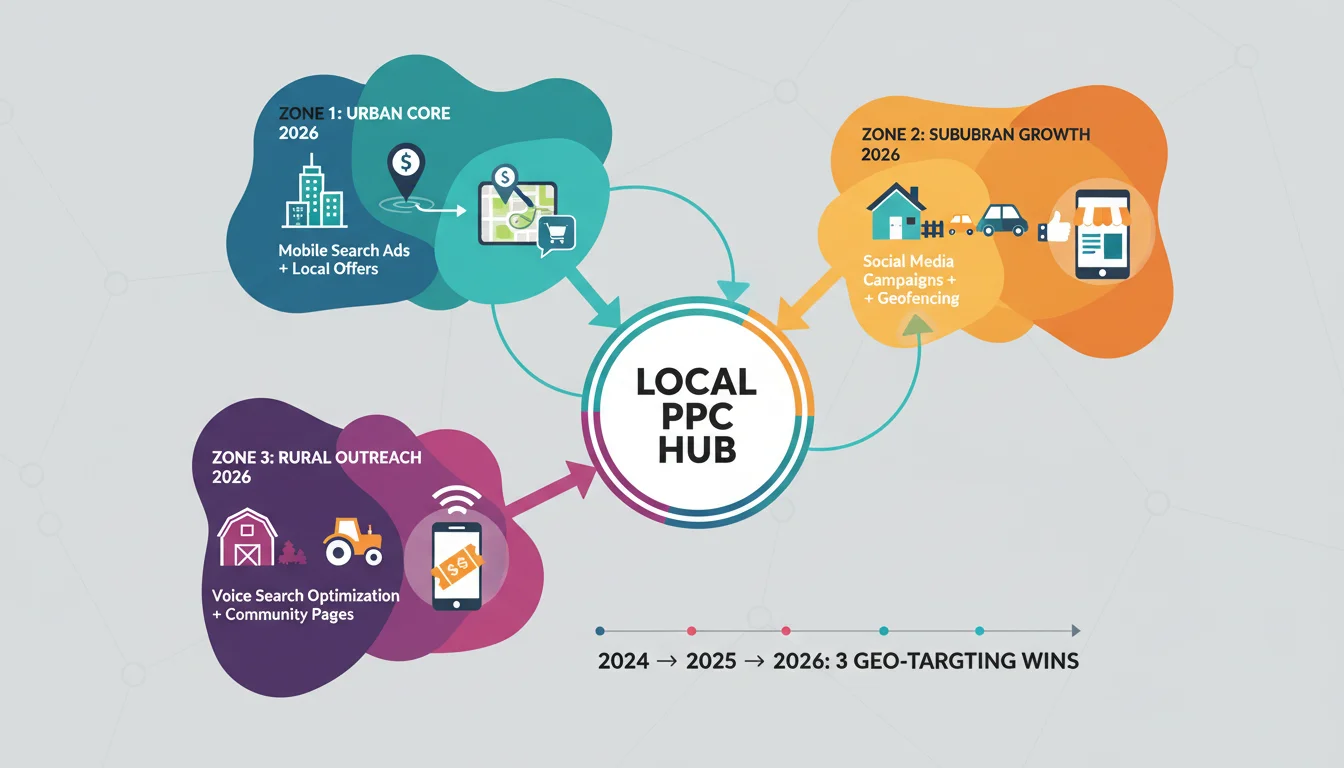
The solution lies in a strategic implementation of local PPC, focusing on geo-targeting. This isn’t just about setting a radius around your business; it’s about understanding the specific intent of a local searcher. It’s about being visible precisely when a potential customer is looking for what you offer, right where they are. This requires a granular approach to campaign setup and ongoing management.
Step 1: Define Your Hyper-Local Audience
Before launching any campaign, you must understand your customer’s geographic behavior. For a restaurant near the Georgia Aquarium, your primary audience might be tourists, convention-goers, and downtown office workers. For a landscaping company in Roswell, it’s homeowners in specific subdivisions. I always advise clients to map out their actual service areas and customer demographics. Who are they? Where do they live, work, and spend their leisure time? This isn’t guesswork; it’s data-driven analysis. Use tools like Google Analytics to examine your existing customer locations. Look at zip codes, neighborhoods, and even specific street names.
Step 2: Geo-Targeting Configuration
In platforms like Google Ads, you can set precise geographic boundaries. Don’t just use a city; drill down to zip codes, neighborhoods, or even custom radii. For a boutique in Inman Park, I’d set a radius around the BeltLine Eastside Trail and target specific zip codes like 30307 and 30312. You can also exclude areas where you know you won’t get good returns. If your business is in Decatur Square, you might exclude areas far out in Gwinnett County. This level of specificity ensures your ad budget isn’t wasted on irrelevant impressions.
Beyond basic radius targeting, consider geo-fencing. This advanced technique allows you to target users who have recently been within a specific physical boundary, even if they’ve since left. For example, a car dealership could target individuals who have recently visited a competitor’s lot. This requires a more sophisticated setup, often with third-party platforms, but the precision is unmatched. A Statista report indicates that geo-fencing campaigns can see click-through rates up to two times higher than traditional mobile ads.
Step 3: Keyword Strategy for Local Intent
Your keywords must reflect local intent. Instead of “plumber,” use “plumber Sandy Springs” or “emergency plumbing services Dunwoody.” Incorporate “near me” variations, even if the platforms automatically account for them; explicitly including them in your keyword list reinforces local relevance. Use Google’s Keyword Planner to identify high-volume local search terms. Don’t forget long-tail keywords that capture very specific local needs, such as “HVAC repair near Chastain Park” or “pizza delivery West Midtown.”
Crucially, build a robust negative keyword list from day one. If you’re a high-end restaurant, you don’t want to show up for “cheap eats” or “fast food.” Continuously monitor your search term reports to identify and add irrelevant terms. This practice alone can save significant budget and improve ad quality scores.
Step 4: Craft Compelling Local Ad Copy
Your ad copy must immediately communicate local relevance. Mention local landmarks, neighborhoods, or specific streets. “Best coffee on Ponce de Leon Ave” is far more impactful than “Best coffee shop.” Include your business’s physical address or a prominent call to action to “Visit Our Atlanta Location.”
Use ad extensions effectively. Location extensions are non-negotiable; they display your address, phone number, and a map link directly in your ad. Call extensions allow mobile users to call you with a single tap. Structured snippet extensions can highlight specific services or products relevant to your local market. I’ve seen conversion rates jump simply by adding a well-configured location extension.
Step 5: Localized Landing Pages
When a user clicks your ad, they must land on a page that continues the local experience. The landing page should prominently feature your local address, phone number, and perhaps a map. The content itself should speak to the specific needs of the local audience you’re targeting. If your ad mentions “dentist in Marietta,” the landing page shouldn’t be a generic corporate page; it should be tailored to your Marietta office, showcasing local testimonials and staff.
Ensure your landing pages are mobile-friendly. A significant portion of local searches happen on mobile devices, often while the user is on the go. A slow or clunky mobile experience will drive potential customers away immediately.
Step 6: Bid Strategy and Optimization
Local PPC isn’t a “set it and forget it” endeavor. Monitor performance daily. Adjust bids based on geographic performance. You might find that users in one zip code convert at a higher rate than another, justifying a higher bid in that area. Schedule your ads to run during your business hours or when your target audience is most likely to be searching. A restaurant might bid higher during lunch and dinner hours, for instance. This dynamic optimization is what separates successful local campaigns from mediocre ones.
Platforms like Google Ads offer various automated bid strategies. While these can be helpful, I often recommend starting with manual bidding for local campaigns until you gather sufficient data. This allows for greater control over your spend in specific, high-value local segments. Once you have a clear understanding of what works, you can then experiment with automated strategies.
Measurable Impact: The Results of Precision
The shift from broad, unfocused campaigns to highly targeted local PPC yields tangible results. Businesses typically see a significant improvement in their return on ad spend (ROAS). Instead of paying for clicks from users who are miles away and have no intention of visiting, they’re paying for clicks from individuals who are actively searching for their services within their immediate vicinity. This dramatically increases the likelihood of conversion.
One client, a specialty retail store near the Krog Street Market, initially struggled with online visibility despite a prime location. Their previous campaigns targeted the entire Atlanta metro area. After implementing a hyper-local strategy, focusing on geo-fencing around specific neighborhoods like Cabbagetown and Candler Park, and optimizing for keywords like “boutique gifts Krog Street,” their foot traffic from online ads increased by 40% within three months. Their cost per acquisition (CPA) dropped by 25% because they were no longer wasting budget on irrelevant impressions. This is the power of precision.
Another example involves a law firm specializing in personal injury cases, located near the Fulton County Courthouse. They found that targeting users specifically searching for “personal injury lawyer downtown Atlanta” or “car accident attorney near 30303” led to a higher quality of leads. These individuals were often already in the area for other legal matters or had just experienced an incident nearby, making them highly motivated. Their conversion rate for qualified leads from PPC jumped from 8% to 18% once they honed their geo-targeting and local keyword strategy, according to their internal tracking.
Beyond immediate conversions, enhanced local PPC also builds stronger brand visibility within your core service area. When your business consistently appears at the top of local search results for relevant queries, it fosters familiarity and trust. People start to recognize your name, even if they don’t click on an ad immediately. This cumulative effect strengthens your local market position, making you the go-to option when the need arises. It’s not just about the click; it’s about cementing your presence in the local consciousness. This continuous reinforcement is something that broad, national campaigns simply cannot achieve for a local business.
A well-executed local PPC strategy ensures your marketing budget works harder and smarter. It focuses resources on the most promising leads, leading to higher conversion rates, lower acquisition costs, and ultimately, sustainable local growth. It’s about being the obvious choice for your neighbors.
What is geo-targeting in local PPC?
Geo-targeting is the practice of delivering online advertisements to consumers based on their geographic location. In local PPC, this means setting your campaigns to show ads only to users within specific cities, zip codes, neighborhoods, or even custom radii around your business, ensuring your message reaches a locally relevant audience.
How often should I review my local PPC campaign settings?
You should review your local PPC campaign settings, including bids, keywords, and ad copy, at least weekly. Performance data changes rapidly, and consistent monitoring allows you to quickly identify underperforming elements and make adjustments to maintain efficiency and improve results. For larger budgets or highly competitive markets, daily checks might be necessary.
Can I use local PPC if my business doesn’t have a physical storefront?
Yes, even service-area businesses without a physical storefront can benefit significantly from local PPC. Instead of targeting a radius around a store, you’d target the specific service areas where you operate, such as “plumber in Marietta” or “mobile car detailing Dunwoody.” You can use service area targeting in platforms like Google Ads to define your operational zones.
What’s the difference between geo-targeting and geo-fencing?
Geo-targeting typically involves delivering ads to users currently located within a defined geographic area or those who have expressed interest in that area. Geo-fencing is a more advanced technique that targets users who have entered or exited a specific, often smaller, virtual boundary (the “geo-fence”) in the past, allowing for highly precise audience segmentation based on recent physical presence.
Should I use broad match keywords for local PPC?
While broad match keywords can generate significant impressions, they often lead to wasted spend in local PPC due to irrelevant searches. I recommend prioritizing exact match and phrase match keywords combined with extensive negative keyword lists for local campaigns. This ensures your ads appear for highly specific and relevant local searches, improving your conversion rates.


