 By Editorial Team
Key Takeaways
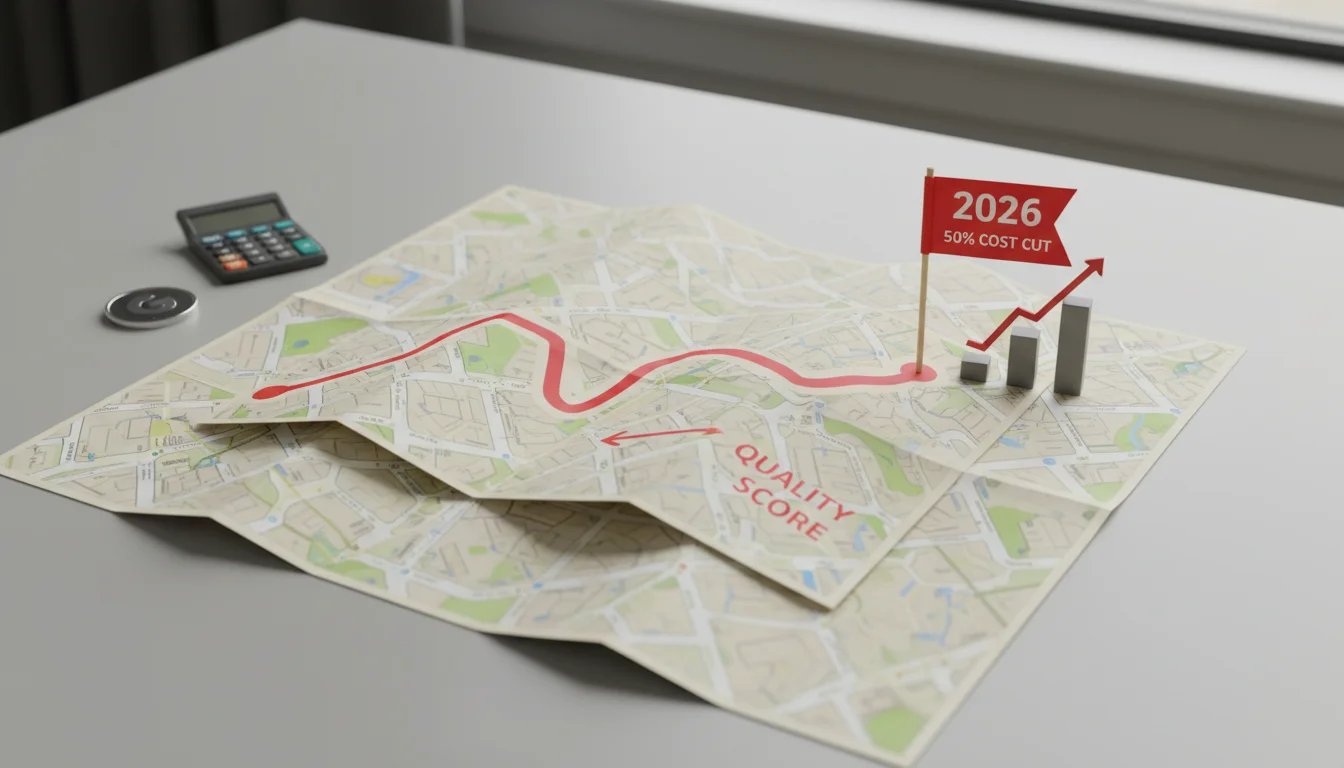
- Advertisers can reduce Google Ads costs by up to 50% by improving Quality Score through meticulous keyword research and ad copy alignment.
- Achieving an “Excellent” (7/10 or higher) Quality Score for core keywords can unlock significantly lower Cost Per Click (CPC) and improved ad positioning.
- Continuously monitoring and refining ad copy, landing page experience, and keyword relevance is essential for sustained Quality Score improvement.
- A/B testing ad variations with different headlines and descriptions directly impacts Click-Through Rate (CTR), a key Quality Score component.
- Implementing structured landing pages that directly address user intent and ad messaging can boost Quality Score by improving user experience signals.
The digital advertising landscape is a battlefield of bids and algorithms, and for many businesses, it feels like they’re constantly throwing money into a black hole. I remember working with “Atlanta Artisans,” a bespoke furniture maker in the West Midtown Design District, just off Howell Mill Road. Their Google Ads campaigns were bleeding cash. They were spending nearly $2,500 a month and getting barely 15 qualified leads. The owner, Sarah, was frustrated, telling me, “We’re showing up for ‘custom dining tables Atlanta,’ but our costs are through the roof. It feels like we’re paying double what our competitors are.” This is a classic symptom of a low Quality Score, a metric that, when properly understood and optimized, is the single most powerful lever for Google Ads optimization and unlocking efficiency. But how exactly do you turn that tide?
The Hidden Costs of Low Quality Score: Sarah’s Predicament
Sarah’s problem wasn’t unique. Many small to medium-sized businesses struggle with Google Ads because they treat it as a simple “set it and forget it” platform. They upload some keywords, write a few ads, and expect magic. The reality is far more nuanced. Google’s algorithm, designed to provide the best possible experience for users, heavily rewards advertisers whose ads are highly relevant to what people are searching for. This is where Quality Score comes in. It’s Google’s estimate of the quality of your ads, keywords, and landing pages. A higher score means lower costs and better ad positions.
For Atlanta Artisans, their average Quality Score across their primary campaigns was a dismal 3/10. This meant they were paying a premium for every click. Google essentially penalizes advertisers for showing irrelevant ads, and those penalties add up fast. I explained to Sarah, “Think of it like this: if your ad isn’t a good match for the search, Google has to work harder to justify showing it, so they charge you more. If it’s a perfect match, they reward you.”
Deconstructing Quality Score: The Three Pillars
Quality Score isn’t some arbitrary number; it’s a composite of three critical components, each weighted differently but equally vital for holistic improvement. Understanding these components is the first step toward effective ad relevance and better performance.
Expected Click-Through Rate (CTR)
This is Google’s prediction of how likely your ad is to be clicked when shown for a specific keyword, relative to other ads. It’s a huge factor. If users aren’t clicking your ad, Google assumes it’s not relevant. My advice for improving CTR is always about crafting compelling, benefit-driven ad copy that speaks directly to the searcher’s intent. For Atlanta Artisans, their initial ad copy was generic: “Custom Furniture. High Quality. Shop Now.” It lacked punch, lacked specificity. We knew we had to change that.
Ad Relevance
This metric assesses how closely your keyword relates to your ad copy. It seems obvious, but you’d be surprised how many advertisers use broad keywords with generic ads. If someone searches for “mid-century modern dining table,” and your ad just says “Custom Furniture,” that’s a mismatch. The ad isn’t relevant enough. Google wants to see a tight thematic connection between what someone types into the search bar and what your ad promises. This is non-negotiable. If you’re not getting this right, you’re throwing money away.
Landing Page Experience
Once a user clicks your ad, what happens next is crucial. Google evaluates your landing page for factors like transparency, ease of navigation, and how well the content on the page relates to the ad copy and keyword. A slow-loading page, confusing layout, or content that doesn’t deliver on the ad’s promise will sink your Quality Score faster than you can say “bounce rate.” We’re talking about direct impact on user satisfaction, which Google values above almost everything else.
The Atlanta Artisans Case Study: A Journey to 8/10
Our work with Atlanta Artisans began in Q3 2025. Their initial Google Ads setup was fragmented, with broad keywords shoved into single ad groups and generic landing pages. We set a clear goal: achieve an average Quality Score of 7/10 or higher for their top 20 keywords within six months, aiming for a 30% reduction in Cost Per Click (CPC) and a 50% increase in qualified leads.
Phase 1: Granular Keyword Research and Ad Group Restructuring (Months 1-2)
The first thing we did was dive deep into their keyword data. We used Google Ads’ own Keyword Planner, but also third-party tools, to identify long-tail keywords that were highly specific to their offerings. Instead of just “custom dining tables,” we found “walnut live edge dining table Atlanta,” “reclaimed wood kitchen island Georgia,” and “bespoke conference tables for offices.” This allowed us to create hyper-focused ad groups, each with a tight cluster of related keywords. For example, one ad group was solely for “Live Edge Dining Tables,” another for “Mid-Century Modern Seating.”
This approach dramatically improved ad relevance. We ensured that each ad group had its own unique ad copy, directly mirroring the keywords within it. For the “Live Edge Dining Tables” group, the ad headlines would feature “Stunning Live Edge Dining Tables” and “Handcrafted Walnut Slabs.” This specificity immediately started to move the needle on Expected CTR.
One of the biggest mistakes I see advertisers make is lumping too many disparate keywords into one ad group. It’s lazy, and Google punishes it. You simply cannot achieve high ad relevance that way.
Phase 2: Crafting Irresistible Ad Copy and Extensions (Months 2-4)
With structured ad groups, we focused on ad copy. We performed A/B tests on various headlines and descriptions. For instance, for “custom dining tables,” we tested headlines like “Atlanta’s Custom Dining Tables” vs. “Bespoke Dining Tables, Handcrafted Locally.” The second performed significantly better, emphasizing craftsmanship and local appeal. We included strong calls to action like “Design Yours Today” or “Free Consultation.”
We also implemented all relevant ad extensions: Sitelink Extensions for specific product categories (e.g., “Dining Tables,” “Coffee Tables,” “Office Furniture”), Callout Extensions highlighting unique selling propositions (“Sustainable Wood,” “Family-Owned Business”), and Structured Snippets to showcase their design styles (“Styles: Farmhouse, Modern, Industrial”). These extensions don’t just take up more real estate on the search results page; they also contribute to a higher Expected CTR because they provide more information and options to the user. According to a Statista report from early 2025, ads with well-implemented extensions see an average CTR increase of 10-15%.
Phase 3: Overhauling the Landing Page Experience (Months 3-5)
This was arguably the most impactful phase. Atlanta Artisans’ original landing pages were essentially their homepage, which was beautiful but not optimized for specific ad campaigns. A user clicking an ad for “walnut live edge dining table Atlanta” would land on a general page about all their furniture. This created friction and confusion.
We designed dedicated landing pages for their top product categories. Each page was simple, fast-loading, and highly relevant to the ad group’s keywords. For the “Live Edge Dining Tables” ad group, the landing page featured prominent images of live edge tables, clear calls to action for custom quotes, and concise descriptions of the wood types and craftsmanship. We ensured the page loaded in under 2 seconds (critical for mobile users, which represented over 60% of their traffic) and was easy to navigate on any device. Google Ads documentation explicitly states that landing page experience is a direct factor in Quality Score.
We also added trust signals like customer testimonials and a clear contact form. The goal was to make the user’s journey from search query to conversion as seamless and logical as possible. I’ve always maintained that your landing page is just as important as your ad copy; if you fail there, you fail everywhere.
The Results: A Remarkable Transformation
By the end of the six-month period, Atlanta Artisans saw a dramatic improvement. Their average Quality Score across their key campaigns jumped from 3/10 to 8/10. For their highest-volume keywords, like “custom dining tables Atlanta,” their Quality Score was consistently 9/10.
The impact on their bottom line was profound:
- Cost Per Click (CPC) decreased by an average of 42%. For some keywords, the reduction was as high as 60%. This meant they were paying significantly less for the same, or even better, ad position.
- Qualified leads increased by 110%. The improved ad relevance and landing page experience meant they were attracting prospects who were genuinely interested in their specific offerings.
- Monthly ad spend remained consistent, but ROI skyrocketed. They were spending roughly the same $2,500, but now generating over 30 quality leads, translating into several high-value custom furniture orders each month.
Sarah was ecstatic. “It’s like we finally cracked the code,” she told me. “We’re not just getting more clicks; we’re getting the right clicks, and we’re paying less for them. It feels like we’re finally getting a fair shake from Google.” This wasn’t magic; it was meticulous attention to detail and a deep understanding of how Google’s algorithm rewards quality.
Sustaining High Quality Score: It’s an Ongoing Process
Achieving a high Quality Score isn’t a one-and-done task. The digital landscape is always shifting. New competitors emerge, search trends evolve, and Google’s algorithms are constantly refined. To maintain those 8/10 and 9/10 scores, continuous monitoring and optimization are essential.
I advise clients to schedule weekly reviews of their Quality Score data within the Google Ads interface. Pay attention to keywords whose scores are dipping. This could indicate a need to refresh ad copy, update landing page content, or even pause underperforming keywords. Regularly check your search terms report to find new negative keywords to add (to prevent irrelevant impressions) and new positive keywords to target (to capture emerging demand).
Furthermore, conduct quarterly audits of your landing pages. Are they still fast? Are they still relevant? Are there new features or products you need to highlight? A recent IAB report on digital commerce highlighted that user expectations for website speed and relevance are only increasing, reinforcing the need for constant vigilance.
The bottom line? Quality Score is not just a metric; it’s a philosophy for running effective Google Ads campaigns. It forces you to think about the user experience, to be precise with your messaging, and to deliver on your promises. Ignore it at your peril, and watch your ad spend disappear into the ether. Embrace it, and you’ll find yourself paying less for more, just like Atlanta Artisans did.
What is a good Quality Score in Google Ads?
A Quality Score of 7/10 or higher is generally considered excellent. Achieving this level indicates that your ads, keywords, and landing pages are highly relevant and effective, leading to lower Cost Per Click (CPC) and better ad positions.
How does Quality Score affect my Google Ads costs?
Quality Score directly impacts your Ad Rank and the actual CPC you pay. A higher Quality Score means you can achieve higher ad positions at a lower cost, while a low score forces you to bid significantly more to appear in the same position, effectively penalizing your budget.
Can I see my Quality Score for individual keywords?
Yes, you can view your Quality Score for individual keywords within your Google Ads account. Navigate to the “Keywords” section, click on “Columns,” then “Modify columns,” and under “Quality Score,” add the “Quality Score” column along with its individual components like “Ad Relevance,” “Expected CTR,” and “Landing page experience.”
How often should I check and optimize my Quality Score?
I recommend checking your Quality Score data weekly, especially for your highest-spending keywords. Continuous monitoring allows you to quickly identify any dips or opportunities for improvement and make timely adjustments to your ad copy or landing pages.
What’s the quickest way to improve a low Quality Score?
The quickest way to improve a low Quality Score is by focusing on two key areas simultaneously: improving ad relevance by aligning ad copy very closely with keywords, and enhancing landing page experience by ensuring the page loads quickly and directly matches the ad’s message and user intent. Often, a combination of these two yields immediate results.


