 By Editorial Team
Key Takeaways
- Implement a unified tracking system across all campaigns to accurately attribute conversions and understand the true customer journey.
- Prioritize keyword research that identifies both high-intent commercial terms for paid search and broader informational queries for organic content creation.
- Allocate budget strategically by analyzing how PPC campaigns can accelerate SEO efforts for new content or competitive terms.
- Ensure consistent messaging and branding across all paid and organic touchpoints to build trust and reinforce brand identity.
- Regularly analyze competitor strategies in both paid and organic search to identify gaps and opportunities for your own integrated approach.
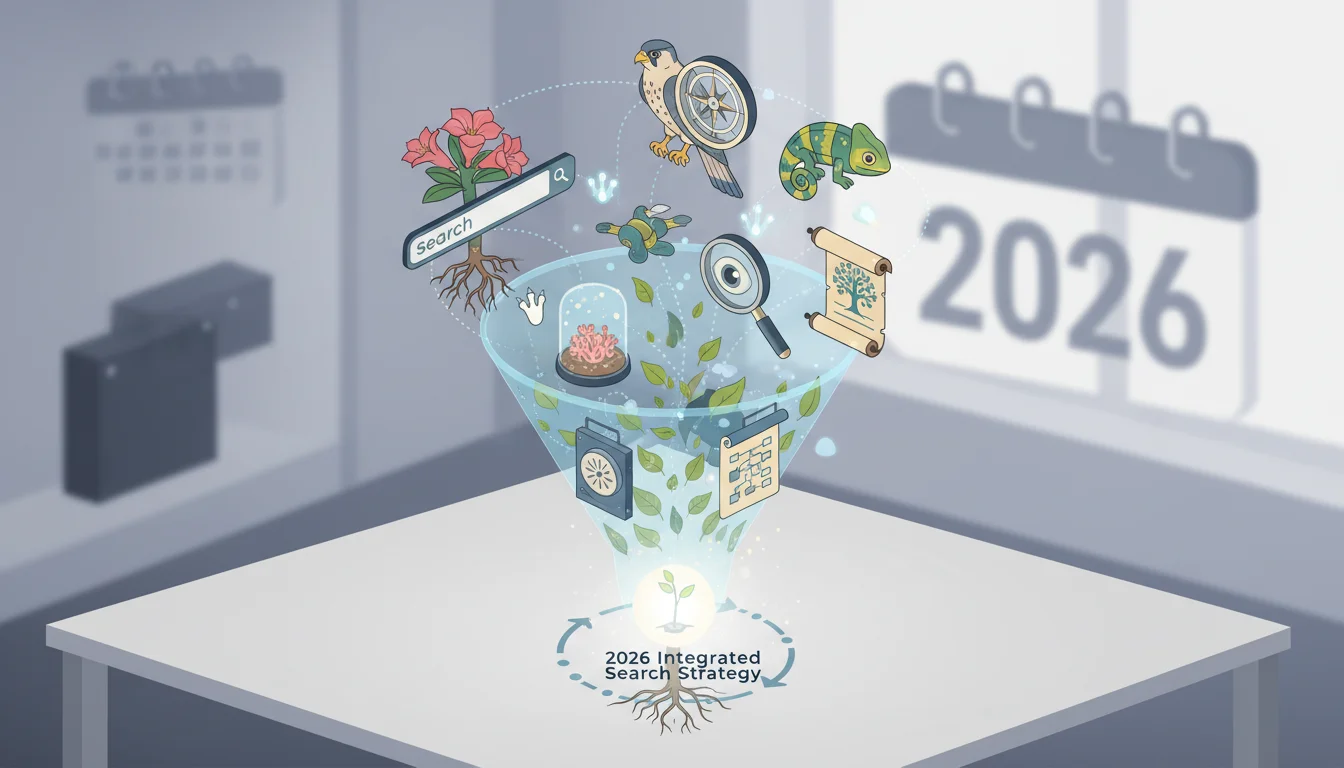
The digital marketing field, particularly in 2026, demands more than isolated campaigns. It requires a cohesive strategy where every element works in concert. Consider the predicament of “Flora & Fauna Furnishings,” a hypothetical mid-sized furniture retailer based in the heart of Atlanta, Georgia, with a flagship store near the intersection of Peachtree Road and Lenox Road. For years, their marketing efforts had been segmented: one team managed their Google Ads campaigns, focusing on immediate sales, while another handled content creation and website optimization for organic visibility. This siloed approach, while generating some results, left significant revenue on the table. They were struggling with inconsistent messaging, duplicated efforts, and an inability to truly understand the well-rounded impact of their marketing spend. The question wasn’t if they needed a change, but how to forge a true PPC SEO teamwork, an integrated search strategy that would propel them forward. Flora & Fauna Furnishings, like many businesses, initially viewed paid search (PPC) and organic search (SEO) as distinct entities, almost as competitors for budget and attention. Their PPC team, led by Sarah, focused on immediate conversions, bidding on terms like “buy mid-century modern sofa Atlanta” or “discount dining tables Buckhead.” They saw quick returns, but the cost-per-click was escalating, especially for high-value keywords. Meanwhile, Mark, heading the SEO team, worked diligently on blog posts about “sustainable wood furniture trends” and “how to choose the right mattress size,” aiming for long-term authority and organic traffic. Both teams were effective in their own right, yet their efforts often overlapped without complementing each other. For instance, Mark’s team would spend months ranking for a specific product category, only for Sarah’s team to launch a high-budget PPC campaign for the exact same terms, effectively bidding against their own potential organic traffic. This isn’t just inefficient. It’s a fundamental misunderstanding of how search engines operate and how customers interact with brands online. The first step in addressing Flora & Fauna’s disjointed strategy involved a complete audit of their existing efforts. We looked at their organic rankings for key product categories and informational queries, cross-referencing these with their active PPC campaigns. A significant finding was the lack of unified keyword research. Sarah’s team used tools like Google Ads Keyword Planner primarily for commercial intent terms, while Mark’s team relied on Ahrefs and Semrush for broader, long-tail informational queries. The disconnect meant they were missing opportunities to reinforce their brand across the entire customer journey. For example, a customer might start by searching “best ergonomic office chair reviews” (an SEO opportunity), then later search “buy ergonomic office chair Atlanta” (a PPC opportunity). Without a shared strategy, Flora & Fauna was only catching a fraction of these potential customers. One immediate tactical shift involved sharing keyword data. Sarah’s team identified high-converting PPC keywords that Flora & Fauna did not yet rank for organically. These became priority topics for Mark’s content marketing team. Conversely, Mark’s team identified informational keywords driving significant organic traffic that could benefit from a targeted, low-cost PPC campaign to capture users further down the funnel. The goal here is not to bid on keywords where you already rank first organically, but to use PPC to test new keywords, gain visibility for terms where organic ranking is difficult or slow, or dominate the search results page when both organic and paid spots are available. According to a Statista report from early 2026, Google continues to hold over 90% of the global search market share, making a strong strategy across both paid and organic Google results imperative for visibility. The implementation of a unified tracking system was critical for Flora & Fauna. Before, PPC conversions were tracked in Google Ads, and organic conversions were tracked in Google Analytics 4, but rarely were these datasets combined for a well-rounded view. We integrated their CRM with both platforms, allowing them to see the true customer journey, from initial organic discovery to a paid click leading to purchase. This revealed surprising insights. For instance, many customers who eventually purchased via a PPC ad had first visited the Flora & Fauna blog through an organic search for a related informational query. This demonstrated that the organic content was nurturing leads, making the subsequent paid conversion more likely and potentially cheaper. This kind of cross-channel attribution is not just a nice-to-have. It’s essential for smart budget allocation. Another powerful aspect of an integrated search strategy is using PPC to accelerate SEO. When Flora & Fauna launched a new line of locally sourced, handmade wooden tables, Mark’s team published detailed blog posts and product pages optimized for terms like “artisan wooden tables Atlanta” and “sustainable dining furniture Georgia craftsmen.” While these pages slowly gained organic traction, Sarah’s team immediately launched targeted PPC campaigns for these new, less competitive terms. This not only drove initial traffic and sales to the new line but also signaled relevance to search engines. Increased click-through rates and user engagement from these early PPC efforts can positively influence organic rankings over time, as search engines observe user behavior metrics like bounce rate and time on page. A HubSpot study published in late 2025 highlighted that businesses effectively integrating paid and organic search saw an average 27% increase in overall search visibility compared to those with siloed strategies. The teamwork also extended to creative assets and messaging. Before, PPC ad copy and organic meta descriptions were often written independently, sometimes even contradicting each other in tone or promotional offers. We established a central content calendar and style guide. The language used in PPC ads for a specific product line now mirrored the language and value propositions on the corresponding organic landing pages and blog content. This consistency built trust with potential customers. When a user clicked an ad, they landed on a page that felt familiar and reinforced the message that attracted them in the first place, leading to higher conversion rates and lower bounce rates. This alignment is particularly important for local businesses like Flora & Fauna, where customers might encounter the brand through multiple touchpoints, from a local search to seeing a physical ad near the Atlanta Botanical Garden. We also addressed the “competitor analysis” aspect. Both teams had been monitoring competitors, but again, in isolation. Sarah’s team watched competitor PPC bids and ad copy, while Mark’s team analyzed competitor organic rankings and content strategies. By combining these efforts, they gained a much clearer picture. They identified competitors dominating certain niche organic terms that Flora & Fauna could target with a focused PPC campaign to quickly gain market share. Conversely, they found high-cost PPC keywords where competitors were spending heavily, suggesting an opportunity for Flora & Fauna to invest in long-term SEO to eventually capture that traffic organically and reduce their dependence on expensive paid clicks. This complete view, I believe, is where many businesses falter. They see only half the battle. The process wasn’t without its challenges. Initial resistance came from both teams, accustomed to their established workflows and metrics. Sarah worried that Mark’s SEO efforts would cannibalize her PPC conversions, while Mark feared that PPC would overshadow the long-term value of organic growth. Overcoming this required clear communication, shared goals, and demonstrating the complementary nature of their efforts through data. We implemented a monthly joint meeting where both teams reviewed integrated reports, discussed performance, and planned future campaigns together. This fostered a sense of shared responsibility for overall search performance rather than individual channel metrics. It’s a cultural shift as much as a strategic one. The transformation at Flora & Fauna Furnishings has been significant. Within six months of implementing their PPC SEO teamwork strategy, they saw a 15% increase in overall organic traffic and a 10% reduction in their average cost-per-acquisition for paid campaigns. Their brand visibility for core terms like “luxury home decor Atlanta” and “custom furniture Georgia” improved dramatically, often appearing in both the top paid and organic spots on the search results page. This dominance isn’t accidental. It’s the direct result of a carefully orchestrated integrated search strategy. Their content marketing efforts now directly feed into potential PPC campaigns, and PPC insights inform their long-term SEO roadmap. They learned that when paid and organic search channels work together, they don’t just add up. They multiply. The success of Flora & Fauna Furnishings proves that true PPC SEO teamwork isn’t an abstract concept. It’s a tangible, measurable approach that yields superior results compared to siloed strategies. By integrating keyword research, aligning content and ad messaging, and implementing unified tracking, businesses can achieve greater visibility, reduce costs, and in the end drive more conversions. The future of search marketing belongs to those who view it as a single, interconnected ecosystem.
What is PPC SEO teamwork?
PPC SEO teamwork refers to the strategic integration of paid search (PPC) and organic search (SEO) efforts to achieve greater overall visibility, efficiency, and conversion rates than either strategy could accomplish independently. It involves sharing data, aligning keywords, and ensuring consistent messaging across both channels.
Why is unified keyword research important for an integrated search strategy?
Unified keyword research is important because it allows marketing teams to identify keywords that serve different purposes across the customer journey. High-intent commercial keywords might be prioritized for PPC, while broader informational queries become targets for organic content, ensuring complete coverage and avoiding wasted effort or budget on overlapping campaigns.
How can PPC accelerate SEO efforts for new content?
PPC can accelerate SEO by driving immediate traffic and engagement to newly published content or product pages. This early exposure can signal relevance to search engines, potentially leading to faster organic ranking improvements as search algorithms observe user interaction metrics like click-through rates and time on page.
What are the benefits of consistent messaging between PPC ads and organic content?
Consistent messaging across PPC ads and organic content builds trust and reduces friction in the customer journey. When a user clicks a paid ad or an organic search result and finds that the landing page or content aligns perfectly with their expectation, it leads to higher engagement, lower bounce rates, and improved conversion rates.
What kind of tracking is necessary to measure PPC SEO teamwork effectively?
Effective measurement requires unified tracking that attributes conversions across both paid and organic channels. This often involves integrating website analytics (like Google Analytics 4) with advertising platforms (like Google Ads) and potentially a CRM system to gain a well-rounded view of the customer journey, from initial search interaction to final purchase.


