 By Editorial Team
Key Takeaways
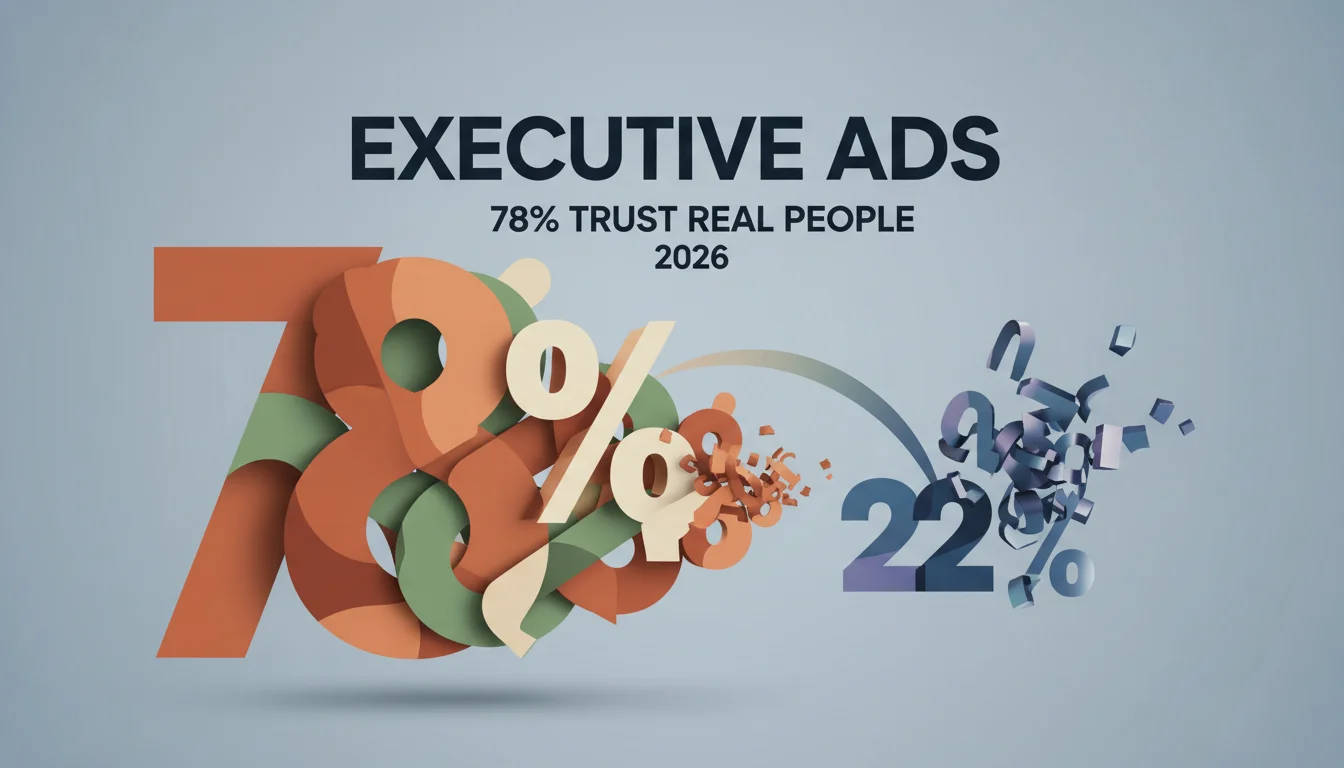
- Prioritize authentic, unscripted executive voices in ads, as 78% of consumers in a 2026 Nielsen report indicated they trust recommendations from real people more than traditional advertisements.
- Integrate thought leadership content, such as LinkedIn articles or industry presentations, into your ad campaigns to demonstrate expertise and build credibility.
- Focus ad spend on platforms where executives can genuinely engage, like LinkedIn’s Sponsored Content or X’s (formerly Twitter) promoted posts, rather than broad display networks.
- Measure the impact of executive-led campaigns by tracking engagement metrics like comment sentiment, share rates, and direct inquiries, alongside traditional conversion metrics.
Building trust building through executive ads and authentic brand messaging has become a non-negotiable for marketers in 2026. The traditional advertising model, heavy on polished slogans and generic endorsements, struggles to resonate with an increasingly discerning audience that values authenticity above all else. Consumers are weary of the slick, impersonal approach. They seek genuine connection and credible insights from the people behind the brand.
The Shifting Sands of Consumer Trust
The marketing field has fundamentally changed. A 2026 report from Nielsen, “The Trust Factor: Consumer Attitudes Towards Advertising,” found that 78% of global consumers now trust recommendations from real people, including company leaders, significantly more than they trust traditional advertisements. This represents a substantial shift from just five years ago. What this tells us is clear: the public craves transparency. They want to know the individuals steering the ship, their philosophies, and their vision. When an executive steps forward, not just as a figurehead but as a thought leader, it humanizes the brand and creates an immediate, visceral connection that a faceless corporation cannot achieve. This isn’t just about putting a CEO’s face on a billboard. It’s about crafting a narrative where the executive’s insights, expertise, and genuine passion for their industry become an integral part of the advertising message. Consider the impact of a CEO sharing their perspective on a critical industry trend in a sponsored LinkedIn article versus a generic ad about a new product feature. The former establishes authority and provides value, while the latter often feels like a sales pitch. We’re seeing this play out across various sectors. For instance, in the B2B SaaS space, companies whose founders actively publish thought leadership on platforms like LinkedIn often see higher engagement rates on their sponsored content. According to data from HubSpot’s 2026 State of Marketing report, B2B companies that consistently publish executive thought leadership see a 30% increase in lead quality compared to those that rely solely on traditional product-centric ads. That’s a significant improvement in the sales pipeline.
Authenticity Over Aspiration: Crafting Executive-Led Campaigns
The core principle here is authenticity. Consumers are adept at spotting manufactured sincerity. For executive-led ad campaigns to succeed, the messaging must feel genuine, not corporate-speak translated for public consumption. This requires a departure from heavily scripted advertisements. Instead, focus on showing executives in their element: discussing challenges, sharing insights, or even admitting failures and lessons learned. Think about short-form video content where an executive directly addresses a common customer pain point, offering a solution rooted in their company’s unique approach. This kind of direct, unpolished communication often outperforms highly produced, impersonal commercials. The best executive ads aren’t about selling a product directly. They’re about selling a vision, a philosophy, or a solution to a broader problem within the industry. For example, a fintech executive might publish a sponsored post on a financial news site, discussing the future of digital currencies and how their company is contributing to that evolution. This isn’t a direct ad for their banking app. It’s a demonstration of forward-thinking leadership that positions the company as an innovator. When executives share their genuine perspective, they build a reservoir of goodwill and credibility. This reservoir then is a powerful foundation for subsequent product-focused marketing efforts. People buy from brands they trust, and trust often originates from the people representing those brands.
Strategic Placement: Where Executive Voices Resonate
Choosing the right platforms for executive thought leadership in advertising is as important as the message itself. Not all channels are created equal for this nuanced approach. Broad display networks, while offering reach, often lack the context and engagement mechanisms necessary for executive voices to truly shine. Instead, prioritize platforms that facilitate deeper engagement and discussion. LinkedIn’s Sponsored Content remains a powerhouse for this strategy. Executives can share articles, videos, or even short posts that appear in the feeds of targeted professionals. The platform’s professional context encourages meaningful interactions, allowing executives to engage directly with comments and questions. A well-crafted sponsored article from a CEO outlining their perspective on AI’s impact on their industry, for instance, can generate significant qualified traffic and foster valuable dialogue. Similarly, X’s (formerly Twitter) promoted posts can be effective for short, impactful statements or real-time commentary on industry news, particularly if the executive has an established presence there. The key is to ensure the executive is genuinely active on these platforms, not just using them as a broadcast channel. An executive who responds to comments, participates in discussions, and offers further insights builds a much stronger connection than one who simply posts and disappears. This active engagement reinforces their authenticity and approachability, which in turn strengthens brand perception. Consider also industry-specific forums or niche online communities. While perhaps smaller in audience, the engagement quality can be exceptionally high. Sponsoring a discussion or Q&A session with an executive on a relevant industry forum, for instance, can position them as an accessible expert. This localized, targeted approach often yields more impactful results than a wide but shallow reach. The objective is to place the executive’s message where it will be received by an audience already predisposed to value expert opinion.
Measuring Impact Beyond Impressions
Evaluating the success of executive thought leadership in advertising requires a broader set of metrics than traditional ad campaigns. While impressions and click-through rates (CTRs) still matter, they don’t tell the whole story. We need to look at indicators of trust, engagement, and brand perception. One critical metric is engagement quality. Are people just liking the post, or are they commenting thoughtfully, sharing it with their networks, or even asking direct questions? Tools like Google Analytics can track traffic from these sponsored executive posts to specific landing pages, allowing us to see not just visits, but time spent on page and conversion rates on related content. For social platforms, pay close attention to comment sentiment analysis. Are the comments positive, negative, or neutral? Are people expressing increased trust or appreciation for the insights shared? This qualitative data provides invaluable feedback on how the executive’s message is landing. Another important indicator is share rates. When an executive’s content is shared, it acts as a powerful endorsement, amplifying reach through organic networks of trusted individuals. Plus, tracking direct inquiries or mentions of the executive or their insights in subsequent sales conversations or customer feedback can directly link their thought leadership to business outcomes. In the end, the goal isn’t just to generate clicks, but to cultivate a reputation for expertise and reliability. This means looking at long-term brand lift studies, tracking changes in brand perception, and even conducting surveys to gauge consumer trust levels before and after an executive-led campaign. According to an IAB report published in Q1 2026, brands that actively promoted executive thought leadership saw an average 15% increase in brand favorability ratings over a 12-month period compared to those that did not. These are the kinds of metrics that truly demonstrate the return on investment for this strategic approach.
Cultivating Executive Presence for Advertising Success
Building a compelling executive presence for advertising isn’t an overnight task. It requires consistent effort and a clear strategy. It begins with identifying which executives within your organization are best suited to be public faces. These individuals should possess not only deep industry knowledge but also strong communication skills and a genuine desire to engage. Once identified, develop a content calendar that aligns their expertise with relevant industry trends and strategic business objectives. This ensures their messaging remains pertinent and impactful. Content formats can vary widely, from long-form articles on LinkedIn Pulse to concise video snippets on other platforms. The key is to maintain a consistent voice and perspective across all channels. This consistency reinforces their personal brand and, by extension, the company’s brand. Plus, actively encourage executives to engage in industry events, webinars, and panel discussions. These opportunities provide authentic platforms for them to share their insights and interact directly with target audiences, which can then be amplified through targeted advertising. For example, promoting clips of an executive’s keynote speech from a major industry conference like CES 2026 can be incredibly effective. The objective is to weave their expertise into the fabric of your advertising, making it feel less like marketing and more like valuable insight. The future of advertising hinges on genuine connections and credible voices. By helping executives to share their expertise, companies can build a foundation of trust that resonates deeply with today’s consumers. AI Branding: Marketing Leaders’ 2027 Outlook offers further insights into how technology can support brand consistency. AI Content: Brand Voice Consistency in 2026 can also help ensure your executive’s voice remains cohesive across all content.
Why is executive thought leadership becoming more important in advertising?
Consumers in 2026 increasingly distrust traditional advertising and seek authentic connections. Executive thought leadership humanizes a brand, provides credible insights, and builds trust by showing the expertise and vision of the people behind the company.
What platforms are best for executive-led ad campaigns?
Platforms that facilitate deeper engagement and professional context are ideal. LinkedIn’s Sponsored Content is highly effective for articles and videos, while X’s promoted posts can work for concise, real-time commentary. Industry-specific forums also offer high-quality, targeted engagement.
How should we measure the success of executive thought leadership in advertising?
Beyond traditional metrics like impressions, focus on engagement quality (comments, shares, direct inquiries), comment sentiment analysis, and long-term brand lift studies. An IAB report from Q1 2026 indicated an average 15% increase in brand favorability for companies using executive thought leadership.
What types of content work best for executive ads?
Authentic, unscripted content that shows an executive’s genuine insights, perspectives on industry trends, or solutions to common problems tends to perform best. This includes sponsored articles, short-form videos, and direct commentary, rather than heavily polished sales pitches.
How can an executive maintain authenticity in advertising?
To maintain authenticity, executives should actively engage with their audience by responding to comments and participating in discussions. Their messaging should feel genuine and consistent across all platforms, focusing on providing value and sharing their true perspective rather than just selling.


