 By Editorial Team
Key Takeaways
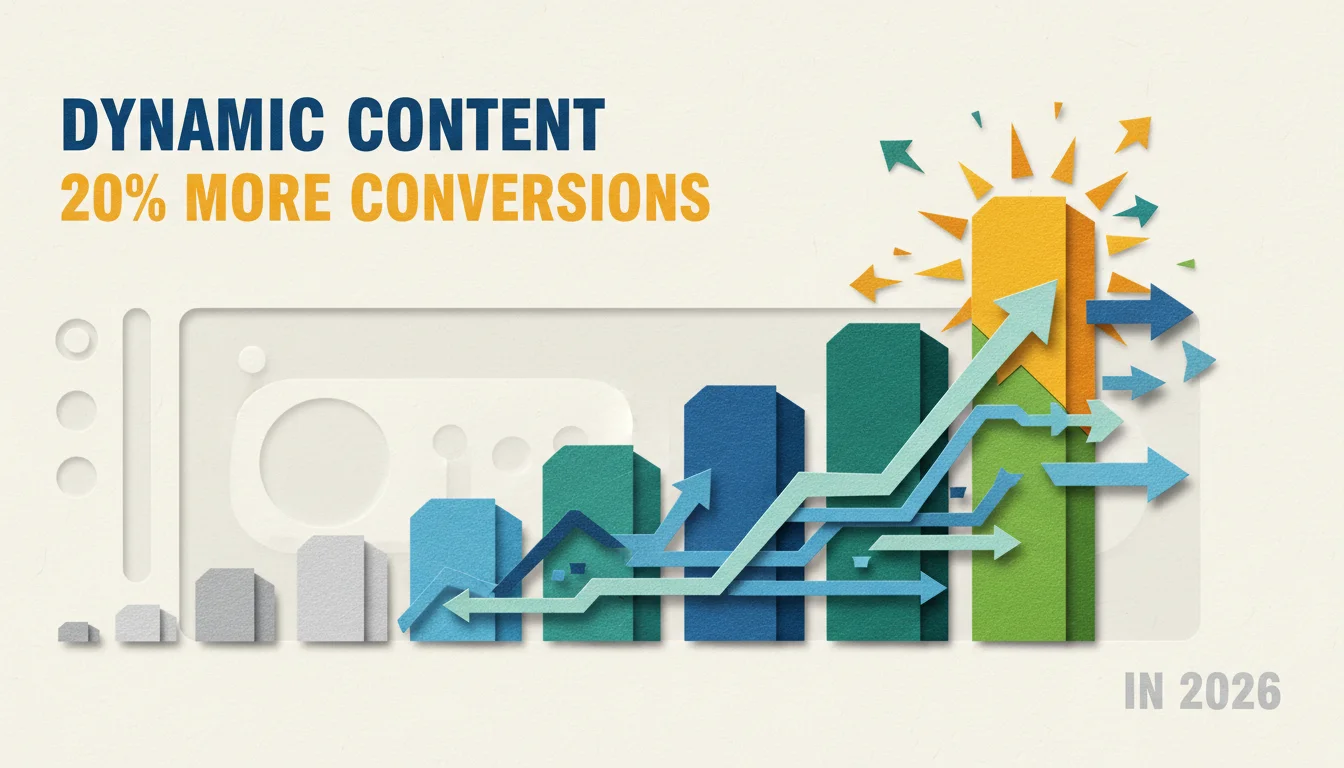
- Implementing dynamic content on landing pages can increase conversion rates by up to 20% compared to static pages, as observed in A/B testing on campaigns targeting diverse audience segments.
- Effective personalization requires a robust data strategy, including CRM integration and real-time behavioral tracking, to accurately segment users and deliver relevant content.
- Marketers should prioritize testing specific dynamic elements like headlines, calls-to-action, and hero images, as these often yield the most significant performance improvements.
- Advanced personalization platforms, such as Optimizely or Adobe Target, are essential for managing complex dynamic content rules and A/B/n testing at scale.
- A successful dynamic content strategy focuses on user intent and journey stage, ensuring the personalized experience guides visitors directly to their desired outcome or next step.
The era of one-size-fits-all marketing is over. In 2026, the expectation for relevance is not just high, it’s foundational. This is precisely where dynamic content for personalized landing pages becomes an indispensable strategy, directly impacting your conversion rate.
The Imperative of Personalization in 2026
Static landing pages are a relic. They speak to no one specifically, and in doing so, they speak effectively to no one at all. We are past the point where a generic message can capture and hold attention. Today’s digital consumer expects a tailored experience from the moment they click an ad or follow a link. This isn’t a luxury; it’s a baseline expectation. When I review campaign performance for clients, the stark difference between personalized and non-personalized experiences is undeniable. Conversion rate improvements are not marginal; they are often double-digit percentages.
Think about the fundamental psychology at play. A user clicks on an ad because a specific message resonated with them. If they land on a page that immediately reinforces that message, perhaps even expanding on it with context directly relevant to their known preferences or prior interactions, they feel understood. That feeling builds trust. A generic page, on the other hand, forces them to re-evaluate their decision to click, creating friction. This friction, however slight, is enough to send a significant portion of visitors bouncing back to their search results or social feeds. The opportunity cost of not personalizing is substantial, measured in lost leads and missed revenue.
Building Your Dynamic Content Foundation: Data and Segmentation
You cannot personalize without data. This is the bedrock. Your customer relationship management (CRM) system, whether it’s Salesforce or HubSpot, must be the central repository for all customer and prospect data. This includes demographic information, purchase history, website browsing behavior, email engagement, and even interactions with your customer service team. The richer your data, the more granular your segmentation can be, and thus, the more precise your personalization efforts.
Segmentation isn’t just about broad categories like “new customer” versus “returning customer.” It’s about understanding intent. Are they researching a specific product feature? Are they comparing pricing? Did they just abandon a cart? Each of these scenarios demands a different message, a different call-to-action, and potentially even a different visual layout. For instance, a user who just clicked an ad for “eco-friendly cleaning supplies” should land on a page that prominently features those specific products, perhaps with testimonials highlighting environmental benefits, rather than a general household goods page. We rely heavily on data from platforms like Google Analytics 4 to track user journeys and identify key behavioral patterns that inform these segments. Without this detailed data, your dynamic content is just glorified A/B testing, not true personalization. It simply won’t hit the mark.
Consider the complexity of a B2B scenario. A user from a large enterprise might be interested in different features, pricing structures, and case studies than a user from a small business, even if they’re looking at the same core product. Your CRM should be able to identify the company size or industry based on their email domain or IP address, allowing your landing page to dynamically swap out relevant client logos, testimonials from similar-sized businesses, and even adjust the language to reflect enterprise-level concerns (e.g., scalability, security, integration capabilities). This level of detail isn’t optional; it’s a competitive necessity.
Key Elements for Dynamic Personalization
When you’re implementing dynamic content, not all elements carry equal weight. Some parts of a landing page have a disproportionately high impact on conversion. Focus your initial efforts here:
- Headlines: This is often the first thing a visitor sees. A dynamic headline that mirrors the ad copy they clicked, or speaks directly to their identified need, creates immediate relevance. If a user clicked an ad for “affordable project management software,” the landing page headline should not just say “Project Management Software,” but rather “Affordable Project Management Software for Small Teams” or “Boost Productivity with Budget-Friendly PM Tools.”
- Hero Images/Videos: Visuals are powerful. A dynamic hero image that reflects the user’s industry, demographic, or specific product interest can instantly make the page feel more relevant. For a real estate site, showing properties in a user’s previously searched neighborhood or a family-oriented image for a parent searching for homes can significantly improve engagement.
- Calls-to-Action (CTAs): The CTA is where you guide the user to the next step. A dynamic CTA can change based on their journey stage. A first-time visitor might see “Download a Free Guide,” while a returning visitor who has already downloaded content might see “Schedule a Demo” or “Start Your Free Trial.” This ensures the user is always presented with the most logical next step for them.
- Social Proof/Testimonials: Dynamically displaying testimonials or case studies from customers in the user’s specific industry or with similar pain points is incredibly effective. A B2B prospect from the healthcare sector will find testimonials from other healthcare providers far more convincing than general ones.
- Pricing/Offers: This is a sensitive area, but effective. Presenting personalized pricing tiers or specific promotional offers based on user segments (e.g., first-time buyer discount, loyalty offer for returning customers) can directly influence conversion. This requires careful integration with your e-commerce or billing systems, but the payoff can be substantial.
These elements, when dynamically adjusted, create a cohesive, personalized narrative that guides the user more effectively towards conversion. This isn’t about tricking anyone; it’s about making the path to purchase as clear and relevant as possible for each individual.
| Factor | Dynamic Content Landing Pages | Static Landing Pages |
|---|---|---|
| Conversion Rate Impact | Up to 20% increase | Lower, generic performance |
| Personalization Level | Tailored to user intent/journey | One-size-fits-all message |
| Relevance Expectation (2026) | Foundational expectation | Considered a relic |
| Key Elements for Improvement | Headlines, CTAs, hero images | Limited impact from generic elements |
| Data Strategy Requirement | Robust data, CRM integration | Minimal data reliance |
| Impact on User Trust | Builds trust, reduces friction | Creates friction, forces re-evaluation |
Tools and Technologies for Implementation
Implementing dynamic content isn’t a manual process; it requires specialized tools. For basic dynamic text replacement, many modern marketing automation platforms like Pardot or Adobe Marketing Cloud offer built-in functionalities. However, for more sophisticated rules, multivariate testing, and complex audience segmentation, dedicated personalization platforms are essential. Tools like Optimizely and Adobe Target are industry leaders in this space. These platforms allow you to define rules based on various data points (referrer URL, geographic location, device type, past behavior, CRM data) and then dynamically swap out page elements in real-time.
The setup process involves defining your audience segments, creating variations of your content for each segment, and then setting up the rules that dictate which content is displayed to which user. It’s not a set-it-and-forget-it solution; continuous monitoring and A/B testing are vital. You’ll want to track metrics like conversion rate, bounce rate, time on page, and engagement with specific dynamic elements. A common mistake I see is marketers implementing dynamic content without a clear testing framework. You need to know what’s working and what isn’t, otherwise you’re just guessing. Remember, the goal isn’t just to make the page different; it’s to make it better for the specific user.
For smaller businesses or those just starting, even a simple WordPress plugin like If-So Dynamic Content can provide a foundational layer of personalization. It allows for basic conditional content display based on factors like referrer, location, or user roles. While not as powerful as enterprise-grade solutions, it’s a solid starting point to prove the concept and demonstrate ROI before investing in more complex systems.
Measuring Success and Iterating
The true power of dynamic content lies in its iterative nature. Once you launch your personalized landing pages, the work isn’t done; it’s just beginning. You need to meticulously track performance. What are your key performance indicators (KPIs)? Is it lead generation, product purchases, demo requests, or content downloads? Whatever your goals, ensure your analytics are set up to attribute conversions back to specific dynamic content variations and audience segments.
According to a Statista report from 2024, digital ad spending continues its upward trajectory, making every click more valuable. You simply cannot afford to waste those clicks on generic experiences. My experience dictates that a conversion rate uplift of 15% to 20% is a reasonable expectation when dynamic content is implemented strategically and continuously optimized. However, don’t just look at the overall conversion rate. Drill down. Are certain segments performing better than others? Is a particular dynamic headline outperforming another? This granular data will inform your next round of optimizations. You might find that a subtle change in wording for a specific demographic yields a 5% improvement, which, scaled across thousands of visitors, translates into significant revenue. This is not a one-time project; it’s an ongoing commitment to understanding and serving your audience better.
We’ve seen campaigns where a dynamic element, like a countdown timer for a limited-time offer, increased urgency and conversions by 10% for users who landed from an email campaign announcing that specific offer. For users arriving from organic search, however, the same countdown timer performed poorly, suggesting they weren’t yet ready for a time-sensitive commitment. This highlights the importance of matching the dynamic element to the user’s intent and journey stage. Never assume; always test. That’s the editorial line I always take when advising on these strategies.
Embracing dynamic content for personalized landing pages is no longer an advanced tactic; it’s a fundamental requirement for competitive digital marketing. It’s about delivering the right message, to the right person, at the right time, every single time.
What is dynamic content on a landing page?
Dynamic content on a landing page refers to elements that change automatically based on specific user data or characteristics, such as their location, previous browsing history, referral source, or demographic information, to provide a personalized experience.
How does dynamic content improve conversion rates?
Dynamic content improves conversion rates by making the landing page more relevant and engaging for each individual visitor. When content directly addresses a user’s specific interests or needs, it builds trust, reduces friction, and guides them more effectively towards the desired action, leading to higher conversion.
What data points are essential for effective personalization?
Essential data points include demographic information, geographic location, referral source (e.g., specific ad clicked), device type, past website behavior (pages visited, products viewed), purchase history, and interactions with emails or other marketing materials, typically managed through a CRM system.
Can I implement dynamic content without a large budget?
Yes, while enterprise-level solutions like Optimizely or Adobe Target offer extensive capabilities, smaller businesses can start with basic dynamic content functionalities offered by many marketing automation platforms or even WordPress plugins. The key is to begin with simple, impactful personalizations and scale as your needs and budget grow.
Which landing page elements should I prioritize for dynamic personalization?
Prioritize elements with high visibility and direct impact on user engagement and decision-making. These typically include headlines, hero images or videos, calls-to-action (CTAs), social proof (testimonials, case studies), and specific offers or pricing details.


