 By Editorial Team
Key Takeaways
- Identify your target audience’s core questions and pain points at each stage of the buyer’s journey to inform content strategy.
- Utilize a content audit spreadsheet, including columns for stage, format, and primary keyword, to systematically map existing assets and identify gaps.
- Prioritize interactive content formats like calculators and quizzes for the decision stage to drive conversions and capture valuable user data.
- Integrate specific calls to action (CTAs) tailored to each journey stage, directing users to the appropriate next step in the sales funnel.
- Regularly analyze content performance metrics, such as time on page and conversion rates, using tools like Google Analytics 4 (GA4) to refine and improve your mapping strategy.
Effective marketing isn’t about creating content; it’s about creating the right content for the right person at the right time. This fundamental principle underpins successful content mapping, a strategic process that aligns your digital assets with each phase of your target audience’s buyer’s journey. Fail to map your content, and you’re essentially shouting into the void, hoping something sticks. But how do you systematically connect your content efforts to real business outcomes?
1. Define Your Buyer Personas and Their Journey Stages
Before you even think about content, you must understand who you’re talking to. This sounds elementary, yet many organizations skip the rigor. A buyer persona isn’t just a demographic profile; it’s a semi-fictional representation of your ideal customer, based on market research and real data about your existing customers. Include their goals, challenges, motivations, and even their preferred information sources.
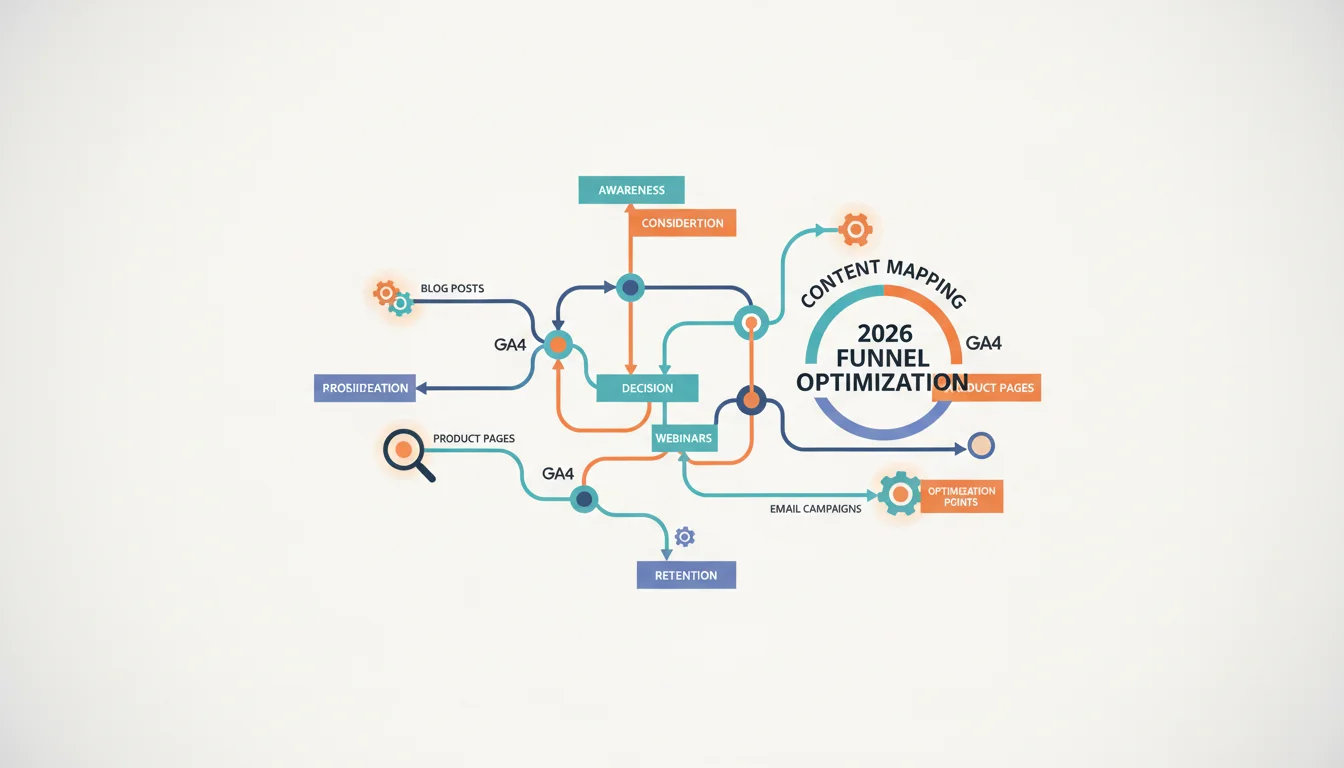
Once your personas are solid, delineate their journey. We typically break this into three core stages: Awareness, Consideration, and Decision. I’ve found that trying to force more than three or four stages often overcomplicates the process without adding proportional value. Keep it focused.
- Awareness Stage: The buyer realizes they have a problem or opportunity. They’re looking for answers, resources, and insights to understand their challenge better. They aren’t ready for a sales pitch; they want education.
- Consideration Stage: The buyer has clearly defined their problem and is researching various approaches or methods to solve it. They’re evaluating options, comparing solutions, and seeking deeper insights.
- Decision Stage: The buyer has chosen a solution strategy and is now comparing specific vendors or products. They need information that justifies a purchase, addresses objections, and demonstrates value.
To truly understand these stages for your audience, conduct interviews with sales teams, customer service representatives, and even customers themselves. What questions do they ask? What objections arise? This qualitative data is gold. For example, if you’re a B2B SaaS company, your sales team can tell you exactly what competitors come up in late-stage conversations, which is invaluable for your decision-stage content.
Pro Tip: Persona-Specific Pain Points
For each persona, document their specific pain points at each stage. A marketing manager’s awareness-stage pain point might be “difficulty tracking campaign ROI,” while a CEO’s might be “lack of clear visibility into departmental performance.” Your content must speak directly to these nuanced needs.
2. Audit Your Existing Content Assets
Don’t start from scratch. Most companies already have a wealth of content. Your task now is to categorize it. Create a spreadsheet (Google Sheets or Microsoft Excel work perfectly) with columns for:
- Content Title
- URL
- Content Type (Blog post, eBook, video, infographic, case study, webinar, etc.)
- Primary Keyword(s)
- Buyer Persona(s) Addressed
- Buyer’s Journey Stage (Awareness, Consideration, Decision)
- Call to Action (CTA)
- Performance Metrics (Page views, conversion rate, time on page, etc., you’ll populate this later from Google Analytics 4)
- Notes/Gaps
Go through every piece of content you have and fill out this spreadsheet. Be brutally honest about its alignment. A blog post titled “Understanding Cloud Computing” is likely awareness stage. A whitepaper comparing “Cloud Provider X vs. Cloud Provider Y” is consideration. A free trial sign-up page is decision. This exercise will quickly reveal where your content is concentrated and, more importantly, where the gaps exist. I frequently find that organizations overproduce awareness-stage content and neglect the critical decision stage, leaving potential customers hanging just before purchase.
Common Mistake: Content Silos
A frequent error is creating content in silos, disconnected from the larger marketing strategy. This leads to redundant content, conflicting messages, and significant gaps in the buyer’s journey. Your audit helps break down these silos and fosters a unified content approach.
| Feature | Awareness Stage | Consideration Stage | Decision Stage |
|---|---|---|---|
| Buyer’s Goal | Realize problem/opportunity | Research approaches/methods | Compare specific vendors/products |
| Content Focus | Education, answers, insights | Evaluating options, deeper insights | Justify purchase, address objections |
| Sales Pitch Readiness | ✗ Not ready | Partial | ✓ Ready |
| Example Content Type (B2B SaaS) | “Understanding Cloud Computing” blog | “Cloud Provider X vs. Y” whitepaper | Free trial sign-up page |
| Conversion Impact | ✗ Indirect | Partial | ✓ Direct |
| Primary Keyword Alignment | Broad problem-focused | Solution-focused, comparative | Brand-specific, purchase intent |
3. Identify Content Gaps and Prioritize Creation
With your audit complete, you’ll have a clear visual representation of where your content is strong and where it’s lacking. Focus on the gaps. Which personas are underserved? Which journey stages have minimal support? For instance, if your audit shows 50 blog posts for the awareness stage but only two case studies for the decision stage, you have a clear priority.
When prioritizing, consider the impact. Decision-stage content often has a direct correlation with conversions, so filling those gaps can yield faster returns. However, neglecting awareness means you won’t fill the top of your funnel. It’s a balance, but generally, I advocate for strengthening the weakest link in your content chain first.
For each identified gap, brainstorm content ideas that directly address the persona’s pain points and questions at that specific stage. For example:
- Awareness Stage Gap: Lack of content explaining a complex industry trend. Content Idea: An infographic or a short animated explainer video.
- Consideration Stage Gap: No comparative analysis of solutions. Content Idea: An in-depth eBook or a comparative blog post with a downloadable checklist.
- Decision Stage Gap: Insufficient social proof or clear ROI data. Content Idea: Video testimonials, detailed case studies with quantifiable results, or a ROI calculator.
According to HubSpot’s 2025 State of Marketing Report, interactive content formats like quizzes and calculators saw a 35% increase in lead generation effectiveness compared to static content. This data strongly suggests that interactive tools are not just nice-to-haves; they are essential for engaging prospects, especially in the consideration and decision stages.
4. Develop a Content Plan with Specific Formats and CTAs
Now, transform your identified gaps into an actionable content plan. For each piece of new content, specify:
- Target Buyer Persona: Who is this for?
- Buyer’s Journey Stage: Where does it fit?
- Content Format: Blog post, video, podcast, infographic, whitepaper, case study, calculator, live demo, etc.
- Primary Keyword(s): What search terms will bring users to this content?
- Core Message/Goal: What do you want the user to learn or feel?
- Call to Action (CTA): What is the very next logical step you want them to take?
The CTA is critical and must align with the journey stage. An awareness-stage CTA should be low-commitment, like “Read More” or “Download our Free Guide.” A consideration-stage CTA might be “Register for a Webinar” or “Request a Demo.” A decision-stage CTA is typically “Start Your Free Trial” or “Contact Sales.” Mismatched CTAs confuse users and disrupt the flow of their journey.
Consider the example of a company selling project management software. For the awareness stage, a blog post titled “5 Common Reasons Projects Fail” could have a CTA to “Download our Checklist for Project Success.” In the consideration stage, a webinar on “Choosing the Right Project Management Tool” might end with a CTA to “Compare Features Now.” Finally, a decision-stage case study showing a 30% efficiency gain could lead to a “Schedule a Personalized Demo” CTA.
Pro Tip: Micro-Conversions
Think about micro-conversions at each stage. Not every CTA needs to be about purchasing. An awareness-stage micro-conversion might be an email list signup. A consideration-stage micro-conversion could be downloading an in-depth report. These smaller steps build trust and nurture leads towards the ultimate decision.
5. Implement and Distribute Your Mapped Content
Content mapping isn’t just about planning; it’s about execution. Create the content according to your plan. This involves writing, designing, developing, and producing high-quality assets. Don’t forget about content distribution. Even the best-mapped content is useless if no one sees it.
Distribute your content across relevant channels, aligning with where your personas spend their time:
- Awareness: Social media, organic search (Google Search Console is your friend here), paid social ads targeting broad interests.
- Consideration: Targeted email campaigns, industry forums, retargeting ads, LinkedIn groups.
- Decision: Direct email to sales-qualified leads, personalized outreach, comparison sites.
Ensure your website’s navigation and internal linking structure support the buyer’s journey. Guide users naturally from an awareness-stage blog post to a consideration-stage whitepaper, and then to a decision-stage case study. This seamless flow is crucial for user experience and SEO.
6. Measure, Analyze, and Refine Your Content Mapping Strategy
Content mapping is not a one-time project. It’s an ongoing process of iteration and improvement. Regularly monitor the performance of your mapped content using analytics tools. Key metrics to track include:
- Traffic by Content Piece: How many visitors are reaching each piece?
- Time on Page/Engagement: Are users spending enough time consuming the content?
- Conversion Rates: How effectively is the content driving the desired CTA?
- Bounce Rate: Are users leaving immediately, indicating a mismatch in expectations?
- Lead Quality: Are the leads generated from specific content pieces high-quality?
Use Google Analytics 4 (GA4) to create custom reports that segment users by their journey stage and the content they consume. Look for patterns. If your awareness-stage blog posts have high bounce rates, perhaps the topics aren’t truly addressing initial pain points, or the content isn’t engaging enough. If your decision-stage content isn’t converting, it might lack sufficient social proof or clear value propositions. This data empowers you to make informed adjustments.
For instance, if a consideration-stage eBook comparing solutions has a high download rate but a low conversion to demo requests, you might need to re-evaluate the eBook’s messaging or the clarity of its follow-up CTA. Perhaps a more interactive comparison tool would serve that stage better. This iterative process of analysis and refinement is what separates good content strategists from the rest.
Common Mistake: Set It and Forget It
The biggest mistake after implementing a content map is assuming it’s done. Market conditions change, competitor strategies evolve, and your audience’s needs shift. A truly effective content mapping strategy demands continuous review and adaptation. I recommend a quarterly review of your content audit and performance data to ensure alignment and identify new opportunities.
Mapping content to the buyer’s journey stages requires discipline and a deep understanding of your audience. It’s not a quick fix, but a strategic investment that pays dividends in clearer messaging, more engaged prospects, and, ultimately, increased conversions. By systematically aligning your content with every step of your customer’s path, you build a powerful, efficient marketing machine.
What is the main purpose of content mapping?
The main purpose of content mapping is to align specific pieces of content with the needs, questions, and motivations of your target audience at each stage of their buyer’s journey, ensuring that the right information reaches them at the most opportune time to guide them toward a purchase.
How do the three main buyer’s journey stages influence content strategy?
The three main stages (Awareness, Consideration, Decision) dictate the type, format, and depth of content. Awareness-stage content focuses on problem identification and education, consideration-stage content offers solutions and comparisons, and decision-stage content provides justification, social proof, and calls to action for purchase.
What types of content are best for the Awareness stage?
For the Awareness stage, content should be easily digestible and educational, focusing on general topics related to your audience’s pain points. Examples include blog posts, infographics, short videos, checklists, and introductory guides that explain concepts without being overtly promotional.
Why is a content audit essential before mapping new content?
A content audit is essential because it provides a comprehensive overview of your existing content assets, allowing you to identify strengths, weaknesses, and significant gaps in your current content library. This prevents redundant content creation and ensures new content addresses actual strategic needs.
How frequently should a content mapping strategy be reviewed and updated?
A content mapping strategy should be reviewed and updated regularly, ideally on a quarterly basis. This frequency allows you to account for evolving market trends, changes in customer behavior, new product offerings, and the performance data from your analytics, ensuring your strategy remains effective and relevant.


