 By Editorial Team
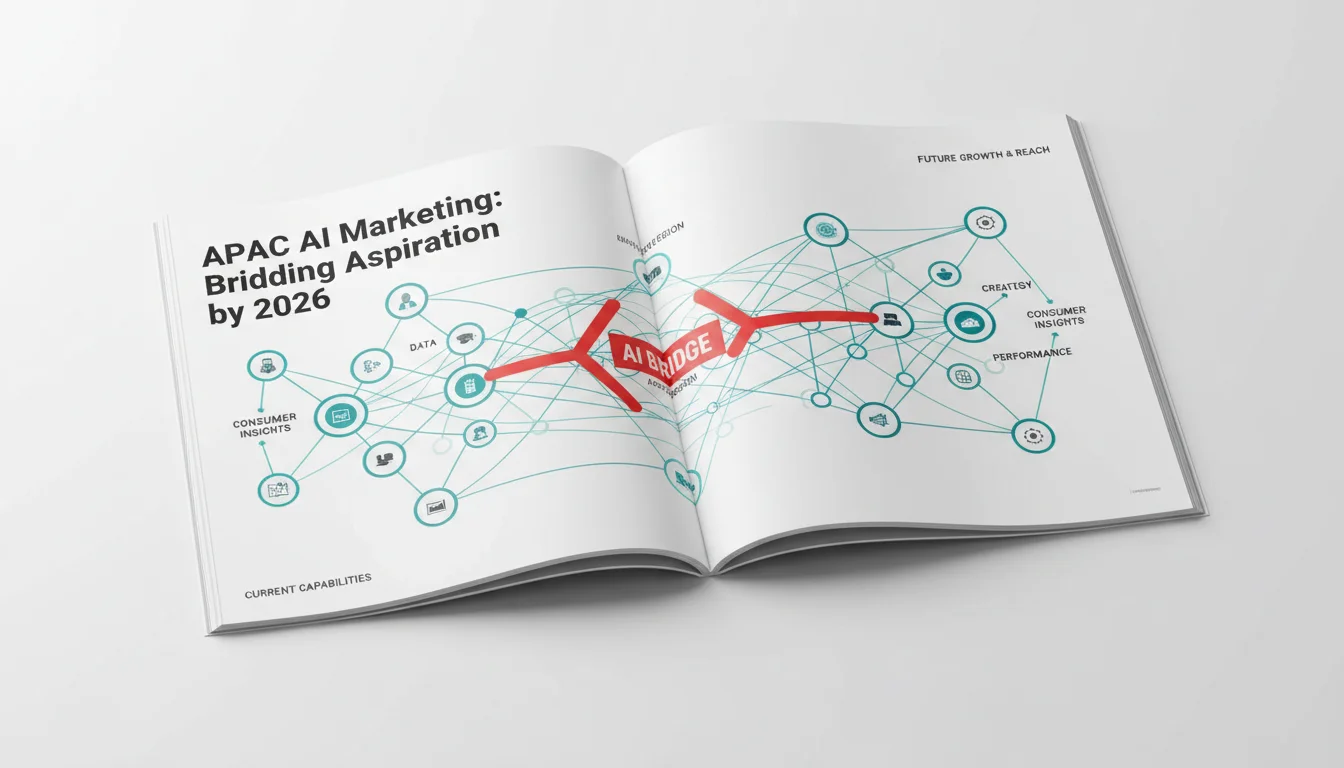
A lot of marketing teams I talk to across Asia-Pacific (APAC) are stuck in the same place. There’s plenty of excitement about artificial intelligence, but the actual use of it is spotty and isn’t producing real ROI. This gap between what they want to do and what they’re actually doing is creating a huge competitive problem, leaving companies unable to personalize content effectively, predict where the market is going, or get a real handle on customer behavior in a region with so many different digital platforms. We all see the massive potential of AI adoption in APAC marketing by 2026, but the real question is, how do we get from just talking about it to actually seeing results?
Key Takeaways
- A 2025 Forrester report found that companies getting AI right see a 15% bump in campaign effectiveness within a year.
- Before you even look at an AI tool, define a specific goal you can measure, like cutting customer acquisition cost by 10% or boosting conversions by 5%.
- Plan to spend at least 20% of your AI project’s starting budget just on cleaning and prepping your data. Bad data is the number one reason these projects fail.
- Roll out AI in stages. Start with small pilots for things like ad targeting or content generation to let your team build skills and prove the concept.
- You need an AI governance committee to handle the ethics and make sure you’re compliant with local data privacy laws like Singapore’s PDPA or Australia’s Privacy Act.
The Unfulfilled Promise: Why Early AI Efforts Stumbled
When the first wave of AI hype hit, a lot of APAC marketing departments jumped in and bought tools without any real strategy. I’ve seen it happen over and over: a company shells out for a fancy AI analytics platform or a content generator, and then it just sits there gathering dust. The issue was always the approach, not the tech. Teams didn’t have a grip on their own data, which created the classic “garbage in, garbage out” problem. Predictive models simply can’t produce miracles when you’re feeding them messy customer profiles and spotty campaign data.
We saw a lot of “shiny object” syndrome. A marketing director in Singapore would hear about a competitor’s new AI personalization engine and immediately want one too, completely skipping the part where they figure out if their team can even run it or what problem it’s supposed to fix. The result was a bunch of disconnected AI projects. A tool might make one small thing better, like an AI that optimizes email subject lines to increase open rates, but because that data wasn’t feeding back into the CRM for lead scoring or the ad platforms for retargeting, the total business impact was basically zero. Another huge problem was the skills gap. Most teams didn’t have data scientists or AI specialists on hand who actually knew how to set up, train, and make sense of these complex systems, and just leaning on vendor support was never enough to get something truly customized and effective off the ground.
Ignoring data governance was another way these early projects crashed and burned. You can’t be sloppy with data collection in markets like South Korea or Australia, where privacy laws are strict and the fines for messing up are huge, not to mention the hit to your reputation. So many of the first AI projects completely missed that the data needed to be compliant, not just clean, which led to all sorts of legal and ethical problems that stopped them in their tracks. When there’s no clear plan for who owns the data, who can access it, and how it can be used, AI projects get stuck in internal compliance hell and never see the light of day.
The Strategic Path to Effective AI Adoption in APAC Marketing
To get real, measurable results from AI adoption in APAC marketing, you have to be systematic. This means moving from small, one-off pilot projects to a fully integrated deployment across your marketing operations. It’s about building a smart marketing system, not just buying the priciest software on the market.
Step 1: Define the Business Problem with Precision
Stop. Before you even think about which AI tool to buy, you need to define a specific, measurable business problem. “We want to use AI for marketing” is not a goal. A real goal sounds like this: “We need to cut our customer churn by 8% in the Indonesian market by the end of 2026,” or, “Our goal is to lower our cost per acquisition (CPA) for new leads in Japan by 15% with better ad targeting.” Having that kind of clarity gives your AI project a clear finish line. It’s no surprise that a 2025 report from the Interactive Advertising Bureau (IAB) found that companies with sharp, defined AI goals were 2.5 times more likely to get a positive ROI from their AI investments. This first step is what separates a real strategy from just playing with expensive toys.
Step 2: Audit Your Data Infrastructure and Quality
Your AI is only ever going to be as smart as the data you feed it. You have to do a deep audit of all your data sources, your CRM, Google Analytics 4, insights from Meta Business Suite, your email platform, even offline sales records. Check everything for accuracy, consistency, and completeness, and figure out where the gaps are. This usually means you’ll have to pull data from all those different places into a single customer data platform (CDP), like a Segment or Tealium, to get a unified view. Be prepared to set aside a good chunk of your starting budget, maybe 20% to 30%, just for data cleaning and integration. It’s boring, grunt work, but it’s absolutely fundamental. If you skip this, your whole AI project is doomed from the start because no algorithm can fix bad data.
Step 3: Pilot with a Specific Use Case and Measure
Don’t try to boil the ocean and do a massive AI overhaul right away. Pick one specific marketing area where you can make a big impact with low risk for your first pilot. Some good starting points are:
- Predictive Analytics for Customer Lifetime Value (CLTV): Use AI to pinpoint your best customers so you can create campaigns to keep them around.
- Dynamic Ad Creative Optimization: Let an AI test tons of ad copy and image variations on platforms like Google Ads or LinkedIn Ads, automatically finding what works best.
- Personalized Content Recommendations: Put an AI engine on your site or app to show users the products or articles they’re most likely to be interested in based on what they’ve clicked.
Let’s say you’re piloting dynamic ad creative. You could use a tool like Smartly.io or AdCreative.ai to generate 50 ad variations for a product you’re selling in the Philippines, aiming them at a specific audience on Facebook and Instagram. Let that pilot run for six to eight weeks while you watch the KPIs like a hawk, click-through rate (CTR), conversion rate, and return on ad spend (ROAS). You have to compare those numbers to a control group using your old, manually managed ads. This step-by-step method gives your team a chance to learn how the tech works and prove it has real value before you try to roll it out everywhere.
Step 4: Build Internal AI Literacy and Expertise
Your whole marketing team needs to get AI-literate, not just your data scientists. They have to learn how to work with these tools, figure out what the outputs mean, and give good feedback so the models can improve. You’ve got to invest in training. This could be workshops on how to write good prompts for generative AI like Jasper or Copy.ai, or training on how to read the results from predictive models. It’s also a smart move to either hire a dedicated AI Marketing Specialist or train someone on your team to be the go-to AI person. They’ll act as the translator between the tech guys and the marketing department, making sure the AI solutions actually solve business problems. If you don’t build this knowledge in-house, you’ll be stuck depending on vendors, which slows you down and keeps you from really understanding what’s going on under the hood.
Step 5: Establish AI Governance and Ethical Guidelines
The more you use AI, the more you have to worry about ethics and legal compliance, especially in a region as diverse as APAC. You need to create an internal AI governance committee with people from marketing, legal, IT, and data privacy. Their job is to set the rules of the road for:
- Data Usage and Privacy: Making sure you’re following the rules in places like Singapore with its Personal Data Protection Act (PDPA), which the Personal Data Protection Commission oversees, or Australia’s Privacy Act.
- Algorithmic Bias: Constantly checking your AI models for bias in how they target ads, generate content, or recommend products, and then fixing it.
- Transparency and Explainability: Knowing how the AI is making its decisions, especially for sensitive things like customer segmentation.
For instance, if you see an AI model that starts showing ads to one demographic way more than others, your governance committee must have a plan in place to spot that, figure out why it’s happening, and correct it. Getting ahead of these issues is how you build trust with your customers and avoid getting into legal trouble.
The Measurable Impact of Strategic AI Adoption
When companies are smart about it, the payoff from AI adoption in APAC marketing is real and you can see it in the numbers. The ones that actually integrate AI into their operations, instead of just playing with it, are seeing big wins. Take a big e-commerce company in Southeast Asia: they put in an AI personalization engine for product recommendations and within nine months, their average order value was up 12% and conversions had jumped 7%. They got there through the hard work of prepping their data, constantly tweaking the model, and really getting to know their customer segments, not by just flicking a switch on new software.
Here’s another one: a B2B SaaS company working in India and China started using AI for lead scoring and prediction. The result? They cut their sales cycle by 18 days on average and boosted their lead-to-opportunity conversion rate by 20%. The AI figured out which leads were hot by analyzing their digital behavior, which meant the sales team could stop wasting time and focus on the right people. And this isn’t just a couple of lucky stories. A 2025 eMarketer report predicted that the top APAC companies using AI will grow their revenue 1.5 times faster than their competitors by 2027.
On top of the revenue, AI makes your operations a lot more efficient. When you automate the boring stuff like A/B tests, pulling reports, and managing campaign budgets, your marketing people are freed up to think about strategy, be creative, and dig into what customers really want. I saw a regional airline do this well, they used AI to adjust ticket prices on the fly and send out personal offers based on demand and who was looking. They ended up with a 5% increase in bums on seats for key routes without hurting their profit margins. Marketing in APAC is getting smarter, period. The companies that build a solid, ethical AI framework now are the ones that are going to win tomorrow.
Conclusion
Getting AI adoption in APAC marketing right by 2026 demands a complete, data-focused strategic shift. It’s not about buying a few tools and hoping for the best. You have to start with a very specific business problem, get your data in order, and then run targeted pilot programs that you can actually measure to build your team’s skills and show a real return on investment.
What is the biggest challenge for AI adoption in APAC marketing?
The biggest hurdles are almost always messy, disconnected data and not having a clear strategy that connects an AI project to a real business goal. On top of that, many companies just don’t have the right skills in-house and lack a solid plan for data governance.
How can we ensure AI solutions are compliant with APAC data privacy laws?
You need a dedicated AI governance committee that includes people from your legal and data privacy teams. You have to use techniques to anonymize data, always get clear consent from users for how you use their information, and constantly audit your AI models and data processes to make sure you’re following local laws like Singapore’s PDPA or the Australian Privacy Act.
What specific marketing functions can benefit most from AI in APAC?
The biggest wins come from personalizing the customer experience with things like product recommendations, using predictive analytics for churn or lead scoring, getting smarter with ad targeting and optimization, and automating content creation for all the different local markets you operate in.
How long does it typically take to see ROI from AI marketing initiatives?
You can see some positive signs from a small pilot in about 3 to 6 months. But for a big, measurable ROI from a fully integrated AI strategy, you’re looking at more like 9 to 18 months. That’s assuming you’ve done the data prep work, you’re constantly improving the models, and your team is actually using the tools.
Should we build our own AI models or use off-the-shelf solutions?
Most marketing teams should do a mix of both. It’s best to start with ready-made AI platforms for everyday jobs like ad optimization or personalizing emails. Once your team gets more experienced and your data is in better shape, then you can think about building your own custom models to solve unique problems and get a real edge on the competition.


