 By Editorial Team
The area of airport pre-order marketing is rife with misinformation, often leading businesses to squander valuable ad spend on ineffective strategies when crafting PPC ad content. Many common assumptions about traveler behavior and digital advertising in this unique environment simply do not align with current data or platform capabilities.
Key Takeaways
- Targeting based solely on flight status or destination is often less effective than audience segmentation by travel intent and purchasing behavior.
- Generic calls to action (CTAs) underperform. Specific, time-sensitive offers for pre-ordering food, duty-free, or services drive higher conversion rates.
- Mobile-first ad copy and landing page optimization are non-negotiable given that over 70% of airport travelers use their smartphones for planning and purchasing.
- Ad extensions, particularly structured snippets highlighting product categories and price extensions, significantly boost click-through rates for airport pre-order campaigns.
- A/B testing ad copy variations focused on convenience, savings, and personalization yields superior results compared to static, untracked campaigns.
Myth 1: Travelers are only interested in duty-free discounts
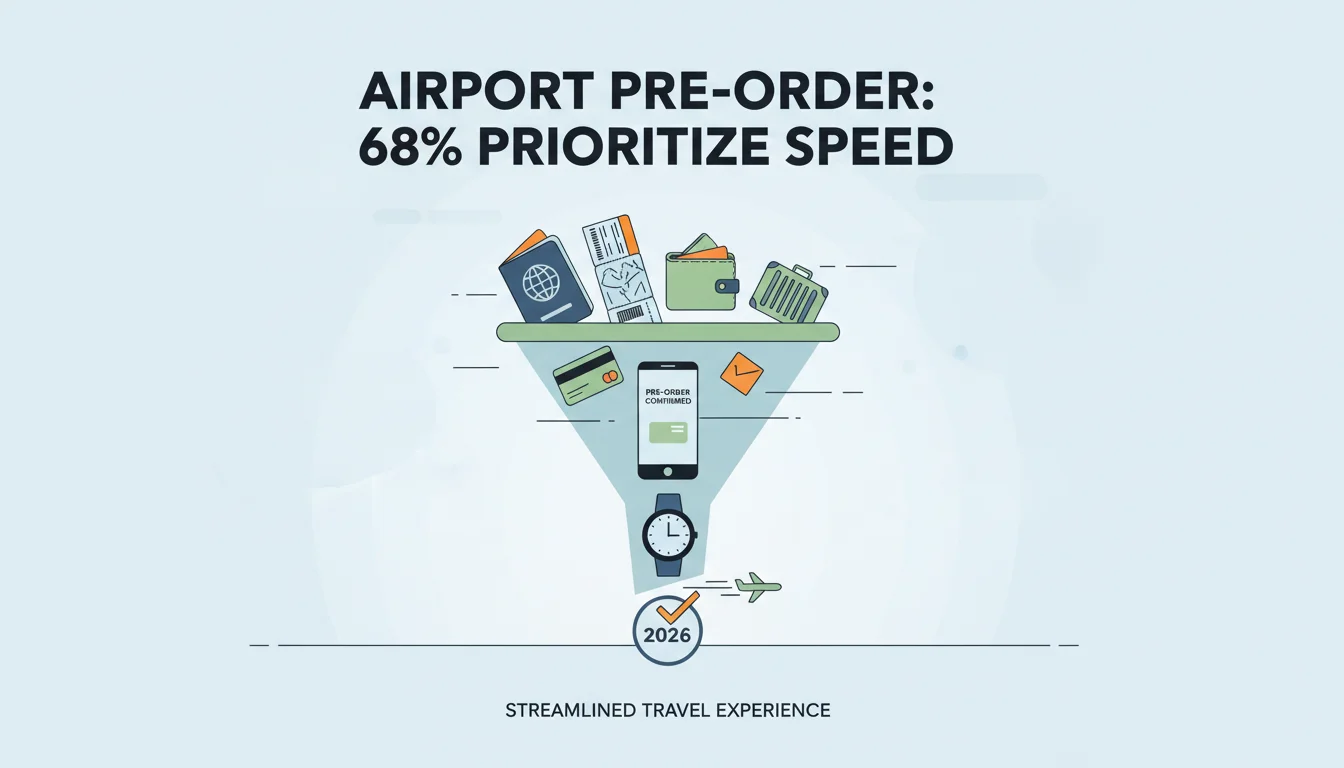
The idea that airport pre-order is solely driven by the allure of duty-free savings is a persistent myth. While discounts certainly play a role, particularly for high-value items, the modern traveler values convenience and time-saving mechanisms above almost all else. A 2025 survey by Nielsen (https://www.nielsen.com/insights/2025-travel-consumer-report) revealed that 68% of airport passengers prioritize avoiding queues and maximizing leisure time before a flight over securing the absolute lowest price on a non-essential item. This means your PPC ad content should emphasize the ease of ordering a meal to be ready upon arrival at the gate, or the speed of picking up a pre-selected travel essential, rather than solely focusing on a 10% discount on perfume. Consider a traveler with a tight connection or a family juggling luggage and young children. The promise of a hot coffee and breakfast sandwich waiting for them at their terminal, ordered moments before they even left their house, is a far more compelling value proposition than a slight saving on a luxury good they might not even need. We see this reflected in conversion rates. Ads highlighting “Skip the Line: Pre-order Your Coffee Now” consistently outperform those simply stating “Duty-Free Savings on Electronics” for food and beverage categories. The real value is in the friction removed from the travel experience.
Myth 2: Broad geographic targeting around airports is sufficient
Many marketers assume that targeting a 5-mile radius around Hartsfield-Jackson Atlanta International Airport (ATL) is enough for their airport pre-order campaigns. This approach, however, is akin to fishing with a very wide net in a vast ocean. While it might catch some fish, it wastes significant bait on areas with low intent. Effective PPC ad content for airport pre-order demands a more granular approach, using advanced location and behavioral targeting features within platforms like Google Ads (https://support.google.com/google-ads/answer/1722038). Instead of broad radii, focus on location extensions and geo-fencing specific terminals or gates for immediate needs. More critically, combine this with audience segmentation based on travel intent signals. Are you targeting leisure travelers searching for vacation packages weeks in advance? Or business travelers who frequently fly specific routes and might be interested in pre-ordering a consistent meal from their favorite airport restaurant? A travel industry report from eMarketer (https://www.emarketer.com/content/digital-travel-advertising-2026) indicates that audiences segmented by “frequent flyer status” or “upcoming travel search history” show a 3x higher conversion rate for pre-order services than generic airport-proximity targets. This is not just about being near the airport. It’s about being in the traveler’s digital journey when they are actively planning or in transit. For instance, targeting users searching for “ATL terminal B food options” or “pre-order duty free international departures” yields far more qualified clicks than a general location-based campaign.
Myth 3: One-size-fits-all ad copy works for all pre-order items
The notion that a single piece of PPC ad content can effectively promote everything from a quick snack to a high-end watch is fundamentally flawed. Travelers’ motivations and purchase journeys differ wildly depending on the product or service they are considering for pre-order. A generic ad like “Pre-order at the Airport Today!” lacks the specificity to resonate with any particular need. For food and beverage pre-orders, your ad copy should emphasize speed, freshness, and convenience. Think headlines like “Hot Coffee & Pastries Ready at Gate D25” or “Skip the Line, Grab Your Meal Before Boarding.” Use structured snippet extensions to list specific menu items or popular combos. Conversely, for duty-free goods (e.g., cosmetics, electronics), the ad copy should lean into exclusivity, savings, and the ability to browse and compare without pressure. “Exclusive Travel Retail Deals: Pre-order & Collect” or “Your Favorite Brands, Tax-Free: Reserve Now” are more effective. A study by the IAB (https://www.iab.com/insights/mobile-travel-path-to-purchase/) highlighted that ad copy tailored to specific product categories saw a 45% uplift in click-through rates compared to general campaigns. This means creating multiple ad groups, each with highly specific keywords and corresponding ad copy that speaks directly to the traveler’s likely intent for that particular product type.
Myth 4: Desktop optimization is still relevant for airport pre-order
While some travel planning still occurs on desktop, the vast majority of in-airport and pre-flight digital engagement happens on mobile devices. Believing that desktop-optimized landing pages and ad experiences are sufficient for airport pre-order is a critical oversight. Data from Statista (https://www.statista.com/statistics/1269389/mobile-commerce-share-travel-worldwide-by-segment/) indicates that mobile commerce accounts for over 70% of digital travel purchases globally as of 2026. This trend is even more pronounced for impulse or last-minute purchases, which often characterize airport pre-orders. Your PPC ad content must be written with mobile screens in mind: concise headlines, clear calls to action, and compelling descriptions that don’t require extensive scrolling. More importantly, the landing page experience must be flawlessly responsive and fast-loading on mobile. Slow load times or clunky navigation on a smartphone will lead to high bounce rates and wasted ad spend, regardless of how compelling your initial ad copy was. Google’s own data confirms that a 1-second delay in mobile load time can impact conversions by up to 20%. This is not merely a suggestion. It’s a fundamental requirement for success in this space.
Myth 5: Set it and forget it is a viable strategy
The dynamic nature of airport environments, flight schedules, and traveler behavior means a “set it and forget it” approach to airport pre-order PPC ad content is a recipe for mediocrity. Campaigns need constant monitoring, analysis, and adjustment. What works during peak holiday travel may not resonate during off-peak seasons. Similarly, an ad performing well for early morning flights might underperform for late-night departures. A/B testing different headlines, descriptions, and calls to action is non-negotiable. Experiment with ad customizers that dynamically insert flight numbers or gate information (if feasible and privacy-compliant) to create a highly personalized experience. Monitor search query reports to identify new keywords and negative keywords. Adjust bid strategies based on time of day, day of week, and specific events (e.g., major sporting events leading to increased airport traffic). Without this continuous optimization loop, your campaigns will quickly become stale and inefficient, leaving money on the table. A HubSpot report (https://blog.hubspot.com/marketing/ppc-optimization-tips) on PPC campaign management stresses that campaigns reviewed and optimized weekly see an average of 15-20% improvement in ROI compared to those updated monthly or less frequently. The field of airport pre-order marketing is complex, but by discarding these common myths and adopting a data-driven, traveler-centric approach to PPC ad content, businesses can significantly enhance their campaign performance. Focus on convenience, targeted audiences, specific messaging, mobile optimization, and continuous iteration to truly connect with the modern airport traveler.
What is the most effective call to action for airport pre-order ads?
The most effective calls to action are specific and highlight immediate benefits, such as “Order Ahead & Skip the Line,” “Pre-order for Gate Delivery,” or “Reserve Duty-Free Now.” Generic CTAs like “Shop Now” are less impactful for this niche.
How can I target business travelers specifically with airport pre-order ads?
Target business travelers by using audience segments like “frequent business travelers,” “corporate travelers,” or by targeting users searching for specific business travel destinations. Ad copy should emphasize efficiency, time-saving, and premium offerings, such as “Expedited Business Meals” or “Pre-order Conference Essentials.”
Are there specific ad extensions that perform well for airport pre-order?
Yes, structured snippet extensions to highlight product categories (e.g., “Menu: Coffee, Pastries, Sandwiches”), price extensions for popular items, and location extensions to specify terminal and gate information are highly effective for airport pre-order campaigns. Promotion extensions for specific deals also drive strong engagement.
Should I use broad match keywords for airport pre-order campaigns?
While broad match keywords can uncover new search queries, for airport pre-order, it’s generally more effective to prioritize exact match and phrase match keywords to ensure high intent and reduce wasted spend. Focus on terms like “pre-order food ATL terminal B” or “duty free pickup JFK.” Use broad match sparingly and with aggressive negative keyword lists.
How often should I review and optimize my airport pre-order PPC campaigns?
Given the dynamic nature of airport traffic and traveler behavior, it’s advisable to review and optimize airport pre-order PPC campaigns at least weekly. This allows for timely adjustments to bids, ad copy, and targeting based on performance trends, flight schedules, and seasonal demand fluctuations.


