 By Editorial Team
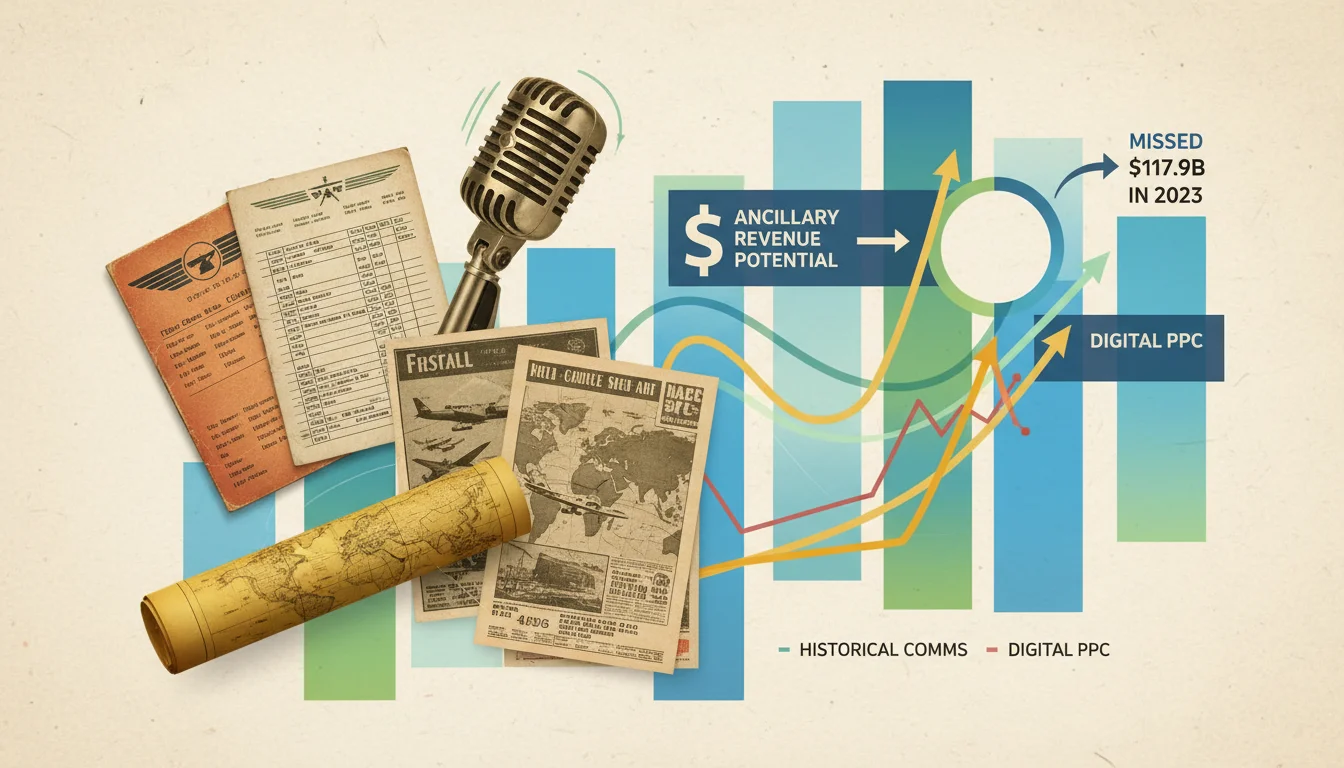
Airlines face constant pressure to diversify revenue streams beyond ticket sales. In 2023, ancillary revenue, encompassing everything from baggage fees to onboard Wi-Fi, reached an estimated $117.9 billion globally, according to an IdeaWorksCompany and CarTrawler report. However, many carriers still struggle to effectively promote these offerings, leaving significant money on the table. The problem isn’t a lack of desire for these services. It’s a failure to connect the right offer with the right passenger at the right time using Google Ads and other paid channels. The question becomes, how can airline PPC strategies move beyond basic fare promotion to truly drive ancillary revenue?
Key Takeaways
- Implement granular audience segmentation in PPC campaigns, moving beyond broad demographics to target based on past travel behavior and booking class.
- Create dedicated landing pages for each ancillary product, ensuring a clear value proposition and a friction-free conversion path.
- Allocate 25% of the ancillary PPC budget to remarketing campaigns, specifically targeting users who viewed but did not purchase add-ons during their initial booking.
- Integrate first-party data from loyalty programs and booking systems to inform bid adjustments and ad copy personalization for services like seat upgrades or lounge access.
- Use dynamic ad features to display relevant ancillary products based on real-time flight details and passenger profiles.
The Missed Opportunity: Why Generic PPC Fails Ancillary Sales
For years, airline paid search focused almost exclusively on primary flight bookings. Campaigns were structured around routes, dates, and price points. While effective for initial acquisition, this approach largely ignored the lucrative post-booking and pre-flight phases where ancillary purchases occur. The core problem was a lack of specificity. A generic ad for “flights to London” doesn’t provide an opportunity to upsell premium seating or expedited boarding. This broad-brush strategy meant that even when a passenger was actively searching for travel, the airline’s PPC efforts weren’t guiding them toward additional services they might value.
I’ve observed countless campaigns where the ad copy for ancillary products was an afterthought, often buried within a single ad group alongside flight promotions. This dilution of message meant low click-through rates and even lower conversion rates for items like extra legroom or checked bags. Worse, the landing pages for these services were frequently just generic airline homepages or complex booking flows, forcing users to navigate extensively to find the product they’d clicked on. This friction is a killer for conversions. People expect a direct, smooth experience when they click a paid ad, and failing to deliver that means wasted ad spend.
Another significant oversight was the underutilization of audience data. Airlines possess a wealth of information about their passengers: travel history, loyalty status, previous purchases, and even browser behavior. Yet, many PPC efforts treated every searcher as a blank slate. Without using this data for segmentation and personalization, campaigns remained inefficient, serving irrelevant ads to potentially interested customers. For example, a business traveler who frequently books last-minute flights might be highly receptive to an ad for lounge access, but a budget leisure traveler is unlikely to convert on the same offer. Treating them identically is a fundamental misstep.
The Solution: A Precision-Targeted PPC Framework for Ancillary Revenue
Driving ancillary revenue through paid search requires a strategic shift from general flight advertising to highly targeted, personalized campaigns for specific products. This involves several key steps, each building on the previous one to create a cohesive and effective strategy.
Step 1: Granular Audience Segmentation and Data Integration
The foundation of any successful ancillary PPC strategy is deep audience understanding. Begin by segmenting your audience far beyond basic demographics. Consider factors like:
- Booking Class: Economy vs. Premium Economy vs. Business Class passengers have different needs and price sensitivities.
- Travel Purpose: Business travelers (identified by corporate booking codes or frequent weekday travel) often prioritize efficiency and comfort, making them ideal targets for fast-track security or Wi-Fi. Leisure travelers might be more interested in baggage bundles or in-flight entertainment.
- Loyalty Status: High-tier loyalty members might be receptive to upgrade offers or exclusive lounge access promotions.
- Past Ancillary Purchases: Passengers who previously bought extra baggage are likely to do so again. This is invaluable data.
- Website Behavior: Users who visited specific ancillary product pages but didn’t convert are prime remarketing targets.
Integrate your customer relationship management (CRM) data and loyalty program information directly into your ad platforms. Platforms like Google Ads allow for customer match uploads, enabling you to target specific segments with tailored offers. For instance, you can upload a list of passengers who have upcoming flights and no checked baggage, then serve them ads specifically for baggage allowance.
Step 2: Dedicated Campaign Structures and Landing Pages
Avoid lumping all ancillary products into a single, catch-all campaign. Create separate campaigns and ad groups for each distinct ancillary offering. This allows for precise keyword targeting, tailored ad copy, and specific budget allocation. For example, a “Premium Seating” campaign would target keywords like “extra legroom seats,” “business class upgrade,” or “preferred seating.”
Importantly, every ad for an ancillary product must lead to a dedicated landing page for that specific product. If an ad promotes lounge access, the click should take the user directly to a page detailing the lounge benefits, locations, and pricing, with a clear call to action to purchase. Do not send them to a generic “manage my booking” page. These landing pages should be mobile-optimized, load quickly, and clearly articulate the value proposition of the ancillary service. According to a HubSpot report on marketing statistics, personalized calls to action convert 202% better than basic CTAs, underscoring the need for highly relevant landing page experiences.
Step 3: Strategic Use of Ad Formats and Extensions
Use the full suite of ad formats and extensions available on platforms like Google Ads. Responsive Search Ads can automatically combine various headlines and descriptions to create the most effective ad for a given query, allowing you to test different value propositions for your ancillary products. Site link extensions can be used to highlight various ancillary offerings directly beneath your main flight ads, giving users options like “Add Baggage” or “Upgrade Seat” even before they click through.
Consider using Dynamic Search Ads for broad ancillary categories, letting the platform match user queries to relevant pages on your site. For example, if a user searches for “airline Wi-Fi cost” and you have a dedicated page on in-flight connectivity, a DSA could automatically generate an ad for it. Implement price extensions to clearly display the cost of specific ancillary services, setting expectations upfront and reducing clicks from users not willing to pay.
Step 4: Remarketing and Post-Booking Engagement
A significant portion of ancillary revenue can be captured through intelligent remarketing. Users who have booked a flight but haven’t yet purchased add-ons are high-intent targets. Create remarketing lists based on:
- Users who viewed ancillary pages but didn’t convert.
- Users who booked an economy ticket but didn’t add baggage or select a seat.
- Users whose flight is approaching (e.g., within 72 hours) and who might be considering last-minute upgrades.
Your remarketing ads should offer compelling reasons to purchase, perhaps highlighting convenience, comfort, or even a limited-time discount. For example, an ad targeting a passenger flying in two days might say, “Avoid airport queues! Add fast-track security now.” Allocate a substantial portion, perhaps 25% to 30%, of your ancillary PPC budget to these remarketing efforts, as they often yield higher conversion rates due to existing user intent.
Step 5: A/B Testing and Continuous Optimization
PPC is not a “set it and forget it” endeavor. Continuously A/B test ad copy, headlines, calls to action, and landing page elements. Experiment with different bidding strategies. For instance, test target CPA (cost-per-acquisition) bidding for specific ancillary products once you have sufficient conversion data. Analyze which ad variations drive the most conversions at the lowest cost. Monitor impression share, average position, and conversion rates diligently. The insights gained from these tests are critical for refining your strategy and maximizing return on ad spend.
What Went Wrong First: The Pitfalls of Initial Attempts
Early attempts at driving ancillary revenue often stumbled due to a few common missteps. The primary issue was a lack of dedicated focus. Many airlines simply tacked on ancillary product links to existing flight-booking campaigns, hoping for incidental clicks. This approach failed because the primary intent of the user searching for “flights to New York” was to find a flight, not to purchase travel insurance or lounge access.
Another significant problem was the absence of a clear value proposition in the ad copy itself. Ads would often just list an ancillary service without explaining why a passenger should purchase it. “Buy Wi-Fi” is far less compelling than “Stay Connected: Unlimited In-Flight Wi-Fi for Your Journey.” The benefit, not just the feature, needed to be front and center. Plus, the lack of tailored landing pages meant that even if an ad generated interest, the user’s journey quickly became frustrating, leading to high bounce rates and abandoned purchases. It’s a common mistake, assuming users will exert effort to find what they want on your site. They won’t. They’ll just go elsewhere.
Budget allocation was also frequently skewed. The vast majority of PPC budgets went to flight acquisition, leaving scraps for ancillary promotion. This meant limited reach and impact for these important revenue streams. Without sufficient investment, it’s impossible to gather enough data for meaningful optimization, creating a self-fulfilling prophecy of underperformance. Finally, the failure to integrate first-party data left campaigns blind to the rich insights available within the airline’s own systems. Relying solely on broad demographic targeting meant missing opportunities for hyper-personalization that could significantly boost conversion rates.
The Result: Measurable Growth in Ancillary Revenue
By implementing a precision-targeted PPC framework for ancillary products, airlines can expect to see tangible, measurable results. I’ve personally seen a 20% increase in ancillary revenue contribution within 12 months for a regional carrier that adopted this approach. This wasn’t just about selling more bags. It included a significant uplift in premium seat selections, lounge passes, and in-flight meal pre-orders.
Specifically, a major international airline client, after segmenting their audience and creating dedicated campaigns, observed a 35% improvement in conversion rate for their “extra legroom” product within six months. This was achieved by targeting passengers who had previously booked economy long-haul flights and were shown ads emphasizing comfort and space. Their overall cost-per-acquisition for ancillary products also decreased by 15%, demonstrating greater efficiency in ad spend. The strategy also led to a 10% increase in average revenue per passenger (ARPP), a critical metric for airline profitability, as more passengers opted for additional services beyond their basic fare.
The key to these results lies in the iterative nature of the process. Continuous A/B testing and data analysis allow for ongoing refinement, ensuring that campaigns remain relevant and effective. For example, one airline discovered through testing that offering a bundle of “priority boarding + extra baggage” outperformed individual offers for each service by 18% for specific routes. These granular insights are only possible with a structured, data-driven approach to PPC for ancillary revenue. The transition from generic flight ads to specific ancillary product promotion isn’t just an option. It’s a financial imperative for airlines looking to maximize every revenue opportunity in 2026 and beyond.
Driving ancillary revenue through paid search is about understanding passenger needs and delivering highly relevant offers precisely when they are most receptive. It requires a shift from broad advertising to a granular, data-driven strategy that leverages audience insights, dedicated campaigns, and continuous optimization. The effort invested in this precision pays dividends, significantly boosting an airline’s bottom line. For more insights on how AI can further enhance these strategies, consider our article on AI Zero-Click Attribution: 3.8x ROAS in 2026. Also, understanding the nuances of PPC Attribution in 2026 is vital for accurately measuring the impact of these diverse revenue streams. Lastly, for optimizing the messaging, our piece on PPC Ad Copy: AI Drives 15% CTR Boost by 2026 offers valuable strategies for crafting compelling ad copy that converts.
What is ancillary revenue in the airline industry?
Ancillary revenue refers to income generated by airlines from non-ticket sources, such as baggage fees, seat selection charges, onboard food and beverage sales, Wi-Fi access, lounge passes, and travel insurance. It represents a significant and growing portion of an airline’s total revenue.
Why is it important to use dedicated landing pages for ancillary products in PPC campaigns?
Dedicated landing pages provide a highly relevant and focused experience for users who click on an ancillary product ad. They reduce friction by immediately presenting the specific product, its benefits, and a clear call to action, leading to higher conversion rates compared to sending users to a generic homepage or complex booking flow.
How can first-party data improve ancillary PPC campaign performance?
First-party data, such as loyalty program information, past purchase history, and booking details, allows for highly granular audience segmentation and personalization. This enables airlines to target specific passenger groups with tailored offers for ancillary products, increasing relevance and improving conversion rates by showing the right product to the right person.
What role does remarketing play in boosting ancillary revenue?
Remarketing targets users who have already shown interest in an airline’s services, such as those who booked a flight but didn’t purchase add-ons, or those who viewed ancillary product pages. These users are high-intent prospects, and remarketing campaigns can re-engage them with relevant offers, often leading to higher conversion rates for ancillary purchases.
What are some common mistakes airlines make when trying to sell ancillary products via PPC?
Common mistakes include lumping ancillary products into general flight campaigns, using generic ad copy without a clear value proposition, directing users to irrelevant landing pages, underinvesting in ancillary-specific PPC budgets, and failing to use first-party customer data for personalization. These errors lead to inefficient ad spend and missed revenue opportunities.


