 By Editorial Team
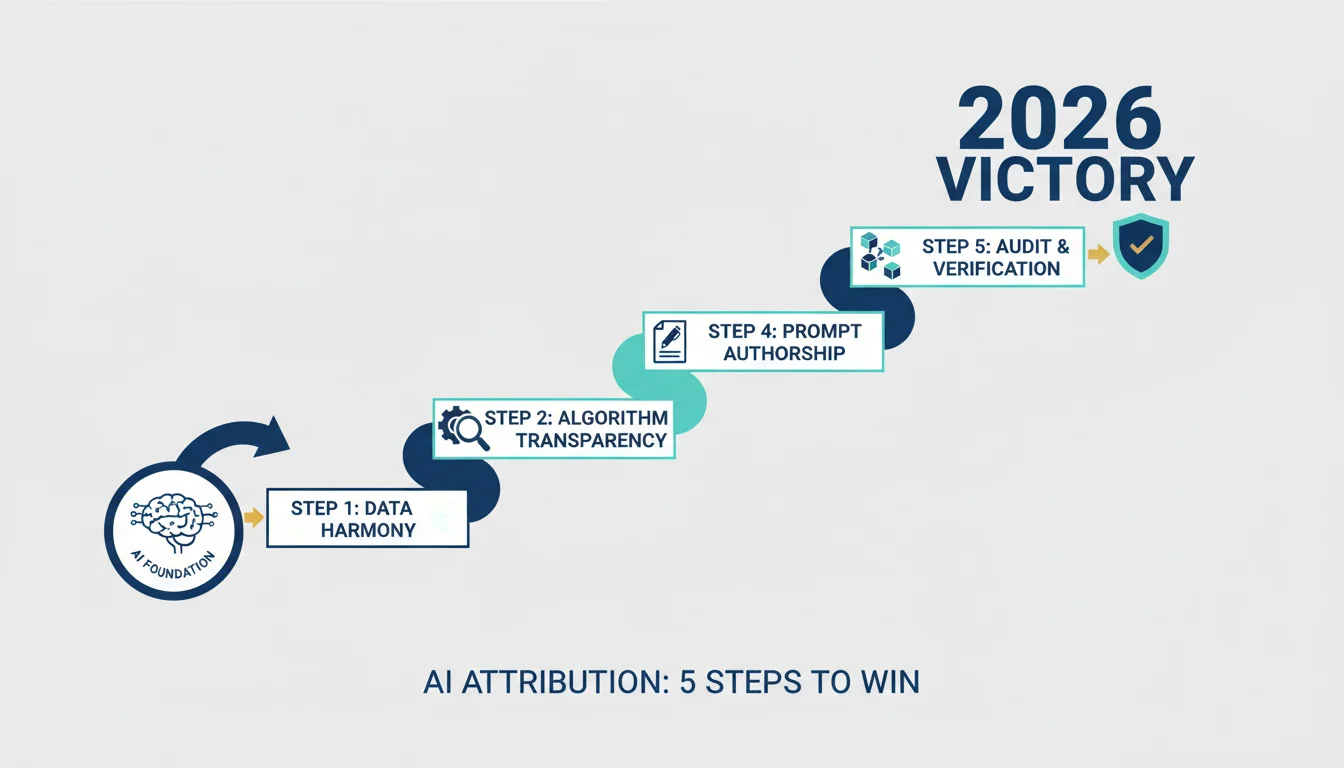
Understanding which marketing touchpoints genuinely contribute to conversions across complex customer journeys requires more than basic last-click models. Advanced AI attribution models are transforming how marketers allocate budgets, providing granular insights into the true impact of every interaction. How can you implement these sophisticated models to gain a competitive edge in 2026?
Key Takeaways
- Implement a strong data pipeline to collect granular, user-level interaction data from all marketing channels, including server-side tracking for platforms like Google Ads and social media.
- Select an AI-driven attribution platform that offers algorithmic models like Shapley value or Markov chains, moving beyond heuristic rules to accurately distribute credit across multi-touch journeys.
- Integrate your chosen attribution model with your bidding strategies in platforms such as Google Ads and Meta Ads Manager to automate budget reallocation based on true incremental value.
- Regularly audit your attribution model’s performance by comparing its predictions against A/B test results for specific channel interventions to ensure accuracy and prevent model drift.
- Focus on measuring long-term customer value and lifetime value (LTV) within your attribution framework, as short-term conversion metrics can misrepresent the impact of awareness-building channels.
1. Establish a Granular Cross-Channel Data Foundation
The effectiveness of any advanced AI attribution model hinges entirely on the quality and completeness of its input data. You cannot attribute what you do not track. This means moving beyond standard client-side pixel implementations and embracing server-side tracking, enhanced conversion APIs, and a unified data schema across all your marketing platforms. For instance, relying solely on client-side tracking for Google Ads conversions often leads to data loss due to browser privacy changes and ad blockers. Implementing server-side tagging via a solution like Google Tag Manager’s server container allows you to send conversion data directly from your server to Google, Meta, and other ad platforms, significantly improving data fidelity.
Pro Tip: Prioritize unique user identification. Implement a consistent user ID across your CRM, analytics platform, and marketing channels. This might involve hashed email addresses or first-party cookies that persist across sessions. Without a reliable way to connect disparate touchpoints to a single user, even the most sophisticated AI model will struggle to paint an accurate picture.
Common Mistakes: Many marketers neglect to collect impression data, focusing only on clicks. Impression data, especially for upper-funnel channels, provides important context for AI models to understand brand awareness and assisted conversions. Also, failing to standardize naming conventions for campaigns, ad sets, and ads across platforms creates data silos that hinder complete analysis.
2. Select an AI-Driven Attribution Platform
Once your data pipeline is strong, the next step is choosing the right tool. Forget last-click, first-click, or even linear models. Advanced AI attribution models, often employing machine learning techniques like Shapley value or Markov chains, are designed to quantify the incremental contribution of each touchpoint. These models analyze millions of customer journeys to identify patterns and assign credit more accurately than rule-based systems. Platforms like AppsFlyer (for mobile-first businesses) or Adjust offer sophisticated mobile attribution, while enterprise solutions such as Adobe Analytics or custom-built data science solutions provide broader cross-channel capabilities.
When evaluating platforms, look for these features:
- Algorithmic Models: Ensure it moves beyond heuristic rules to employ true machine learning for credit distribution.
- Cross-Device Stitching: The ability to connect a user’s journey across their phone, tablet, and desktop is non-negotiable.
- Integration Capabilities: It must smoothly integrate with your ad platforms (Google Ads, Meta Ads, TikTok Ads) for automated bidding adjustments and your CRM for customer lifetime value (CLTV) data.
- Transparency: While AI models are complex, the platform should offer some level of explainability for how credit is assigned. You need to understand the “why” behind the recommendations.
Pro Tip: Don’t settle for a black box. Even if the underlying algorithms are proprietary, the platform should provide reports that illustrate the relative weight given to different channels or touchpoint types. This helps build trust and allows you to validate the model’s outputs against your own marketing intuition.
3. Configure Model Parameters and Training Data
After selecting your platform, you’ll need to configure its parameters. This isn’t a “set it and forget it” process. Most AI attribution models require a significant amount of historical data to train effectively. I typically recommend at least 12 to 18 months of conversion and interaction data, encompassing a full business cycle (including seasonal peaks and troughs). You’ll define what constitutes a “conversion” (e.g., purchase, lead form submission, app install) and the various touchpoint types to be considered (e.g., paid search click, organic search visit, social media ad view, email open, website visit).
Within the platform settings, you’ll often specify:
- Lookback Window: The duration (e.g., 30, 60, 90 days) during which touchpoints are considered relevant to a conversion. This significantly impacts the model’s output. For complex B2B journeys, a longer window (90+ days) is often appropriate.
- Conversion Value: Assign monetary values to different conversion types, especially if you have multiple goals. This helps the AI prioritize higher-value actions.
- Interaction Types: Clearly define what constitutes an “interaction” for different channels. For display or video, this might include a certain view duration or an impression.
Common Mistakes: Over-segmenting initial data can lead to sparse data sets for the AI to learn from. Start with broader categories and refine as the model matures. Conversely, failing to include all relevant touchpoints (e.g., offline interactions if applicable) will create blind spots in the model’s understanding of the customer journey.
4. Integrate with Bidding and Budgeting Systems
The real power of advanced AI attribution models comes from their integration with your ad platforms. Once your model is trained and delivering insights, you need to feed those insights back into your bidding and budgeting strategies. For Google Ads, this involves importing the model’s attributed conversions directly into the platform. You can then use these “new” conversion numbers to inform Smart Bidding strategies like Target CPA or Target ROAS. Similarly, Meta Ads Manager allows for custom conversion uploads that can influence its automated bidding algorithms.
The goal here is to automate the reallocation of budget based on the true incremental value identified by your AI model. If the model determines that a specific display campaign is contributing significantly to assisted conversions, even if it rarely generates last-click conversions, your bidding system should reflect that increased value. This shifts budget away from channels that appear strong on a last-click basis but have lower incremental impact, and towards channels that truly drive customer acquisition.
Pro Tip: Start with a cautious integration. Don’t immediately switch all campaigns to AI-attributed bidding. Implement it on a subset of campaigns or channels first, monitor performance closely, and gradually expand as you gain confidence in the model’s recommendations. This minimizes risk while allowing you to realize the benefits.
For a deeper dive into optimizing your ad spend, consider exploring how AI PPC can lead to significant ROI increases, further enhancing your budgeting strategies.
5. Continuously Monitor, Validate, and Refine
Attribution modeling is not a one-time setup. The marketing field, customer behavior, and your campaigns are constantly evolving, and your AI attribution model must evolve with them. Establish a rigorous process for continuous monitoring and validation. This includes:
- Performance Monitoring: Regularly compare your AI model’s attributed conversions and ROAS against traditional models. Look for significant discrepancies and investigate the underlying reasons.
- A/B Testing: This is arguably the most critical validation step. Conduct controlled experiments where you intentionally reduce or increase spend on a channel that the AI model suggests is over- or undervalued. Measure the actual incremental impact on conversions. For example, if the AI model says your brand search campaigns are essential, try pausing them for a small, controlled segment of your audience and observe the downstream effect on other channels.
- Model Drift Detection: AI models can “drift” over time if the underlying data patterns change. Implement alerts for significant shifts in attributed values or unexpected changes in channel contributions.
- Data Quality Audits: Periodically review your data collection processes to ensure accuracy and completeness. New privacy regulations or platform updates might necessitate adjustments to your tracking.
According to a 2023 eMarketer report, a significant challenge for marketers remains the difficulty in validating attribution models, highlighting the need for strong testing frameworks. Without this ongoing validation, you’re operating on faith, not data.
Pro Tip: Don’t be afraid to challenge the model. If its recommendations consistently contradict strong business intuition or fail to deliver expected results in A/B tests, investigate. It might indicate an issue with data quality, model configuration, or an external factor the model isn’t accounting for.
Implementing advanced AI attribution models for complex journeys requires significant upfront investment in data infrastructure and platform selection, but the long-term gains in budget efficiency and strategic insight are undeniable. This approach helps in working through the digital ad spend field effectively.
What is the main advantage of AI attribution over traditional models?
The main advantage is the ability of AI models to learn from complex user behavior patterns and assign fractional credit to touchpoints based on their incremental contribution, rather than relying on predefined, static rules like last-click or linear models. This leads to more accurate budget allocation.
How much data do I need to train an effective AI attribution model?
You generally need at least 12 to 18 months of historical conversion and interaction data. This allows the AI to learn from a sufficient volume of customer journeys and account for seasonality or other recurring patterns in your business.
Can AI attribution models account for offline marketing efforts?
Yes, if you can digitize and integrate your offline data. This might involve collecting customer phone numbers or email addresses at in-store purchases, linking them to online profiles, or using surveys to ask about offline influences. The key is to have a consistent identifier to connect offline and online touchpoints.
What are common challenges when implementing AI attribution?
Common challenges include poor data quality, lack of consistent user identification across channels, difficulty integrating the attribution model with existing bidding systems, and the need for continuous monitoring and validation to prevent model drift. The initial setup can be complex and resource-intensive.
How often should an AI attribution model be re-trained or updated?
The frequency depends on the dynamism of your market and customer behavior. Many platforms offer continuous learning, updating the model as new data comes in. However, a full re-training might be necessary quarterly or semi-annually, especially if there are significant changes in your marketing strategy, product offerings, or the competitive field.


