 By Editorial Team
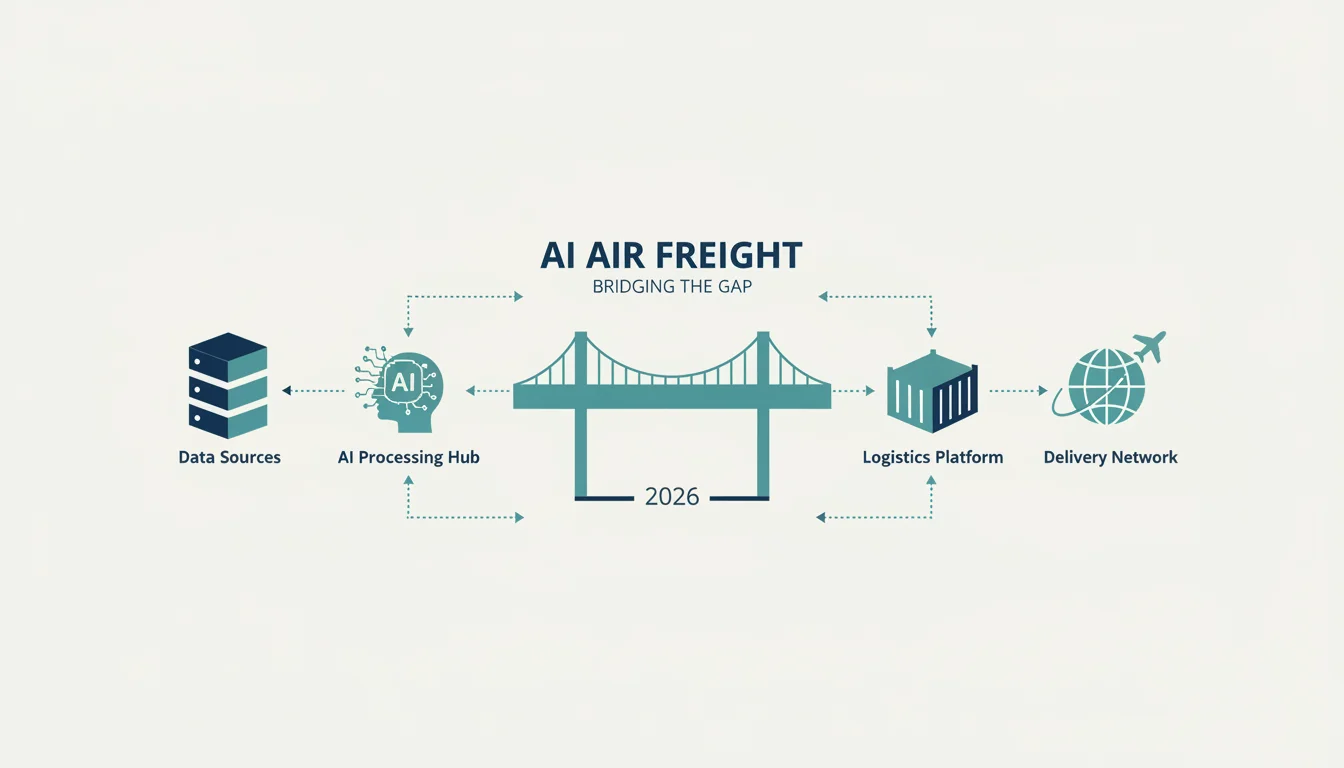
By 2026, the air freight industry is heading for a wall. We’re seeing demand surge, but it’s crashing against aging infrastructure and operational habits that haven’t changed in decades, which creates bottlenecks that delay shipments, bloat costs, and leave customers angry. For carriers and logistics providers, integrating AI air freight solutions is now table stakes for staying competitive, but we all know that getting the budget for infrastructure upgrades to match the tech is a constant battle. So how do operators actually bridge that gap between the tech we need and the ground-level reality?
Key Takeaways
- With 4.5% annual growth projected through 2030 thanks to e-commerce and shifting global supply chains, the industry needs serious technological upgrades now.
- Legacy infrastructure, think outdated sorting systems and endless manual paperwork, is behind 20% of all air freight delays, hitting the bottom line directly.
- Using AI-powered predictive analytics for route optimization can slash fuel consumption by up to 15% and bump up on-time delivery rates by 10%.
- Automated cargo handling systems run by AI can cut loading and unloading times by an average of 30% which boosts throughput without pouring new concrete for an expansion.
- A strategic spend on AI infrastructure, like intelligent warehousing or autonomous ground equipment, typically pays for itself in 3 to 5 years from efficiency gains alone.
The Problem: Strained Capacity Meets Legacy Systems
The International Air Transport Association (IATA) projects the global air cargo market will keep swelling by a sustained 4.5% each year through 2030, a trend driven mostly by the non-stop growth of e-commerce and ever-more-complex global supply chains. The problem is a massive disconnect: the market’s demand for speed and reliability is blowing past the capabilities of systems that were built for a different world. A lot of air cargo hubs, especially the older ones, are still leaning on people to manually sort, track, and load cargo, which is a baked-in recipe for delays and mistakes. Look at a high-volume hub like the cargo facilities at Hartsfield-Jackson Atlanta International Airport. Its sheer scale makes the limits of those old-school methods painfully obvious anytime there’s an unexpected surge. This is a systemic challenge.
A huge part of the problem is that operators are flying blind, with no real-time visibility or predictive tools. Without them, it’s a struggle to anticipate demand swings, find the best routes, or even know exactly where a specific shipment is in the network. That leads directly to half-empty planes, clumsy ground handling, and a constant fire-fighting approach to solving problems. In fact, a full 20% of all air freight delays can be pinned directly on these old infrastructure limits and manual workarounds. The financial hit is huge, showing up everywhere from extra fuel costs for re-routing flights to contract penalties for missing a delivery window. It’s a constant race against the clock that’s often lost before the cargo even gets near an airplane.
What Went Wrong First: Misguided Tech Investments
The first wave of attempts to modernize air freight mostly flopped because they were focused on small, piecemeal fixes instead of genuine, data-driven overhauls. A lot of companies bought shiny point solutions, a basic tracking system here, a few robots for one warehouse task there, without ever plugging them into a single, working operational plan. The result was a patchwork of disconnected systems that created new data silos and didn’t fix the actual sources of inefficiency. For example, some cargo handlers rolled out automated guided vehicles (AGVs) in one warehouse but didn’t upgrade their inventory software or connect to airline schedules. So while the AGVs moved boxes fast in their little zone, the delays just piled up at transfer points or during manual data entry, wiping out most of the gains. Advanced parts were mismatched with an outdated system.
Another classic mistake was investing in new technology without analyzing a lick of historical data. Without knowing the real traffic patterns, where bottlenecks actually came from, or how different operational choices affected the flow, the investments were just expensive guesses. This led to “solutions” that treated symptoms instead of the disease. I saw companies spend a fortune on faster conveyor belts without realizing the real holdup wasn’t belt speed but the manual package identification happening at intake. The capital spend was huge, the operational improvement was tiny, and everyone got cynical about technology. It just proves that buying tech for its own sake is a waste of money. You need to dig into your operational data and have a real strategy for integration.
The Solution: Strategic AI Integration and Infrastructure Investment
The path forward requires a strategic, integrated approach centered on AI air freight solutions and targeted infrastructure spending. It’s about augmenting your people with tools that sharpen their decisions, automate the grunt work, and provide a level of visibility we’ve never had before. The solution really has three core parts: using predictive analytics for operations, bringing in intelligent automation for cargo handling, and using AI to tighten up security and compliance.
Step 1: Implementing AI for Predictive Analytics and Route Optimization
The first real step is to deploy AI-powered predictive analytics platforms. These systems consume massive amounts of data, historical flight patterns, weather forecasts, real-time demand signals, even geopolitical news, to forecast demand and optimize flight routes with incredible accuracy. For example, a system like the IBM Supply Chain Intelligence Suite can crunch millions of data points to flag a potential customs backlog or bad weather system, giving carriers enough time to adjust schedules or re-route a shipment before it becomes a problem. This directly cuts fuel consumption, a huge opex line item, by finding flight paths that avoid turbulence and crowded airspace. A 2025 Statista analysis found that this kind of AI-driven route optimization can cut fuel use by up to 15% and boost on-time delivery rates by 10%. Those numbers have a huge impact on profitability and customer satisfaction.
AI platforms can also dynamically allocate cargo space on planes, making sure they’re flying as full as possible and that high-priority shipments don’t get bumped. By predicting when and where demand will spike, carriers can get resources in place ahead of time and adjust their pricing, which means more revenue from every flight. How else could you possibly get that kind of granular insight? The old way of relying on historical averages and gut feelings just can’t compete. This is about moving from being reactive to being proactive with data-driven strategy.
Step 2: Intelligent Automation for Cargo Handling and Warehousing
The second part is about integrating AI with the physical hardware on the ground to create cargo handling and warehousing systems that actually learn and adapt. AI-powered robotic sorting systems can identify a package’s dimensions, weight, and destination on the fly and route it to the right loading bay without a person needing to touch it. These systems, which have been common in advanced distribution centers for a while, are now being built for the specific chaos of air cargo environments. You’re seeing automated guided vehicles (AGVs) and autonomous mobile robots (AMRs) using computer vision and machine learning to shuttle cargo containers across the tarmac, positioning them perfectly for loading or customs. A late 2025 report from IAB showed that these AI-integrated automated systems can cut loading and unloading times by an average of 30%, which is a massive increase in an airport’s capacity without building a single new facility. This hits the ground-ops bottleneck right where it hurts.
AI also optimizes the warehouse itself. Intelligent inventory systems can track every single package in real time, predict how much storage space you’ll need next week, and even tell you the best spot to place a container for quick retrieval later. This kills search time, slashes errors, and makes sure cargo is always ready to go. Integrating AI with vision systems adds another layer of security, too, by automatically flagging weird packages or suspicious movements.
Step 3: Enhancing Security and Compliance with AI
Third, AI is a massive help with security and compliance, which are constant headaches in this business because air freight is so heavily regulated. Manual checks are slow and notoriously prone to human error. AI-powered scanning and anomaly detection systems can analyze X-ray images, manifest data, and sensor feeds far faster than a person, picking out prohibited items or inconsistencies that a human eye might miss. These systems learn from huge datasets of both legitimate and illicit cargo, constantly getting smarter about spotting risks. For instance, AI algorithms can be trained to recognize the specific density and shape profiles of explosives or narcotics, even when they’re hidden inside other goods, which makes inspections both faster and far more effective.
AI can also handle compliance by automatically checking that all the right documentation, permits, and declarations are attached to every shipment. This is a big deal for preventing customs delays, which are a major source of pain in international freight. By automating these checks, logistics providers get a much smoother path through regulatory gates, cutting down their administrative load and getting cargo delivered faster. The investment in these AI tools delivers a dual benefit of better safety and improved operational speed.
The Results: Measurable Gains and Future Resilience
So what are the results? Companies that go all-in on this integrated approach are seeing real, measurable gains across their KPIs. We’re seeing operational costs drop by an average of 15-20% within the first two years, mostly from fuel savings, better labor use, and fewer errors. On-time delivery rates are climbing by 10-15% which directly improves customer satisfaction and keeps them from jumping to a competitor. At the same time, cargo throughput at these AI-enabled facilities is up by as much as 30%, which allows them to handle more volume without a proportional increase in headcount or physical space. This metric is critical for handling the projected growth in demand.
For a concrete case, one major European cargo airline invested in AI-driven predictive maintenance for its fleet and put AI-powered sorting systems in its Frankfurt hub. They reported a 12% drop in unexpected aircraft groundings and a 17% boost in package processing speed. These are hard numbers reflecting improved efficiency and resilience. The typical ROI for a strategic investment in AI infrastructure, like intelligent warehousing and autonomous ground gear, is somewhere between 3 and 5 years. It also builds a more agile, responsive, and secure air freight operation that’s equipped to handle the complexities of global trade for years to come.
The future of air freight depends on this combination of artificial intelligence and modernized infrastructure. It’s the only clear path to gaining the efficiency, reliability, and security the global supply chain now demands.
What is the primary driver of increased demand in air freight?
The explosive growth of e-commerce and increasingly complex global supply chains are the main drivers. Both demand faster, more reliable delivery for high-value and time-sensitive goods which is air freight’s specialty.
How does AI specifically reduce fuel consumption in air freight?
AI analyzes millions of data points, weather, air traffic, aircraft performance, to find the most efficient flight path in real time. It helps pilots avoid bad weather and congested airspace, enabling more direct routes that burn less fuel.
What types of infrastructure investments are most impactful alongside AI?
The most impactful investments are intelligent warehousing systems, automated cargo handling gear like robotic sorters and autonomous vehicles (AGVs), and advanced sensor networks that give you real-time data on your cargo and facilities.
Can AI help with regulatory compliance in air freight?
Yes, absolutely. AI is great for compliance. It can automate the verification of all the required paperwork and declarations, and its anomaly detection capabilities in scanning systems help spot prohibited items, reducing both customs delays and security risks.
What is the typical ROI timeframe for AI infrastructure investments in air freight?
On average, companies see a return on their investment in strategic AI infrastructure within 3 to 5 years. The payback comes from major gains in operational efficiency, direct cost reductions, and the ability to handle more cargo.


