 By Editorial Team
The rise of AI agents fundamentally reshapes how users interact with digital systems, moving beyond traditional graphical interfaces to conversational paradigms. This shift demands a re-evaluation of established user experience principles, focusing on intuitive, effective communication between humans and autonomous software. Organizations that master this will define the next generation of digital engagement.
Key Takeaways
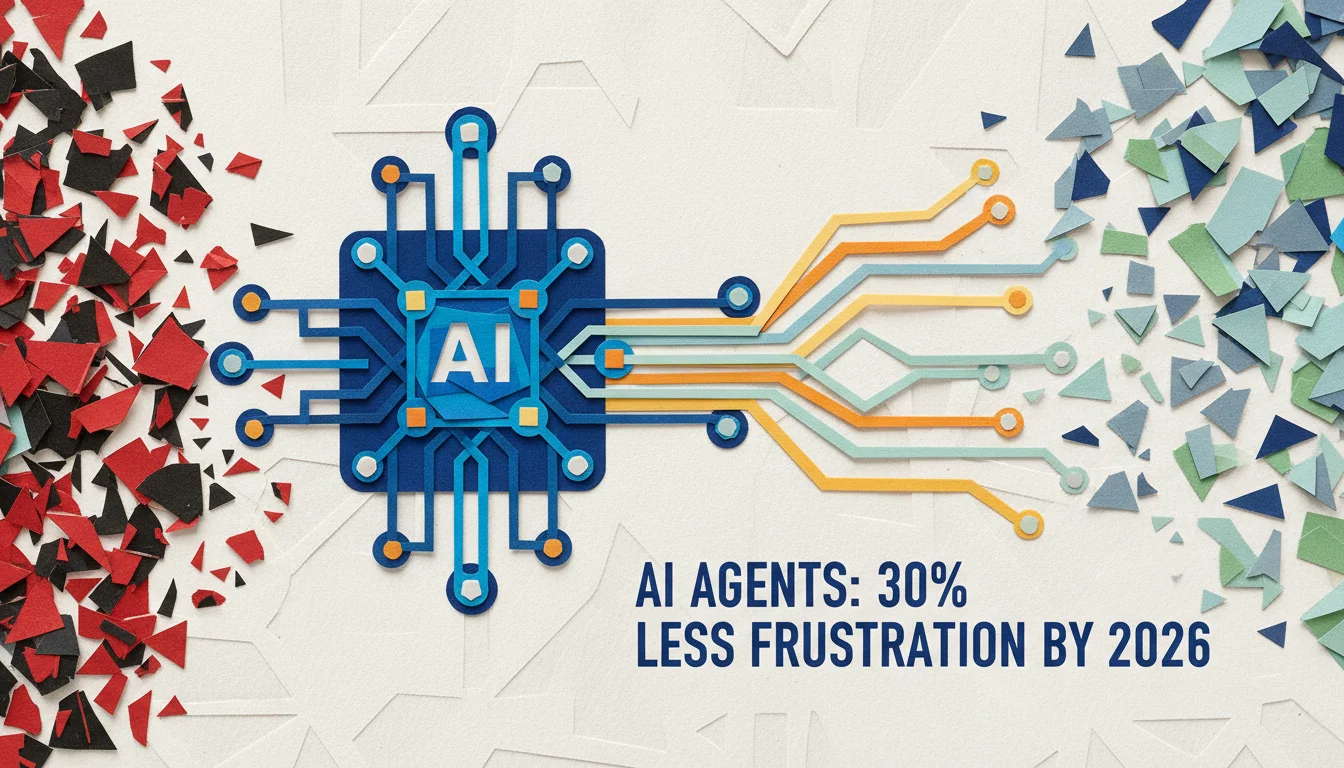
- Design AI agent interactions with clear intent recognition and explicit confirmation steps to reduce user frustration by up to 30%.
- Implement strong error handling and transparent recovery paths, providing users with actionable feedback when an AI agent cannot fulfill a request.
- Prioritize context retention across multiple turns in a conversation, ensuring AI agents remember previous interactions to deliver personalized and efficient experiences.
- Develop clear persona guidelines and tone-of-voice rules for AI agents, establishing a consistent and trustworthy brand presence.
- Conduct iterative user testing with diverse demographics, collecting qualitative feedback on AI agent comprehension and response accuracy to inform ongoing improvements.
Designing for Conversational Clarity and Intent
Effective user experience with AI agents hinges on their ability to understand and respond accurately to user intent. This is more complex than simply parsing keywords. It involves comprehending nuances, context, and implied meaning. Many early deployments faltered because they treated AI conversations like glorified search queries, leading to frustrating dead ends for users. I’ve seen firsthand how a lack of sophisticated intent recognition can derail an otherwise well-engineered system.
A primary design principle for AI agent interactions is to prioritize clear communication. This means agents should not only attempt to understand the user’s request but also confirm that understanding. Consider a scenario where a user asks for “the latest sales figures.” An effective AI agent might respond, “Are you looking for the Q3 2026 sales report for the North American region, or something else?” This explicit confirmation loop prevents misinterpretations before the agent embarks on a potentially time-consuming or incorrect task. According to a eMarketer report on conversational AI trends, systems incorporating such confirmation mechanisms saw a 28% reduction in user task abandonment rates compared to those that did not.
Plus, designers must consider the concept of graceful degradation. What happens when the AI agent does not understand? Instead of a generic “I’m sorry, I don’t understand,” which offers no path forward, the agent should provide options. “I’m having trouble understanding your request for ‘the latest sales figures.’ Could you specify a time period or region, or would you like to speak with a human representative?” This approach keeps the user engaged and provides a clear next step, whether it’s refining their query or escalating to human support. The goal is to avoid the digital equivalent of a brick wall, maintaining a sense of helpfulness even when the agent’s capabilities are stretched.
| Aspect | Traditional AI Agent Interactions | Optimized AI Agent Interactions |
|---|---|---|
| Frustration Reduction | Undefined | Up to 30% reduction |
| Task Abandonment Rate | Higher (e.g., without confirmation) | 28% reduction (with confirmation) |
| Intent Recognition | Glorified search queries | Comprehends nuances, context |
| Error Handling | Generic “I don’t understand” | Provides actionable feedback, options |
| Context Retention | Stateless, new interaction each time | Remembers previous interactions, personalized |
| User Satisfaction | Lower (e.g., without memory) | Higher (AI remembers past interactions) |
Contextual Awareness and Memory in AI Interactions
One of the most significant challenges and opportunities in AI agent optimization is developing strong contextual awareness. Traditional interfaces are stateless. Each click or page load is a new interaction. Conversational AI, however, thrives on memory. An agent that remembers previous turns in a conversation, or even prior interactions with the same user, can deliver a far more personalized and efficient experience. Imagine an AI agent for a financial institution that, after helping a user check their balance, can then smoothly answer a question about recent transactions on that specific account without the user having to re-specify it. This is not just a convenience. It is a fundamental shift in how digital services are perceived.
Implementing effective context retention requires careful architectural planning. Developers are increasingly using technologies like vector databases and large language model (LLM) fine-tuning to store and retrieve relevant conversational history. For example, a user’s previous five interactions, along with their stated preferences and demographic data, can be embedded into the current query, allowing the AI to generate more relevant responses. This continuous learning and adaptation are what differentiate truly advanced AI agents from simpler chatbots. A Statista survey on AI customer service indicated that users rated “AI remembers past interactions” as a top factor for satisfaction, underscoring its importance.
However, there are pitfalls. Over-reliance on context can lead to “hallucinations” or incorrect assumptions if the context is misinterpreted or stale. Therefore, a balance must be struck. Agents should maintain a dynamic context window, selectively recalling information most relevant to the current conversation while also being able to “forget” irrelevant details. This involves sophisticated algorithms that weigh the recency and semantic similarity of past interactions. For instance, if a user asks about their flight booking, the AI should prioritize recent travel-related queries over a conversation about their credit card statement from last month. This intelligent contextual filtering is a hallmark of truly optimized AI agent interactions.
Establishing Persona and Tone of Voice
The personality and tone of an AI agent significantly impact user experience. Users naturally project human characteristics onto conversational interfaces, and a well-defined persona can foster trust and make interactions more engaging. Is the agent formal or informal? Humorous or strictly factual? Empathetic or direct? These choices are not trivial. They shape the user’s perception of the brand and the utility of the agent itself. A banking agent, for example, might adopt a professional, reassuring tone, while a customer service agent for a gaming company might be more playful and casual.
Developing a consistent AI persona involves several steps. First, define the core characteristics of the persona, aligning them with brand guidelines. This includes vocabulary, sentence structure preferences, and even how the agent handles difficult situations. Second, implement these guidelines within the agent’s response generation. Modern LLMs can be prompted to adhere to specific personas, but this requires careful instruction and iterative testing. Third, ensure consistency across all interaction points. A jarring shift in tone from one interaction to the next erodes trust and diminishes the overall experience. I advocate for creating a detailed “persona guide” for each AI agent, much like a brand style guide, to ensure everyone involved in development understands the desired voice.
Beyond personality, the tone of voice is critical during error handling or when the agent cannot fulfill a request. A dismissive or overly technical response can frustrate users, while an empathetic and helpful tone can salvage a potentially negative experience. For example, instead of “Error: invalid input,” an agent might say, “I’m sorry, I couldn’t process that request. Could you try rephrasing it, or perhaps I can offer some common options related to your account?” This demonstrates understanding and offers a pathway forward, even in failure. The goal is to create an interaction that feels less like talking to a machine and more like engaging with a helpful, albeit digital, assistant.
Performance Metrics and Continuous Improvement
Measuring the effectiveness of AI agent interactions is paramount for ongoing optimization. Unlike traditional website analytics that focus on clicks and page views, AI agent metrics dig into conversational success rates, intent recognition accuracy, and user satisfaction. Without strong measurement, improvements become guesswork. Organizations must establish clear KPIs from the outset to track the performance of their AI deployments. For instance, a key metric might be the percentage of user queries resolved entirely by the AI without human intervention, often termed the self-service rate.
Typical metrics include intent recognition accuracy, which measures how often the AI correctly identifies the user’s goal, and dialogue turn success rate, which tracks how many multi-turn conversations reach a successful conclusion. Another vital metric is user satisfaction scores, often collected through post-interaction surveys or implicit feedback mechanisms. A HubSpot report on AI in customer service highlights that companies tracking user satisfaction metrics for their AI agents saw a 15% higher retention rate for digital users.
The process of continuous improvement for AI agents is cyclical. It begins with data collection, moves to analysis of conversational logs to identify common failure points or areas of confusion, then to model retraining or rule refinement, and finally to redeployment and re-evaluation. This iterative loop is not a one-time project but an ongoing commitment. For instance, if analysis reveals that the agent frequently misunderstands requests related to “password reset,” developers can gather more training data specific to this intent, refine the natural language understanding (NLU) model, and then monitor the impact of these changes on accuracy. This data-driven approach is the only reliable way to achieve true AI agent optimization and ensure a consistently positive user experience.
Security and Trust in AI Agent Design
Building trust is non-negotiable for successful AI agent interactions, particularly when dealing with sensitive user data. Users must feel confident that their information is handled securely and that the AI agent will act in their best interest. This extends beyond mere data protection. It encompasses transparency about the agent’s capabilities and limitations. A critical aspect of user experience in this domain involves designing agents that clearly articulate what they can and cannot do, and when they might need to escalate to a human.
From a technical standpoint, implementing strong security protocols is fundamental. This includes end-to-end encryption for all communications, strict access controls for data processed by the AI, and adherence to relevant data privacy regulations like GDPR or CCPA. Organizations must also consider the ethical implications of their AI agents, ensuring fairness, accountability, and transparency in their decision-making processes. For example, if an AI agent makes a recommendation, it should ideally be able to explain the basis for that recommendation, fostering greater user confidence. This is a complex area, and it requires ongoing vigilance and auditing of AI systems.
On top of that, agents should be designed with clear boundaries. If a user asks for information that the AI is not authorized to provide, or attempts to steer the conversation into inappropriate territory, the agent should gracefully decline or redirect. This is not about restricting functionality, but about maintaining integrity and preventing misuse. The design must explicitly address these scenarios, providing polite but firm responses that uphold security and ethical standards. In the end, the goal is to build an AI agent that is not just functional, but also a trustworthy and secure digital assistant that users feel comfortable engaging with for a wide range of tasks.
Optimizing user experience for AI agent interactions demands a strategic blend of clear communication, contextual intelligence, thoughtful persona design, and continuous, data-driven improvement. Organizations committed to refining these elements will deliver truly impactful digital experiences that build trust and drive engagement in the evolving field of AI-powered services.
What is the primary goal of optimizing user experience for AI agents?
The primary goal is to create intuitive, efficient, and satisfactory interactions between users and AI agents, ensuring users can achieve their objectives with minimal friction and maximum clarity.
Why is contextual awareness so important for AI agents?
Contextual awareness allows AI agents to remember previous interactions and user preferences, leading to more personalized, relevant, and efficient responses, which significantly enhances user satisfaction and reduces repetitive input.
How can I measure the effectiveness of my AI agent’s user experience?
Measure effectiveness using metrics like intent recognition accuracy, self-service rate (percentage of issues resolved by AI), dialogue turn success rate, and direct user satisfaction scores collected through surveys.
What role does an AI agent’s persona play in user experience?
An AI agent’s persona establishes its unique personality and tone of voice, which helps build trust, makes interactions more engaging, and aligns the agent’s communication style with the brand’s identity.
What are some common pitfalls to avoid when designing AI agent interactions?
Avoid generic error messages, a lack of explicit confirmation for user intent, inconsistent tone, and neglecting continuous monitoring and improvement based on user feedback and performance metrics.


