 By Editorial Team
The digital advertising ecosystem in 2026 demands more than just well-designed creatives. It requires a deep understanding of how specific visual and textual elements resonate with diverse audiences. This is where dynamic creative optimization, powered by advanced AI optimization, transforms static campaigns into adaptive, high-performing assets capable of generating a significant return on ad spend. How can businesses effectively deploy these sophisticated systems to move beyond A/B testing and truly personalize ad experiences at scale?
Key Takeaways
- Dynamic creative optimization (DCO) platforms integrate real-time data with AI to assemble thousands of personalized ad variants from a single creative brief.
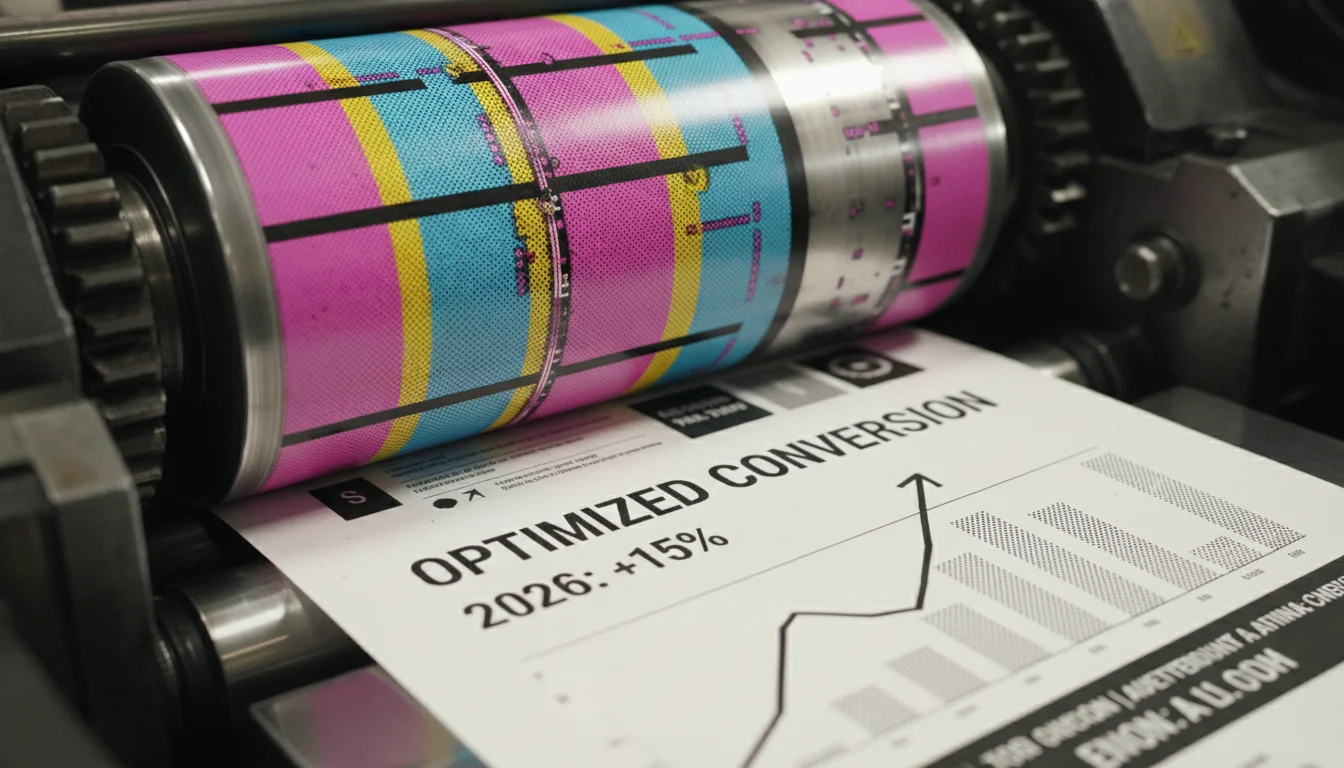
- Implementing DCO typically results in a 15% to 30% increase in conversion rates compared to traditional static ad campaigns, according to recent industry benchmarks.
- Successful DCO deployment requires a modular creative strategy, breaking down ad elements into interchangeable components like headlines, images, calls to action, and backgrounds.
- AI optimization in DCO goes beyond simple A/B testing by identifying complex patterns and predicting which ad variant will perform best for individual users across different contexts.
- Advertisers should focus on establishing clear performance metrics and continuously feeding campaign data back into the AI models to refine their DCO strategies.
The Evolution of Ad Creation: From Static to Dynamic
For years, advertisers carefully crafted a handful of ad creatives, perhaps testing a few variations manually. That approach, frankly, is obsolete. Today’s consumer journey is fragmented across countless devices and platforms, each demanding a tailored message. Dynamic creative optimization (DCO) addresses this by automating the creation and delivery of highly personalized ad experiences. Instead of a fixed banner, think of a DCO system as a sophisticated assembly line for ads, where individual components like headlines, images, calls to action (CTAs), and even background colors are swapped out based on real-time data signals.
The core principle involves feeding a DCO platform a set of creative assets (images, videos, copy blocks) and audience data. The platform’s AI then combines these elements into thousands, sometimes millions, of unique ad variants. These variants are served to specific users based on their demographics, browsing behavior, location, time of day, and even the weather. A user searching for “running shoes” in Atlanta on a sunny morning might see an ad for lightweight trail runners with an image of a local park and a CTA to “Shop Atlanta’s Best Selection.” The same user, later that evening, might see an ad for recovery sandals with a different image and a “Relax Your Feet” CTA. This level of personalization is simply unattainable with manual creative production.
AI Optimization: The Brain Behind Dynamic Creatives
The “optimization” in DCO is where artificial intelligence truly shines. It isn’t just about shuffling elements. It’s about intelligent decision-making at scale. AI algorithms analyze vast datasets, including past campaign performance, user engagement metrics, and external factors, to predict which ad combinations are most likely to convert a specific user. This goes far beyond basic A/B testing, which typically compares two or three versions of an ad. AI-driven DCO can simultaneously test hundreds or even thousands of variables, identifying subtle correlations that a human analyst would miss.
Consider a retail brand promoting a new clothing line. A DCO platform, powered by AI, might discover that users in urban areas respond better to images featuring models in street style, while suburban audiences prefer more classic, aspirational lifestyle shots. It might also learn that a headline emphasizing “limited stock” performs better with younger demographics, while an offer for “free shipping” resonates more with older buyers. These insights are not just theoretical. The AI continuously adjusts the creative mix in real-time, prioritizing the highest-performing combinations to maximize campaign efficiency. According to a 2025 report by eMarketer, AI-powered ad optimization is projected to drive a 22% increase in ad spend efficiency for brands adopting these technologies.
One of the most compelling aspects of AI optimization is its ability to adapt. As campaign data flows in, the AI learns and refines its models, making subsequent ad deliveries even more effective. This continuous feedback loop means that campaigns don’t just start strong. They get stronger over time. It’s a fundamental shift from static campaign management to an agile, data-driven approach that responds to audience behavior in milliseconds.
Implementing Dynamic Creative: A Modular Approach
Successfully deploying dynamic creative optimization hinges on a modular creative strategy. You cannot simply hand over a finished ad and expect the system to work miracles. Instead, think of your ad as a collection of interchangeable components. This means breaking down every element into its smallest, most versatile parts:
- Headlines: Develop multiple versions that highlight different benefits, address various pain points, or use different tones (e.g., urgent, informative, playful).
- Body Copy: Create short, punchy descriptions that can be combined and reordered.
- Images/Videos: Produce a diverse library of visuals featuring different products, models, settings, and emotional appeals. Ensure they are high-resolution and adhere to platform specifications.
- Calls to Action (CTAs): Offer a range of CTAs, from “Shop Now” to “Learn More,” “Get a Quote,” or “Download the Guide,” to match different stages of the customer journey.
- Backgrounds/Colors: Experiment with different brand colors, textures, or even seasonal themes.
Each of these components needs to be tagged and categorized within the DCO platform, allowing the AI to understand their purpose and potential combinations. For example, a travel company might tag images by destination (beach, city, mountains), activity (hiking, relaxing, dining), and season. This granular organization provides the AI with the necessary building blocks to construct relevant ad variants. Without a well-structured asset library, even the most advanced AI will struggle to generate truly effective dynamic creatives.
Consider the technical requirements. Platforms like Google Ads and Meta Business Suite offer strong DCO capabilities, but they require advertisers to upload assets in specific formats and adhere to their creative guidelines. Ensuring your assets are properly formatted and categorized from the outset saves considerable time and prevents potential campaign delays. It’s not just about having a lot of assets. It’s about having the right assets, structured correctly, for the AI to work with.
Measuring Success: Beyond Click-Through Rates
While click-through rate (CTR) remains a foundational metric, measuring the success of dynamic creative optimization requires a more well-rounded view. Advertisers must look at deeper funnel metrics to understand the true impact of personalized ad experiences. This includes:
- Conversion Rate: How many users who saw a dynamic ad completed a desired action (purchase, lead form submission, app install)? This is often the most direct indicator of DCO effectiveness.
- Cost Per Acquisition (CPA): Is the personalized approach driving down the cost of acquiring a new customer or lead? Lower CPAs are a strong signal of efficient ad spend.
- Return on Ad Spend (ROAS): For e-commerce businesses, ROAS directly measures the revenue generated for every dollar spent on dynamic ads.
- Engagement Metrics: Beyond clicks, evaluate time spent on landing pages, video completion rates, and interactions with interactive ad elements. Higher engagement often correlates with stronger intent.
- Audience Segmentation Performance: Analyze which dynamic creative combinations perform best for specific audience segments identified by the AI. This provides valuable insights for future targeting strategies.
Setting up proper tracking and attribution is paramount. Without accurate data collection, the AI’s learning capabilities are severely hampered. Integrating your DCO platform with your analytics tools (e.g., Google Analytics 4) ensures a complete picture of user behavior post-click. A recent IAB report highlighted that brands with strong first-party data strategies see an average 25% uplift in DCO campaign performance.
It is not enough to simply launch a DCO campaign and walk away. Continuous monitoring and iteration are essential. Regular analysis of the AI’s recommendations and the performance of various ad variants allows marketing teams to identify emerging trends, refine their asset libraries, and even inform broader content strategy. This iterative process is what truly unlocks the long-term value of AI-driven creative optimization. You might find, for instance, that a specific product image performs exceptionally well on mobile devices during evening hours but underperforms on desktop during the workday. These are the granular insights that DCO provides.
Future-Proofing Your Strategy with Attentive AI Grow
The trajectory for dynamic creative optimization, powered by advanced AI, points towards even greater personalization and automation. We are moving beyond simply swapping out elements to AI that can generate entirely new copy and even visual elements based on learned patterns and brand guidelines. This next generation of tools promises to further reduce the manual burden on creative teams, allowing them to focus on higher-level strategic thinking rather than repetitive production tasks.
The key to staying ahead involves embracing these technological shifts rather than resisting them. Invest in understanding how these systems work, train your teams on the modular creative approach, and establish clear data governance policies. The goal is not to replace human creativity but to augment it, enabling marketers to deliver more relevant and impactful messages at an unprecedented scale. The future of advertising is undeniably dynamic, and those who adapt will reap the rewards of enhanced campaign performance and deeper customer connections. Failure to do so risks being left behind in a fiercely competitive digital field.
What is dynamic creative optimization (DCO)?
Dynamic creative optimization (DCO) is an advertising technology that uses real-time data and AI to assemble and deliver personalized ad variants to individual users. It automatically combines different creative elements (headlines, images, CTAs) from a pre-defined asset library to create the most relevant ad for each impression, moving beyond static ad delivery.
How does AI optimization enhance DCO campaigns?
AI optimization analyzes vast amounts of data, including past campaign performance and user behavior, to predict which ad variants are most likely to resonate with specific audiences. It continuously learns and refines its predictions, automatically prioritizing the highest-performing creative combinations in real-time to maximize conversion rates and efficiency.
What kind of assets do I need for dynamic creative campaigns?
You need a diverse library of modular creative assets, including multiple versions of headlines, body copy, images, videos, calls to action, and backgrounds. Each asset should be distinct and tagged appropriately within the DCO platform to allow the AI to mix and match them effectively for different audience segments.
What are the primary benefits of using dynamic creative?
The primary benefits include increased ad relevance and personalization, which typically leads to higher engagement, better conversion rates, and a more efficient use of ad spend. DCO also significantly reduces the manual effort involved in creating and testing numerous ad variations, allowing for greater scalability.
How do I measure the success of my dynamic creative optimization efforts?
Measure success by looking beyond basic metrics like click-through rate. Focus on conversion rate, cost per acquisition (CPA), return on ad spend (ROAS), and engagement metrics like video completion rates. Continuous monitoring and analysis of which ad variants perform best for specific audience segments are also important for refining your strategy.


