 By Editorial Team
Key Takeaways
- Marketing teams currently spend 30% of their time on manual campaign coordination, according to a 2025 eMarketer report.
- Implementing an AI-driven work management platform can reduce cross-channel campaign setup time by 40% within six months.
- Successful integration requires a phased rollout, starting with pilot teams and clearly defined success metrics like reduced approval cycles.
- Real-time data synchronization across platforms prevents message inconsistencies that damage brand perception and campaign efficacy.
- Adobe Workfront AI automates routine tasks, freeing up marketing specialists to focus on strategic content development and performance analysis.
The fragmented nature of modern marketing operations makes true cross-channel sync an elusive goal for many organizations. Campaigns often launch with misaligned messages, delayed assets, and duplicated efforts across various platforms. Achieving a unified customer experience, where every touchpoint reinforces the brand narrative, remains a significant challenge.
The Problem: Disconnected Campaigns and Wasted Resources
Marketing departments in 2026 are wrestling with an unprecedented number of channels: social media platforms, email, display advertising, content marketing, video, and emerging immersive experiences. Each channel often operates with its own tools, teams, and timelines. This siloed approach creates a significant bottleneck for cohesive campaign execution. I’ve personally seen instances where a brand’s social media team launched a promotion before the email team had even finalized their copy, leading to customer confusion and missed opportunities. A 2025 eMarketer report highlighted that marketing professionals spend approximately 30% of their work week on manual coordination tasks, including chasing approvals, tracking asset versions, and reconciling conflicting schedules across different teams (eMarketer, 2025 Industry Report). This isn’t just inefficient. It’s a drain on creative energy. When teams are bogged down in administrative overhead, they have less capacity for strategic thinking, innovation, and genuine engagement with their audience. The result is often a diluted message, a disjointed customer journey, and in the end, underperforming campaigns. Consider the common scenario: a new product launch. The creative team develops visuals, the copywriters draft messaging, the social media team plans posts, the email team designs newsletters, and the paid media team sets up ad campaigns. Without a centralized system, these efforts frequently diverge. The social post might go live with an outdated product image, the email might reference a promotion that hasn’t started yet on the website, and the paid ad copy could contradict the organic content. These inconsistencies erode trust and diminish the overall impact of a campaign. Customers expect a smooth experience, regardless of the channel. When they don’t get it, brands risk appearing disorganized and unprofessional.
What Went Wrong First: The Pitfalls of Manual Coordination and Patchwork Solutions
Before embracing integrated solutions, many organizations attempted to solve the problem of disconnected campaigns through sheer force of will or by layering on more manual processes. This usually involved a deluge of spreadsheets, endless email chains, and weekly “sync” meetings that often extended for hours without clear action items. These approaches, while well-intentioned, inevitably failed to scale. One common misstep I observed early in my career was the reliance on shared drive folders and manual version control. Marketing teams would upload assets to a central server, but without automated workflows, tracking approvals became a nightmare. A graphic designer would upload “Campaign_Banner_V3_Final.png” only for the legal team to request a minor text change, resulting in “Campaign_Banner_V3_Final_Legal_Approved.png” and inevitably, “Campaign_Banner_V3_Final_Legal_Approved_Revised_FINAL.png”. This led to significant delays and, more critically, the accidental deployment of unapproved assets. The sheer volume of digital assets created by a modern marketing department makes manual tracking impossible. Another failed approach involved trying to stitch together disparate project management tools with rudimentary integrations. For instance, a team might use one platform for creative asset management, another for email marketing, and a third for social media scheduling, attempting to bridge the gaps with Zapier or custom scripts. While these point-to-point integrations offered some relief, they rarely provided a well-rounded view of campaign progress or allowed for true real-time data flow. They often broke down with platform updates, requiring constant maintenance and leading to new data silos. This patchwork strategy often created more complexity than it solved, requiring dedicated IT resources to maintain systems that were never designed to work together smoothly. The promise of “integration” often fell short, delivering only partial connectivity rather than true teamwork.
The Solution: Centralized AI-Powered Work Management
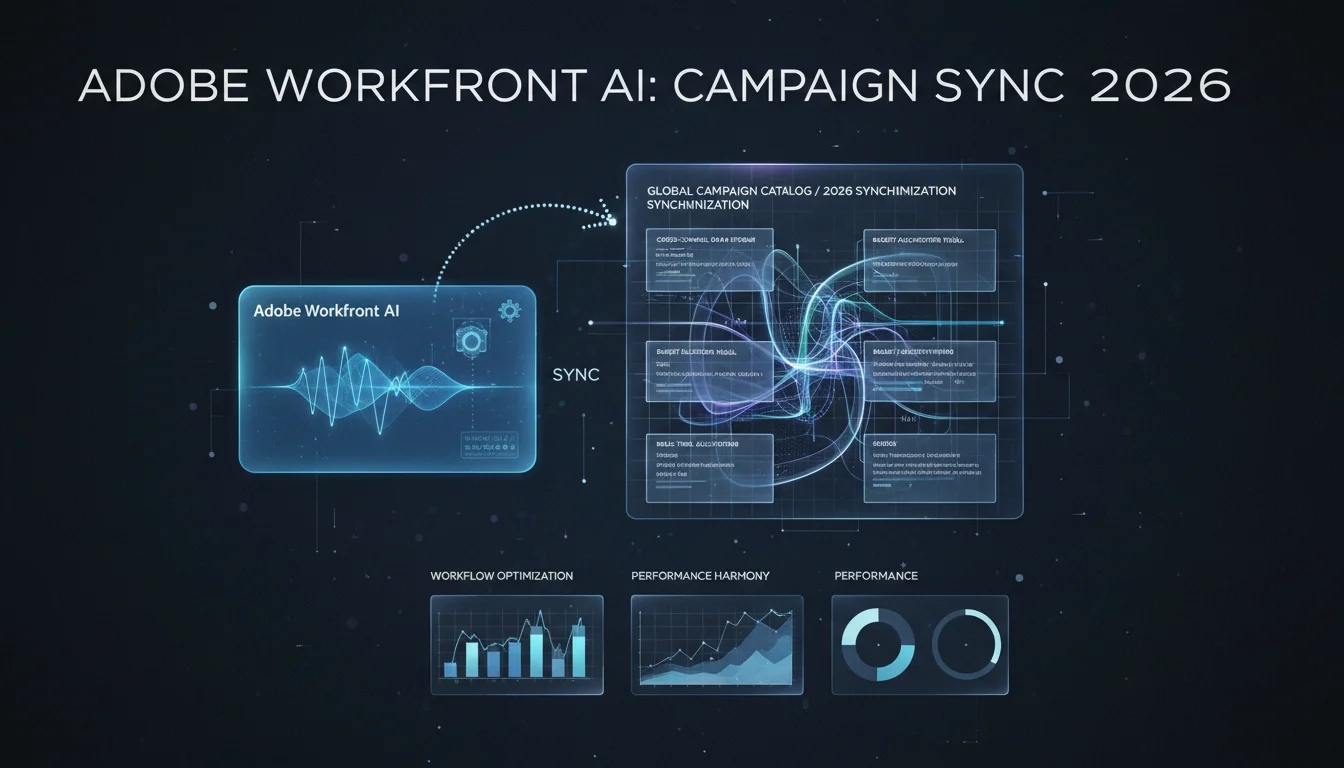
The answer to this pervasive problem lies in adopting a centralized, AI-powered work management platform. Platforms like Adobe Workfront AI offer a complete solution by integrating various marketing functions onto a single operating system. This allows for genuine campaign integration, ensuring that all aspects of a campaign, from initial concept to final execution, are aligned and visible.
Step 1: Consolidate Workflows and Asset Management
The first step involves migrating all marketing project management, asset creation, and approval processes into the platform. This means moving away from individual spreadsheets and disparate tools. Workfront AI provides a unified environment where creative briefs, content calendars, asset libraries, and approval workflows reside in one place. For example, a content team can initiate a request for a new blog post, which automatically triggers tasks for copywriters, graphic designers, and SEO specialists. The platform tracks each stage, ensuring accountability and transparency. The ability to attach specific metadata to each asset, such as “Approved for Q3 Campaign” or “Requires Legal Review,” eliminates the confusion of multiple file versions.
Step 2: Implement AI-Driven Automation and Insights
Workfront AI’s core strength lies in its artificial intelligence capabilities. The AI can automate routine, repetitive tasks that consume significant team time. This includes intelligent routing of approvals based on project type or asset sensitivity, automated reminders for approaching deadlines, and even predictive scheduling to identify potential bottlenecks before they occur. For instance, if a creative team consistently overruns its estimated time for video production, the AI can adjust future project timelines accordingly, providing more realistic expectations for campaign launches. The AI also offers valuable insights into team capacity and project performance. It can analyze historical data to predict resource needs for upcoming campaigns, helping managers allocate talent more effectively. According to a 2024 IAB report on marketing automation, companies using AI-driven platforms saw a 25% reduction in project delays due to improved resource forecasting (IAB, 2024 Automation Trends). This predictive power allows marketing leaders to make data-driven decisions about project staffing and budget allocation, moving beyond guesswork.
Step 3: Integrate with Execution Platforms for Real-Time Sync
True cross-channel sync requires smooth integration with the platforms where campaigns are actually deployed. Workfront AI offers strong connectors to major marketing execution tools, such as Adobe Experience Cloud, Google Ads, and various social media management platforms. This integration ensures that once an asset is approved in Workfront AI, it can be automatically pushed to the relevant execution channel. For example, a finalized ad creative for a display campaign can be directly synchronized with Google Ads, eliminating manual uploads and reducing the risk of errors. Plus, these integrations facilitate real-time data flow. Performance metrics from active campaigns can be pulled back into Workfront AI, providing a well-rounded view of how content is performing across all channels, directly alongside the project management data. This immediate feedback loop allows for rapid adjustments to campaign strategies. If a particular ad creative is underperforming on Instagram, the team can quickly identify it, revise the asset within Workfront AI, and push the updated version live without significant delays.
Step 4: Establish Clear Governance and Training
Implementing any new platform requires clear governance and complete training. Organizations must define clear roles, responsibilities, and approval hierarchies within Workfront AI. Who approves the initial brief? Who signs off on final creative? Establishing these protocols beforehand prevents confusion and ensures smooth operations. Training is paramount. All team members, from project managers to content creators, need to understand how to effectively use the platform’s features. This includes understanding dashboards, submitting requests, tracking progress, and collaborating on assets. A phased rollout, starting with a pilot team, can help identify and address any initial challenges before a full organizational deployment. My recommendation is always to invest heavily in the training phase. A powerful tool is only as good as its users’ proficiency.
The Result: Enhanced Efficiency, Cohesion, and Performance
The adoption of an integrated AI-driven work management platform delivers tangible benefits across the marketing organization. The most immediate result is a significant increase in operational efficiency. By automating routine tasks and centralizing workflows, teams spend less time on administrative overhead and more time on creative and strategic initiatives. A recent study by Forrester Consulting, commissioned by Adobe, found that organizations using Workfront saw a 40% reduction in campaign setup time within the first six months of implementation (Forrester Consulting, “The Total Economic Impact of Adobe Workfront,” 2025). This translates directly into faster time-to-market for campaigns and more capacity for innovation. Beyond efficiency, campaigns achieve a new level of cohesion and consistency. With all assets, messages, and schedules managed from a single source of truth, the risk of misaligned messaging across channels is drastically reduced. Customers experience a unified brand voice and visual identity, which strengthens brand recognition and trust. This consistency directly impacts campaign performance. A 2024 HubSpot report on brand consistency noted that consistent branding across channels can increase revenue by up to 23% (HubSpot, “State of Marketing Report,” 2024). When every touchpoint reinforces the same message, the cumulative effect on the audience is far more powerful than fragmented efforts. Finally, the real-time insights provided by Workfront AI lead to improved campaign performance and strategic agility. Marketers gain an unprecedented level of visibility into project status, team capacity, and campaign effectiveness. This data-driven approach allows for rapid iteration and optimization. If a particular campaign element is not resonating, the team can quickly identify the issue, make adjustments, and deploy revised content, all within a simplified workflow. This agility is critical in today’s fast-paced digital environment, allowing brands to respond to market shifts and customer feedback in near real-time. For any organization aiming to deliver impactful, synchronized marketing experiences, a strong work management system with AI capabilities is no longer a luxury. It’s a fundamental requirement. The future of marketing hinges on the ability to deliver truly integrated experiences across every customer touchpoint. Investing in a platform that centralizes work, leverages AI for automation, and provides deep insights is not just about improving internal processes. It’s about delivering a superior brand experience that drives measurable results. PPC campaigns are especially poised to benefit from this integrated approach, seeing a significant ROI boost. Plus, the strategic use of AI in PPC can lead to a 15% CTR boost by 2026, demonstrating the direct impact of these technologies on advertising effectiveness. This also impacts how we approach ad creative testing, moving beyond traditional A/B tests.
What is cross-channel sync in marketing?
Cross-channel sync refers to the coordinated deployment of marketing messages, assets, and campaigns across all customer touchpoints, such as email, social media, web, and paid advertising, ensuring a consistent brand experience and unified messaging.
How does AI improve campaign integration?
AI improves campaign integration by automating routine tasks like asset routing and approvals, providing predictive insights for resource allocation, and facilitating real-time data synchronization between work management and execution platforms, reducing manual effort and errors.
Can Workfront AI integrate with existing marketing tools?
Yes, Workfront AI offers strong integration capabilities with a wide range of marketing execution platforms and creative tools, allowing for smooth data flow and asset synchronization across your existing technology stack.
What are the main benefits of using a centralized work management platform for campaigns?
The main benefits include increased operational efficiency, reduced campaign setup time, improved consistency in brand messaging across all channels, better resource allocation through AI-driven insights, and enhanced agility for campaign optimization.
What challenges should be expected during implementation?
Challenges during implementation can include initial team resistance to new tools, the need for complete training, defining clear governance structures, and migrating existing data and workflows. A phased rollout and strong change management strategy can mitigate these issues.


