 By Editorial Team
Personalizing customer journeys with Active Intelligence is no longer an aspiration. It’s a fundamental requirement for competitive advantage. The ability to react to customer behavior in real-time and adapt experiences accordingly separates market leaders from the rest. But how do you actually implement this dynamic personalization?
Key Takeaways
- Implement a strong Customer Data Platform (CDP) like Segment to unify customer data from all touchpoints for a 360-degree view.
- Use Machine Learning (ML) models within platforms such as Amazon SageMaker to predict customer intent and personalize recommendations in real-time.
- Orchestrate personalized experiences across channels using a marketing automation platform like Salesforce Marketing Cloud, ensuring consistent messaging.
- Establish clear A/B testing protocols for all personalized elements to continuously refine and improve their impact on conversion rates.
- Prioritize data privacy and compliance by implementing consent management platforms and adhering to regulations like GDPR and CCPA throughout the data collection and activation process.
1. Consolidate Customer Data with a Unified CDP
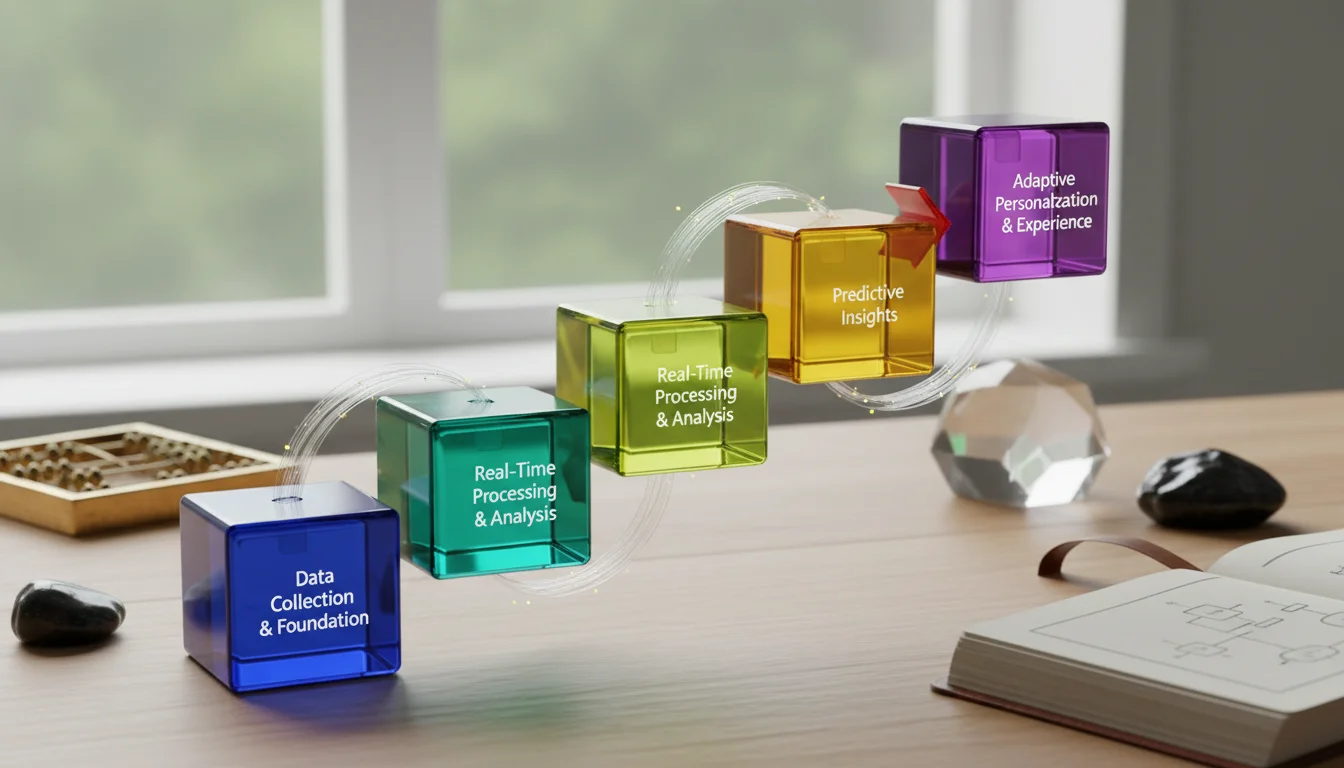
The foundation of any effective personalization strategy, especially one driven by Active Intelligence, is a complete and accurate view of your customer. This means bringing together data from every single touchpoint: website interactions, mobile app usage, CRM records, email engagement, purchase history, and even offline interactions. A Customer Data Platform (CDP) is essential here. Without it, you’re trying to personalize based on fragmented insights, which is like trying to navigate a city with only half a map. For instance, consider a B2B SaaS company. Their customer data might reside in Salesforce Sales Cloud for sales interactions, Zendesk for support tickets, and Adobe Experience Platform for web analytics. A CDP like Segment acts as the central nervous system, ingesting all this disparate data and stitching it together into persistent, unified customer profiles. This isn’t just about collecting data. It’s about making it immediately available and actionable. We’ve seen clients struggle for years with data silos, only to unlock significant potential once a CDP is properly integrated. Pro Tip: When selecting a CDP, look beyond data ingestion. Evaluate its identity resolution capabilities (how well it merges profiles across different identifiers) and its ability to activate data directly into your marketing and sales tools. A strong CDP should offer pre-built integrations to hundreds of platforms, reducing custom development time. Common Mistake: Confusing a CDP with a CRM or DMP. While there’s overlap, a CRM focuses on sales and service processes, and a Data Management Platform (DMP) primarily handles anonymous data for advertising. A CDP is designed for first-party, known customer data, providing a persistent, unified profile. Trying to force a CRM or DMP to function as a CDP will inevitably lead to data integrity issues and limit your personalization efforts.
2. Implement Real-Time Data Streaming and Processing
Once your data is consolidated, the next step for Active Intelligence is ensuring it flows in real-time and can be processed instantly. Traditional batch processing, where data is updated daily or even hourly, simply doesn’t cut it for dynamic personalization. If a customer adds an item to their cart, browses a specific product category, or abandons a form, you need to react within seconds, not minutes or hours. This requires a streaming data architecture. Tools such as Apache Kafka are industry standards for handling high-throughput, low-latency data streams. Imagine a customer browsing a new line of athletic wear on your e-commerce site. As they click through different products, their interactions are immediately sent to a Kafka topic. From there, stream processing engines can pick up these events. For example, a rule might be set up to identify users who view more than three items in a specific category within a five-minute window. This immediate identification then triggers the next step: personalization. Pro Tip: Focus on event-driven architecture. Every significant customer action (page view, click, purchase, email open) should be treated as an event. Define a clear event taxonomy early on to ensure consistency across all data sources. This structured approach simplifies data processing and makes it easier to build sophisticated real-time segments.
3. Develop and Deploy Predictive Machine Learning Models
Real-time data streams are powerful, but they become truly intelligent when paired with Machine Learning (ML) models. These models analyze historical and real-time data to predict future behavior, recommend products, identify churn risks, or even determine the optimal message to send. This is where personalization moves beyond simple rules-based logic to true Active Intelligence. Consider a retail scenario. An ML model could predict the likelihood of a customer purchasing a specific item based on their browsing history, past purchases, and similar customer behavior. For example, if a customer frequently buys organic groceries and views a new line of organic pet food, an ML model could assign a high probability of purchase. Platforms like Amazon SageMaker allow you to build, train, and deploy these models at scale. You can train a recommendation engine model using historical purchase data and then integrate it with your real-time data streams to serve personalized product suggestions on your website or app the moment a customer arrives. A common model for this is a collaborative filtering algorithm, which identifies patterns in user behavior and recommends items based on what similar users have liked or purchased. Common Mistake: Over-engineering models or trying to predict too many things at once. Start with a few high-impact predictions, such as “next best offer” or “churn risk,” and refine them. Simpler models that are well-maintained often outperform overly complex ones that are difficult to interpret and update. Regularly retrain your models with fresh data to ensure their predictions remain accurate.
4. Orchestrate Personalized Experiences Across Channels
With real-time data and predictive insights, the final step is to orchestrate truly personalized experiences across all customer touchpoints. This means delivering the right message, through the right channel, at the right time. This orchestration layer is typically handled by advanced marketing automation platforms that can consume real-time signals and trigger actions. Imagine a customer browsing your website, viewing a specific product, and then leaving without purchasing. With Active Intelligence, this isn’t a lost opportunity. The real-time data stream detects the abandoned cart. The ML model predicts the likelihood of conversion with a small incentive. Your marketing automation platform, perhaps Salesforce Marketing Cloud, then triggers a personalized email within minutes, offering a 10% discount on that specific item. Simultaneously, if the customer is active on social media, a targeted ad for the same product might appear in their feed, dynamically generated based on their recent browsing. This coordinated effort feels smooth to the customer and significantly increases the chances of conversion. When setting up these orchestrations, use the visual journey builders found in most modern marketing platforms. You can define decision splits based on real-time attributes (e.g., “Has viewed X product in last 5 minutes?”) and trigger different paths for different segments. Pro Tip: Don’t just focus on outbound marketing. Personalization should extend to your website, mobile app, and even customer service interactions. For example, if a customer calls support, their agent should instantly see their recent browsing history and any active promotions they’ve received, thanks to the unified customer profile. This well-rounded approach builds trust and loyalty.
5. Continuously Test, Learn, and Refine
Active Intelligence is not a “set it and forget it” solution. It’s an ongoing process of iteration and improvement. The efficacy of your personalization strategies must be continuously measured, analyzed, and refined. A/B testing is paramount here. Every personalized element, from a product recommendation algorithm to an email subject line, should be tested against a control group or alternative variations. For example, when implementing a new personalized banner on your e-commerce homepage, run an A/B test. Show 50% of your visitors the personalized banner and 50% a generic one. Track key metrics like click-through rates, conversion rates, and average order value. Use platforms like Optimizely or Adobe Target to manage these experiments. Analyze the results to understand which personalization strategies are truly driving engagement and revenue. If a personalized recommendation engine consistently underperforms a simpler, rule-based one for a specific product category, it suggests your ML model might need retraining or adjustment. This iterative process, driven by data, ensures your Active Intelligence continually improves. According to a eMarketer report from late 2024, companies that rigorously test their personalization initiatives see an average of 15% higher customer lifetime value. That’s a significant difference. Common Mistake: Relying solely on intuition or anecdotal evidence. Without rigorous testing, you’re guessing whether your personalization efforts are effective. What feels intuitive might not always be what resonates with your customers. Always back your decisions with data from controlled experiments.
6. Prioritize Data Privacy and Compliance
In the pursuit of hyper-personalization, it’s easy to overlook the critical importance of data privacy. With stricter regulations like GDPR in Europe and CCPA in California, and similar frameworks emerging globally, ensuring compliance is non-negotiable. Active Intelligence relies heavily on customer data, making privacy a central pillar of your strategy. This means implementing strong consent management platforms (CMPs) that allow customers to clearly understand and control how their data is collected and used. Tools like OneTrust or Cookiebot can help manage cookie consents and data subject access requests. Plus, ensure your data pipelines are secure and that access to sensitive customer data is strictly controlled and audited. Regular security audits and employee training on data handling best practices are important. Failing to prioritize privacy can lead to significant fines, reputational damage, and, more importantly, a loss of customer trust. I’ve seen companies spend years building sophisticated personalization engines only to face severe setbacks due to privacy missteps. It’s a costly lesson. Pro Tip: Integrate privacy-by-design principles from the very beginning of your Active Intelligence implementation. Don’t treat privacy as an afterthought. Think about data minimization (collecting only what you need), pseudonymization, and anonymization where possible. Transparency with your customers about data usage builds stronger relationships. Personalizing customer journeys with Active Intelligence is a complex, multi-faceted endeavor that demands a strategic approach to data, technology, and continuous improvement. By following these steps, you can build a dynamic system that not only reacts to customer behavior but intelligently anticipates it, delivering truly relevant and impactful experiences.
What is the difference between personalization and Active Intelligence?
Personalization generally refers to tailoring experiences based on known customer attributes or rules. Active Intelligence takes this further by using real-time data streams and machine learning to dynamically adapt experiences and predict future behavior in the moment, rather than relying on static segments or historical batches.
How long does it take to implement Active Intelligence?
The timeline varies significantly based on current infrastructure, data complexity, and desired scope. A basic implementation with a unified CDP and a few real-time triggers might take 6-12 months. A full-scale deployment with advanced ML models across multiple channels could take 18-24 months or more, requiring continuous iteration.
What are the key technologies required for Active Intelligence?
Core technologies include a Customer Data Platform (CDP) for data unification, real-time data streaming platforms (like Apache Kafka), Machine Learning (ML) platforms for predictive analytics (e.g., Amazon SageMaker), and marketing automation/orchestration platforms (like Salesforce Marketing Cloud) for experience delivery.
Can small businesses implement Active Intelligence?
While full-scale Active Intelligence can be resource-intensive, smaller businesses can start with more accessible tools that offer real-time capabilities. Many modern marketing platforms now include integrated CDPs, basic ML for recommendations, and real-time triggers, allowing for scaled-down but effective implementations.
What are the main benefits of using Active Intelligence for customer journeys?
The primary benefits include increased customer engagement, higher conversion rates, improved customer satisfaction and loyalty, reduced churn, and more efficient marketing spend due to highly targeted and relevant communications. It allows businesses to respond to customer needs instantly.


