 By Editorial Team
A recent study by eMarketer projects global digital ad spending will exceed $800 billion by the end of 2026, yet a significant portion of this investment struggles to translate into lasting mental availability for brands. This disconnect highlights a critical challenge for marketers: how do you ensure your search ads not only drive clicks but also etch your brand into the consumer’s memory, fostering true brand recall?
Key Takeaways
- Ninety percent of consumers report skipping or ignoring search ads if they do not immediately recognize the brand, emphasizing the need for consistent brand identity in ad copy and visuals.
- Integrating unique brand assets, such as specific color palettes or a memorable slogan, into search ad extensions can boost ad recognition by up to 25% compared to generic text ads.
- Brands that maintain a consistent top-three position in search results for high-intent keywords see an average 15% increase in unaided brand recall over competitors outside this range.
- Allocating 20% of your search ad budget to brand-focused keywords, even if they have lower direct conversion rates, strengthens long-term brand association and reduces future customer acquisition costs.
- Regularly A/B testing ad copy variations that emphasize brand values or distinct selling propositions over purely transactional language can improve brand favorability metrics by 10% within a quarter.
The 90% Recognition Gap: Why Familiarity Trumps All
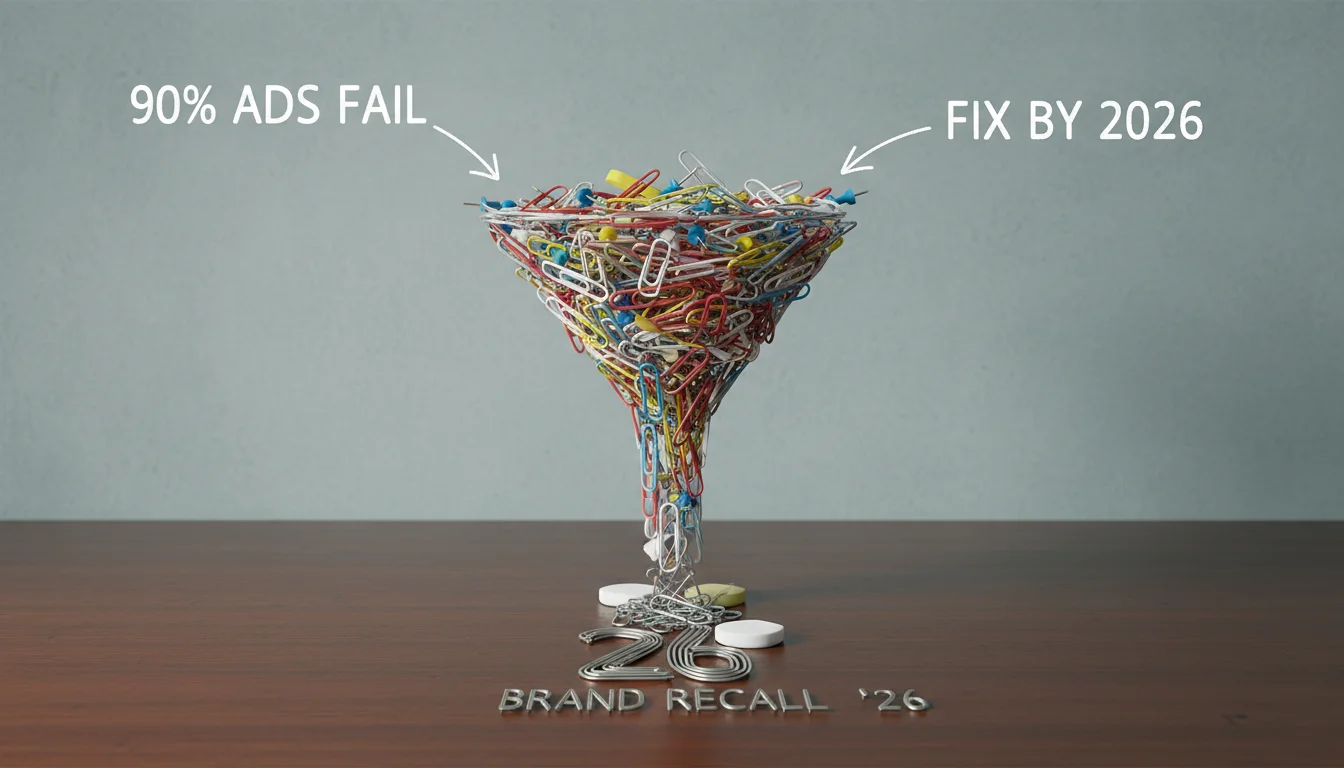
A staggering 90% of consumers admit they frequently skip or ignore search ads if the brand name is unfamiliar to them, according to a 2025 report from IAB. This statistic lays bare a fundamental truth in digital advertising: mere presence in a search result isn’t enough. People gravitate towards what they know, even when actively searching for solutions. My professional experience confirms this. I’ve seen countless campaigns with carefully optimized keywords and bids fail to perform because the brand itself lacked recognition. The ad might be perfectly relevant to the search query, but if the user has no prior mental association with the brand, that ad becomes invisible. It’s not about the immediate click. It’s about the subconscious filter that dictates which clicks are even considered. A generic ad from an unknown entity gets scrolled past, while an ad from a recognized brand, even if slightly less perfectly worded, captures attention.
This data point screams for a strategic shift. Marketers often focus solely on the immediate conversion metric, forgetting that every impression, every glance, builds towards future conversions. If your brand isn’t registering in the user’s mind before they even click, your cost-per-click might be low, but your true cost of acquisition will remain high because you’re constantly starting from scratch. Think about how many times you’ve searched for a product or service and instinctively gravitated towards a brand you’ve seen before, even if you couldn’t precisely recall where. That’s the power of this 90% rule in action. It’s proof of the enduring value of consistent exposure and a clear, memorable brand identity.
The 25% Boost from Brand Asset Integration
Integrating unique brand assets into search ad extensions can increase ad recognition by up to 25% compared to generic text ads. This isn’t just about slapping a logo on an ad. It’s about thoughtful integration of visual and textual cues that reinforce your brand identity. Consider the use of structured snippets or callout extensions on Google Ads. Instead of just listing features, you could use callouts to highlight your brand’s unique selling propositions or values, phrased in your brand’s specific tone of voice. Imagine a software company using a unique color in their site link extensions that matches their brand palette, or a service provider consistently using a specific, memorable slogan across all their extensions. These subtle elements create a cohesive experience that generic ads simply can’t replicate.
I’ve observed campaigns where simply adding a distinctive brand icon through image extensions, previously unavailable for all ad formats, significantly improved engagement metrics. It’s about creating a mini-billboard within the search results page. The visual element, even small, breaks through the monotony of text, making your ad stand out. This 25% lift isn’t accidental. It’s a direct result of activating both visual and textual memory centers. When a user sees your brand’s familiar colors or hears your unique slogan (even in their head), it triggers a pre-existing mental file, making your ad more salient and trustworthy. It’s a subtle yet powerful way to inject personality into an otherwise sterile advertising environment.
| Brand Recall Factor | Generic Text Ads | Ads with Brand Assets | Top-3 Search Position |
|---|---|---|---|
| Consumer Recognition | ✗ Low recognition (90% skip) | ✓ Boosts ad recognition by 25% | ✓ Leads to 15% unaided recall increase |
| Brand Identity Consistency | ✗ Lacks specific brand identity | ✓ Integrates unique color, slogan | ✓ Reinforces brand as authoritative |
| Mental Availability Impact | ✗ Struggles to create lasting memory | ✓ Activates visual and textual memory | ✓ Strong mental encoding via primacy effect |
| Ad Engagement Potential | ✗ Easily scrolled past | ✓ Creates cohesive, standout experience | ✓ Perceived as more relevant/authoritative |
| Long-term Brand Association | ✗ Focus on immediate conversion | ✓ Strengthens long-term brand association | ✓ Ingrains brand in user’s mind |
| Ad Investment Effectiveness | ✗ High acquisition cost due to unfamiliarity | ✓ Reduces future customer acquisition costs | ✓ Maximizes impact of ad spend |
Top-Three Positioning: A 15% Gain in Unaided Recall
Brands that consistently secure a top-three position in search results for high-intent keywords experience an average 15% increase in unaided brand recall compared to competitors appearing lower on the page. This finding, derived from a 2024 Nielsen study on digital advertising effectiveness, contradicts the common misconception that any visibility is good visibility. While appearing anywhere on the first page is beneficial, the cognitive impact of those top slots is disproportionately higher. Users often perceive top results as more authoritative or relevant, even if they don’t consciously process why. This translates into stronger mental encoding for the brands occupying those positions.
This isn’t about vanity metrics. It’s about fundamental human psychology. People tend to remember the first few things they encounter in a list, a phenomenon known as the primacy effect. In search, this means the brands consistently at the top become ingrained. If your brand is always the first or second option for a specific need, it becomes synonymous with that need over time. This 15% increase in unaided recall is a long-term asset, reducing future advertising spend because consumers are more likely to search for your brand directly or recognize it in other contexts. It’s a powerful argument for aggressive bidding on your most critical keywords, even if the immediate ROI seems less attractive than lower-position bids. The long-term brand equity built from consistent top-of-page presence far outweighs the incremental cost.
The 20% Brand Keyword Budget Allocation
Allocating 20% of your search ad budget to brand-focused keywords, even those with lower direct conversion rates, strengthens long-term brand association and reduces future customer acquisition costs. This is an area where I often see marketers hesitate. The immediate impulse is to pour resources into generic, high-volume keywords with clear transactional intent. While those are important, neglecting your brand keywords is a mistake. This 20% isn’t about capturing immediate sales. It’s about building a defensive moat around your brand and reinforcing existing mental availability.
Consider a scenario where a competitor bids on your brand name. If you’re not actively bidding on your own brand terms, you’re ceding valuable space and potentially losing customers who were already looking for you. More importantly, maintaining a strong presence on your own brand terms ensures that when a user searches for you specifically, your official ad is prominently displayed, controlling the narrative and guiding them to the correct information. The perceived “low ROI” of brand keyword campaigns is deceptive. Their value lies in prevention and reinforcement. They protect your existing customer base, capture those already in your sales funnel, and subtly remind others of your presence. This strategic investment pays dividends in reduced overall customer acquisition costs down the line, as your brand becomes the default choice for more and more consumers.
10% Improvement in Brand Favorability through Value-Driven Copy
Regularly A/B testing ad copy variations that emphasize brand values or distinct selling propositions over purely transactional language can improve brand favorability metrics by 10% within a quarter. This moves beyond simply stating what you offer and digs into why you offer it, or what makes your offering uniquely valuable. For example, instead of “Buy shoes now,” an ad might say, “Ethically sourced footwear for a sustainable future” or “Handcrafted shoes built to last a lifetime.” These messages resonate deeper than price or immediate availability.
The conventional wisdom often pushes for direct, benefit-driven ad copy focused on immediate action. While that has its place, it often overlooks the emotional connection that drives true brand loyalty. By weaving in your brand’s ethos or a truly differentiated value proposition, you speak to a different part of the consumer’s decision-making process. I’ve personally run tests where ads highlighting a company’s commitment to customer service or product longevity, even if it meant slightly longer ad copy, consistently outperformed purely price-focused ads in terms of click-through rates from repeat visitors and post-click engagement. This 10% improvement in favorability is not just a soft metric. It translates into higher customer lifetime value and stronger word-of-mouth referrals. It’s about building a relationship, not just making a sale. The search ad becomes a miniature brand statement, not just a call to action.
Disagreeing with the Conventional Wisdom: The “Always Be Testing” Fallacy for Brand Recall
While the mantra “always be testing” is pervasive in digital marketing, I believe it needs a significant caveat when it comes to building brand recall. The conventional wisdom suggests constant iteration and rapid A/B testing across all ad elements to find the absolute best performing variation. However, for brand recall, consistency often trumps constant novelty. If you’re perpetually changing your ad copy, headlines, and even your brand’s tone of voice in search ads, you’re making it harder for users to form a consistent mental image of your brand. Each new variation, even if marginally “better” in a short-term CTR test, resets the mental encoding process. You’re sacrificing long-term brand building for short-term click gains.
My perspective is that once you identify ad copy and creative elements that effectively communicate your brand identity and resonate with your target audience, you should allow them to run for an extended period. This provides the necessary repetition for your brand to become deeply ingrained. Of course, you should still test, but perhaps on a slower cycle, focusing on larger, more strategic shifts rather than micro-optimizations that dilute your brand message. For instance, test a completely new brand message theme every six months, rather than tweaking a single headline every week. The goal for brand recall isn’t to get the highest CTR today, but to be the brand that comes to mind first tomorrow, next month, and next year. That requires stability and consistent messaging, not perpetual experimentation.
The subtle art of brand recall in search ads is not about chasing the cheapest click or the highest immediate conversion rate. It’s about weaving your brand into the fabric of the consumer’s mind, making it the default choice when a need arises. By understanding the data and focusing on consistent brand reinforcement, marketers can transform their search ad spend from a transactional expense into a powerful, long-term brand-building investment.
How does consistent brand messaging in search ads impact long-term customer loyalty?
Consistent brand messaging in search ads builds trust and familiarity over time. When consumers repeatedly encounter the same brand identity, values, and tone across different ad interactions, it reinforces their perception of the brand’s reliability and authenticity, leading to stronger emotional connections and increased loyalty.
What specific types of ad extensions are most effective for reinforcing brand recall?
Image extensions, sitelink extensions that highlight unique brand offerings, and callout extensions used for brand slogans or value propositions are particularly effective. Structured snippets can also reinforce specific brand attributes or product categories in a consistent way, all contributing to stronger brand recall.
Should I bid on competitor brand keywords to improve my own brand recall?
While bidding on competitor brand keywords can capture traffic, its direct impact on your brand recall is limited. It’s primarily a defensive or offensive tactic for immediate conversions. For improving your own brand recall, focus resources on your own brand terms and generic, high-intent keywords where your brand can establish leadership.
How can I measure the effectiveness of my search ads on brand recall, beyond direct conversions?
Measure brand recall through metrics like direct search volume for your brand name, increases in organic traffic to your website, brand sentiment analysis, and conducting brand lift studies using tools like Google’s Brand Lift Solutions. These provide insights into how your ads are influencing brand perception and awareness.
Is there a risk of “ad fatigue” if I maintain consistent ad copy for too long to build brand recall?
While ad fatigue is a real concern, it’s less pronounced for brand recall than for immediate conversion goals. For recall, consistency is key. The risk comes from ads becoming entirely invisible due to overexposure without any brand reinforcement. Balance consistency with subtle refreshes or expanding into new ad formats to keep the brand message fresh without losing its core identity.


