 By Editorial Team
Key Takeaways
- By the 2026 holidays, 65% of shoppers will just assume AI is personalizing their product recommendations, creating a direct demand for advanced predictive analytics in any serious e-commerce platform.
- Retailers without AI-powered visual search or good interactive chatbots are on track to miss a projected 30% holiday sales lift that comes directly from these technologies.
- A solid 40% of shoppers will share their data for a better AI experience, but only if they see clear privacy rules, this puts the pressure on brands to have transparent data governance.
- To meet expectations for efficiency and savings, brands need to focus on AI that delivers real value, like real-time inventory and dynamic pricing, instead of just gimmicky features.
- There’s a big disconnect between shoppers ready for AI and retailers who haven’t implemented it. Investing in AI training for your marketing team is just as important as buying the software.
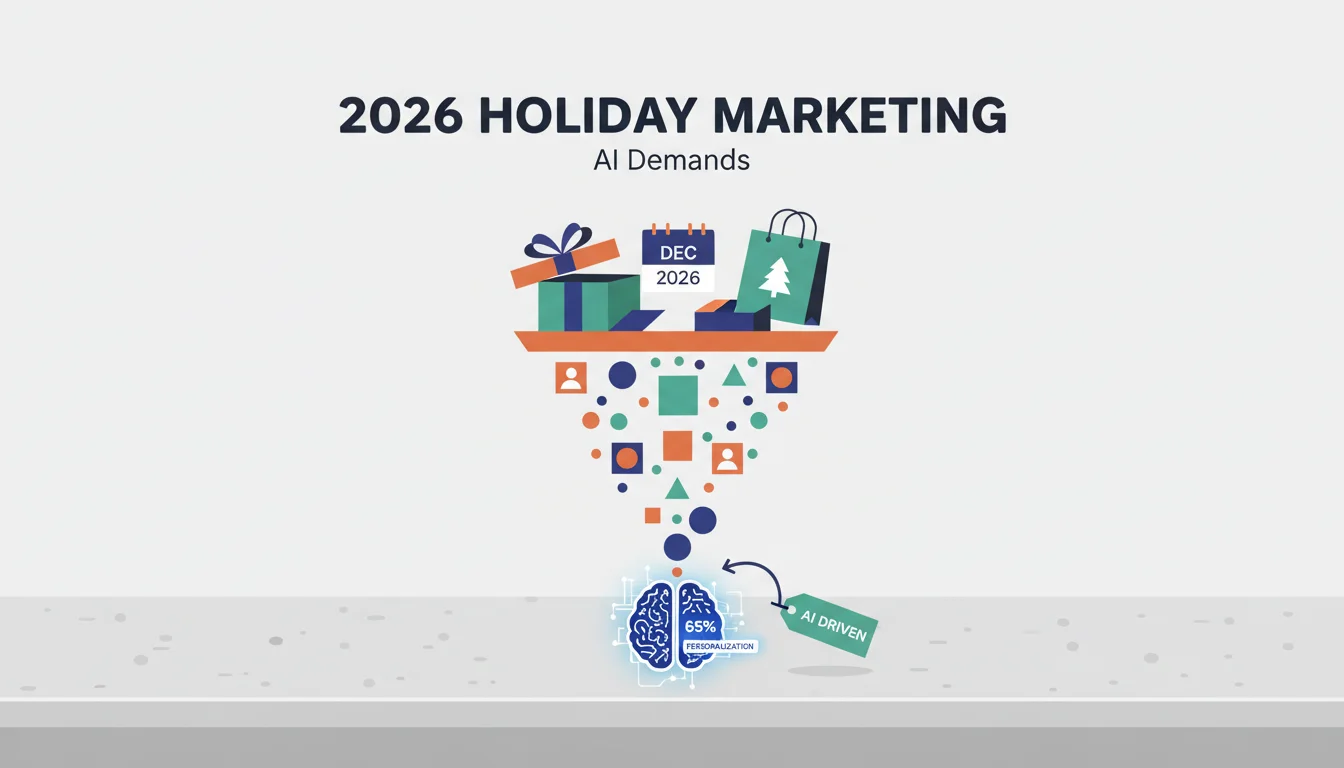
A recent eMarketer report says that by the 2026 holiday season, over 65% of consumers will expect AI to personalize their shopping experience, touching product discovery, the actual purchase, and post-purchase support. This isn’t some future trend. It’s the current reality for holiday marketing strategists, and marketers must prepare for this shift in what customers expect.
65% of Consumers Expect AI-Personalized Recommendations
That 65% statistic is a mandate from your customers. It means generic product carousels and broad “you might also like” sections are going to feel lazy and outdated. During the high-stakes holiday rush, people want a curated experience that feels like the store already knows what they’re looking for. This expectation is baked in from their daily lives, where streaming services suggest movies and social media feeds feel custom-built. For marketers, this requires moving past basic segmentation. It means real-time behavioral analysis, using every click, view, and abandoned cart to refine recommendations on the fly. Platforms like Salesforce Commerce Cloud‘s Einstein AI are already showing what’s possible, analyzing shopper intent to predict their next move and giving retailers a clear path forward. My take? E-commerce platforms must dynamically adjust product displays based on individual browsing sessions, or they’re already behind. The sheer volume of holiday data makes doing this by hand impossible at scale.
30% Increase in Sales Driven by AI Visual Search and Chatbots
Research from the IAB shows that AI-powered visual search and smart chatbots are set to drive a 30% sales lift for retailers who adopt them early. This is all about reducing friction in the buying journey. Think about a shopper who sees a sweater on Instagram. With visual search built into your app, they can upload that photo and immediately get similar products with price and availability, completely bypassing clumsy keyword searches that often miss the mark. At the same time, modern chatbots, way beyond the old FAQ bots, can handle complex questions on product specs, shipping times, or even suggest alternatives based on what a customer has looked at before. Clients implementing these tools see immediate improvements in conversion rates, especially for impulse buys. The whole thing hinges on smooth integration and natural language processing that gets context, not just basic keywords. A chatbot that can actually help a customer decide between two different models of a smart home device, instead of just dumping product links, creates a real competitive advantage.
40% of Consumers Willing to Share Data for Enhanced AI Experiences
A HubSpot report found something interesting: 40% of consumers will share personal data if it gets them a more personalized and efficient shopping experience. This willingness, however, is built on trust. Consumers are discerning with their information. They expect total transparency on how their data is being used, strong security, and a clear payoff for them. This means marketers have to be explicit, maybe with a quick privacy summary or an in-app notification, about how data improves the shopping experience. Brands must demonstrate its utility to the consumer. For example, explaining that sharing purchase history lets the AI recommend compatible accessories or flag sales on favorite brands can build that trust. Any brand that’s murky about its data practices will hit a wall of resistance, no matter how good its AI is. A lot of companies fall down right here. They focus on the tech and neglect the essential human element of trust. For more on this, consider the broader implications of marketing data trust in 2026.
AI for Real-Time Inventory and Dynamic Pricing: Beyond Novelty
While flashy AI features get a lot of press, the real workhorses for 2026 holiday marketing are in the backend: real-time inventory management and dynamic pricing. These aren’t just for efficiency. They directly shape the customer experience. Nothing loses a sale and customer goodwill faster than running out of a hot item mid-December because of slow inventory updates. AI systems can predict demand swings with surprising accuracy, helping optimize stock levels and even suggest moving products between warehouses. In the same vein, dynamic pricing, fed by AI analyzing competitor prices and demand signals, keeps products priced competitively without killing margins. This isn’t about gouging customers. It’s about offering fair prices that react to the market, which sharp consumers actually appreciate. Think about it: Google Ads already does this with automated bidding strategies that use AI to adjust bids based on conversion probability. The power of AI lies in its ability to solve fundamental operational challenges, which improves the customer’s chance of finding what they want at a price they see as fair. For a deeper dive into optimizing your ad spend, explore PPC waste strategies for 2026.
Challenging the Conventional Wisdom: The “Set It and Forget It” Myth
There’s a dangerous myth that AI is a “set it and forget it” tool. That could not be more wrong, especially during the chaos of the holiday season. I’ve seen marketers install a personalization engine, dust their hands off, and then watch performance stagnate. AI models need constant monitoring and retraining. Consumer behavior changes fast during peak shopping times, what worked in October can completely bomb the week before Christmas. The AI itself needs to adapt. Marketing teams must actively engage with the AI’s output, analyze its recommendations, and feed it corrections to help it learn. It also means you have to be honest about the data you’re feeding it. Is customer data even clean and complete? Are there biases in historical sales data the AI might just amplify? Relying on AI without human strategy is a recipe for disaster. Human oversight remains critical for guiding and optimizing these powerful tools. It’s an ongoing partnership, not a one-time handoff. Brands embedding AI thoughtfully into their shopping experiences, from personalization to inventory, will win. The takeaway for marketers is simple: invest in the technology and in the continuous refinement and strategic oversight that ensure the AI works for your customers. This proactive approach is key for PPC planning to achieve peak profit in 2026.
What is the most critical aspect of AI in holiday marketing for 2026?
Meeting the consumer expectation for personalization is the top priority. With 65% of shoppers anticipating AI-driven recommendations, you need real-time behavioral analysis and dynamic product curation, not just basic segmentation.
How can AI chatbots and visual search impact holiday sales?
These tools are projected to drive a 30% sales increase by making shopping easier. Visual search lets people find products with an image, and good chatbots give detailed, context-aware help, which smooths out the path to purchase.
Are consumers willing to share data for AI-enhanced shopping?
Yes, 40% will share data for a better AI experience, but they need to see the value. This requires brands to be transparent about data use, guarantee security, and show exactly how that data leads to better product suggestions or offers.
Beyond personalization, where else should AI be applied in holiday marketing?
AI should be applied heavily to backend operations, especially real-time inventory management and dynamic pricing. These functions prevent stockouts, ensure competitive prices, and have a direct effect on customer satisfaction during peak season.
What is a common misconception about AI implementation in marketing?
Many people think AI is a “set it and forget it” solution. The reality is that AI models need constant human oversight, retraining, and monitoring to keep up with fast-changing market conditions and shopper behavior, particularly during the holidays.


