 By Editorial Team
TikTok is a cultural engine now, turning quick vids into global trends. If you’re a marketer, you have to get a handle on the audience emotions behind these trends to make campaigns that actually get noticed. TikTok’s algorithm is built to reward engagement, and that engagement is almost always driven by a real emotional spark. So how do you consistently bottle that lightning?
Key Takeaways
- Use tools like the TikTok Creative Center and third-party platforms to find out what emotional themes are popping off right now.
- Build your content pillars around specific emotions like humor or nostalgia so your brand’s message actually connects with people.
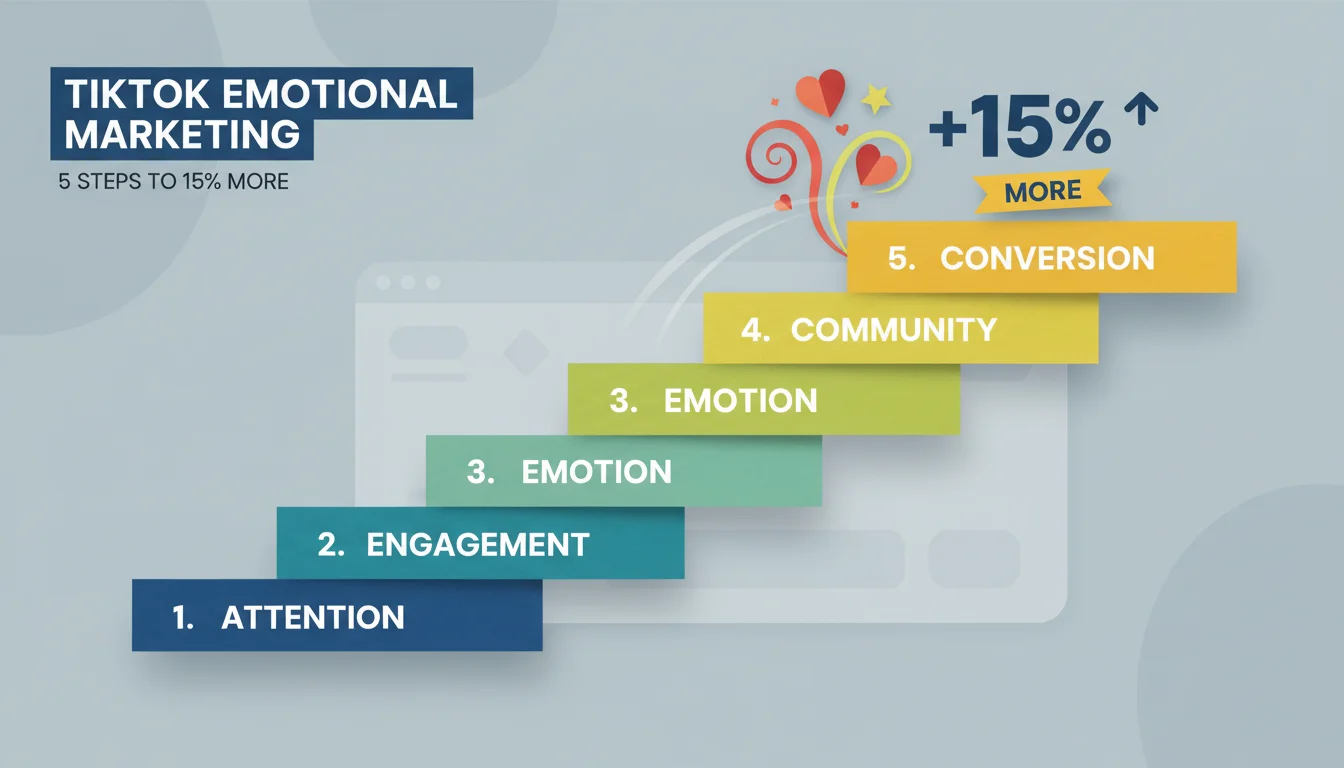
- A/B test your emotional hooks and CTAs in TikTok ads. You should be able to get your conversion rates up by at least 15%.
- Find and engage with UGC where people are already using your brand in an emotional way, it’s a massive boost for your credibility and reach.
- Constantly check your campaign metrics, especially sentiment analysis and share rates, to keep refining how you tap into audience emotions.
1. Identify Emerging Emotional Trends Through Data Analytics
A good TikTok strategy starts with knowing what emotions are actually hitting with users right now, and you find that out with data, not by guessing. Your first stop should be TikTok’s own Creative Center. Go straight to the “Trends” tab and start filtering by region and your industry to get data that’s actually useful to you. I spend most of my time in the “Popular Hashtags” and “Trending Songs” sections because the emotional flavor of a hot sound or hashtag can tell you a lot about what the collective mood is.
You’ll start to see patterns. A bunch of videos using a wistful, old-school sound clip with photos of 90s childhoods? That’s a wave of nostalgia you can ride. A sudden explosion of a super fast, high-energy track? That’s your cue for humor or empowerment content. While TikTok’s tools are a great start, you’ll eventually want to plug in a third-party platform like Sprout Social or Hootsuite Analytics to get a much closer look at the actual sentiment in the comments, which helps you move beyond just “positive” or “negative” to see if people are feeling joy, surprise, or something else entirely. You can literally search for keywords like “love this” or “crying” to quantify the reaction.
Pro Tip: Don’t just chase the top 10 trends you see everywhere. You need to be digging into the “Up & Coming” sections to catch a trend while it’s still climbing which gives you a huge head start and makes your brand’s participation feel way more natural. I set up daily alerts for new trending sounds or effects that are popular with my target demographic so I’m never caught flat-footed.
Common Mistake: Just scrolling your own “For You Page” and calling it research. Your FYP is a personalized bubble, not a representative sample of the whole platform. You have to back up your ideas with real data from analytics tools, otherwise you’re just gambling your budget and time on content that could completely miss.
2. Develop Content Pillars Aligned with Identified Emotions
Okay, so you have your data on what emotions are trending. Now you build your content pillars around those feelings. A content pillar is just a core topic or theme that you can spin off a ton of smaller videos from, and for TikTok, these pillars *must* be rooted in an emotion. So if your data points to humor being hot, maybe your pillar is “Relatable Everyday Annoyances.” Or if you sell sustainable stuff and see inspiration trending, your pillar could be “Small Changes, Big Impact.”
Let’s get specific. Your analysis shows a trend around “celebrating small wins.” You sell drinks. Your content pillar is now “The Daily Uplift.” Your videos are simple: someone looking stressed by a task, then taking a quick break with your drink, then a look of relief and satisfaction. A cold drink with a buddy post-workout. A sparkling water to signal “I’m done for the day.” You have to hammer the positive emotion home visually and audibly, bright lighting, that trending upbeat sound you found earlier, and real smiles. The story arc is fast: problem, your product as the solution, then the happy feeling.
You’ve got literally seconds to land the emotional punch. That’s just the reality of the platform. There’s a late 2025 eMarketer report confirming what we all feel: videos under 15 seconds have way higher completion rates. So what visual cues, sound effects, and text on screen will get that feeling across instantly? You need to have a library of these ready to go.
3. Craft Compelling Hooks and Calls to Action
Those first few seconds are everything. That’s your window to set the emotional hook and stop the scroll. If your pillar is “Empowerment through DIY,” your hook is a quick shot of someone looking totally fed up with a wobbly shelf, then a slick transition. If you’re a beauty brand going for a “Confidence Boost,” it’s all about a fast-cut transformation that shows the emotional change. Always, always layer in trending audio that matches the emotional journey you’re showing.
And please, can we move past just saying “Link in bio” for a CTA? TikTok has features like “Shop Now” and “Learn More” buttons right on the video that you should be using. Or, make the CTA emotional. If your video is nostalgic, ask people to “Share your favorite childhood memory in the comments!” For a funny video, “Tag a friend who does this!” works every time. It drives engagement, builds a sense of community around the post, and strengthens that emotional tie.
You have to A/B test this stuff. Make two versions of a video with one small change. For a stress-relief product, does “Feeling stretched thin?” as an on-screen text hook work better than just opening with a shot of a stressed-out person? Test it and see which gets more likes in the first 3 seconds. Do the same for CTAs: “Discover calm today” vs. “Find your peace now.” The Ads Manager has a built-in A/B testing tool for this, so you can run controlled tests and get real numbers. A Q4 2025 IAB report showed that people who actually do this see, on average, an 18% lift in conversions. It’s not a small difference.
4. Use User-Generated Content (UGC)
UGC is pure gold for emotional marketing on TikTok because it feels real in a way your slick, branded ads never can. Seeing a real person’s genuine reaction to your product builds a level of trust that money can’t buy. So you need to actively fish for it. Run a contest. Create a branded hashtag for an emotional theme. If you sell pet supplies and your pillar is “The Joy of Pet Ownership,” start a #MyPetMyJoy campaign and ask for funny pet videos. Then, get permission and feature the best ones on your own channel.
The power of UGC is that it plugs into a shared feeling. When someone sees another person, a real person, getting a kick out of your product, there’s an immediate sense of “I get that.” It’s the engine behind every successful challenge on the platform. Think about the whole “unboxing” genre. It’s all about the shared feeling of anticipation and discovery. Encourage your customers to film their unboxing, but prompt them to focus on their reaction, not just the product. You’re selling the feeling, not the object.
Pro Tip: Don’t just repost UGC and walk away. Get in the comments. Like the post, thank the creator, share it with a note. This makes that person feel seen and signals to everyone else that you’re a brand that actually listens. That kind of back-and-forth is what really solidifies the emotional bond.
Common Mistake: Treating UGC like a free-for-all content library. If you just rip a creator’s video without credit or permission, it will blow up in your face. You’ll look exploitative and cheap. Always ask for permission and always give proper credit (a simple “Credit: @[username]” in the caption is usually all it takes).
5. Monitor and Adapt Your Strategy
The emotional field on TikTok changes incredibly fast. A trend that’s on fire today is cringey next week. You have to be constantly monitoring and ready to adapt. Keep your eye on the analytics dashboard for the basic stuff, views, watch time, engagement rate, follower count. But the real story is in the comments. Are people actually feeling what you wanted them to feel? Are the same jokes or complaints popping up? A good sentiment analysis tool can save you hours here, giving you a quick read on the overall emotional reaction.
If you posted an “inspirational” video and the comments are full of sarcasm, you missed. It’s a clear signal to rethink your approach. But if your comedy bit gets a flood of “I needed this laugh today,” you’ve struck gold. You take that feedback and use it immediately to sharpen your content pillars, tweak your hooks, or change your CTAs for the next video. You can’t be precious about your ideas. If an emotional angle is a dud, kill it and try something else. TikTok rewards speed.
Make it a weekly habit to review your best and worst videos. What do the winners have in common? A certain kind of music? A specific visual gag? A narrative that always works? Then look at the duds. What went wrong? Was the emotional point muddy? This constant cycle of analyzing, adapting, and testing again is the only way to get consistent results on the platform.
The emotional connection you build on TikTok isn’t just about fleeting views. It’s a real asset that builds brand loyalty and leads to actual results. If you can stay on top of trends, create content with some emotional intelligence, and constantly tweak your approach based on what you see, you’ll build a connection with your audience that’s surprisingly strong.
What is emotional marketing on TikTok?
Emotional marketing on TikTok is just making content that’s built to make people feel something specific, joy, nostalgia, humor, whatever, so they connect with your brand and engage.
How can I find trending sounds and hashtags on TikTok?
The best place is the TikTok Creative Center. Go to the “Trends” tab and you can filter by your industry and region to see which sounds and hashtags are actually popular.
Why is user-generated content (UGC) important for emotional marketing?
UGC is huge because it’s authentic. It shows real people having real feelings about your product, which builds trust and credibility way better than a brand ad ever could.
How frequently should I analyze my TikTok performance?
You should be in your analytics at least weekly. You need to be checking your core metrics and reading the comments to see what’s working so you can adapt quickly.
Can I use A/B testing on TikTok?
Yep. TikTok’s Ads Manager has a built-in A/B testing tool. You can use it to test different versions of your ads, like trying out two different hooks or calls to action to see what gets a better response.


