 By Editorial Team
Most businesses have no idea where their pay-per-click (PPC) ad spend actually generates sales, creating huge attribution gaps that hide a ton of missing value. When you can’t connect ad impressions and clicks to actual leads or revenue, your marketing team is just guessing. They end up throwing money at the wrong campaigns and walking away from serious growth opportunities. Not understanding the full customer journey means you’re absolutely leaving revenue on the table.
Key Takeaways
- You need a solid server-side tracking solution covering at least 80% of your key conversion events by Q3 2026 to fight the data loss from client-side tracking.
- Audit your Google Ads and Meta Ads conversion settings every quarter and make sure all your primary conversion actions are set to a data-driven attribution model.
- Connect your CRM data to your ad platforms. The goal is a 95% match rate on customer emails to get reliable offline conversion tracking.
- Use an analytics platform like Google Analytics 4 to build custom attribution models that actually map to how your customers buy from you.
- Take at least 15% of your worst-performing PPC budget and move it to campaigns where you can clearly see the attribution path and higher ROAS.
The Hidden Costs of Incomplete Data
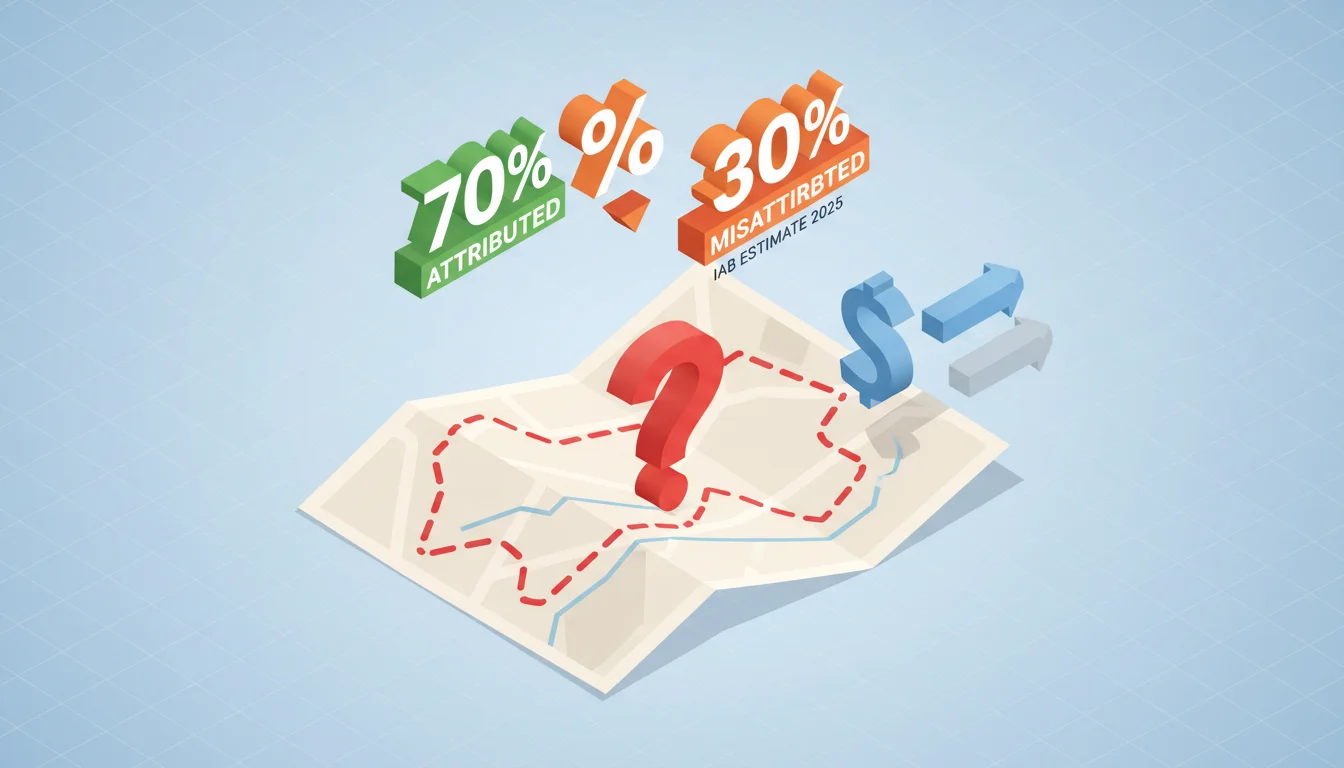
This problem of missing PPC value is everywhere, and it costs advertisers billions. The Interactive Advertising Bureau (IAB) put out a report in 2025 estimating that over 30% of digital ad spend is misattributed because of fragmented data and old measurement techniques (IAB, “Attribution Challenges in 2025”). This is a fundamental misunderstanding of what works. When you don’t have a clear picture, your budget decisions are just speculation, and you end up favoring whatever channel got the “last-click” while ignoring the earlier touchpoints that actually did the heavy lifting.
Here’s a common story: someone sees your display ad on social media, clicks, browses your site, but leaves. A few days later, they type your brand name into Google, click your branded PPC ad, and buy something. A standard last-click model gives 100% of the credit to that branded search ad. The display ad that introduced them to you and started the whole journey gets zero. This gives you a totally warped view of performance, and you might cut your budget for those “ineffective” display campaigns, which means you’re just chopping off the top of your funnel and killing future branded search traffic.
It’s all gotten worse with privacy rules, browser changes, and ad blockers. Safari’s Intelligent Tracking Prevention (ITP) puts a short lifespan on cookies, making it nearly impossible to track users over longer buying cycles. Firefox does something similar. So if your customer takes more than a few days to make a purchase, maybe switching between their phone and laptop, the link between that first ad they saw and the final sale is probably broken. Advertisers are left flying blind, with no way to measure the real impact of their top-of-funnel efforts.
What Went Wrong: Common Missteps in PPC Attribution
A lot of companies try to fix their attribution problems by just adding more client-side tracking scripts or sticking with the default settings in their ad platforms. These moves don’t work. The biggest mistake is relying on the standard last-click attribution model. It’s simple, sure, but it completely misses the reality of a modern customer journey. It’s like saying only the person who scored the final goal in a soccer match deserves any credit, ignoring the midfielders and defenders who made it happen.
Another huge error is not setting up cross-device tracking correctly. People bounce between their phones, tablets, and desktops all day. A conversion that starts on a phone and ends on a laptop can look like two different people if you don’t have your tracking straight. Many businesses just flip a switch and assume it’s working, but it’s rarely that simple without serious integration and identity resolution work.
And then there’s offline conversion tracking, or the lack of it. This is a massive attribution hole for any business with a store or a sales team. If your online ad leads to a phone call or an in-store visit that turns into a sale weeks later, that data has to get back into the ad platform. If it doesn’t, the ad looks like a failure. This is especially damaging for businesses with long sales cycles like car dealerships, real estate, or B2B software. I’ve seen so many good campaigns get shut down because their reported online ROI looked terrible, but a later analysis showed they were driving a ton of untracked offline sales.
Finally, a lack of basic data governance and validation will sink any attribution project. Tracking pixels break. GTM containers get messed up. Data streams get corrupted. If your data is garbage, your attribution model will be too. Teams often set up tracking once and then forget about it, only to find out months later that their most important conversion events weren’t being recorded at all.
Closing the Gaps: A Strategic Approach to PPC Attribution
Fixing attribution gaps means you need a real strategy. It’s about better data collection, smarter modeling, and always refining what you’re doing. You have to get past the simplistic last-click mindset to get a full picture of your marketing’s impact.
1. Implement Server-Side Tracking for Enhanced Data Reliability
Your first move has to be shifting to server-side tracking for your main conversion events. Client-side tracking, which depends on browser cookies and JavaScript, is getting hammered by privacy settings and ad blockers. Server-side tracking sends data from your own server directly to the ad platforms, making it far more durable and accurate. You can use tools like Google Tag Manager (GTM) Server-Side (Google Tag Manager Help) to manage this. For example, instead of waiting for a browser to fire a purchase pixel to Google Ads (which might get blocked), your server confirms the purchase and sends that confirmed data directly. This way, the conversion gets counted even if the user has strict privacy settings.
Start by picking your top 3-5 conversion events, like purchases or lead form submissions. Get your developers to set up server-side tracking for these, focusing on getting it right before you try to do everything. Your goal should be to have at least 80% of your primary conversion data flowing through a server-side setup by the end of Q3 2026. This move alone will stop a huge amount of data loss.
2. Embrace Data-Driven Attribution Models
Once your data is more reliable, get off last-click. All the big ad platforms, including Google Ads (Google Ads Help) and Meta Ads (Meta Business Help Center), have data-driven attribution (DDA) models. These use machine learning to look at all the conversion paths and assign credit to different touchpoints based on how much they actually contributed. Unlike fixed rules-based models (like linear or time decay), DDA is dynamic and learns from your actual customer behavior.
Turning on DDA is usually just a settings change, but you need enough conversion data for the model to work properly, aim for at least 300 conversions in a 30-day window. Check the DDA reports regularly. You’ll see how it shifts credit away from last-click, and this will show you the channels and keywords you were undervaluing, letting you make smarter budget moves.
3. Integrate CRM and Offline Conversion Data
If your sales cycle goes beyond a quick online purchase, integrating your customer relationship management (CRM) data is a must. This means you have to upload offline events like closed deals or booked appointments back into Google Ads and Meta Ads. You use customer info like email addresses or phone numbers (which are hashed for privacy) to match those offline sales back to the original ad clicks.
Here’s how it usually works:
- Collect customer identifiers (like email) from your website forms.
- Pass an ad click ID (like GCLID for Google Ads or Meta Click ID for Meta) with that customer info.
- When an offline sale happens, export that event from your CRM along with the click ID.
- Upload that file back into the ad platform using its offline conversion import tool (Google Ads Help).
You should be aiming for a match rate of 95% or higher on your customer emails to make this tracking solid. This closes one of the biggest gaps and gives you a true picture of how your online ads drive actual business.
4. Use Advanced Analytics for Custom Modeling
Platform DDA is good, but advanced tools like Google Analytics 4 (GA4) let you build your own custom attribution models. GA4’s event-based data structure is perfect for tracking complex user journeys. You can assign specific weights to different channels based on your own business logic. How much is that first brand-awareness touchpoint really worth? You can build a model to reflect that.
For example, you could build a custom model that gives more credit to top-of-funnel awareness campaigns if you’re in a competitive market. Or you could do the opposite and give more weight to mid-funnel content if your product requires a lot of research. You have to experiment with these models and check them against your actual sales numbers instead of just trusting a default setting.
5. Continuous Auditing and Iteration
Attribution isn’t a one-time setup. It needs constant auditing and iteration. That means:
- Quarterly Tracking Audits: Use tools like Google Tag Assistant (Google Tag Assistant) to check that your pixels are firing, your server-side streams are working, and your conversions are being recorded correctly.
- Attribution Model Comparisons: Constantly compare what last-click is telling you versus what your data-driven model says. See how your perception of what’s “working” changes.
- Budget Reallocation Based on Full Value: Use what you’re learning to move money around. Don’t be afraid to pull budget from a channel that looks great on last-click but weak in a DDA model, or to invest more in a channel that DDA shows is an unsung hero.
- Experimentation: Run A/B tests on campaigns and targeting, but use your new, improved attribution metrics to decide what wins.
When you do all this, you finally get a clear picture of what your PPC campaigns are actually doing. You stop guessing and start making decisions based on data, which leads to more efficient spending and better returns. The whole point is to unlock growth that was hidden from you before.
Conclusion
Fixing PPC attribution gaps is now a basic requirement for staying competitive in digital advertising. By making server-side tracking a priority, using data-driven models, connecting offline data, and keeping a strict audit schedule, companies can finally connect ad spend to real revenue. When every dollar is accounted for, you can make it work a lot harder. Start this quarter by getting server-side tracking set up for your top three conversion events. It’s the foundation for everything else.
What is an attribution gap in PPC?
An attribution gap in PPC means you can’t accurately connect all the ad touchpoints a customer interacts with before they convert. This gives you an incomplete picture of what’s actually driving business, leading to some marketing efforts getting too much credit while others get too little.
Why is server-side tracking important for PPC attribution?
Server-side tracking is important because it sends conversion data from your own server directly to ad platforms. This gets around client-side problems like browser privacy settings, ad blockers, and short cookie lifespans, giving you much more reliable and complete data for your attribution models.
How does data-driven attribution (DDA) differ from last-click attribution?
Last-click attribution gives 100% of the credit for a sale to whatever ad the person clicked right before converting. Data-driven attribution (DDA) is smarter. It uses machine learning to look at the entire customer journey and spreads the credit across multiple ad interactions based on how much they actually contributed to the final conversion.
Can I track offline conversions for my PPC campaigns?
Yes. You track offline conversions by connecting your CRM data with your ad platforms. You upload offline events (like a closed deal) along with a customer identifier (like a hashed email address) back into Google Ads or Meta Ads. The platform can then match that offline action to an earlier ad click.
What are the immediate benefits of improving PPC attribution?
Improving PPC attribution immediately helps you allocate your budget more accurately. You can spot channels you were undervaluing, get clearer insights into the customer journey, and achieve a higher return on ad spend (ROAS) because you’re optimizing based on what’s actually working.


