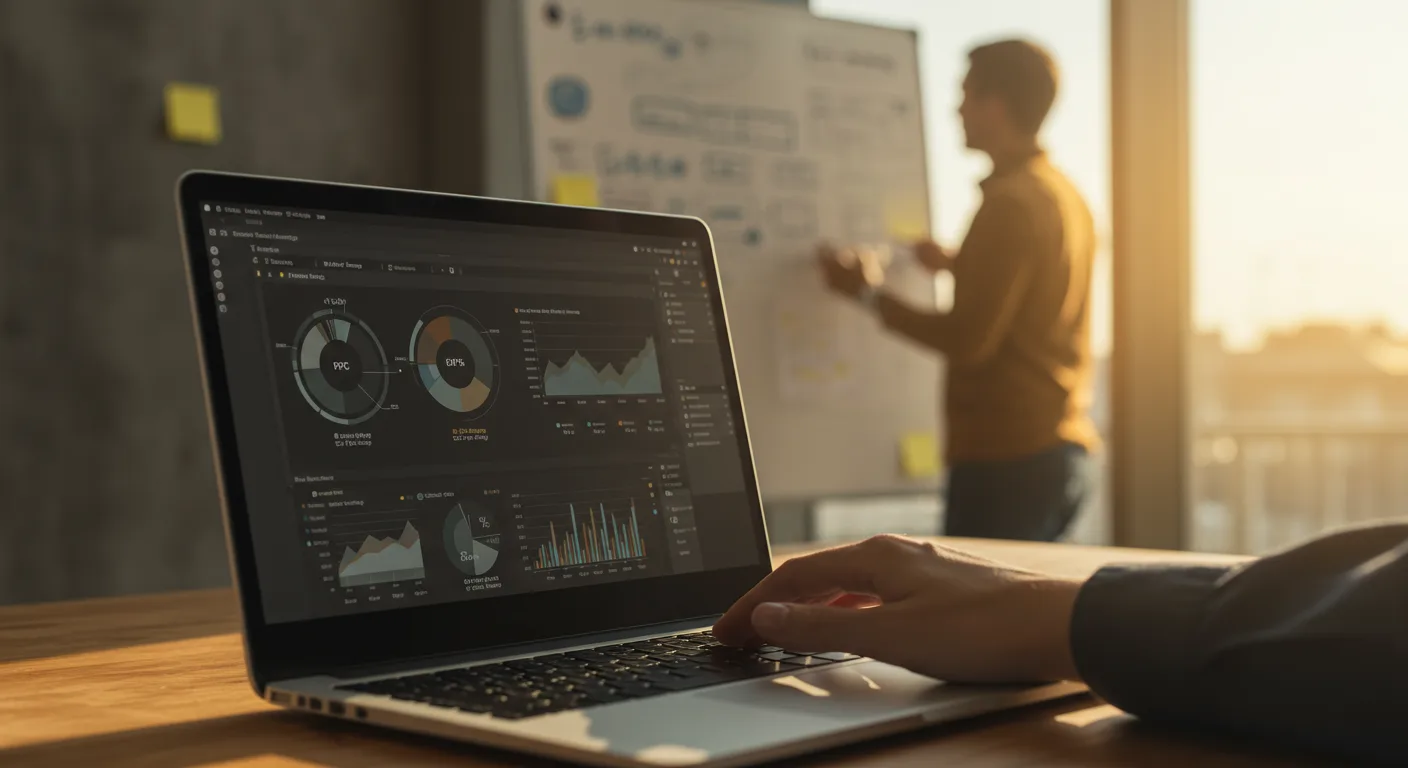
Understanding the ROI of PPC Campaigns
In the dynamic realm of digital marketing, pay-per-click (PPC) campaigns stand as a cornerstone strategy for driving targeted traffic and generating conversions. However, simply launching a PPC campaign isn’t enough. To truly maximize your investment, you need to understand and optimize your return on investment (ROI). Let’s break down how to assess and improve the ROI of your PPC efforts. A positive ROI signifies that the revenue generated from your PPC campaign surpasses the costs incurred, making it a worthwhile investment. Conversely, a negative ROI indicates that your campaign is losing money and requires immediate adjustments.
Calculating your PPC ROI involves a straightforward formula: [(Revenue – Cost) / Cost] x 100. For instance, if your campaign generated $10,000 in revenue with a cost of $2,000, your ROI would be (($10,000 – $2,000) / $2,000) x 100 = 400%. This means you’re earning $4 for every $1 spent. Several factors influence your PPC ROI, including your keyword selection, ad copy relevance, landing page experience, and targeting parameters. By carefully optimizing each of these elements, you can significantly enhance your campaign’s profitability.
Here’s how to improve your PPC ROI:
- Refine Keyword Targeting: Conduct thorough keyword research to identify high-intent keywords that align with your target audience’s search queries. Use keyword match types (broad, phrase, exact) strategically to control the relevance of your ads.
- Optimize Ad Copy: Craft compelling ad copy that highlights your unique value proposition and addresses the user’s needs. Use strong calls to action and A/B test different ad variations to identify the most effective messaging.
- Improve Landing Page Experience: Ensure your landing pages are relevant to your ad copy and provide a seamless user experience. Optimize for speed, mobile-friendliness, and clear calls to action.
- Implement Conversion Tracking: Set up conversion tracking in platforms like Google Analytics to accurately measure the value of your PPC campaigns. This data will inform your optimization efforts and help you identify areas for improvement.
According to a recent study by Statista, businesses that actively track and optimize their PPC campaigns experience an average ROI increase of 20-30%.
The Power of Expert Interviews in Marketing
In today’s competitive marketing landscape, establishing authority and building trust are paramount. One of the most effective ways to achieve this is by incorporating expert interviews into your content strategy. Featuring interviews with leading PPC specialists and marketing professionals provides invaluable insights, credibility, and a fresh perspective for your audience. These interviews can take various forms, including written Q&As, video discussions, or podcast episodes. Regardless of the format, the key is to showcase the expertise and knowledge of the interviewee in a way that resonates with your target audience.
The benefits of incorporating expert interviews are multifaceted:
- Enhanced Credibility: Associating your brand with recognized experts in the field instantly boosts your credibility and reputation.
- Fresh Perspectives: Experts offer unique insights and perspectives that can challenge conventional thinking and provide valuable takeaways for your audience.
- Increased Engagement: Interviews are often highly engaging, as they offer a more personal and relatable connection with the subject matter.
- Expanded Reach: Experts often share the interview with their own networks, expanding your reach and introducing your brand to a new audience.
When conducting expert interviews, it’s crucial to select individuals who are genuinely knowledgeable and respected in their field. Prepare thoughtful and insightful questions that delve into relevant topics and provide actionable advice for your audience. For instance, when interviewing a PPC specialist, you might ask about their strategies for optimizing ad campaigns, their thoughts on the latest industry trends, or their advice for beginners.
To maximize the impact of your expert interviews, promote them across multiple channels, including your website, social media, and email newsletters. Encourage your audience to share their thoughts and ask follow-up questions, fostering a sense of community and engagement. By consistently featuring expert interviews, you can establish your brand as a trusted source of information and build lasting relationships with your audience.
HubSpot’s research consistently shows that content featuring expert opinions generates significantly higher engagement rates compared to standard blog posts.
Crafting High-Converting Landing Pages
Your landing page serves as the crucial bridge between your marketing efforts and your desired conversions. A well-designed and optimized landing page can significantly improve your conversion rates, while a poorly executed one can squander valuable traffic and potential customers. Creating high-converting landing pages requires a strategic approach that focuses on user experience, relevance, and clear calls to action.
Key elements of a high-converting landing page include:
- Compelling Headline: Your headline is the first thing visitors see, so it needs to grab their attention and clearly communicate the value proposition.
- Clear Value Proposition: Explain the benefits of your offer in a concise and persuasive manner. Highlight what makes your product or service unique and why visitors should choose you.
- Engaging Visuals: Use high-quality images or videos to showcase your product or service and create an emotional connection with your audience.
- Concise and Persuasive Copy: Keep your copy focused on the benefits and avoid unnecessary jargon. Use bullet points, headings, and subheadings to make it easy to read.
- Strong Call to Action (CTA): Make your CTA prominent and use action-oriented language that encourages visitors to take the next step.
- Social Proof: Include testimonials, reviews, or case studies to build trust and credibility.
- Mobile Optimization: Ensure your landing page is fully responsive and provides a seamless experience on all devices.
In addition to these elements, it’s essential to A/B test different variations of your landing page to identify what works best for your audience. Experiment with different headlines, visuals, copy, and CTAs to optimize your conversion rates. Utilize tools like VWO or Optimizely to run A/B tests and track your results. Remember that continuous testing and optimization are key to maximizing the performance of your landing pages.
According to MarketingSherpa, companies that conduct A/B testing on their landing pages experience an average conversion rate increase of 40%.
Leveraging Data for Landing Page Optimization
Landing page optimization is not a one-time task, but rather an ongoing process that requires continuous monitoring and refinement. To effectively optimize your landing pages, you need to leverage data to understand how visitors are interacting with your page and identify areas for improvement. Data-driven optimization involves analyzing key metrics, such as bounce rate, time on page, conversion rate, and click-through rate, to gain insights into user behavior and preferences.
Here are some specific ways to leverage data for landing page optimization:
- Analyze Bounce Rate: A high bounce rate indicates that visitors are leaving your page without interacting with it. This could be due to a variety of factors, such as irrelevant content, slow loading speed, or a confusing layout.
- Track Time on Page: The amount of time visitors spend on your page can indicate their level of engagement. If visitors are spending a short amount of time on your page, it could be a sign that your content is not compelling or that your page is not meeting their needs.
- Monitor Conversion Rate: Your conversion rate is the percentage of visitors who complete your desired action, such as filling out a form or making a purchase. Tracking your conversion rate allows you to measure the effectiveness of your landing page and identify areas for improvement.
- Analyze Click-Through Rate (CTR): CTR measures the percentage of visitors who click on a specific element on your page, such as a button or a link. Analyzing CTR can help you identify which elements are most engaging and which ones need to be optimized.
- Use Heatmaps and Scrollmaps: Tools like Hotjar provide visual representations of user behavior on your landing page, showing where visitors are clicking, scrolling, and spending their time.
By analyzing these metrics, you can identify pain points and areas of friction on your landing page and make data-driven decisions to improve user experience and increase conversions. For example, if you notice a high bounce rate on a particular page, you might try improving the headline, optimizing the content, or speeding up the loading time. Remember to track your results and continuously iterate to optimize your landing pages for maximum performance.
A study by Adobe found that businesses that use data-driven marketing strategies are 6 times more likely to achieve their marketing goals.
Integrating PPC and Landing Page Optimization Strategies
While PPC campaign optimization and landing page optimization are often treated as separate disciplines, they are intrinsically linked and should be integrated for maximum effectiveness. A well-optimized PPC campaign can drive highly targeted traffic to your landing page, but if your landing page is not optimized for conversions, you’ll be wasting valuable clicks and potential customers. Conversely, a highly optimized landing page will be ineffective if your PPC campaign is not driving relevant traffic.
Here are some strategies for integrating PPC and landing page optimization:
- Align Keywords and Ad Copy with Landing Page Content: Ensure that the keywords you’re targeting in your PPC campaign are reflected in your ad copy and landing page content. This will improve the relevance of your ads and landing pages, leading to higher quality scores and lower costs per click.
- Use Dedicated Landing Pages for Each Ad Group: Create separate landing pages for each ad group in your PPC campaign, tailored to the specific keywords and ad copy. This will ensure that visitors are landing on a page that is highly relevant to their search query.
- Optimize Landing Pages for Mobile: With the increasing prevalence of mobile devices, it’s essential to optimize your landing pages for mobile users. Ensure that your landing pages are responsive, load quickly, and provide a seamless user experience on all devices.
- Track Conversions from PPC Campaigns: Set up conversion tracking in your PPC platform and Google Analytics to accurately measure the performance of your campaigns. This data will help you identify which keywords, ad copy, and landing pages are driving the most conversions.
- Continuously Test and Optimize: Regularly A/B test different variations of your ad copy and landing pages to identify what works best for your audience. Use the data you collect to make informed decisions and continuously optimize your campaigns for maximum performance.
By integrating your PPC and landing page optimization strategies, you can create a cohesive and effective marketing ecosystem that drives targeted traffic, improves conversion rates, and maximizes your ROI. Remember that continuous monitoring, testing, and optimization are key to achieving long-term success.
Research from WordStream indicates that businesses that align their PPC campaigns with dedicated landing pages experience an average conversion rate increase of 25%.
Future Trends in PPC and Landing Page Optimization
The landscape of PPC and landing page optimization is constantly evolving, driven by technological advancements and changing user behavior. Staying ahead of the curve requires a proactive approach to learning and adapting to new trends. Several key trends are shaping the future of PPC and landing page optimization, including the increasing use of artificial intelligence (AI), the growing importance of personalization, and the rise of voice search.
Here are some of the emerging trends to watch:
- AI-Powered Optimization: AI is increasingly being used to automate and optimize various aspects of PPC and landing page optimization, from keyword research and ad copy creation to bid management and A/B testing. Expect AI-powered tools to become even more sophisticated in the coming years.
- Personalization at Scale: Consumers are increasingly demanding personalized experiences, and marketers are responding by leveraging data and technology to deliver tailored content and offers. Personalized landing pages, ad copy, and targeting strategies will become even more prevalent.
- Voice Search Optimization: With the rise of voice assistants like Google Assistant and Amazon Alexa, voice search is becoming increasingly popular. Optimizing your PPC campaigns and landing pages for voice search will be crucial for reaching a wider audience.
- Video Landing Pages: Video is a highly engaging and effective medium for communicating your value proposition and driving conversions. Expect to see more businesses using video landing pages to capture attention and increase engagement.
- Augmented Reality (AR) Experiences: AR is beginning to make its way into marketing, allowing businesses to create immersive and interactive experiences for their customers. AR-enhanced landing pages could offer a unique and engaging way to showcase products and services.
By embracing these emerging trends and continuously experimenting with new strategies, you can stay ahead of the competition and maximize the effectiveness of your PPC and landing page optimization efforts. The key is to remain agile, data-driven, and focused on delivering exceptional user experiences.
Gartner predicts that AI-powered marketing solutions will be used by over 80% of businesses by 2030.
What is a good ROI for a PPC campaign?
A “good” ROI for a PPC campaign depends on your industry and business goals. However, a general benchmark is an ROI of 3:1, meaning you earn $3 in revenue for every $1 spent. Some businesses aim for even higher, such as 5:1 or 10:1.
How often should I A/B test my landing pages?
A/B testing should be an ongoing process. Aim to run at least one A/B test per month on your key landing pages. Prioritize tests based on potential impact and traffic volume.
What are some common mistakes to avoid on landing pages?
Common mistakes include having a cluttered design, unclear value proposition, slow loading speed, lack of mobile optimization, and a weak or missing call to action.
How important is mobile optimization for landing pages?
Mobile optimization is crucial. A significant portion of web traffic comes from mobile devices, so a poorly optimized mobile landing page can lead to high bounce rates and lost conversions. Ensure your landing pages are responsive and provide a seamless experience on all devices.
What tools can I use for landing page optimization?
Several tools can help with landing page optimization, including Google Analytics for tracking metrics, Hotjar for heatmaps and user behavior analysis, Optimizely and VWO for A/B testing, and Google PageSpeed Insights for checking page speed.
By understanding the nuances of PPC and landing page optimization, and implementing the strategies discussed, you can significantly boost your marketing performance. Expert interviews provide valuable insights, while data-driven landing page optimization ensures you’re maximizing conversions. Continuous testing, adaptation, and integration of strategies are the keys to long-term success. Are you ready to start optimizing your campaigns and landing pages for better results?



