 By Editorial Team
Key Takeaways
- Over 60% of Google searches now end without a click to another website, fundamentally altering how pay-per-click (PPC) campaigns are measured and optimized.
- PPC strategies must adapt by focusing on brand visibility and direct conversions within search results, rather than solely relying on website traffic.
- Marketers should analyze search engine results page (SERP) features like Featured Snippets and Local Packs to identify new opportunities for zero-click engagement.
- Attribution models need re-evaluation to credit PPC’s influence on brand awareness and subsequent direct or organic conversions, even without an immediate click.
- Testing and iterating on ad copy that provides immediate value or answers within the ad itself can capture attention and drive conversions in a zero-click environment.
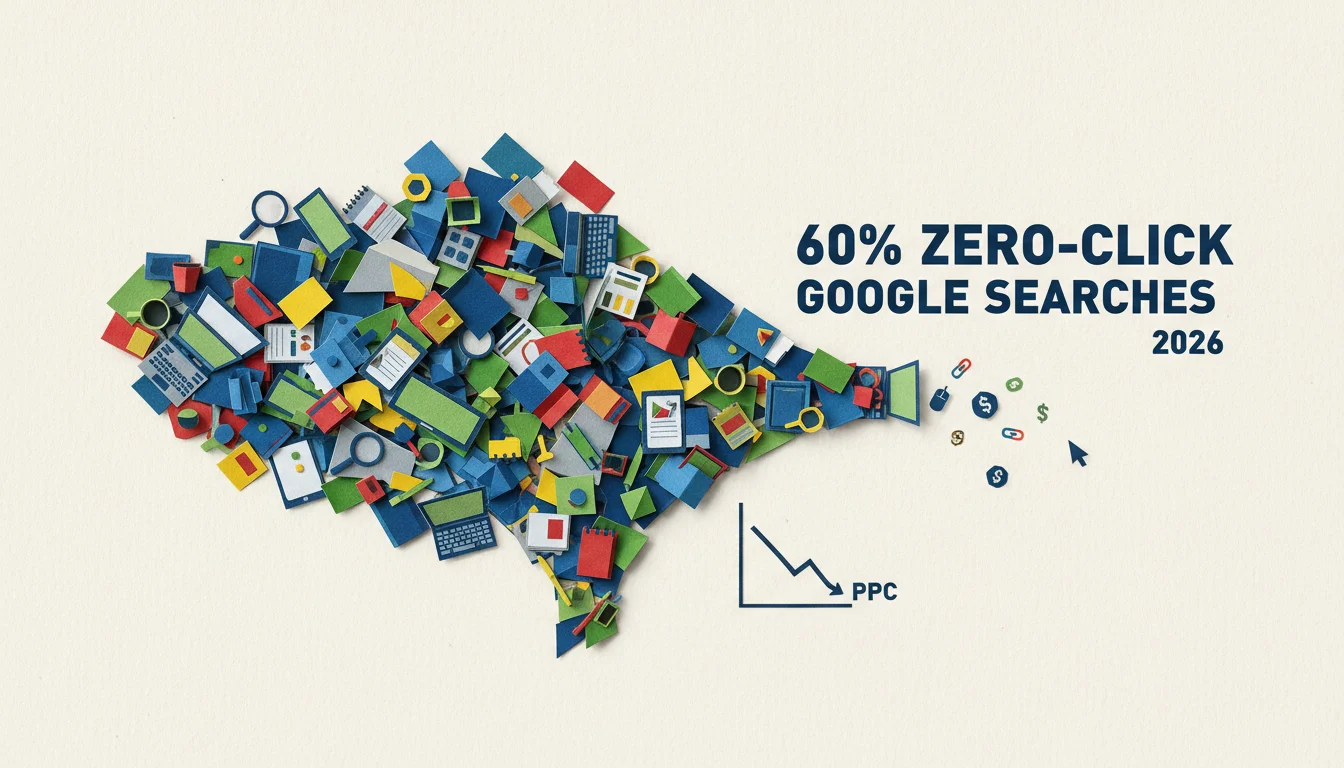
A staggering 60% of Google searches conclude without a single click to an external website, a seismic shift that deeply impacts how we measure PPC influence and interpret zero-click data. This phenomenon demands a recalibration of marketing analytics, moving beyond traditional click-through rates as the sole metric of success. How then do we accurately assess the value of paid campaigns when users find their answers directly on the search engine results page (SERP)?
The Rise of Zero-Click Searches: A Data Point
Recent industry analysis, including a prominent study by SparkToro, indicates that in 2026, the majority of Google searches are now zero-click events. This means users are finding the information they need directly on the SERP, whether through Featured Snippets, knowledge panels, local packs, or other rich result formats. For PPC advertisers, this statistic is not merely interesting. It’s a fundamental challenge to established performance indicators. If a user sees your ad, gains brand recognition, and then finds their answer elsewhere or makes a direct purchase later without clicking your ad, how do you attribute that success? The conventional wisdom that a click equals engagement is increasingly outdated. My experience shows that many campaigns still chase clicks above all else, often missing the subtle, yet powerful, brand-building impact occurring directly on the SERP.
SERP Feature Dominance: Understanding User Behavior
Consider the evolving nature of the SERP. According to Google’s own documentation on Search Console Insights, the platform prioritizes delivering immediate answers, often through its own properties or highly summarized content. For example, a search for “weather in Atlanta” no longer requires a click to a weather site. The answer is prominently displayed. This behavior extends to more complex queries. A Statista report from 2025 indicated a significant uptick in user interaction with Featured Snippets and Knowledge Panels for informational queries, surpassing traditional organic and paid links. This isn’t just about convenience. It’s about conditioning users to expect immediate gratification. Your PPC ad might be the first touchpoint, even if the user never clicks it. They see your brand, your offer, and perhaps even a key piece of information embedded within the ad copy itself. This initial exposure creates a mental footprint, influencing subsequent actions like direct website visits or future searches.
Attribution Models Under Scrutiny: The Need for Nuance
The prevalence of zero-click data forces a critical re-evaluation of current PPC influence attribution models. Last-click attribution, still widely used, completely misses the mark here. If a user sees a paid ad, remembers the brand, and then types the brand name directly into their browser or searches for it again later via an organic query, the initial PPC touchpoint receives no credit. This is a significant blind spot. A HubSpot study published in 2024 highlighted that businesses employing more sophisticated, multi-touch attribution models reported 30% higher ROI on their digital advertising spend. I advocate for models that account for view-through conversions and assist conversions. Platforms like Google Ads offer various attribution models, from time decay to data-driven, which can provide a more well-rounded view. We need to move beyond simply tracking clicks and start analyzing impression data more deeply, correlating it with direct traffic, brand search volume, and even offline conversions. For example, a local Atlanta business running a geo-targeted PPC campaign might see an increase in foot traffic even without a corresponding increase in ad clicks, suggesting a strong zero-click influence.
Optimizing for Visibility, Not Just Clicks: A Strategic Shift
The strategic implication of zero-click searches is clear: PPC campaigns must be optimized for maximum visibility and immediate value delivery, not just for clicks. This means crafting ad copy that is not only compelling but also informative enough to answer a user’s query directly within the ad itself. Consider using ad extensions to their fullest potential. Structured snippets, callout extensions, and sitelink extensions can provide rich information, contact details, and even direct answers to common questions without requiring a click to your landing page. According to an IAB report on digital advertising trends, brands that effectively use rich ad formats and extensions see a measurable increase in brand recall and direct traffic, even in a zero-click environment. For instance, a Georgia-based personal injury law firm, like Bader Law in Atlanta (baderlaw.com/atlanta-personal-injury-lawyer), might use ad extensions to display their phone number, office hours, and a direct link to their “no-win-no-fee” policy, providing immediate value to someone searching for legal assistance. This approach shifts the goal from “get the click” to “provide the answer and build the brand.”
The Disconnect: Why Conventional Wisdom Fails
Here’s where I fundamentally disagree with the prevailing wisdom that PPC success is solely defined by click-through rates and direct conversions via ad clicks. Many marketers still cling to these metrics because they are easy to track and directly attributable. However, this perspective completely ignores the powerful, albeit indirect, impact of brand exposure. In a world dominated by zero-click searches, a well-placed, highly visible ad acts as a digital billboard. It builds brand recognition, encourages trust, and plants a seed that may blossom into a conversion later, through a different channel. To dismiss this influence is to undervalue a significant portion of your advertising spend. We need to stop viewing impressions as merely “unclicked ads” and start seeing them as valuable brand touchpoints, especially when they occupy prime SERP real estate. The data suggests that even if a user doesn’t click, the mere presence of your ad can influence their perception and future behavior. The field of search has irrevocably changed, demanding that marketers evolve their understanding of zero-click data and PPC influence. Success now hinges on strategically using every impression to build brand recognition and deliver immediate value, moving beyond the singular pursuit of a click.
What is a zero-click search?
A zero-click search is a search engine query where the user finds the answer directly on the search results page without clicking through to any external website. This often happens through features like Featured Snippets, Knowledge Panels, or local business listings.
How does zero-click data impact PPC advertising?
Zero-click data means that traditional PPC metrics like click-through rate (CTR) no longer fully capture ad performance. PPC campaigns now influence users through brand visibility and direct information delivery on the SERP, potentially leading to later direct or organic conversions that are harder to attribute.
What strategies can marketers use to adapt to zero-click searches?
Marketers should focus on optimizing ad copy to provide immediate answers, using ad extensions to offer rich information, and prioritizing brand visibility on the SERP. This includes monitoring performance in SERP features and adjusting attribution models to credit view-through and assist conversions.
Why is last-click attribution insufficient for zero-click environments?
Last-click attribution only credits the final touchpoint before a conversion. In a zero-click environment, a PPC ad might be the initial brand exposure that influences a user, but if they convert later through a direct visit or organic search, the PPC ad gets no credit, leading to an incomplete understanding of its value.
Can PPC still drive conversions in a zero-click world?
Absolutely. While direct clicks might decrease for some queries, PPC still drives conversions by building brand awareness, providing immediate solutions within ad copy, and influencing subsequent direct searches or offline actions. The conversion path simply becomes more complex and less linear.


